Thursday, July 9, 2026
spot_img
Home Blog Page 62

Record-Breaking Attendance Of Over 50,000 Visitors At PLEXPOINDIA 2024 Recently Concluded

0

Record-Breaking Attendance Of Over 50,000 Visitors At PLEXPOINDIA 2024 Recently Concluded

After a long time, PLEXPOINDIA 2024 made a glorious return to Gujarat and concluded successfully on 9th December at Helipad Exhibition Centre (HEC), Gandhinagar (Gujarat). The grand comeback to Gandhinagar immediately captured the attention of the plastics industries with its immense scale and extraordinary appeal.

This time, PLEXPO exhibition surpassed all the records of its previous editions and became landmark in the history of Plastic Industry. The exhibition was spread over 25,000 sq.mts. area and around 500 exhibitors took part in the event showcasing variety of products and newer technologies taking place in the field of Plastics. The exhibition was supported by Ministry of MSME, Gujarat and Plastindia Foundation along with leading plastic associations & GPCB extended their logo support to the event, making this event memorable one.

The inaugural function of Plexpoindia exhibition took place on 6th December at the venue in which large number of plastic industrialists/stalwarts, exhibitors, visitors and members remained present. The function was presided over by Shri Mulubhai Bera, Hon’ble Minister of Tourism, Cultural activities, Environment, Forest & Climate Change, Government of Gujarat, whereas Shri Jagdishbhai Vishwakarma, Hon’ble Minister of State for cooperation Salt Industries, Printing & Stationery, Protocol, Cottage, MSMEs, Khadi & Rural Industries, Civil Aviation and Shri Shamalbhai Patel, Chairman, Amul-Sabar Dairy, Director-NDDB were Guest of Honour at the function. Shri R. B. Barad, IAS, Chairman, Gujarat Pollution Control Board also present on this occasion. Addressing the gathering Hon’ble Minister Shri Mulubhai Bera uttered that plastic industry is playing vital role and following PWM rules by plastic manufacturers, co-ordinating with implementing authorities will go a long way in growing plastic industries.

Hon’ble Minister Shri Jagdishbhai Vishwakarma said that no one can live without plastics and it becomes part of our daily life. It is very wrong prediction that industry become victim of so called criticization. He also highlighted about of use of plastics v/s. use of traditional materials in various applications. Shri R. B. Barad, Chairman-GPCB talked about implantation of PMW rules and assured to extend full co-operation of GPCB to plastic industry to facilitate the units in meeting their obligations and will not be any harassment.

Shri Bharat Patel, President-GSPMA welcomed all the guests and invitees and thanked all the sponsors, exhibitors and wish all of them for their fruitful participation in the exhibition. Shri Vajubhai Vaghasia, Chairman-Plexpoindia’24 reiterated role of plastics exhibitions and history and glory of Plexpo exhibitions being held by GSPMA every three years. Shri Shailesh Patel in his concluding remarks at the inaugural function again thanked all the sponsor, exhibitors for their support and team GSPMA/PLEXPOINDIA for successful organization of the event.

During the exhibition, technical sessions were held on 6th, 7th & 8th December 2024 on various topics at the venue. Panel discussions were held on * War: Price V/s. sustainability, * Meeting the global Plastics & Sustainability Race with Technology, * EPR Compliance, * Manufacturing with Alternate to Virgin Plastics, * Government of India certification for Labs & Indian Standards for Plastic Industry, * Brands & Plastics: Sustainable Collaboration and lastly presentation on How to export & avail government subsidies by PLEXCONCIL, Sponsored by Ministry of Commerce, Government of India. All the technical sessions organized and managed by Shri Krunal Goda, Chairman, Technical Seminar & Conference Committee.

The exhibition has become a platform for future industries. New materials, innovative machineries, biomanufacturing, bioplastic, compostable plastics. etc., received widespread attention and were fully represented. Bringing into the front industrial innovations, cutting-edge technologies in automotive, circular economy/recycling, packaging and other sectors were introduced with various innovative solutions utilizing plastics “Circular Economy”, “Innovative Materials”, “Digitalization” and “High-end Technologies are the industry trends emphasized at this mega event. Focusing on the four main themes of “Circular Economy,” “Innovative Materials,” “Digitalization” and “High-End Technologies. The exhibition showcased innovative technologies presented by exhibitors. It highlighted keywords such as energy efficiency, cost reduction, intelligence, efficiency and high quality, directly addressing customer pain points and demands, and getting a lot of attentions in the fairground.

The promotional events of the Plexpoindia exhibition like Launch Functions/ Road Shows organized at Ahmedabad, Vadodara, Surat, Rajkot, Hyderabad, Bangaluru, Chennai, Delhi, Jaipur, Daman, Vapi, Dhoraji, Bhavnagar, etc. and many more throughout the country. Also promotion of the exhibition made through social media, newspapers, channels, radios, hoardings at prominent places in the country.

Reputed companies sponsored the exhibition in different categories like Diamond Sponsor – M/s. Kapsun Resources Corporation, whereas Gold Sponsors includes ACL, Bestzone, Haitian, HPCL, HMEL, etc. and many companies joined as Silver Sponsors of the event. The exhibitors from all the segments participated in the exhibition. Large number of visitors from the different sectors visited the show and large volume of business anticipated.

The exhibition not only received overwhelming praise from exhibitors but also earned high acclaim from the visitors. Visitors with their footsteps and expressed their abundant gains and benefits from the show. The grand event has come to a successful conclusion, but the excitement never ends. The 10th edition of PLEXPOINDIA 2028 declared to be held in February 2028.

https://www.plexpoindia.org/

#plexpoindia#modernplasticsindia #modernplasticsasia #plasticsislife #plasticstalk #modernplastics#modernplasticsworld #pasticsnews #plasticsisgood #plasticsplane#plasticsrecycling#plasticmagazine #plasticIndustry#modernplasticsmiddleeast#indianmagazine#innovations #modernplasticsamerica #modernplasticsbangladesh #modernplasticsasia #modernplasticsitaly

Sustainable Investment Platform Sustvest Raises $1.7 Million In Pre-Series A Round Led By Inflection Point Ventures And Antler

0

Sustainable Investment Platform Sustvest Raises $1.7 Million In Pre-Series A Round Led By Inflection Point Ventures And Antler

  • SustVest is India’s first regulated platform for sustainable investments, offering investments in renewable energy. It delivers 12-14% XIRR returns with monthly payouts while enabling C&I consumers to access zero-cost solar projects, reducing electricity costs by up to 50%.
  • The funds will be allocated toward acquiring solar projects, covering marketing expenses with the launch of the regulated platform, managing operations and legal expenses.
  • So far, Inflection Point Ventures has invested over INR 800 Cr across 260+ startups.

Gurugram : Sustainable Investment Platform SustVest Raised $1.7 Million in Pre-Series A Round in mix of equity and debt Led by Inflection Point Ventures and Antler along with participation from WEH ventures, Venture Catalysts, Soonicorn Ventures, FAAD Network, and others. The funds will drive key business growth initiatives, including acquiring solar projects, scaling marketing with the regulated platform launch, strengthening operations, and covering legal expenses.

SustVest specializes in sustainable investments in renewable energy. The platform has achieved over ₹43 Cr in Assets Under Management (AUM) with 9.3 MW of solar installations, distributing over ₹5.7 Cr in energy income and saving over 94 lakh kgs of carbon emissions.

Co-founders Hardik Bhatia (CEO) and Devansh Shah (CTO) bring deep industry expertise. Hardik, a B.E. in Computer Science from BITS Pilani, had a family background in the solar business and extensive fintech experience. Devansh, also a BITS Pilani graduate in Finance and Computer Science, is a tech innovator.

Mr. Ankur Mittal, Co-Founder, Inflection Point Ventures, says: “Many smaller investors find it difficult to invest in renewable energy due to high entry barriers. SustVest solves this by offering fractional ownership in renewable energy projects for investing. By doing so, SustVest is making sustainable investments more accessible to a broader audience and democratizing the renewable energy projects. In turn, helping investors earn passive income and promote the growth of clean energy initiatives.”

SustVest offers investors fixed-income opportunities with environmental impact while enabling C&I consumers to access zero-cost solar projects at up to 50% lower tariffs. Their portfolio includes renowned clients such as Lodha Group, Hitachi, Mahle Group, Subros Ltd, CISF, NSG, CRPF, and others.

SustVest serves investors across the globe with seamless KYC processes via its regulated platform. Its projects span key locations, including Maharashtra, Himachal Pradesh, and more.

Hardik Bhatia, Co-Founder and CEO, Sustvest, says,” The investment opportunities once reserved for the ultra-wealthy are now accessible to all through SustVest, democratizing renewable energy investments. We’re building a gateway for EPCs to access finance for the OPEX model, bridging critical gaps in the ecosystem. IPV has been exceptional in understanding our vision and supporting us on this journey with their expertise, enabling us to scale our impact and bring clean energy closer to everyone.”

India’s rooftop solar market presents a $405.63 billion opportunity, with 7.6 million MSMEs fit for solar integration. The alternative investment market in India is expected to reach $11.8 billion, driven by 99 million individuals earning over ₹15 lakh annually.

https://sustvest.com/

#sustvest#modernplasticsindia #modernplasticsasia #plasticsislife #plasticstalk #modernplastics#modernplasticsworld #pasticsnews #plasticsisgood #plasticsplane#plasticsrecycling#plasticmagazine #plasticIndustry#modernplasticsmiddleeast#indianmagazine#innovations #modernplasticsamerica #modernplasticsbangladesh #modernplasticsasia #modernplasticsitaly

Clariant Envicat N2O-S Catalyst Expected To Cut 275 KT/Y CO2eq At Sichuan Lutianhua Nitric Acid Plant

0

Clariant Envicat N2O-S Catalyst Expected To Cut 275 KT/Y CO2eq At Sichuan Lutianhua Nitric Acid Plant

  • EnviCat N2O-S catalyst successfully started up at Sichuan Lutianhua nitric acid plant in August 2024 and estimated to reduce N2O emissions by 275 kilotons of CO2eq
  • Sichuan Lutianhua was a winner of Clariant’s Climate Campaign, receiving a free load of EnviCat N2O-S catalyst for nitrous oxide (N2O) abatement
  • This easy-to-install catalyst is proven to remove up to 95% of N2O from the off-gas of nitric acid production plants

Clariant, a sustainability-focused specialty chemical company, today announced that its EnviCat N2O-S nitrous abatement catalyst is performing successfully at Sichuan Lutianhua’s nitric acid plant and is projected to reduce annual emissions by 275 kilotons of CO2eq[1]. Sichuan Lutianhua is one of the winners of Clariant’s 2021-2022 global Climate Campaign, which offered a free load of the catalyst to nitric acid producers lacking N2O abatement technology. Located in Sichuan Province, China, the 135 KTA nitric acid plant started operating in 2009 with no N2O removal system in place.

Xaver Karsunke, Vice President of Clariant Specialty Catalysts, commented, “With China supporting crucial decarbonization efforts to combat climate change, we are proud to partner with Sichuan Lutianhua on reducing their carbon footprint through our innovative catalyst technology. Clariant’s EnviCat solutions are empowering leading Chinese companies, like Sichuan Lutianhua, to efficiently cut emissions in hard-to-abate industrial sectors.”

Sun Guang, Assistant General Manager at Sichuan Lutianhua, added, “Our company is committed to sustainable practices and reducing our environmental impact. Partnering with Clariant to install the EnviCat N2O-S catalyst is an important step towards achieving our emissions reduction goals. We have already measured a significant decrease in N2O emissions from our nitric acid production and look forward to continued positive results.”

Founded in 1959 and based in Luzhou City, Sichuan Province, China, Sichuan Lutianhua Co. Ltd. is a leading producer of chemicals with significant capacities in ammonia, urea, methanol, and dimethyl ether. Listed on the Shenzhen Stock Exchange since 1999, the company has advanced technological capabilities with a strong focus on research and development.

Nitric acid is essential for producing fertilizers. However, its production emits N2O, which is nearly 300 times more damaging to the climate than CO2. Adding to the problem, more than half of nitric acid producers do not remove N2O from their off-gas. Based on 66 million tons of nitric acid produced annually around the world[2], N2O emissions equal to approximately 100 million tons of CO2e yearly[3].

The EnviCat N2O catalyst series presents an easy solution to this serious problem. Using the catalysts, N2O and other nitrogen oxides can be removed almost completely (up to 99% for tertiary abatement and 95% for secondary abatement) from production emissions. Moreover, the EnviCat N2O-S is easy to adopt as the catalysts can be installed in any state-of-the-art nitric acid plant without disrupting the production process. Well-established in the market for more than 20 years, EnviCat N2O catalysts are currently installed in over 50 plants globally.

The aim of Clariant’s Climate Campaign was to provide nitric acid producers around the world with an economical path to emission reduction. From November 2021 to March 2022, several winners were selected to receive a complimentary load of the EnviCat N2O-S catalyst.

Learn more about Clariant’s EnviCat N2O-S catalyst for nitrous oxide abatement.

Enabling our customers to reduce their nitrous oxide emissions is part of Clariant’s broader initiative to support a wide range of industries in the energy transition. This includes decarbonizing hard-to-abate sectors, advancing the hydrogen economy, and promoting the adoption of renewable energy sources. In 2023 alone, Clariant’s catalysts helped avoid greenhouse gas emissions equivalent to 40 million tons of CO2e for its customers.

www.clariant.com

#clariant#modernplasticsindia #modernplasticsasia #plasticsislife

#plasticstalk #modernplastics #modernplasticsworld #plasticsnews

#plasticsisgood #plasticsplanet #plasticsrecycling


Empowering Calibration Service Providers To Deliver Precision Solutions

0

Empowering Calibration Service Providers To Deliver Precision Solutions

Ensuring the precision and accuracy of specialised equipment is critical for businesses. Calibrating and optimising these precision machines requires a deep understanding of geometry, mechanics, and the latest calibration technologies. Laser calibration systems have become the preferred choice for maintaining precision instrument performance, but using these advanced calibration tools demands a high level of technical expertise and practical experience.

While large companies often maintain dedicated inspection teams to perform these calibration duties, the associated costs can be prohibitive for small and medium-sized businesses. However, as the number of calibration service providers grows, more accessible and cost-effective solutions for ensuring the optimal performance of precision equipment are becoming available.

Micro-check Calibration Pvt. Ltd. (Micro-check) is an India-based calibration service provider using Renishaw’s cutting-edge calibration systems to support their small and medium-sized customers. They offer a range of calibration services to Indian machine manufacturers, imported machine tool installations and other large machine tool end users.

Micro-check has worked with Renishaw since 2016, using calibration products such as the XL-80 laser interferometer, QC20 ballbar, and XR20 rotary axis calibrator, to provide services to machine manufacturers. They recently expanded their offering by adding the Renishaw XK10 alignment laser system to their suite of tools. This strategic investment has further enhanced Micro-check’s ability to provide comprehensive testing and optimisation solutions for their customers.

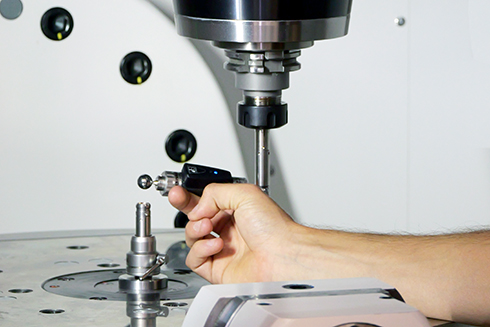
Using the XK10 alignment laser system

Micro-check added Renishaw’s XK10 system to their collection this year, using its multi-functional capabilities to support their customers in the machine tool, automation, robotics, electroplating, and aerospace sectors, plus more specialised areas. For example, in the electroplating industry, the XK10 system measures the coplanarity of holding fixtures which solves the problem of uneven material thickness on the hard chrome plating of piston rods. It can also be used to assess the rigidity of machine foundations by checking for vibration, and horizontal or vertical movements caused by other equipment like machinery, presses, or cranes. The XK10 system measures displacement and deflection within a machine’s own structure, due to its axis movement.

The XK10 alignment laser system measures a range of parameters that Micro-check finds useful, including straightness, squareness, flatness and level, as well as spindle coaxiality and direction. They have used the XK10 system extensively and have successfully completed calibration services for over 150 machines across a range of applications.

Advantages in measuring range

Traditional measurement methods (like using granite squares, dial gauges, autocollimators, and metrology artefacts), require manual operation and are prone to errors, making them unreliable. In contrast, the XK10 system leverages laser technology, enabling it to measure over long distances with excellent inspection efficiency. For instance, Micro-check used the XK10 system to measure parallel and perpendicular straightness of a 25 metre casting in just 45 minutes. If they had used a granite square (typically around 2 metres long) for the same measurement, it would have required multiple test set-ups and would have been less efficient.

The Managing Director of Micro-check, Mr. Sunil Navale, has over 35 years of experience across design, assembly, testing and maintenance in the machine tool industry.

Data stitch function

Laser measurement has its advantages, but in real-world environments the presence of air turbulence can introduce noise into the laser measurements, which can significantly reduce the repeatability of the results. The degree of air turbulence can vary depending on the measurement environment. Implementing strict environmental controls can be costly and may not be accessible to all customers. The longer the distance between the XK10 launch unit and the M-unit, the more the air turbulence affects the measurement.

When developing the XK10 laser alignment system, Renishaw understood the practical application environments of their customers, so they developed a stitching feature to solve this challenge. The data stitch function in Renishaw’s CARTO software allows you to measure long axes with high accuracy and repeatability by combining multiple shorter measurements. The idea is to limit the distance between the XK10 launch unit and the M-unit to a length where the air turbulence has minimal impact, and then move the units along the axis to measure the remaining segments. CARTO software easily stitches the shorter measurements into a single long measurement.

Simple and intuitive user interface

The XK10 system’s user interface provides detailed step-by-step operation instructions for each measurement task, guiding the user through the measurement process. The instructions are user-friendly which helps operators to familiarise themselves with the system’s capabilities. Throughout the testing process, the XK10’s wireless display unit shows the measurement data and test diagrams in real-time. After each completed measurement, the XK10 system software generates a detailed measurement report, which can be exported in both PDF and XML formats.

Mr. Navale highlighted the XK10 system’s operational flexibility, saying: “You only need to switch to the required measurement task on the display unit to see the data. The user interface is very intuitive and easy to use. Most importantly, the XK10 system helps improve the overall productivity, especially in the machine assembly stage, as it identifies potential issues and resolves them quickly, reducing time and making the process more efficient.”

Portability

The XK10 system is a portable tool that uses a wireless connection to communicate with the S-unit and M-unit, and is powered by a battery providing 30 hours of operation. This makes it well-suited for service providers like Micro-check, who have to regularly take the tool to a customer’s workshop.

The XK10 system and fixturing kit are supplied in carry cases for easy transportation of the equipment.

https://www.renishaw.com/

#renishaw#modernplasticsindia #modernplasticsasia #plasticsislife

#plasticstalk #modernplastics #modernplasticsworld #plasticsnews

#plasticsisgood #plasticsplanet #plasticsrecycling

2025: A Look Ahead For The Printing Industry

0

2025: A Look Ahead For The Printing Industry

As the year draws to an end, we turn our attention to 2025 and how significant, globally defining factors will shape the printing industry.

2024 was an historic election year with more than 70 countries taking to the ballot boxes. In over 80% of democracies the incumbents were voted out. In Europe this has resulted in significant national shifts and regional instability due to the polarisation of the left and the right. It has had a financial impact, particularly on interest rates. As print growth follows GDP growth, a reduction in business opportunities and trade volume is likely. Proving a hindrance too, will be trade barriers limiting transactions for export to the US.

America was no different. As well as the political change accompanying the return of a Trump administration the rest of the world will, it seems, face higher import taxes. This will affect orders and may drive a shift towards local production of price sensitive products. Demand for imported print may move away from commodity applications to focus on high quality items such as luxury coffee table books and specialist publications.

War continued to have an impact on business in 2024 and it will be shaping it in 2025 too. All eyes will continue to be on the Russia-Ukraine war while potentially damaging boycotts will be created by the conflict in Gaza.

The full impact of all these influencing elements is still yet to be completely understood as situations evolve daily.

Continuing to evolve too, is universal commitment to environmental responsibility for print production. The Paris Climate Agreement and more recently COP 29 have reconfirmed a wide international effort. In Europe Print Service Providers (PSPs) are working on meeting the 2024 European Corporate Sustainability Reporting Directive (CSRD) which requires any business with revenue of more than E40m (and any non-European company doing business in Europe with more than E150M) to start quantifying and measuring their sustainability performance.

We have all seen how extreme weather has added to the cost of operations as companies invest in making supply chains more flexible while customer activism is set to put pressure on companies to exceed legal standards. Plastic bans will continue to encourage greater adoption of paper solutions, especially in packaging, labels, and cards applications, while the emphasis on local production will increase, benefiting those PSPs that are as close as possible to their clients. All of which ensure sustainability will become an increasingly key factor in purchasing decisions for print.

PSPs are also having to ready themselves for more stringent data protection laws with regards to hosting customer data owned by their clients, new employment laws, and stricter health and safety requirements. The disconnection between the creation and governing of laws in different countries has the potential to impact the export and import of printed products, favouring the online selling of print.

In fact, 2024 was a significant year for online print as for the first time more than 50% of all print sold was online. Digitisation of documents is continuing to accelerate while inkjet is becoming a dominant print technology in many applications. There is a growing focus as well on what AI can do and how the use of robots can increase productivity.

At the same time PSPs are changing from a labour intensive to capital intensive business model. Most have to borrow money to finance new equipment and those that experience challenges in finding and retaining skilled labour may find capacity and production under pressure. Investing in digital printing capabilities and automation can help mitigate employment costs, reduce waste associated with analogue production, and increase production flexibility to manage last minute orders – no matter the volume. The recent easing of challenges surrounding the supply of consumables and substrates has enabled PSPs to refocus their attention on improving operational efficiency and productivity.

While the stabilisation of inflation might help, operations will continue to face expenditure increases on a number of fronts – rising energy prices affecting costs and travel, higher interest rates impacting national debts and hindering access to capital, trade barriers limiting transactions with some countries and placing downward pressure on consumer spending. This could result in reduced spending on printed communication, especially in retail and photo merchandise. It may also drive the consolidation of printers in certain markets.

There are social and cultural considerations to consider as well, from an ageing population impacting access to a skilled workforce and more and more people working from home. Other considerations include migration and a mounting trend of income inequality. Also proving transformative is the growth in retail e-commerce sales estimated to exceed $4.1 trillion worldwide by the end of 2024 with new heights expected to be reached in the years ahead. Children’s literacy is seeing a widespread decline, and that has the potential to reduce the run length of books, possibly driving digital production. We are seeing too, an increase in active monthly users on social media despite privacy issues, the proliferation of fake news, and inaccurate sponsored posts. This may actually boost printed communications.

The printing industry landscape in 2025, as we see it now, is marked by economic uncertainty, environmental demands, and rapid technological innovation. PSPs that embrace sustainability, digitisation, and automation will be well positioned to adapt to shifting consumer and client preferences as well as regulatory pressures. This will empower their resilience and growth, despite the evolving global conditions.

https://www.ricoh.com/

#ricoh#modernplasticsindia#modernplasticsasia #plasticsislife #plasticstalk #modernplastics#modernplasticsworld #pasticsnews #plasticsisgood #plasticsplane#plasticsrecycling#plasticmagazine #plasticIndustry#modernplasticsmiddleeast#indianmagazine#innovations #modernplasticsamerica #modernplasticsbangladesh #modernplasticsasia #modernplasticsitaly

“K Defies All Challenges To Remain The Centre Of The Plastics World”

“K Defies All Challenges To Remain The Centre Of The Plastics World”

Interview on the road to K 2025 with Ulrich Reifenhaeuser, Chairman of the K Exhibitor Advisory Board, and Thorsten Kuehmann, Managing Director of the VDMA Plastics and Rubber Machinery Association

 Large areas of the global economy are currently experiencing economic headwinds. So, what sort of signal does an already fully booked K 2025 send?

Ulrich Reifenhaeuser: It shows that the global assessment of the industry remains positive. In the past, the plastics industry has developed outstanding products and valuable solutions, and this will continue in the future. Plastic is a relatively young material, which still has enormous potential. Yes, we are going through difficult economic times, but they will pass. In principle, this does not change the need for plastic solutions. We want to display and see them. That’s why the K defies all challenges and remains the Centre of the plastics world.

Thorsten Kuehmann: We are going through a time of great uncertainty. However, there are some fixed stars of considerable radiant power, of which the K is one such star. Everyone knows that the K is taking place, and the world is heading there. It provides the orientation that is especially needed in difficult times. This is also reflected in the motto of K 2025: “The Power of Plastics – Green, Smart, Responsible.

That motto exudes great self-confidence. What is it based on?

Kuehmann: We believe that plastic as a material offers the solution to the major issues facing our civilization. For example, plastic helps to improve the global climate. This is because CO2 emissions are decreasing as vehicles are becoming lighter due to the higher use of plastic, thereby consuming less energy. Energy consumption is also greatly reduced in the construction industry because buildings are better insulated with plastic. The CO2 footprint is reduced because plastic packaging means less food spoilage. These are all major contributions from the plastics industry. Another point is the circular economy: resources are not only used once, but again and again. We are creating recyclability. A great deal is already possible, hence the motto “The Power of Plastics“. We just need to do it.

Reifenhaeuser: It is a fact that we have a huge climate problem in this world. It is also true that plastic is the most climate-friendly material. Its production consumes significantly less CO2 than that of other materials. This climate advantage would be immediately visible if, for example, the CO2 footprint was labelled on packaging. It is therefore not presumptuous to be very self-confident.

The circular economy is still in its early stages. Where do we stand today?

Reifenhaeuser: We are further than we were three years ago. Mechanical engineering has now reached an astonishingly high level. The technical solutions for recycling are largely available. However, we could actually be three times better off than we actually are; in other words, we could recycle much more. Why aren’t we doing that? Because recycling is technically demanding, and therefore more expensive than virgin plastic. No-one is prepared to pay the higher costs. Consumers are extremely cost-conscious, plus brand manufacturers are under enormous competitive pressure. Plastic has been a success because it is far better than other materials. However, the step towards a circular economy is costly. It will not be possible to get to grips with this cost problem without regulatory requirements.

Kuehmann: That’s true, but there is light on the horizon. One key to reducing costs would be a vastly increased penetration of digitalization. On the one hand, this concerns the digitalization of machine and plant systems, allowing processes to be better controlled. It also makes it easier to handle difficult materials – and recycles are more difficult to handle. On the other hand, material flows also need to be digitalized. This is where the digital product passport comes in for example, which digitally tracks a product over its entire life cycle. Machines and products are two levers that can be used to bring costs down. It will still take time, but we are well on the way.

How far have companies actually progressed with digitalization? Is AI already being utilized?

Kuehmann: Virtually every company in the plastics machinery industry is now focusing on digitalization. This topic is now current all across the globe, with many companies even already focusing on digital sales. Recently, artificial intelligence has also been finding its way into the industry. In the process of digitalizing their operations, companies have so much data available, that they can simply solve certain requirements much better with intelligent algorithms. Three years ago, nobody was talking about artificial intelligence, now it’s on everyone’s lips – and there are also the first practical examples.

Reifenhaeuser: Automation has been used in plastics machinery manufacturing for over 40 years. Now almost everyone is going one step further and focusing on digitalization. In essence, this means that much larger amounts of data and therefore more information are being registered due to faster processors. This allows processes to be noticeably improved once again. The next step is the intelligent processing of the different types of information. This brings us to AI, which generates enormous added value – in design, production and service. The potential is enormous.

Where do employees stand in the future of plastics engineering?

Kuehmann: Our employees are one of the most important assets we have – all the more so because demographic trends show the difficulty in recruiting enough young people with certain qualifications. On the one hand, we must therefore try to make mechanical engineering attractive to more people, especially women. On the other hand, we need to push ahead with digitalization, including AI. This will streamline processes and ultimately allow us to manage with fewer but qualified staff.

How will the VDMA address these specific issues at K?

Kuehmann: At the trade fair, we will bring to life the motto we have developed together with our members and partners: “The Power of Plastics – Green, Smart, Responsible”. We will make all facets of this motto visible to visitors. In the outdoor area of K, companies will present concrete solutions and thereby show where we currently stand as an industry: in recycling, in plastics processing, and in digitalization. To this end, we will be providing an overview of all these machine applications and digitalization solutions in the VDMA Dome. There, we will also be discussing topics relating to talented young prospects.

Reifenhaeuser: This exhibition in the outdoor area will of course be flanked by the innovations and special developments that will be on show at the individual companies’ stands. So, you can experience both: the strength of plastics as a whole on the VDMA site, and the technical finesse at the company stands. There will once again be plenty to see. In plastics machinery manufacturing, the development cycles in the companies are closely aligned with the three-year cycle of the K trade fair. This also explains why suppliers are always so keen to present their products, and why the trade visitors remain so interested.

https://www.vdma.org/en/

#vdma#modernplasticsindia#modernplasticsasia #plasticsislife #plasticstalk #modernplastics#modernplasticsworld #pasticsnews #plasticsisgood #plasticsplane#plasticsrecycling#plasticmagazine #plasticIndustry#modernplasticsmiddleeast#indianmagazine#innovations #modernplasticsamerica #modernplasticsbangladesh #modernplasticsasia #modernplasticsitaly

Hydrogen Pressure Vessels – AZL Aachen GmbH delivers Deep-Dive into Design and Production Trends

0

Hydrogen Pressure Vessels – AZL Aachen GmbH delivers Deep-Dive into Design and Production Trends

AACHEN, December 2024 — Fibre-reinforced pressure vessels are increasingly becoming the cornerstone of the hydrogen economy, playing a key role in the transport, storage and use of hydrogen for both mobile and stationary applications. AZL Aachen GmbH, in collaboration with a consortium of 25 leading industry players, has successfully completed a 12-month R&D project entitled ‘Trends & Design Factors for Hydrogen Pressure Vessels’.

Project Consortium at the Final Report Meeting © AZL Aachen GmbH

The 550-pages report, presented to the 40 participants of the final project meeting in November, provides a comprehensive overview of the market and technology trends related to the development of thermoset and thermoplastic pressure vessels. By addressing material impacts, complex design considerations and advanced manufacturing technologies, the project provides business- and technology insights. Companies along the whole value chain of pressure vessels have been involved, resins, fibres, liners, production systems, vessel manufacturers, hydrogen system integrators and OEMs.

The first phase of the project involved an in-depth review of regulations, requirements and safety standards, together with examples of state-of-the-art hydrogen pressure vessels. Key aspects covered included manufacturing processes, supply chains and production technologies, as well as a comprehensive patent analysis. In addition, the study examined winding patterns, design strategies, material models and software tools used in the development of pressure vessels.

The second phase of the project involved extensive engineering studies. Warden Schijve, Design Leader at AZL, explained the procedure: “Our team of experts developed CAE models for 12 different layouts of a two-metre, 350-litre Type IV pressure vessel designed for 700 respectively 350 bar applications. These models incorporated different resin and fibre types, layup variations and boss designs to evaluate the impact on mechanics, weight, cost and carbon footprint. We also explored hybrid fibre combinations and dome reinforcement using patch technologies. Detailed process chain modelling provided further insight into cost structures and CO2 footprints.”

The results of the project also show initial future trends: Through the targeted use of advanced material combinations, adapted designs and manufacturing techniques, it is possible to significantly reduce the weight and cost of the vessels while maintaining the necessary safety standards. Compared to state-of-the-art vessels, hydrogen over tank weight efficiencies could be improved from the standard 6 to 7% up to more than 11%. These developments could strengthen the competitiveness of hydrogen technology in various mobility and energy sectors in the future.

“The knowledge gained from the project provides a solid foundation for the use of new technologies to meet the hydrogen economy’s requirements for safe and cost-effective pressure vessels,” commented Celal Beysel, Chairman of the Board at FLOTEKS Plastik San. Tic. A.Ş.

Floteks, a Tier 1 supplier of plastic components, has launched numerous R&D initiatives in the design and development of Type IV vessels in recent years. In 2023, the company joined the AZL Composite Pipes and Vessels Working Group and the ‘Trends and Design Factors for Hydrogen Pressure Vessels’ project. Beysel added: “We are pleased to announce that Floteks has established a new company called Pressura in 2024, which will focus on the production of type 4 pressure vessels for buses and trucks.”

Companies and organisations seeking detailed insights or collaboration opportunities are encouraged to contact AZL. AZL Aachen GmbH serves as an innovation partner for hydrogen tank development, prototyping and testing, and is dedicated to advancing composite technologies.

www.lightweight-production.de

#lightweightproduction#modernplasticsindia#modernplasticsasia#plasticsislife#plasticstalk #modernplastics#modernplasticsworld #pasticsnews #plasticsisgood #plasticsplane#plasticsrecycling#plasticmagazine #plasticIndustry#modernplasticsmiddleeast#indianmagazine#innovations #modernplasticsamerica #modernplasticsbangladesh #modernplasticsasia #modernplasticsitaly

Lucas Meyer Cosmetics By Clariant Unveils New Beauty Collaboration House, Marking A New Era In Cosmetic Innovation

0

Lucas Meyer Cosmetics By Clariant Unveils New Beauty Collaboration House, Marking A New Era In Cosmetic Innovation

  • Lucas Meyer Cosmetics by Clariant announces successful launch of Beauty Collaboration House near Los Angeles, opened on December 10th, dedicated to co-creating innovative cosmetic formulations with customers
  • The new facility showcases Lucas Meyer Cosmetics by Clariant’s ingredients, fostering collaborative product development in the high-value cosmetic ingredients market
  • This customer-centric innovation hub emphasizes hands-on collaboration and setting new standards in the beauty and personal care sector

Lucas Meyer Cosmetics by Clariant announces the opening of its new Beauty Collaboration House near Los Angeles, California. This state-of-the-art facility is designed to revolutionize the way cosmetic formulations and concepts are developed, emphasizing direct collaboration with the specific needs from customers in this region.

The Beauty Collaboration House embodies the company’s commitment to customer-centric innovation in the beauty and personal care sector. The facility’s name emphasizes the ‘LAB’ component, highlighting its role as a collaborative space where customers work hand-in-hand with inhouse experts to develop new cosmetic formulations using active and functional ingredients as well as exotic oils, butters and clays offered by Lucas Meyer Cosmetics by Clariant.

Christian Vang, President of Clariant’s Business Unit Care Chemicals and the Americas region, stated, “The opening of this new facility on December 10th marked a significant shift in how we approach cosmetic innovation. It’s not just about showcasing our ingredients; it’s about working alongside our customers to create the next generation of beauty products. We’re thrilled with the positive response and collaborative energy we’ve seen in just the first few weeks of operation.”

The opening of the Beauty Collaboration House follows the recent integration of Lucas Meyer Cosmetics into Clariant, a move that significantly strengthens Clariant’s position in the specialty chemical industry and expands its footprint in North America. This strategic step aligns with Clariant’s purpose-led growth strategy and its goal to accelerate customer-driven innovation.

“By combining our personal care ingredients portfolio with Lucas Meyer Cosmetics, we’ve created a unique opportunity for collaborative formulation development,” Vang added. “In this fast-paced world of beauty and personal care, we’re not just keeping pace with the market; we’re setting a new standard for customer collaboration.”

The Beauty Collaboration House is expected to drive remarkable growth. The company aims to increase annual sales from around $100 million currently to $180 million by 2028, leveraging this new collaborative approach to product development. Vang also highlighted the value of the experienced team from Lucas Meyer Cosmetics, noting their excellent track record and the invaluable expertise they bring to this new collaborative venture.

The Beauty Collaboration House is set to become a crucible for creativity and a launchpad for breakthroughs in the cosmetics industry. It will serve as a space where boundaries are pushed, conventions are challenged, and the next generation of cosmetic formulations are created in close collaboration with valued customers.

“At Lucas Meyer Cosmetics by Clariant, it is imperative that we align our strategy with local industry trends. The indie brand landscape also involves key players such as consultants and contract manufacturers. One of our objectives is to establish direct connections with them and with the emerging brands,” comments Jackie Kim, Sales Director North America at Lucas Meyer Cosmetics.

As Lucas Meyer Cosmetics by Clariant opens the doors to this new facility, it invites customers to experience a new level of partnership in cosmetic formulation, blending innovative ingredients with the creative vision of beauty brands.

www.clariant.com

#clariant#modernplasticsindia #modernplasticsasia #plasticsislife #plasticstalk #modernplastics #modernplasticsworld #pasticsnews #plasticsisgood #plasticsplanet#plasticsrecycling#plasticmagazine #plasticIndustry#modernplasticsmiddleeast#indianmagazine#innovations #modernplasticsamerica #modernplasticsbangladesh #modernplasticsasia #modernplasticsitaly

Clariant Begins Construction Of Second High Performance Additives Production Line In Cangzhou, China

0

Clariant Begins Construction Of Second High Performance Additives Production Line In Cangzhou, China

  • Commencement ceremony held for expansion of original production line for high-end stabilizer additives jointly operated by Clariant and Beijing Tiangang Auxiliary Co., Ltd.
  • High quality, excellent reputation and full capacity achieved by first production line since launching in 2021
  • New facility manufacturing unique multifunctional Nylostab S-EED additive will enhance quality and features of nylon products with surging demand from the local nylon application markets

Clariant is expanding its Cangzhou production site for the manufacture of the multifunctional additive Nylostab S-EED. The new, second production line in the Hebei Province of China, will jointly be owned and operated by Clariant and its local partner Beijing Tiangang Auxiliary Co., Ltd. A commencement ceremony for the site was today hosted by the leadership teams of the two companies.

“We are excited to take our partnership with Beijing Tiangang to the next level by breaking ground on a second production line in Cangzhou today. The continued investment from Clariant demonstrates our commitment to the Chinese market and reaffirms our strong belief in the prospects of local industries such as textiles and fibers, automotive and packaging,” said Zhigang Miao, Clariant’s Global Head of Polymer Solutions, Additives Polymer Solutions.

For three years, since the launch of the first joint-venture site in 2021, the production site has achieved full capacity, earning it an excellent reputation as a strong local facility with established international background and expertise. With construction of the new production line now commencing, success is expected to reach new highs.

“We feel privileged to deepen our partnership with Clariant further through the expansion of this already very successful production site. Since the beginning of our joint venture we have enjoyed wonderful cooperation with Clariant and among our staff. We hope the new production line will offer local industries and our customers in China even more advanced additives solutions,” says Mr. Gang Liu, Executive Director of Tiangang.

The new production line beginning construction today will specialize in the manufacturing of Clariant’s unique multifunctional Nylostab S-EED additive that is highly compatible with nylons by molecular recognition. Its excellent process stability at high temperatures results in less filament breakage during spinning processes and enhances productivity by reducing cycle time for injection molding processes.

“The success of our first joint-venture production site in Cangzhou has undoubtedly paved the way for our new facility today. We’re confident that our new multifunctional additive Nylostab S-EED, produced at the new site, will have a good number of application areas across the core nylon value chain, which is seeing a surge in capacity expansion and demand particularly from the textile and engineering plastics industry here in China,” says Sandra Schneider, Clariant’s Head of Operations & Supply Chain Additives.

The upstream Chinese nylon industry is expanding rapidly, driving an increase in demand for high- end additives such as Nylostab S-EED. This multifunctional additive is capable of upgrading the quality of nylon products through enhanced colour stability, heat resistance and composite compatibility during the manufacturing process, resulting in overall higher productivity.

www.clariant.com

#clariant#modernplasticsindia #modernplasticsasia #plasticsislife#plasticstalk#modernplastics #pasticsnews #plasticsisgood #plasticsplane#plasticsrecycling#plasticmagazine #plasticIndustry#modernplasticsmiddleeast#indianmagazine#innovations #modernplasticsamerica #modernplasticsbangladesh #modernplasticsasia#modernplasticsitaly

Gift Carding Responsibly – What Brands Need To Know

Gift Carding Responsibly – What Brands Need To Know

The global gift card market was valued at 984.3 billion in 2023. By 2030 that value is expected to reach a staggering 3.09 trillion.

Behind this exciting growth is a mounting environmental challenge. Most of those cards are currently printed on non-recyclable PVC plastic with an associated carbon emission impact of 46.97gCO2e per card when digitally printed. When digitally printed on a paper based substrate the figure is just 4.28gCO2e per card.

But for brands the benefits of digitally printing paper based gift cards extend far beyond the environmental advantages. They include:

  • True cost of ownership – with digital print you order only what you need, when you need it. There is no tying up of budget. There is no need to put cash on a pallet as there is no unused stock to store. The risk of obsolescence is reduced.
  • Faster speed to market – digital print and production supports faster design, creation, approval, and production of short runs. This allows brands to be highly creative in generating interest in short term or reactive promotions, for example.
  • Enhanced customer engagement – with the ability to personalize and adapt content on a piece by piece basis brands can connect more with customers. They can elevate their customer experience and explore exciting ways to reinforce awareness, relevance, and loyalty.
  • Highly targeted application – Gift card designs can be regionalized to promote specific offers, or in recognition of significant cultural dates. They can also be event focused.

We have been working with a huge variety of brands who see the value of their gift cards – which are often single use – being fully recyclable and manufactured with a 91% reduction in their carbon footprint.

We have been helping them adapt their thinking to how short run card production can enable them to interact differently by offering a customized experience – something that makes their customers feel valued.

Brands have also been exploring ways this approach to card creation can help them connect with staff members for seasonal gifting or intercompany activities.

All of this is made possible by digitally printing high quality personalization on a carefully selected high caliper substrate with the RICOH Pro C9500 digital sheet fed press, supported by intelligent software capabilities.

Thanks to the Co-innovation we have undertaken with Ricoh, brands can confidently move away from the mass production model of offset print to a digital on demand, lean, supply chain. They can print according to actual sales data, rather than forecast data, by using relevant, real time figures. They can be highly creative with a premium, luxurious look and feel.

Chat to us or Ricoh to see how cost effective production of responsibly produced gift cards can help reinforce your brand’s core values.

www.ricoh.com

#ricoh#modernplasticsindia#modernplasticsasia #plasticsislife #plasticstalk #modernplastics#modernplasticsworld #pasticsnews #plasticsisgood #plasticsplane#plasticsrecycling#plasticmagazine #plasticIndustry#modernplasticsmiddleeast#indianmagazine#innovations #modernplasticsamerica#modernplasticsbangladesh#modernplasticsasia #modernplasticsitaly