DSM Engineering Materials Helps DiFOLD Unlock the Next Level of Circularity in Its Flagship Origami Bottle Arnitel Eco
DSM Engineering Materials today announces its partnership with sustainability-focused startup DiFOLD, developing foldable reusable products. The startup has chosen DSM Engineering Materials’ ArnitelScentouch Eco – a bio-based thermoplastic copolyester – to manufacture its flagship Origami foldable water bottle. Adopting ArnitelScentouch ECO marks a major step forward in DiFOLD’s mission to reduce the environmental impact of packaging waste.
Inspired by the Japanese art of paper folding, the patented and award-winning design of DiFOLD’s Origami Bottle means it can fold down to less than 10% of its original volume – greatly improving user convenience and reducing the carbon footprint of shipping. The Origami Bottle provides a durable, reusable, and recyclable alternative to single-use water bottles – helping to avoid plastic packaging waste. And because the bottles are made from DSM Engineering Materials’ ArnitelScentouch Eco, the environmental benefits are even greater.
ArnitelScentouch Eco is a bio-based thermoplastic copolyester, partially derived from renewable rapeseed oil. This significantly reduces the material’s cradle-to-gate CO2 emissions – delivering a carbon footprint reduction of up to 50% compared to traditional copolyesters. This measurement is based on an in-depth life cycle assessment (LCA), which includes every stage of the material’s production, from the growing of the feedstock crops to the finished product that leaves the factory.
These qualities make ArnitelScentouch Eco a perfect fit for DiFOLD’s Origami Bottle. According to the cofounders of DiFOLD, Radina Popova and Petar Zaharinov, circularity and durability were the key factors to consider when choosing a material for their unique product. Popova and Zaharinov commented: “We wanted a bio-based material that could be recycled, as well as having the specific mechanical properties required by the folding design. We are happy to say that ArnitelScentouch Eco offers the perfect balance of elasticity, plasticity, and circularity.”
ArnitelScentouch Eco delivers high performance with a very low environmental impact. It is BPA-free and can withstand temperatures of between -30°c and +100°c. And it does not absorb the smells or tastes of liquids, giving it a long usable life. On top of this, ArnitelScentouch Eco can also be recycled without any loss of quality in the recovered material. This is essential in helping DiFOLD to meet its goal of creating a closed-loop recycling system for its products. As well as supplying the ArnitelScentouch Eco material, DSM Engineering Materials offered DiFOLD sustainability advice, technical recommendations, and regulatory compliance services.
Pim Janssen, Marketing Manager for Food Contact, Water Contact, and Appliance markets at DSM Engineering Materials, said: “We are pleased that our services and materials could help DiFOLD in their mission to minimize the impact of packaging on the environment – a topic which is also close to our hearts. By helping to de-fossilize the value chain, ArnitelScentouch Eco contributes to creating a circular economy for materials.”
Solvay and Airborne Receive Funding for a Composite Alternative to Metal Battery Enclosures
Collaboration is targeted at maximizing the energy capacity of lightweight and compact next-generation battery packs for e-mobility
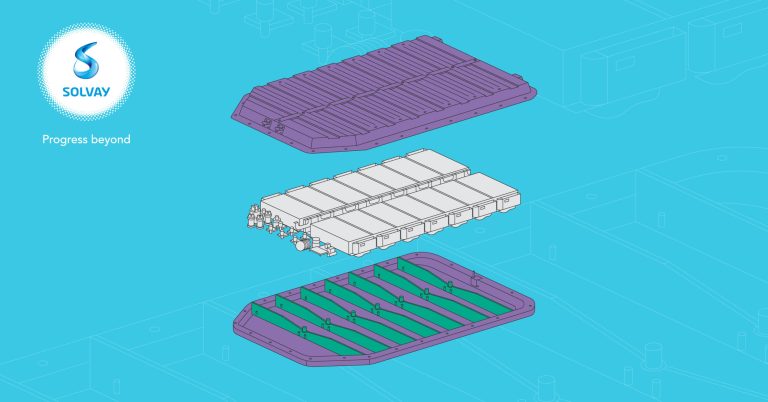
Solvay has announced that its Battery Enclosure Materials Automation (BEMA) project for developing an all-composite solution for energy efficient battery packs has won major funding by Innovate UK as part of UK Research and Innovation, the United Kingdom’s national innovation agency.
This collaboration with Airborne, a technology leader in advanced composites manufacturing using automation and digitalization, has already received letters of support from Jaguar Land Rover and Vertical Aerospace. They see great potential in the design of more compact and lightweight enclosures for high-energy batteries in future electric cars and aircraft, and are interested in the sustainability aspect of this project which aims to reuse composite waste.
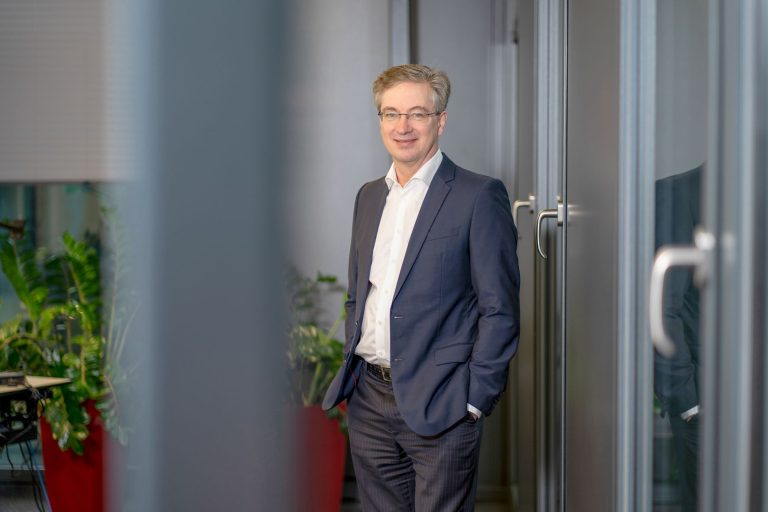
“There is a pressing need to meet net-zero emission regulations and targets with more energy efficient electric powertrain and propulsion solutions,” says Mark Wright, EMEA Sales manager, Automotive, at Solvay Materials. “While already lending structural and weight saving advantages over metals in existing EVs and aircraft, fully composite battery designs for larger production volumes have yet to show their technical and manufacturing feasibility. BEMA seeks to deliver on these challenges by combining the benefits of Solvay’s advanced thermosetting material technology with Airborne’s expertise in flexible automated composite manufacturing systems to create lightweight next-generation battery packs. This will provide a significant step-change towards higher energy efficiency at reduced size.”
“As the demand for industrial quantities of composite battery enclosures grows, the challenge is to shorten the design phase, and provide Design-for-Automation guidance” says Joe Summers, Commercial Director of Airborne. “Working with Solvay will build material characteristics into Design-for-Manufacture rules for our multi-material automated ply placement technology, and subsequently allow us to connect our adaptable automation platform with intelligent planning and optimization”.
BEMA is currently in a pre-industrial testing and evaluation stage. Mechanical impact, shielding, thermal and fire performance tests are underway at Solvay’s Composite Materials Application Centre in Heanor, UK, and at external service providers. In a next project phase, prototypes will be produced to validate the new composite battery enclosure solutions in field trials and obtain proof of concept for industrialization. The project will also address rate capability, cost and sustainability challenges. Tangible and dependable results are expected within an overall project time of two years.
Food packaging today is so much more than just protecting the individual product. It is true that the most important function, from the moment of packaging throughout transport, storage and retail, is to ensure that the contents arrive in private households in one piece. But design and material also have a large influence on buying decisions, because more and more people want food that comes in a more sustainable packaging.
Without any packaging, however, most foods cannot be transported, stored or sold, and in their unpackaged state they would prematurely spoil. The protective wrapping keeps harmful influences like light, oxygen or humidity away and prevents soiling or damages. An extended shelf-life is a meaningful contribution to reducing food waste.
Along the entire value creation chain, globally more than 930 billion tons of food are thrown away every year. This figure comes from the last report by the United Nations Environment Programme (UNEP). The Swiss society Food Waste even goes so far as to say that on average, a third of all food is lost or goes to waste on the way from the field to the plate. It is therefore part of the UN Agenda 2030 to cut the worldwide waste of food per capita in half until 2030. The authors of the Food Waste Index Report 2021 also assume that eight to ten percent of global greenhouse gas emissions stem from food which is not consumed. Packaging can help to curb this wastefulness.
Following the “Sustainable Development Goals” of the United Nations is also the SAVE FOOD Initiative, which was founded in 2011 by Messe Düsseldorf, the FAO and interpack. Their goal is to create public awareness for the issue and to develop counter strategies and solutions in cooperation with politics, society and the industry. A special focus is placed on innovations from the packaging industry. And so, a current research project by SAVE FOOD is looking for answers to the question how biodegradable food packaging could be made from food waste or from by-products of food production.
Combining protection and sustainability
But packaging is not only there to extend freshness and shelf-life. Consumers are increasingly demanding environmentally friendly packaging. It is supposed to be recyclable or made from sustainable materials, yet offer optimal protection for perishable products. And this means that especially food packaging today is a real high-tech product. For example, the company allvac Folien GmbH has developed an eleven-layer polyamide/polythethylene food wrap which is fully recyclable and for this has been awarded certification valid throughout the EU by the cyclos-HTP institute. “Offering no eco-friendly packaging solutions is no longer an option. The pressure on food manufacturers simply is too great.” says Dr. Andreas S. Gasse, CEO of allvac Folien GmbH.
The demand for film stretching lines to produce films with bi-axial orientation from polyamide is increasing.
For aroma-proof food packaging, suitable materials are polyamide films with so-called bi-axial orientation, used for example to package oily, fatty foods or frozen foods. The demand for these films, which owe their special properties to a certain stretching process, continues to rise and so does the demand for relevant film stretching lines. One manufacturer of such lines, interpack exhibitor Brückner Maschinenbau, also focuses on greater efficiency while producing the films. From a mechanical engineering perspective, this is achieved through less use of resources, less consumption of energy and a “zero waste” policy in film manufacture. Brückner has now developed matching concepts for factory lines.
Consumers want more solutions that “reduce, reuse, recycle”.
Recyclates with food contact
Greiner Packaging already uses packaging solutions made of up to 100 percent PET recyclates, so-called rPET, and wants to demonstrate that this is what the food packaging of the future could look like. With the help of the heat-resistant material rPET HTS, in the future, recycled PET is said to be usable even for products that require sterilization through heat. The packaging manufacturer has also developed a self-separating cardboard-plastic-combination which is supposed to make recycling easier. This is achieved by the cardboard wrap, which stabilizes a plastic cup manufactured with thin walls, already separating from this cup by itself during the waste collection process. Cardboard and plastic can thus already be sorted into the correct flow of material during the first separation process, meaning before the packaging even reaches the recycling plant.
The adapted protective atmosphere inside the packaging maintains the quality of fruit for a longer time.
PET recycling is a long-established process and provides recyclates for new food packaging. But other plastics, too, can be reused to manufacture packaging for food. With the chemically recycled polyamide Ultramid Ccycled, for example, BASF offers new possibilities for the development of sustainable packaging especially for the fresh goods sector. The chemical group is exploring new opportunities to use plastic waste in its “ChemCycling” project and is further developing pyrolysis technology which is used to gain new resources from plastic waste which would otherwise be energetically recycled y or sent to a landfill. “A thermochemical process lets our partners gain recycled raw materials from old plastics, which are then fed into the BASF system. By looking at the mass balance, the raw material can be tracked to certain products, for example Ultramid Ccycled. This helps to replace fossil resources and is an important step towards a circular economy. As chemically recycled plastics are equal to new products with regard to their quality and safety, the range of sustainable plastics which can be used to package fresh goods is increasing”, says Dr. Dominik Winter, Vice President of the European polyamide business at BASF.
All Syntegon machines used for packaging food have recently been made able to also process sustainable materials.
Automating the packaging process
Not only the packaging producers, the machine manufacturers have also long since adapted to the new demands. For example, recently all machines by Syntegon used for packaging food are able to also process sustainable materials. For one, carton erectors now also produce paper trays for biscuits as an alternative to conventional plastic trays. Vertical tubular bag machines as well are processing both plastics and paper-based materials. They produce for example pillow bags for frozen goods and stand-up pouches or doy bags for dry foods.
With the 3D printer Partbox, manufacturers can produce tools and spare parts on their own premises.
The shift within retail towards e-foods and the year-round need for fresh food place high demands on the flexibility of producers and manufacturers. One such solution comes from the Schubert Group and utilises robot based packaging machines. The robots were developed by the company itself and enable automation with optimum harmonization of packaging processes. They take fresh products, for example sausage or baked goods, directly from production and place them into primary packaging like trays, flat bowls or tubular bags. Often, special tools are necessary, which are adapted to the shape of the product and suitable for hygienic use in the food industry, and for which Schubert has developed its 3D printer Partbox. This allows customers to manufacture parts that are ready as quickly as possible, right on their own premises. This way, defective parts can be quickly replaced and customers can produce new formats for changed products themselves. Schubert also supplies the matching printing material plastic Partbox Black. It conforms to food hygiene standards, has good mechanical properties and a high resistance to temperature.
Crisp and clear: QR code applied by laser to a compostable film.
Marking compostable film without printing
In order to provide optimum solutions to companies for coding and marking their food packaging, at the Domino Laser Academy in Hamburg, experts from the company are researching and experimenting with new substrates. “We spend a lot of time analysing new packaging materials. Due to the new European legal requirements for recycled plastics, around 95 percent of the food packaging samples we need to test are recycled or recyclable plastics. Our fibre and uv lasers offer many good solutions for coding these substrates. We are however convinced that in the coming years, the demand for compostable solutions will increase. We therefore want to be prepared to offer our customers relevant advice and solutions for these new materials”, says Dr. Stefan Stadler, team leader at the Domino Laser Academy. According to this focus, the laser team has tested the compostable NatureFlex film products by the Japanese company Futamura regarding their suitability for laser coding. The laser produces a crisp, white code on the film without damaging the integrity of the original film, changing the chemical composition, or affecting the properties of the moisture barrier. The print-free coding method does not require additional materials on top of the compostable substrate, which should make gaining certification for the final packaging much easier.
A new filter for bacteria made by SMC Deutschland drastically reduces contamination.
No hygiene is no option
Packaging manufacturers in the food industry are obliged to follow strict legal regulations which among other things demand a high level of hygiene. But hygiene is more than just cleaning and disinfecting. Many applications, for example in the food sector, use compressed air. If this comes into direct contact with food or is used for cleaning, it must not be contaminated with germs, either. SMC Deutschland has developed a new filter for bacteria that meets the strict hygiene requirements of the food industry. With a filter performance of 99.99 percent, it makes sure that international food standards can be met. This applies to the use of compressed air to open or keep open packaging during filling, for cleaning off residual food, powder or dough, or blowing nitrogen into the packaging to prevent food from oxidising.
The food sector is among the most favoured target groups of visitors to interpack, and this shows in the breadth of their presentation. At the world’s leading trade fair for Processing & Packaging in Düsseldorf from 4 to 10 May 2023, visitors can discover which sustainable solutions for the future the food industry has ready. The food industry is mostly located in Halls 5 and 6 as well as 11 to 14.
Further information on interpack is available at www.interpack.com
Modern Plastics Nepal a Much Awaited Platform for the Plastics Industry for Knowledge Sharing and Much More
Modern Plastics India and Modern Plastics Global Network is Happy to Announce the launching of Modern Plastics Nepal. The inaugural issue will be published during Nepal 5P Exhibition, one of the largest shows in Nepal with its third edition, we will be publishing Modern Plastics Nepal Show daily also for the first two days.
The launching of Modern Plastics Nepal magazine would provide a new platform for the plastics industry in Nepal. It would create a space for businesses, manufacturers, and industry professionals to share their insights and experiences in the Nepalese plastics industry.
The magazine would serve as a valuable source of information and insights for industry professionals, covering a wide range of topics related to the plastics industry in Nepal. It could provide comprehensive coverage of the latest developments, trends, and innovations in the industry. Additionally, it could offer analysis and commentary on the impact of government policies, market competition, and emerging technologies on the industry.
Modern Plastics Nepal could cover various topics related to the industry, including raw materials, machinery, processing techniques, new product developments, regulatory issues, and market trends. It could also provide insights into the challenges and opportunities facing the plastics industry in Nepal, including the impact of government policies, market competition, and emerging technologies.
Furthermore, Modern Plastics Nepal could feature interviews with industry leaders, product reviews, case studies, and research articles. It could also serve as a platform for advertising and marketing plastic products and services, helping businesses reach their target audience more effectively.
The magazine’s launch could also contribute to the growth of the plastics industry in Nepal by promoting the industry and raising awareness of its potential. It could attract investment in the sector and create new business opportunities for local manufacturers and suppliers.
Overall, the launching of Modern Plastics Nepal magazine would provide a much-needed platform for the plastics industry in Nepal, creating opportunities for knowledge sharing, business networking, and industry growth.
Leading: pioneer in digitalisation and sustainability
Chinaplas is the most important trade fair in Asia for Arburg. From 17 to 20 April 2023, two important, pioneering innovations will be presented in Shenzhen: the Flexlift, a robotic system specially designed for the Asian market, and the new hybrid Allrounder 470 H, which Arburg is launching to mark the anniversary of “100 years of the Hehl family company”. Furthermore, the 400 square metre Arburg stand no. 10J21 in Hall 10 will impressively feature the two key topics of digitalisation and sustainability, as well as an Allrounder 1600 T rotary table machine, an Allrounder 370 H and a Freeformer 300-3X for industrial additive manufacturing.
Chinaplas is held alternately in Shanghai and Shenzhen. In 2023, the latter metropolis will play host to more than 3,900 exhibitors from all over the world, who will present themselves at the 35th edition of Chinaplas on the grounds of the Shenzhen World Exhibition & Convention Center (SWECC). “The Chinese market is the largest for injection moulding in Asia. The demand for high-end solutions is growing very rapidly and we can offer excellent, market-adapted solutions with our know-how,” says Zhao Tong, Managing Director Arburg China. “We have a particular focus here on turnkey applications with post-injection assembly for the large-scale productions of our customers from the medical, mobility and electronics sectors. This is complemented by digital management and important individual services and training. Most of the automation components and tools come from Asian suppliers and have been assembled and intensively tested at the Arburg Technology Factory Pinghu, China.
Premieres: Milestone machine Allrounder 470 H and Flexlift robotic system
“Highlights of the trade fair presentation are, of course, the anniversary ‘100 years of the Hehl family company’ and the new Allrounder 470 H that Arburg has launched to mark the occasion,” emphasises Zhao Tong. “With this exhibit, we are even celebrating two premieres: that of the milestone machine and that of the Flexlift robotic system, which was specially developed for the Asian market and is also only available there.
The Allrounders 470 H milestone machine is available in Comfort and Premium performance variants. The focus of these new developments was on increasing efficiency, optimising the energy footprint and reducing the cycle time. Highlights include the new oil management concept, throughput splitting enabling simultaneous movements of the axes, servo hydraulics and the high level of user-friendliness in day-to-day operation thanks to optimised connections and interfaces.
Turnkey system for medical technology
At Chinaplas, the anniversary machine Allrounder 470 H Comfort will produce adapters for the medical market using PC (polycarbonate), in a three-platen mould with 2+2 cavities. The cycle time is 25 seconds. The moulded parts are removed by the Flexlift 10+2 double-arm robot, the main arm can handle a payload of ten kilograms, while its second arm can lift loads weighing two kilograms.
The new Allrounder 470 H saves energy, conserves resources, is production-efficient, user-friendly and reliable.
The entire turnkey system that also has an integrated camera test and a sample part drawer for quality assurance purposes, was designed, built and commissioned in the Arburg Technology Factory Pinghu. The gripper component of the Flexlift was also manufactured there in an additive manufacturing process on a Freeformer 300-3x. A live demonstration of the Freeformer at Chinaplas will show how to manufacture a hard-soft compound from PC/ABS and TPU for grippers.
Digital and sustainable into the future
Arburg is not only well positioned and represented in Shenzhen with its machine technology, but is also well prepared for future requirements in the areas of digitalisation and sustainability. Two digital terminals with the Arburg host computer system ALS and the functions of the arburgXworld digital customer portal are on display. Two additional info points will provide more information on the arburgGREENworld programme for the circular economy, carbon footprint and resource conservation, as well as on Arburg services. Zhao Tong outlines the strengths of the offer: “In addition to injection moulding machines, we offer a wide range of services, consulting and digital solutions. We help our customers with high-end technology to produce their products even cheaper, faster and with even higher quality.”
The customer portal „arburgXworld“ links customers with Arburg.
Automated Allrounder 370 H for fast cycles
Of particular interest to trade visitors from the electronics industry is the Allrounder 370 H Ultimate with Gestica controller, 600 kN clamping force and size 290 injection unit: with a fast cycle time of just seven seconds and a 16-cavity injection mould, the exhibit produces relay sockets from a 30 per cent glass-fibre-filled PBT. The Flexlift 5 with a payload of five kilograms removes the sprue and the moulded parts, which are then deposited separately downstream according to cavities.
Allrounder 1600 T: Six-axis robot at work
Finally, the Allrounder 1600 T with 2,000 kN clamping force and size 170 injection unit is likely to attract the attention of customers from the mobility sector. Supported by a Kuka six-axis robot with a load capacity of ten kilograms, fluid connections and connecting parts are produced from polyamide 6 with 35 per cent glass fibre content (PA6 GF 35) and metal inserts. The products are produced in a 4-cavity mould in a cycle time of around 40 seconds. This automated turnkey system was customised to include a punching unit with punching strip conveyor and a PIN removal system. The Kuka six-axis robot was also implemented at the Arburg Technology Factory Pinghu.
The Flexlift robotic system was specially developed for the Asian market and is also only available there.
Further information about Arburg can be found at www.arburg.com
Constantia Flexibles Signs Agreement to Acquire Drukpol Flexo
Constantia Flexibles, the third largest producer of flexible packaging worldwide, has signed an agreement to acquire the Polish company Drukpol Flexo.
“We are delighted by this opportunity to invest in the growth of our European flexo printing platform whilst reinforcing our successful footprint in Poland,” said Pim Vervaat, CEO of Constantia Flexibles. On March 2nd, 2023, Constantia Flexibles has agreed to acquire the Polish flexible packaging company Drukpol Flexo sp. Z.o.o. “I am convinced that Drukpol Flexo has found the right partner for the future and continues to grow under Constantia Flexibles’ wings,” states the founder and owner of Drukpol Flexo, Zenon Ziemak.
Founded in 1992, the company has grown to 183 employees and is a well-established player in the Polish flexible packaging market with strong capabilities in flexo printing, extrusion lamination, and vertical integration. Drukpol Flexo mainly serves domestic food and HPC markets for local and international customers. It brings two additional sites close to Poland’s capital, Warsaw. Therefore, it is highly complementary to Constantia Flexibles’ existing sites Constantia Teich Poland in Rogowiec and Constantia ColorCap in Jejkowice.
By becoming part of Constantia Flexibles, Drukpol Flexo has the possibility to continue its growth and enhance its offering with the more sustainable product portfolio of Constantia Flexibles.
Terms are not disclosed. The acquisition is subject to competition clearance and other closing conditions, and completion is expected in Q2 2023.
KRAIBURG TPE, a global thermoplastic elastomer manufacturer with a diverse range of products and custom solutions for a variety of industries, offers the FC and LW/UV series of TPE compounds for high performance racquet and other sports equipment applications.
Selecting the right racquet equipment based on factors such as balance, shaft stiffness and flexibility, weight, grip size, and string properties is important for comfort of the user.
Advanced materials, such as thermoplastic elastomers (TPEs), have good mechanical properties and provide lightweight solutions that appeal to racquet sports equipment manufacturers.
KRAIBURG TPE, a global thermoplastic elastomer manufacturer with a diverse range of products and custom solutions for a variety of industries, provides multifunctional, custom-engineered TPE compounds for use in racquets and other sporting goods. The non-toxic compounds provide flexibility, scratch and abrasion resistance, and UV, temperature, and chemical resistance.
KRAIBURG’s TPE series of compounds result in stylish and colorfully-designed rackets, since pre-coloring is available for the compounds. The TPE compounds can be used on the handle and grip, surface, and other areas of sporting equipment like racquets.
FC series – food-safe, excellent PP adhesion
With the FC series, which complies with DIN EN 71-3 requirements, the US FDA’s Code of Federal Regulations (CFR), Title 21, and EU Regulation No.10/2011, as well as halogen-free (per IEC 61249-2-21) standards, there is no compromising on safety.
The FC series of compounds adheres well to PP resin and the compounds come in two colors: natural and translucent. With this, the TPE series can be colored in a variety of ways.
The series is suitable for the surface of racquets, anti-vibration caps, and for use in table tennis paddle applications.
LW/UV series – light weight, non-sticky surface
The application of KRAIBURG TPE’s LW/UV series of compounds ensures ease and comfort of use. The low-density, UV and weathering resistant series is especially suitable for application in handles and grips for lightweight racquets that enable quick stroking speeds, recovery, and manoeuvrability for beginners because it produces a non-sticky surface that ensures ease of comfort for the racquet user.
Furthermore, the LW/UV series adheres well to PP resin, thereby allowing for multi-component molding and production of a variety of designs for sporting equipment.
Chlorinated Polyethylene Resins and Elastomers (CPE) Market is set to Reach US$ 1.29 Bn at a CAGR of 8% from 2022-32 | Future Market Insights, Inc.
The global chlorinated polyethylene resins and elastomers (CPE) market stands at US$ 600 Mn as of now and is expected to reach US$ 1.29 Bn by the year 2032 at a CAGR of 8% from 2022 to 2032.
Chlorinated polyethylene resins and elastomers (CPE) come across as thermoplastic polymers that exhibit improvised chemical and physical properties. The application areas include thermoplastic elastomer and modifiers for polyethylene (PE), acrylonitrile butadiene styrene (ABS), and PVC (polyvinyl chloride). They are preferred mainly as they offer protection against heat, fire, oil, chemicals, weather, and abrasion.
The other advantages are inclusive of exceptional physical and mechanical properties, tensile strength, higher-filler acceptance, and low-temperature performance. PVC is being increasingly used for PVS siding, doors, pipes, and fences with upgradation in building and construction sector.
Geomembranes are amongst the major applications of chlorinated resins and elastomers. They could be used as impact modifiers as well as flexible sheeting for roofing membranes, automotives, molded shapes, cable jacketing, and extruded profiles, and ultimately as a base polymer. It needs to be noted that impact modification is the biggest application of chlorinated polyethylene resins and elastomers, as far as consumption is concerned. It is used to impact modify PVC for vinyl sliding, pipes, window profiles, deck, and fence.
At the same time, the fact that prices of raw materials are volatile can’t be ignored. Also, prices of crude oil are skyrocketing. Polyethylene is made from the crude oil derivatives. As such, it gets directly affected by the factors mentioned above. Also, various economies are laying down strict regulations regarding the use of polyethylene in the interest of environment. These factors are likely to restrain the chlorinated polyethylene resins and elastomers (CPE) market in the near future. Future Market Insights has, through its line of expertise in the form of analysts and consultants, highlighted these findings with future perspectives in its latest market study entitled “Chlorinated Polyethylene Resins and Elastomers (CPE) Market”.
“Impact modification is expected to expedite the chlorinated polyethylene resins and elastomers (CPE) market”, says an analyst from Future Market Insights.
Key Takeaways from Chlorinated Polyethylene Resins and Elastomers (CPE) Market
North America is going steady with respect to chlorinated polyethylene resins and elastomers (CPE) market. This could be attributed to excessive usage of PVC in wires, tubing, coatings, cables, and molded products. Personal care products like eyeliners, eyebrow pencils, eye shadows, lipstick, mascara, foundations, and likewise also use PVC.
Europe is expected to witness a CAGR of 12% in the chlorinated polyethylene resins and elastomers (CPE) market on the grounds of the fact that the EU is handsomely investing in pharmaceutical sector. Also, processed food vertical is poised to witness an immense growth herein.
The Asia-Pacific is led by China as it is the largest consumer of chlorinated polyethylene resins and elastomers (CPE) for hoses applications and impact modifiers. On the whole, the construction and electrical verticals are driving the flexible sheeting vertical.
Competitive Landscape
Dow, Inc., in October 2021, entered into partnership with Haldor Topsoe A/S with the objective of efficiently converting waste plastics to the circular plastics, thereby reclaiming their value.
ES-IJ series from Sundow is an exclusive type of polyester-based thermoplastic polyurethane elastomer. The basic application areas encompass injection molding products. The features include fast molding, proper flexibility, higher transparency and resilience, proper abrasion resistance, good hand feeling and texture, and explicit mechanical properties.
Lianda, since the last 2.5 decades, has been providing specialty polymers and performance chemicals to the markets dealing in plastics, adhesives, and elastomers. These specialty polymers comprise FKM (fluoroelastomers), CSM (chlorosulfonated polyethylene), CR (polychloroprene), EPDM, CO/ECO (epichlorohydrin, and likewise.)
FMI’ Analyst view: Rapid urbanization leads to 100% Biodegradable Thermoformed for food packaging – How and why is the United States Market witnessing high demand?
As per the latest market research conducted by FMI, the global thermoformed containers market is expected to record a CAGR of 4.6% from 2023 to 2033. In 2023, the market size is projected to reach US$ 19.9 billion. By 2033, the valuation is anticipated to reach US$ 31.6 billion.
Thermoformed containers are products made using a thermoforming process where the closed-cell foams or rigid plastics are heated to a pliable temperature. These are molded using pressure and vacuum forming techniques for the desired shape.
These containers are gaining popularity owing to attributes such as lightweight, durability, water resistance, cost-effectiveness, and reusability. On account of this, the containers such as clamshells, blisters, trays & lids, and bowls are being adopted across diverse industries. Such factors are expected to surge the thermoformed containers market growth.
The consumption of packaged food and beverage products such as fresh fruits, vegetables, meat, dry fruits, and beverages has been experiencing an exponential surge. Rapid urbanization, which has led to changes in usage patterns can be attributed as the main factor.
There has been a surging demand for ready-to-eat and drink products owing to the fast-paced lifestyle, especially across developing countries such as China and India. This has created strong demand for lightweight, recyclable, and reusable packaging solutions. Such factors might increase the adoption of thermoformed containers during the forecast period.
Hence, leading players in the market are increasingly focusing on mergers and acquisitions to expand their production capacity and product portfolio. For instance, in 2018, Universal Plastics Group, a leading provider of packaging solutions announced the acquisition of Kintz Plastic to expand its production capacity.
North America is projected to be the leading market for thermoformed containers. The existence of an organized food sector is one of the key factors, which has led to the growth of the thermoformed food containers market. There is also a high consumption of packaged food, which has led to the increased application of thermoformed packaging.
As per CAGR, Asia Pacific is anticipated to hold the dominant position. Rapid urbanization, coupled with a sedentary lifestyle which has led to shifting consumption patterns is expected to increase sales.
Country-wise Insights
Why is the United States Market Witnessing High Demand?
The United States is projected to dominate North America, which is expected to account for nearly 37.8% of the total market share in 2023.
Surging demand for durable packaging solutions is expected to spur sales. A growing trend of pursuing artistic activities such as painting is compelling manufacturers to launch trendy and consumer-convenient solutions such as paint trays and others. This has consequently led to the growth of thermoformed trays market.
For instance, in 2020, LINDAR Corp., a leading plastic thermoforming manufacturer, launched a new range of thermoformed PAINTWELL products. These included paint trays, heavy gauge plastic parts, and paint tray liners. A slew of such product launches is estimated to bolster the sales of thermoformed plastic trays in the United States.
What are the Factors Driving the Market in Germany?
Germany is anticipated to emerge as a lucrative market for thermoformed containers in Europe over the forecast period.
A rapid shift in customer preference towards novel blister packaging from traditional bottles is spurring demand in the pharmaceutical industry. These containers protect medications from oxygen and moisture, as a result of which the pharmaceutical players are investing millions in thermoformed packaging trays market.
Also, ease of transportation and low cost of thermoformed blister packaging encourage industry players to adopt this solution. Driven by the growing adoption of thermoformed blisters in Germany, the Europe market is projected to account for nearly 28% of the total market share.
Electric vehicles (EVs) are powered by a battery and electric motor instead of a gasoline tank and internal combustion engine. EVs (sometimes referred to as battery electric vehicles, or BEVs) have surged in popularity as manufacturers have expanded their lineup of sustainable, battery-powered vehicles.
EVs are powered by electricity from the power grid (similar to other household appliances, like a refrigerator or a TV) and store that energy in rechargeable batteries. These batteries power the electric motor, which turns the wheels and moves the car forward.
Why choose an EV?
There are several reasons why more consumers are choosing to drive electric vehicles. Here are a few of the most popular benefits of EVs:
More environmentally friendly. EVs run on electricity, so they don’t emit exhaust from tailpipes or rely on gasoline, a fossil fuel that produces carbon dioxide when burned. Carbon dioxide and other fossil fuels contribute to climate change and harm the environment. While the EV manufacturing and production process does produce carbon dioxide, the amount is offset over the lifetime of an EV because the vehicle doesn’t rely on gasoline.
Lower maintenance requirements. EVs require very little routine maintenance compared to traditional gas-powered vehicles. They don’t need oil changes, the breaks wear out much slower, and there are fewer moving parts in need of routine repairs or replacements.
More affordable fuel costs. With an EV, you fuel your car with electricity from home or a public charging station. You can skip the gas station entirely and will be less susceptible to spikes in gasoline prices.
What are the different types of electric vehicles?
When it comes to EVs, there are a few different options to choose from. Some EVs are completely electric — these are the ones that are also referred to as BEVs. There are other types to know about if you are considering an electric vehicle.
Plug-in electric vehicles: These vehicles are powered entirely by a battery and electric motor. You plug this vehicle into an outlet or charging station for it to receive the electricity it needs to run. Electricity is the only fuel source for EVs.
Plug-in hybrid vehicles (PHEVs): With a plug-in hybrid, the vehicle’s main fuel source is electricity. However, it also has a traditional fuel engine that can use gasoline if the electricity supply runs low. Having a backup fuel supply can be a huge benefit for drivers who experience EV range anxiety.
Hybrid vehicles: Hybrids are similar to plug-in hybrids, but their main fuel source is gasoline. They do have a smaller electric battery, which is charged through regenerative braking. Hybrids let you switch between a regular gas-powered vehicle and “EV mode,” which will normally only work at slower speeds or short distances. You cannot plug these vehicles into a charging station — the battery receives a small charge when you brake.
How to charge your electric car at charging stations
One of the primary benefits of EVs is the variety of charging options. Consumers can charge their vehicles at home or use public charging stations. Here is a breakdown of the different charging methods available.
What are the different levels of charging
There are three levels of charging: Level 1, Level 2, and Level 3. The higher the level, the faster the charge time because more electricity is flowing into the vehicle.
Level 1 charging (120-volt). Level 1 charging uses a household outlet, which is why this is the slowest charging level. With Level 1 charging, you can expect your vehicle to receive between three and five miles of range per hour. If you own a hybrid vehicle, Level 1 charging might work fine because hybrid vehicles have smaller batteries that hold less charge. But for people with a fully electric vehicle that they drive daily, Level 2 or Level 3 charging are better for everyday use.
Level 2 charging (208-volt to 240-volt). Level 2 charging is the most common form of charging for EVs driven daily. Consumers can purchase and install a Level 2 charger at their home. Many public charging stations also use this type of charger. With a Level 2 charger, a vehicle can charge between 12 and 80 miles of range per hour. For drivers charging their EV at home, this means you can plug your car in at night and it will be fully charged by morning.
You can shop for Level 2 chargers through SaveOnEnergy.com. We partner with top-tier energy, solar, and EV companies to bring electricity solutions to your home.
Level 3 charging (400-volt to 900-volt). This is the fastest charging available, delivering between three and 20 miles of range per minute. Level 3 chargers (often called DC Fast Chargers) use direct current (DC) electricity instead of alternating current (AC) electricity and deliver a much higher voltage than Levels 1 and 2. Tesla refers to its Level 3 chargers as Superchargers. These chargers are rarer than Level 2 chargers due to the high price tag and high-voltage requirements.
What are the different types of connectors
You will need to use a charging station with a connector that is compatible with your EV. Level 1 and Level 2 chargers use AC connectors to power vehicles. There are two types of AC connectors:
Type 1 — a single-phase plug that allows you to charge your EV up to 7.4 kilowatts (kW) and 25 miles per hour of charging.
Type 2 — a triple-phase plug that allows you to charge your EV up to 22 kW and 75 miles per hour of charging. Type 2 connectors are most common for new cars.
Unlike Levels 1 and 2, Level 3 chargers use DC connectors. There are three types of DC connectors:
CHAdeMO — This is the original DC connector developed in Japan and is only sold by Nissan and Mitsubishi in the U.S. Because it is compatible with Level 3 chargers, this connector allows you to charge up to 100 kW and 150 miles for every 30 minutes of charging.
Combined Charging System (CCS) — CCS connectors are more common in North America and are used by most auto manufacturers, including General Motors, Ford, Jeep, Dodge, and many others. This connector enables up to 350 kW and 525 miles for 30 minutes of charging.
Tesla/Type 2 — Tesla Superchargers are currently the only chargers compatible with Type 2 connectors. These connectors result in up to 250 kW and 375 miles for 30 minutes of charging.
EV charging cost
The cost to charge an electric vehicle will depend on several factors, including your electricity rate, how many miles you drive on average, and the time of day. The average EV gets between three and four miles per kilowatt-hour (kWh) of electricity. To calculate the cost to charge your vehicle at home, you’ll need to do some math.
The average American drives 1,202 miles per month. In September 2022, the average U.S. electricity rate was 16.32 cents per kWh. If we assume an EV receives four miles per kWh, we know that the EV will use about 300 kWh in a month. This will cost $49.05 to charge at home each month.
Electricity rates vary greatly by state, as do the average miles per kWh for various EVs. In general, charging an EV at home overnight will usually be the cheapest option, although the cost to charge at public charging stations remains lower than the average cost to fuel a gas-powered vehicle.