Wednesday, July 1, 2026
spot_img
Home Blog Page 185

EcoDC MACS: More Power with Less Energy Consumption

EcoDC MACS: More Power with Less Energy Consumption

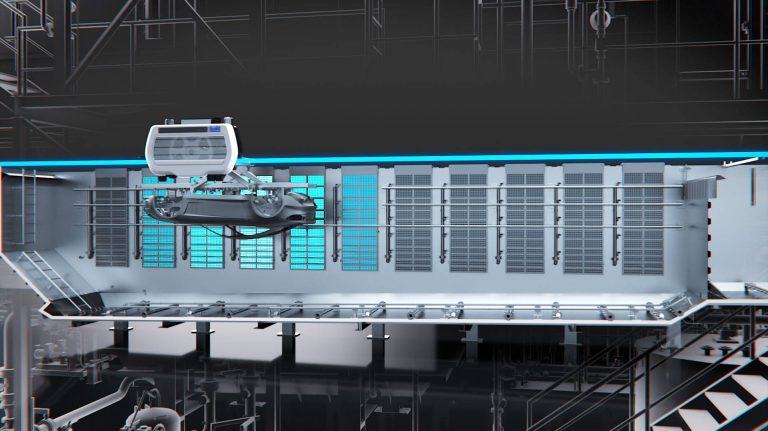
Dürr’s new EcoDC MACS rectifier for cathodic electrocoating provides 50 percent more power with the same space requirement, making it possible to design the layout of new plants more flexibly and easily increase existing plants’ capacity. The new rectifier also saves energy and cuts operating and investment costs due to increased efficiency.

Until now, the immersion step of cathodic electrocoating could only be split into a few areas when using conventional thyristor rectifiers. If a rectifier failed, then a big part of the coating current was unavailable, resulting in imperfect coating and an unusable body. This risk no longer exists with EcoDC MACS because Dürr split the previously large thyristor rectifiers into lots of small rectifier modules, each of which supplies voltage to just a small section of the tank. The failure of one rectifier no longer negatively impacts coating quality. Since the smaller units cost just a fraction by comparison, the investment for replacement units is significantly reduced.

Another advantage of the division into many small units is that EcoDC MACS can control small anode groups down to the individual anode. This allows much more precise voltage regulation in the immersion bath and enables optimized voltage profiles – flexibly designed for many body models.

Higher efficiency through silicon carbide semiconductors

Dürr has increased the EcoDC MACS’ efficiency up to 96 percent by replacing the conventional IGBT modules (insulated-gate bipolar transistor) with modern semiconductors made from silicon carbide (SiC). This results in more power with less waste heat and a lower cooling air requirement, translating to energy savings. A sample calculation for a paint shop with 58 bodies per hour proves the difference in effective power because of the SiC semiconductors’ higher operational efficiency is around 45 kW. Assuming 20 hours of production per day, 230 working days per year, and an electricity price of 0.21 euros per kWh, this results in an energy cost reduction of more than 43,000 euros per year in addition to savings from improved network quality and minimal reactive power.

Active harmonics compensation

Another innovation is the linear current consumption made possible by the integrated Active Front End (AFE) technology. The technology balances harmonic currents, which in the worst case, could result in plant shutdowns and stoppages. AFE does away with the need to invest in another compensation system since the power factor increases to ≈1. In addition, the active harmonic compensation guarantees compliance with the legal limit values for the supply voltage quality.

Simplified troubleshooting

Dürr has also optimized data transfer from the rectifier module to the control unit. Data is now transferred via a customary Profinet or Ethernet IP interface instead of through a special ring bus system, simplifying troubleshooting and guaranteeing higher plant availability. A powerful bus system is also an important prerequisite for Industry 4.0 solutions with additional diagnostic options.

Higher voltage for new paints possible

With the new SiC rectifier modules, plant operators are optimally prepared for new requirements arising from future paints possibly requiring higher coating currents or voltages. EcoDC MACS is rated for a higher direct current of up to a maximum of 450 V DC and more current per rectifier mode of up to 120 A DC. The new SiC rectifiers were already installed in two plants where they ensure that the plants function at the optimal operating point and produce the best possible coating results. SiC rectifiers replace the IGBT technology on the market for around ten years but can also be retrofitted in place of conventional thyristor rectifiers.

www.durr.com


#modernplasticsindia #plasticmagazine #indianmagazine #indianplasticmagazine #modernplasticsaward #ginujoseph #modernplastic #plasticindia #plasticnews #plasticrecycling #modernplasticsglobalnetwork #modernglobalnetwok #modernplasticsaward2023 #PlasticIndustry #durr

Sumitomo (SHI) Demag Doubling Machine Production Capacity in China

Sumitomo (SHI) Demag Doubling Machine Production Capacity in China

Solar-powered Ningbo factory expansion underway, boosting production capacity for Asian markets and catering to rising demand for higher tonnage moulding machines up to 1,500 ton clamp force.

Sumitomo (SHI) Demag China has hosted a groundbreaking ceremony in the presence of local political figures at its Ningbo site, welcoming the start of construction for its new 4,000 square metre production hall. Attended by the mayor and city councillors from the Beilun district, CEO Pietro Scattarreggia marked the occasion announcing that the bigger facility sets the path for future growth, creating 50 new jobs and doubling production capacity.

Granted permission to commence construction towards the end of 2022, Scattarreggia reports that the new facility is set to open in autumn 2023 to coincide with the Group’s 25th production anniversary in China. Putting into context the enormous market potential, the CEO affirmed that the Asian market in general, particularly automotive and electromobility in China, is booming. “Having experienced the strongest performance in the company’s history in 2021 and subsequent economic slowdown last year as a result of coronavirus policy restrictions, the future outlook remains very positive,” Scattarreggia confirms.

The expansion of the Ningbo production hall not only gives the team more space to manufacture more machines, but also expand production to include the larger tonnage Systec Servo machines. “Until now, our production has been limited to machines with clamp forces up to 1,000 tons. Given the demand for larger precision components, being able to extend our product portfolio up to 1,500 tons means we can drastically reduce delivery times for customers in China and Asia,” reports Scattarreggia. He cites this above all else as the strategic rationale for the expansion.

With its hybrid drive concept, the Systec Servo series, characterised by its absolute precision, excellent stability and durability, offers manufacturers of automotive, white goods and consumer components a powerful and energy efficient system. With full process integration for flexible and versatile production of larger components.

The Systec series is ideally suited to these processing requirements, reports Scattarreggia. To support the manufacturing of these larger and heavier machines, the Ningbo production hall is installing stronger cranes.

Additionally, Sumitomo (SHI) Demag China remains committed to reducing its production carbon footprint. An installation of a new solar system measuring 7,000 square metres last September means that the facility can operate virtually independent of the local energy supply, claims the CEO.

In recent years, many production sites in China have felt the impact of power rationing. With a solar source, the Ningbo facility will no longer be affected by future rations. “This is of great significance for production stability,” ends Scattarreggia.

www.sumitomo-shi-demag.eu


#modernplasticsindia #plasticmagazine #indianmagazine #indianplasticmagazine #modernplasticsaward #ginujoseph #modernplastic #plasticindia #plasticnews #plasticrecycling #modernplasticsglobalnetwork #modernglobalnetwok #modernplasticsaward2023 #PlasticIndustry #sumitomoshidemag

Propak Launches Into Ghana to Support the Industrial Transformation and Boost the Local Manufacturing Industry

Propak Launches Into Ghana to Support the Industrial Transformation and Boost the Local Manufacturing Industry

The organisers behind West Africa’s largest manufacturing event have announced the launch of the latest edition in their portfolio; Propak Ghana.

Propak Ghana will focus its attentions on the packaging, plastics, printing and processing sectors in Ghana and its neighbouring countries and act as a catalyst for business connections and growth. The exhibition will take place from the 6th – 8th June 2023 at the Grand Arena in the centre of Accra.

With a verified audience of 2,500 visitors descending on Accra to interact with 120+ brands on display it promises to be a melting pot of ideas, commerce and knowledge sharing, that will help support these key manufacturing sectors in the region and provide access for international brands looking to expand their footprint in the region.

Ghana’s population of 31 million, commands the second largest GDP in West Africa of $72.35bn, with the manufacturing sector making up 18.27% of this, demonstrating its importance to the economy. With Ghana’s Industrial Transformation Agenda that incentivises growth and investment in the manufacturing sector and the continued rise in its population and economic prowess, Accra is the obvious choice for Propak to locate its next event.

“We are hugely excited about this latest development, we’ve been running Propak West Africa in Nigeria for the last 10 years which has built up a reputation as the leading event for the sector in the region.” says George Pearson, Regional Director for Afrocet Montgomery who are organising the event. “We have always seen Ghana as the next opportunity to expand the reach of the portfolio due to its stability and prosperity. After in depth research and discussions with stakeholders we feel the time is now right to launch the exhibition to coincide with the growth in the sector and optimism in the manufacturing community following the pandemic.”

With a number of major local and international players, international pavilions and trade associations already signed up including, CCI France Ghana, Canada Ghana Chamber of Commerce, Ghana Nigeria Business Council, Food & Beverage Association of Ghana and the Ghana Printers & Paper Convertors Association to name a few, the exhibition is on sure footing to quickly become Ghana’s premier platform for the industries it serves.

To find out more about the event, the organisers and other Propak events across the African Continent please visit www.propakghana.com


#modernplasticsindia #plasticmagazine #indianmagazine #indianplasticmagazine #modernplasticsaward #ginujoseph #modernplastic #plasticindia #plasticnews #plasticrecycling #modernplasticsglobalnetwork #modernglobalnetwok #modernplasticsaward2023 #PlasticIndustry #propakghana

Covestro India Joins Hands with United Way Mumbai to Put the “Jal Sanjivani” Program into High Gear in Solapur District

Covestro India Joins Hands with United Way Mumbai to Put the “Jal Sanjivani” Program into High Gear in Solapur District

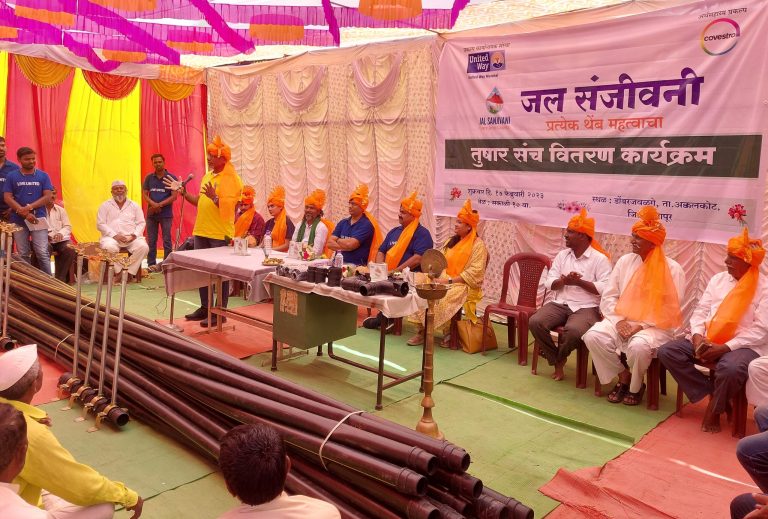
Leading producer of innovative polymers and sustainable solutions provider Covestro and its NGO partner United Way Mumbai came together on 17th February 2023 to flag off a unique project- Jal Sanjivani. Jal Sanjivani is an integrated watershed management program aiming to build a climate-resilient agrarian community.

Covestro is supporting over 400 farmers in the Solapur and Raigad District with much-needed sprinkler and nozzle sets for micro-irrigation through this program. Kavita Desai, Head of Corporate Communications of CSR, Covestro (India) Private Limited, and Shireesh Kumar Jain, Head of Procurement, Covestro (India) Private Limited, were part of the distribution ceremony, representing Covestro India in Solapur on the 17th of Feb 2023. 90 farmers were given the sprinkler sets during this ceremony.

“United Way Mumbai’s Jal Sanjivani project aims to provide sustainable solutions to drought-affected agrarian communities in Maharashtra, India. The focus of the project is to protect and increase the surface and groundwater, improve agricultural efficiency, create alternate livelihoods for farmers, and promote sustainable agri practices. At Covestro (India), we are happy to support this project by distributing sprinkler sets for micro-irrigation to over 400 farmers in Raigad and Solapur districts in Maharashtra. This fosters our vision to bring in a sustainable change at the community level, to make the world a brighter place.” – Kavita Desai, Head of Corporate Communications & CSR, Covestro (India) Private Limited.

Shireesh Kumar Jain, Head- of Procurement, Covestro (India) Private Limited, added, “The process of creating and implementing plans and programs that aim to enhance and sustain human communities is not just satisfying but humbling as well. We hope this program plays an important role in securing water and food security for these areas for many years.”

  • The villages that benefitted from this initiative include:
  • Dombar Jawalge, Halhalli, Teerth and Barhanpur in Solapur district and;
  • Khandas, Ambherpada, Pathraj and Nandgaon in Raigad district

www.covestro.com


#modernplasticsindia #plasticmagazine #indianmagazine #indianplasticmagazine #modernplasticsaward #ginujoseph #modernplastic #plasticindia #plasticnews #plasticrecycling #modernplasticsglobalnetwork #modernglobalnetwok #modernplasticsaward2023 #PlasticIndustry #covestro

Saving Trick for Plastic Recycling by Bacteria

Saving Trick for Plastic Recycling by Bacteria

Scientists at the Max Planck Institute in Marburg have developed a more efficient, carbon dioxide-saving way for the bacterial utilization of ethylene glycol, a component of the plastic PET. They equipped the bacterium Pseudomonas putida with a new metabolic pathway discovered in marine microbes, which led to improved growth. Their findings offer new opportunities for the microbial degradation of PET, but also for the further development of sustainable material cycles.

Plastic is everywhere. In 2017, the annual plastic production worldwide was 350 million tons. A significant amount of it ends up in the environment, and plastic pollution threatens the health and livelihoods of all living things and the stability of ecosystems. At the same time, valuable raw materials are lost that could be used in a sustainable way.

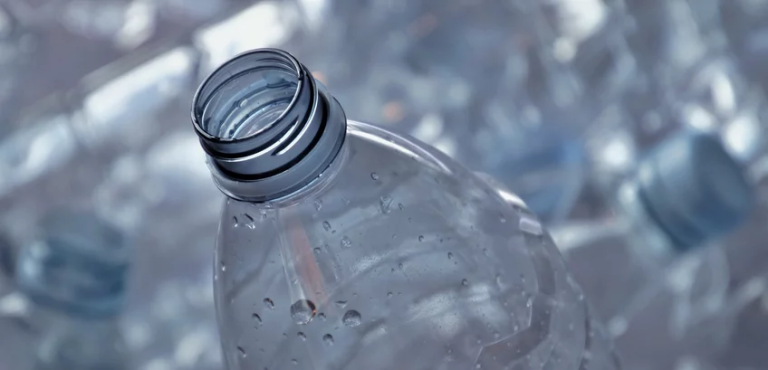
One hope of research lies in the possible degradation or recycling of plastic by microorganisms. Since the discovery of the “PET-eating” bacterial species Ideonella sakaiensis in 2016 , much research has focused on PET (polyethylene terephthalate), which is primarily used in the production of water bottles. The basic building block of PET, the C 2molecule ethylene glycol, is also used as an antifreeze or solvent. It can also be generated electrochemically from syngas, making it a key component of future carbon-neutral biotechnologies. Therefore, the development of bacterial strains with improved ethylene glycol conversion is important not only in terms of PET upcycling, but also in the larger context of creating sustainable industrial resource cycles for this ubiquitous chemical.

Scientists at the Max Planck Institute for Terrestrial Microbiology, the Max Planck Institute for Molecular Plant Physiology and the University of Leiden have now taken a dePET (polyethylene terephthalate) is often used for beverage packaging because of its low air and water permeability. Its basic building block, ethylene glycol, is a resource for biotechnology.cisive step towards the sustainable use of valuable materials. By equipping the biotechnologically relevant bacterium Pseudomonas putida with a new metabolic pathway, they increased its capacity to process ethylene glycol.

The research team thus built on earlier work, the discovery of a metabolic pathway in marine microorganisms that converts C 2 molecules particularly efficiently, the beta-hydroxyaspartate cycle (BHAC). Using methods of synthetic biology and directed evolution, they succeeded in incorporating this pathway into the bacterium

“The BHAC is an elegant metabolic cycle in which the carbon in ethylene glycol is recycled without CO 2 release. It is therefore clearly preferable in terms of carbon and energy balance. With it, our newly developed bacterial strain can process the basic building block of PET much more efficiently,” says Lennart Schada von Borzyskowski, one of the main authors and co-initiator of the study. He performed his experiments as part of his postdoctoral research at the Max Planck Institute for Terrestrial Microbiology in Marburg, collaborating with the group of Arren Bar-Even at the Max Planck Institute for Molecular Plant Physiology in Golm.

Helena Schulz-Mirbach, co-author of the study, explains: “First, we used selected E. coli strains to demonstrate that the synthetically modified bacteria are able to form the entire cellular biomass even after incorporating a BHA section. After subsequent incorporation of the entire BHAC, the new P. putida strain was immediately able to grow on ethylene glycol. The incorporation also led to changes in the central carbon metabolism of the host. And third, with targeted laboratory evolution, we were able to create mutations that further improved the growth of the engineered strain on ethylene glycol—by 35% faster growth with a 20% increase in biomass.”

“The development of sustainable material cycles is probably the greatest challenge of our time,” says Tobias Erb, Director at the Max Planck Institute for Terrestrial Microbiology and coordinator of the study. “Microbial plastic degradation without CO 2 release is an important step towards a closed carbon cycle .”

“The study shows the high potential of the BHAC pathway as a ‘plug-and-play’ metabolic module for synthetic biology,” adds Lennart Schada von Borzyskowski, who is now a professor at Leiden University in the Netherlands. “We recently started testing the BHAC in other organisms as well, for example in the model plant Arabidopsis thaliana . Here we were able to show that the BHAC makes plant photosynthesis more efficient by allowing the plant to retain more CO 2 . These results are very promising in terms of research on CO 2 -saving metabolic pathways for biotechnology and agriculture.”

https://www.mpg.de/


#modernplasticsindia #plasticmagazine #indianmagazine #indianplasticmagazine #modernplasticsaward #ginujoseph #modernplastic #plasticindia #plasticnews #plasticrecycling #modernplasticsglobalnetwork #modernglobalnetwok #modernplasticsaward2023 #PlasticIndustry #mpg

3D Printing with Ultrasound

3D Printing with Ultrasound

Scientists from the Max Planck Institute for Medical Research and the University of Heidelberg have developed a new technology to print matter in 3D. They use sound waves to generate pressure fields. Within these sound fields, for example, solid particles or biological cells can be assembled into selected shapes. The findings pave the way for novel 3D cell culture techniques with high relevance for biomedical engineering.

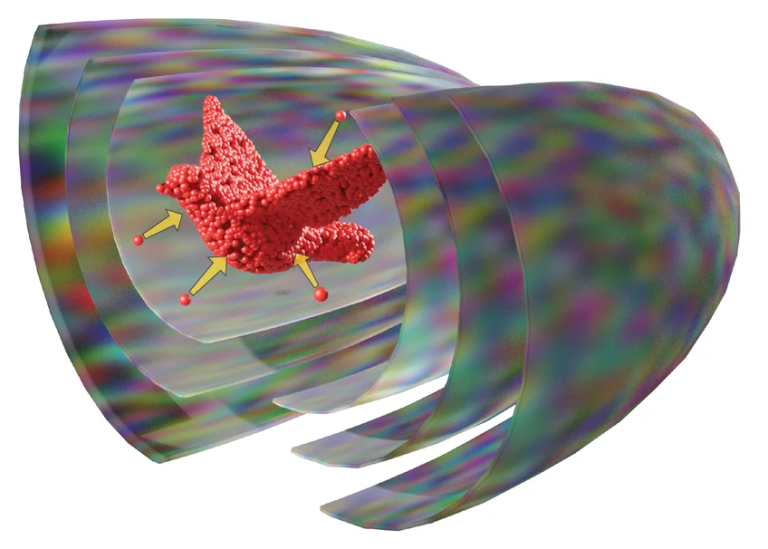
3D printing makes it possible to create complex parts from different materials – even biological ones. Traditional 3D printing can be a slow process, building objects layer by layer. Researchers from Heidelberg and Tübingen are now showing how a 3D object can be formed from smaller building blocks in just one step. “Using targeted and shaped ultrasound, we were able to assemble the smallest particles into a three-dimensional object in a single step,” says Kai Melde, a postdoc in the group and first author of the study. “This can be very useful for so-called bioprinting. The cells used there are particularly sensitive to environmental influences and ultrasound is a gentle method,” adds Peer Fischer, Professor at Heidelberg University.

Sound waves exert forces on matter – a fact that every concert-goer who feels the pressure waves from a loudspeaker knows. With high-frequency ultrasound, which is inaudible to the human ear, the wavelengths can be shifted below one millimeter into the microscopic range. This allows researchers to manipulate very small building blocks such as biological cells.

In previous studies, Peer Fischer and his colleagues demonstrated how ultrasound can be generated using acoustic holograms – 3D-printed plates designed to encode a specific sound field. They demonstrated that these sound fields can be used to assemble materials into two-dimensional patterns.

With their new study, the team was able to take the idea one step further. In the sound fields, they capture particles and cells floating freely in the water and combine them into three-dimensional shapes. In addition, the new method works with a variety of materials, including glass or hydrogel beads and biological cells. First author Kai Melde explains: “The key idea was to use several acoustic holograms together and thus form a sound field that can capture the particles.” Heiner Kremer, who wrote the algorithm for optimizing the hologram fields, adds: “Digitization of an entire 3D object in ultrasonic hologram fields is very computationally intensive and required new calculation routines.”

The researchers assume that their technology for the formation of cell cultures and tissues in 3D is a major advance. Ultrasound has the advantage that it is gentle on cells and can penetrate deep into the tissue. In this way, the new method can be used to manipulate cells remotely without damaging them.

https://www.mpg.de


#modernplasticsindia #plasticmagazine #indianmagazine #indianplasticmagazine #modernplasticsaward #ginujoseph #modernplastic #plasticindia #plasticnews #plasticrecycling #modernplasticsglobalnetwork #modernglobalnetwok #modernplasticsaward2023 #PlasticIndustry #mpg

Retail Sales off to a Good Start in 2023

Retail Sales off to a Good Start in 2023

If you have read the latest PLASTICS Size and Impact report, chances are you’ve learned that 89% of plastic products ended up in the personal consumption column. Given that two-thirds of the U.S. gross domestic product (GDP) is personal consumption expenditures, strong consumer spending data are greeted with optimism in the plastics industry.

According to the advanced retail sales estimates by the U.S. Census Bureau for January of 2023, U.S. retail sales rose by 3.0% from December and 6.4% from a year earlier. Retail sales in all business categories, except for gasoline stations which had zero growth, increased in January. Department store sales increased the most by 17.5% followed by food services and drinking locales which rose by 7.2%. The strong increased sales in these business categories including motor vehicle and parts dealers, furniture stores, and electronics and appliances stores, could increase plastics shipments as inventories are replenished. This, however, hinges on the retailer’s inventories-to-sales ratio.

The retailers’ amount of inventory relative to the number of sales was 1.26 in December, according to the U.S. Census Bureau. While this ratio has been increasing throughout 2022, prior to the COVID-19 recession it stayed above 1.40.

Monthly data tend to be noisy or have high variability—not an indication of a trend. U.S. retail sales estimates are reported in nominal terms or without adjusting for inflation. The Consumer Price Index was up 0.5% in January. Headline inflation was 6.4% in January – negligibly lower from 6.5% in December. In real terms, or adjusted for inflation, the retail sales growth in January is lower than the nominal estimates.

One possible implication of robust consumer spending during an inflationary environment is higher consumer debt. Consumer loans consisting of credit cards and other revolving credit at all commercial banks rose $14.7 billion in January from December. It was a 16.8% increase from a year earlier. Debt-driven growth has limits and could be problematic during an economic slowdown. A weaker labor market, although not a current issue but likely during a low-growth economic environment, could generate higher unemployment rates negatively affecting household personal income.

If the economy continues to stay strong, and consumers remain engaged, plastic product shipments could increase as plastics and plastic products are part of household consumption. However, with the U.S. economic outlook continuing to evolve, a single data point does not reflect an underlying growth momentum in the economy. The U.S. economy is adjusting from a robust 5.9% post-COVID-19 growth rate in 2021 to long-run sustainable growth. The likelihood that the U.S. will grow below 2022’s 2.1% GDP growth remains.

https://www.plasticsindustry.org/


#modernplasticsindia #plasticmagazine #indianmagazine #indianplasticmagazine #modernplasticsaward #ginujoseph #modernplastic #plasticindia #plasticnews #plasticrecycling #modernplasticsglobalnetwork #modernglobalnetwok #modernplasticsaward2023 #PlasticIndustry #plasticsindustry

Hosokawa Alpine AG Celebrates its 125th Anniversary

Hosokawa Alpine AG Celebrates its 125th Anniversary

Hosokawa Alpine AG is celebrating its 125th anniversary this year. “We can proudly look back at our long and successful company history and its outstanding capacity for innovation,” says Dr Antonio Fernández, CEO of Hosokawa Alpine AG. The company has always stood for competence in mechanical and system engineering and is a pioneer and developer of numerous technologies. This has helped Hosokawa Alpine steadily grow with new subsidiaries and business units. Today, the company employs roughly 840 people at its sites in Augsburg and Leingarten (Baden-Württemberg, Germany). There are also several subsidiaries located at home and around the world. The company will be celebrating its anniversary with a variety of activities, including a family event in the summer. “First and foremost, the success of Hosokawa Alpine is the success of our employees. We want to duly acknowledge that,” Fernández explains.

Momentous founding years lay the foundation

The company was founded by trained iron turner, Otto Holzhäuer. What began in 1898 with a small workshop in Augsburg and the production of whalebone stretching machines, has gradually evolved over the decades into a globally active company. Production began in Göggingen, the current headquarters, in 1900. Some of the buildings from that time are still standing on the company premises today. The first verifiable patent dates back to 1903 from the Imperial Patent Office for the “Triumph” universal shredder. At that time, Hosokawa Alpine was already selling shredders to customers throughout Europe. In 1909, the company was trading as “Alpine
Maschinenfabrik-Gesellschaft m.b.H.”. The new company name referred to the Alps, laying the foundation for demands of top and peak performance.

Expansion in the 1950s

After the political uncertainties during and between the two world wars, a new phase of expansion followed in the 1950s. After intensive involvement in research and development in the field of plastics processing, the new business division for the manufacture of blown film extrusion systems was founded in 1960, the second pillar alongside powder and particle processing.

After the takeover by Hosokawa Micron Corporation in 1987, the company was renamed Hosokawa Alpine Aktiengesellschaft and took on an increasingly international presence through the establishment of subsidiaries. Acquisitions in Germany also expanded business activities. The opening of the new logistics centre on the site of the Augsburg freight transport centre in 2020 solved the logistics challenge in Göggingen. The company’s test centres are also constantly being expanded, most recently in 2021 with a technical centre designed for applications from the food industry.

Commitment to the Augsburg location

Despite all the internationalisation, Hosokawa Alpine has never left its Swabian home of Augsburg throughout its 125-year history. The company sees itself as a reliable partner for customers and suppliers, as a dependable and quality employer for the people in the region and as a company with clear roots and commitment to the location: “Augsburg is part of our history and identity. This is where we developed our innovations before taking them all over the world. We are holding on to that,” Fernández said.

In 1900, production began at Hosokawa Alpine’s headquarters in Göggingen. Since then, the location has been expanded as well as modernised several times.


www.hosokawa-alpine.com


#modernplasticsindia #plasticmagazine #indianmagazine #indianplasticmagazine #modernplasticsaward #ginujoseph #modernplastic #plasticindia #plasticnews #plasticrecycling #modernplasticsglobalnetwork #modernglobalnetwok #modernplasticsaward2023 #PlasticIndustry #hosokawaalpine

Registrations Already From All Over the World!

Registrations Already From All Over the World!

Exhibitors at wire and Tube are looking forward to their Düsseldorf trade fairs 2024

Following the successful restart of wire and Tube in June 2022, preparations for the 2024 events are already in full swing. Three weeks after publication of the early-bird offer, more than 500 exhibitors have already registered for their leading trade fairs in Düsseldorf from 15 to 19 April 2024.

This emphasizes once more: the industries are committed to Düsseldorf as a location. The registrations received came from Germany, Europe and overseas. Many regular exhibitors and a large number of new exhibitors have already secured an attractive position in the Düsseldorf exhibition halls thanks to the early-bird offer.

The early-bird offer at significantly reduced conditions runs until 1 June 2023. For wire 2024, German-speaking companies can register at: www.wire.de/1330, English-speaking exhibitors at: www.wire.de/2330. The German link www.tube.de/1330 and the English link www.tube.de/2330 are active for Tube 2024.

“The two Düsseldorf trade fairs are absolute front-place for the wire and Tube sectors when it comes to presenting innovations from the relevant industries to a broad, international audience,” says Daniel Ryfisch, Director wire/Tube & Flow Technologies at Messe Düsseldorf.

Further information on exhibitors, products and industry news can be found on the internet portals at www.wire.de and www.Tube.de


#modernplasticsindia #plasticmagazine #indianmagazine #indianplasticmagazine #modernplasticsaward #ginujoseph #modernplastic #plasticindia #plasticnews #plasticrecycling #modernplasticsglobalnetwork #modernglobalnetwok #modernplasticsaward2023 #PlasticIndustry #wire #Tube

TPE for Car Water Deflector Applications

TPE for Car Water Deflector Applications

KRAIBURG TPE offers UV/HF series and LW/UV series designed specifically for automotive applications such as water deflectors.

Keeping water and moisture out of the car is one way to increase its lifespan. Water entering the car through the doors, windows, or sunroof from flooding, rain, or snow can cause damage and jeopardize its safety.

Water deflector’s function has recently expanded beyond protection to include aesthetics, as they are used as a design element to give the vehicle a distinct look. That is why, choosing the right deflector is critical to ensuring top-tier car stability, steerability, and overall performance.

TPE is a material solution for water deflector application because it is durable, flexible, and cost effective.

KRAIBURG TPE, a global thermoplastic elastomer manufacturer with a diverse range of products and custom solutions for a variety of industries, offers high-quality, custom engineered TPE compounds that meet the most stringent automotive OEM and international regulatory standards.

KRAIBURG TPE has select TPE series compounds with excellent weather and UV resistance, as well as other properties such as adhesion to PP, PC/ABS, SAN and more, which have been developed specifically for automotive exterior applications such as water deflectors. Furthermore, its TPE compounds are customizable to meet the end needs and requirements of the customer. Here are some of the recommendations of TPE series for water deflector applications.

UV/HF series – good adhesion, weather resistance

OEMs choose the UV/HF series for TPEs for its good flow properties, good adhesion to PP, weather resistance, and surface mapping.

The series has passed Kalahari and Florida weathering tests and meets OEM requirements such as BMW GS 93042, Ford WSS-M2D517, GM GMW16233, Mercedes-Benz DBL 5562, PSA B62 0300, Renault 03-10-104, and VW 50123.

LW/UV series – lightweight

The series is a lightweight material that is resistant to UV and weathering, especially in automotive exterior which is suitable for water deflector.

Other features of the LW/UV include:

  • Adhesion to PP
  • Reduced shrinkage and warpage of parts
  • Excellent homogeneous surface – without foaming
  • Non-sticky surface

The series has passed accelerated weathering tests such as Kalahari and Florida and meets Mercedes-Benz DBL 5562 OEM requirements.

Sustainability successes of our TPE

Besides the materials for water deflector application, KRAIBURG TPE’s recent sustainability innovations include a specially developed material solution for consumer, and industry applications comprising post-consumer recycled (PCR) and post-industrial recycled (PIR) content.

http://www.kraiburg-tpe.com


#modernplasticsindia #plasticmagazine #indianmagazine #indianplasticmagazine #modernplasticsaward #ginujoseph #modernplastic #plasticindia #plasticnews #plasticrecycling #modernplasticsglobalnetwork #modernglobalnetwok #modernplasticsaward2023 #PlasticIndustry #kraiburgtpe