Thursday, July 2, 2026
spot_img
Home Blog Page 179

HASCO Streamrunner Multicolour – Product of the Year 2023

HASCO Streamrunner Multicolour – Product of the Year 2023

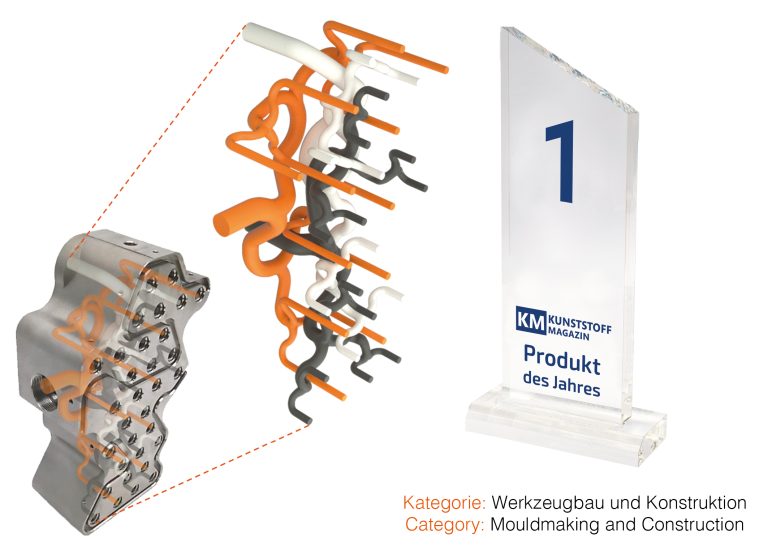
HASCO was delighted to receive a special award at the awards ceremony for the Product of the Year 2023.

The German journal KUNSTSTOFF MAGAZIN called for suggestions to be submitted for the Product of the Year, after which 40 nominees were selected for a reader vote in the plastics sector.

Best Award

HASCO takes first place in the category Mouldmaking and Design

The innovative HASCO Streamrunner Multicolour made a convincing impression in the readers’ vote and finished in first place in the category “Mouldmaking and Design“. At the victory ceremony, Executive Vice President Florian Larisch and Product Manager Sebastian Hohenauer (HASCO hot runner) were particularly delighted to win the Product of the Year, and proudly accepted the award.

Streamrunner Multicolour

With the additively manufactured HASCO Streamrunner, a new age has begun in the world of hot runner technology. Developed with state-of-the-art technologies, this product creates new possibilities for mouldmakers and injection moulders.

Design freedom in new dimensions

The Streamrunner is an additively manufactured hot runner with maximum design freedom. With this technology the flow channels can be optimally designed in rheological terms by completely avoiding sharp edges and areas with poor throughflow properties. This gentle passage of the melt leads to considerably lower shear rates and consequently to better quality of the injection-moulded parts. Colour changes can also be carried out faster through the flow-optimised design because the material can be guided via large deflection radii.

Multi-component injection moulding at a new level

Through the free three-dimensional design of the runners, completely new possibilities are also created in multi-component injection moulding. Different plastic components or colours can be spread over a very small space and the runners can be intertwined. This allows product designers to overcome existing restrictions in the design of plastic mouldings and to utilise new design options.

Through the use of the Streamrunner, injection-moulded parts can be produced cost-effectively. The compact design requires smaller mould sizes and thus smaller injection moulding machines for production. In addition, the low mass of the manifold block reduces energy consumption, thus achieving an additional cost saving.

HASCO keeps a close watch on the rapid developments being made in the field of additive manufacturing and constantly updates the manufacture of the Streamrunner to take the latest innovations into account.

www.hasco.com


#modernplasticsindia #plasticmagazine #indianmagazine #indianplasticmagazine #modernplasticsaward #ginujoseph #modernplastic #plasticindia #plasticnews #plasticrecycling #modernplasticsglobalnetwork #modernglobalnetwok #modernplasticsaward2023 #PlasticIndustry #hasco

LANXESS and TotalEnergies to cooperate on sustainable styrene

LANXESS and TotalEnergies to cooperate on sustainable styrene

Specialty chemicals company LANXESS and French energy group TotalEnergies have entered into a cooperation on the supply of biocircular styrene. Unlike conventional styrene, the raw material used by TotalEnergies is based on tall oil, which is derived from a tree resin and is a by-product of pulp production. LANXESS uses the styrene to produce sustainable ion exchange resins. These products are applied primarily in the treatment of wastewater and chemical process flows as well as in the food industry.

The sustainable origin of the styrene is certified in accordance with the mass balance approach of the ISCC PLUS standard (“International Sustainability and Carbon Certification”). Under mass balance approach, the certified and non-certified materials are mixed physically, but kept separately on a book keeping basis. This method allows companies to document and track the sustainable materials through the complex production process and ensures the full tracibility through the entire supply chain. The ISCC PLUS certification of the styrene is an important requirement, as LANXESS offers its products in accordance with this certification standard as well and therefore relies on the same transparency for its raw materials.

“Our customers are increasingly asking for sustainable solutions, and raw materials with a low carbon footprint are a key lever here. By partnering with TotalEnergies, we can further expand the respective offering for our customers,” says Marcel Beermann, Head of Global Procurement & Logistics at LANXESS.

“We are pleased to form this partnership with LANXESS, which demonstrates TotalEnergies’ ability to offer sustainable products to its customers, helping them reduce their carbon footprint. This is a perfect illustration of the orientation taken by the Refining and Chemicals branch of TotalEnergies to develop lower carbon intensity products, in line with TotalEnergies’ Climate Ambition to get to Net Zero emissions by 2050, together with society,” declares Jean-François Renglet, Vice President Marketing Base Chemicals Division at Total Refining and Chemicals.

In addition to styrene, the specialty chemicals company already sources many other sustainable equivalents of fossil raw materials. Biocircular acrylonitrile is used for another type of ion exchange resins. The preservative Preventol is also available with various fatty acid mixtures based on sunflower oil. Prepolymers under the Adiprene Green brand contain starch-based polyether polyols. The intermediate Trimethylpropane Scopeblue consists of about half sustainable N-butylaldehyde. The composite Tepex Scopeblue is based on flax and polylactic acid. And the high-performance plastic Durethan Scopeblue uses biocircular cyclohexane and waste glass.

https://mag.k-online.com


#modernplasticsindia #plasticmagazine #indianmagazine #indianplasticmagazine #modernplasticsaward #ginujoseph #modernplastic #plasticindia #plasticnews #plasticrecycling #modernplasticsglobalnetwork #modernglobalnetwok #modernplasticsaward2023 #PlasticIndustry #magkonline

From the Sea into the Tunnel: KraussMaffei Customer Oldroyd Uses 100% Sea Plastics for its Products

From the Sea into the Tunnel: KraussMaffei Customer Oldroyd Uses 100% Sea Plastics for its Products

What do a tunnel and hiking boot have in common? Both have a membrane that prevents the ingress of rain. In the case of the tunnel, the Norwegian company Oldroyd is an expert for the membrane and its injection-molded fixing product. It uses CX machines from KraussMaffei and 100% sea plastics.

Tunnels are an everyday phenomenon in Scandinavia because they are used to get around the many fjords. Norway alone has over 900 tunnels, and the world’s longest road tunnel is also located there. The enclosures for the traffic are more complex than one might think because a sophisticated membrane system lies behind the pipes visible to the driver. This system prevents water penetrating the soil causing damage to the concrete.

Working together to promote sustainable tunnel construction (from left): John Oldroyd Cheetham (founder of Oldroyd), Linda A Celin (CEO Oldroyd), Rolf Kjønnerud (KraussMaffei Agent SAXE) and Carl Kremer (Product Development/Operator Oldroyd) in front of one of the CX 160-750.

Oldroyd is the top dog in the area of waterproofing against rain and holds over 90% of the market share in the Nordic countries. The key to success lies in the innovative strength of the family business in Stathelle (around 160 kilometers south-west of Oslo). Originally concentrating on film extrusion, founder John Oldroyd Cheetham also accessed the injection molding technology with the help of KraussMaffei and now successfully operates three hydraulic CX 160-750 with a clamping force of 1600 kN.

So-called spacers, curved products with grid structure, which create a distance between rock and membrane, are produced on these machines in a cycle time of roughly 15 seconds. They weigh approximately 150 grams, whereby there are around 20 different models, varying in diameter and height.


100% sea plastics

The construction of the Stockholm Bypass (a series of underground motorway tunnels) is currently the world’s largest tunnel project. Thousands of spacers from Oldroyd are also used here.

300,000 to 400,000 of the spacers are required for one tunnel alone. For these quantities it pays off ecologically to use recycled materials. Oldroyd uses 100% sea plastics, consisting of roughly half PP and half PE. The remnants of broken fishing nets and plastic ropes are collected on the coast of Norway by specialist companies and crushed, washed, and regranulated. The subtle fish scent does not need to be removed for the tunnel construction.

The APCplus machine feature is very helpful for the changing material compositions and resulting viscosity fluctuations. It ensures a very constant shot weight by adapting the switchover point and the pressure level from shot to shot.

Safe “ghost shifts” at the weekend

Efficient automation is required in order to be able to produce plastic products competitively in Europe. All Oldroyd machines are therefore equipped with oversized LRX robots from KraussMaffei. With their very long vertical axle, these large quantities of manufactured products can be stacked up – starting with a ground-level pallet up to a height of two meters. In the case of the tunnel spacers, this volume covers the production of one (unmanned) weekend exactly.

2-component project with TPE

A new CX with two-component equipment will soon go into operation at Oldroyd because John Cheetham has once again made a development that will change tunnel construction: a 2-component platen, called RoadStar, which is secured on the steel rods that connect the concrete wall and the rock layer. Up to now these platens were made of metal and corroded accordingly, which is why maintenance is required and a replacement after roughly 50 years. Whereas the RoadStars were estimated to have a service life of 120 years in special aging tests. This alone saves a lot of resources. The RoadStar was already tested by Oldroyd customers and was also widely accepted because the integrated TPE layer has a sealing effect, while the other side (made of PE) is impact-resistant. Success on the market and the correspondingly high numbers of units will mean more 2-component machines will make their way north from Munich.

https://mag.k-online.com/


#modernplasticsindia #plasticmagazine #indianmagazine #indianplasticmagazine #modernplasticsaward #ginujoseph #modernplastic #plasticindia #plasticnews #plasticrecycling #modernplasticsglobalnetwork #modernglobalnetwok #modernplasticsaward2023 #PlasticIndustry #magkonline

Back to the Cycle: #tide Turns Ocean Plastic into High-Quality Recyclates

Back to the Cycle: #tide Turns Ocean Plastic into High-Quality Recyclates

Interview with Marc Krebs, Co-Founder & CCO, Tide Ocean SA

Plastic is a resource without which our life today would not be possible – and thanks to recycling, we can even use it several times over. However, we know from reports what can happen if the recycling process does not run properly: the plastic sometimes ends up in the sea. Getting it back into circulation from there and turning it into a usable product is not easy.

#tide has succeeded: The company has overcome several technical as well as organizational challenges and today turns “trash from the sea” into high-quality raw materials that are in no way inferior to conventional primary materials.

Mr. Krebs, how are high-quality plastic recyclates created from ocean-bound plastics?

Marc Krebs.

Marc Krebs: In a multi-stage process: First, the material has to be collected and delivered. We work with local communities, with fishermen and coastal and island dwellers. The material is weighed, recorded, tracked and paid for at a fair price. It is our top priority to give value to waste from the start – so we incentivize the collection of plastic waste in the affected regions. This is then manually separated in our warehouses, mostly social enterprises. This is how we create further added value and jobs. Then the plastic waste – we mainly process PET, PP and PE – is inspected in appropriately equipped facilities to check that it is of the correct type, washed, shredded and processed into granules. We produce plastics for injection molding, but also polyester yarns for textiles or filaments for 3D printing.

What challenges did you have to overcome during development?

Krebs: Technologically, the task was to define the right approach. To do this, we worked with the Swiss Institute for Materials Technology and Plastics Processing (IWK, Rapperswil), analyzed the nature of the materials in studies, and determined the methodology for the most effective recycling. We recycle mechanically and now offer a clean, high quality raw material that can then be further processed and refined thanks to the knowledge of our technological department and is on a par with the quality of Virgin Plastic.

Another challenge was to export our knowledge to the affected countries in Southeast Asia and to build up the supply chain. Often there is a complete lack of a waste management system. We therefore had to look for the right partners to ensure control from sourcing to compounding and thus also our high quality standards. Transparency and credibility were also important to us right from the start, in order to clearly distinguish ourselves from “black sheep” in the recycling business. As a result, I claim we have now achieved a market-leading position, among other things with the development of a Material Passport: we have the path of our material tracked and recorded on a blockchain. We also meet the highest ethical and environmental standards. All this leads to our goal of not only offering a high-quality raw material, but also delivering a new standard with #tide: To be the world’s most important label for ocean-bound plastic.

What are the advantages of using marine plastics?

Krebs: Only advantages. The threat to the oceans is one of the biggest environmental problems of our time. Plastic waste threatens fauna and flora, our food chains, our climate. The blue planet is in danger of suffocating in it, and so are we. By collecting ocean-bound plastic and returning it to the cycle, we are providing a solution to this problem. This is not only ecological – our material is 5 times more environmentally friendly than virgin PET according to mc my external expert opinion – but also sustainable in the economic sense: we create a social impact, create jobs and waste management systems, build infrastructure and pass on our knowledge in workshops.

For which end products can the recyclates be used?

Krebs: We received our first orders from the watch industry, from brands in Switzerland, Scandinavia and the USA, for both watch cases and polyester straps. This enabled us to successfully apply our quality standards to high-precision instruments. In the meantime, products from many other industries have been launched: electronic devices, textiles and fabrics, packaging, and even adult toys are made from our material. Meanwhile, we also receive requests for automobiles and vehicle accessories, for furniture or for products in the construction industry. There are basically no limits.

How do you plan to develop your company and your products in the future?

Krebs: We want to become the world’s most trusted supplier of sustainable plastic products made from marine plastics. To this end, we are currently expanding, opening up the Americas for example, from sourcing to compounding. We want to offer #tide ocean material seamlessly on every continent by 2025, with a broad distribution network and the shortest possible transport routes. In the medium term, we would also like to license our solution. Our dream would be that only recyclates are used for new products, thus protecting the environment, saving fossil raw materials, and creating great added value.

https://mag.k-online.com


#modernplasticsindia #plasticmagazine #indianmagazine #indianplasticmagazine #modernplasticsaward #ginujoseph #modernplastic #plasticindia #plasticnews #plasticrecycling #modernplasticsglobalnetwork #modernglobalnetwok #modernplasticsaward2023 #PlasticIndustry #magkonline

The Future of Plastics: JKU Linz Trains the Plastics Engineers of Tomorrow

The Future of Plastics: JKU Linz Trains the Plastics Engineers of Tomorrow

Interview with Professor Georg Steinbichler, Head of the Institute for Polymer Injection Molding and Process Automation (IPIM), Johannes Kepler University Linz

Plastics must be newly thought and designed – that is the credo at the Johannes Kepler University in Linz. From autumn 2023, courses on plastics technology will be offered here. Plastics don’t just play a supporting role there, they are the star of the show. Because they are a key factor for both the present and the future.

Professor Georg Steinbichler explains in an interview why there is a need for degrees specifically in plastics engineering, what distinguishes them and how industry is already involved in the training of young plastics engineers.

Prof. Dr.-Ing. Georg Steinbichler.

Professor Steinbichler, what are the current challenges your new degree programs aim to address?

Georg Steinbichler: The world is changing, prompting a mindset shift. Climate activists are no longer the only ones who are deeply concerned about the impacts of unrestrained energy and resource consumption. To address the challenges of using fewer resources and encouraging sustainable practices and strategies, we must apply our existing and future knowledge intelligently. This also applies to polymer technologies. Used correctly, plastics already make a significant contribution to today’s ecological and economic solutions. Plastics are also a key material for future technologies such as electric mobility and renewable energy technologies. However, it is troubling that aspects of sustainability and carbon footprints usually only play a secondary role when it comes to new product and technology evaluations and designs. We need transparent reusable systems and production and recovery chains that are optimized for recycling. The Johannes Kepler University (JKU) Linz has completely revised and revamped its current academic degree programs in polymer engineering studies to overcome these multifaceted challenges.

What is the content of the three new courses? How are they structured?

Steinbichler: A new bachelor’s degree program and two master’s degree programs are waiting in the wings and will teach prospective engineers to critically evaluate and develop future-oriented solutions for the sustainable and environmentally friendly use of plastics and respond to the energy and climate crises.

Production of recyclable lightweight components from UD tapes and organic sheets with injection moulding technologies.

Unlike other university study programs that offer optional specializations in plastics technology as part of a mechanical engineering degree, for example, the JKU program is a continuous degree in polymer engineering technology starting with the first semester.

The Bachelor’s degree program in “Sustainable Plastics Technology & a Circular Economy” starts in the fall of 2023 and highlights the entire value chain of plastics ranging from their foundations in science, design and processing to recycling and a circular economy. The program also focuses on new scientific approaches (such as polymers to support medicine, nutrition, water, energy, and the climate) as well as life-cycle impact assessments and digitalization with modeling and machine learning as a superordinate concept for “artificial” intelligence generation. Topics include:

  • Materials and Process Technology: (Hands-on lab tasks focusing on injection molding and extrusion)
  • Design: Design and simulate plastic components
  • Testing Materials: Learn how to characterize materials in terms of mechanical, thermal, and optical features.
  • Recycling Technologies and Material Cycles: Sustainably recycle plastic waste
  • Natural Sciences: Advanced mathematics and programming as well as a focus on the chemical-molecular structure of plastics and synthesis
  • Mechanical Engineering & Mechatronics: Fundamentals in lightweight construction, electrical engineering, and mechanics
  • Life-cycle impact analyses and social relations
  • Bachelor’s Thesis: Specialize in an area you are most interested in, also in collaboration with leading partners in industry and business.

What is the difference between the two master’s programs?

Steinbichler: The two English-taught master’s degree programs will start in the fall of 2024. While the students in the Plastics Management & Sustainability master’s degree program learn to address social challenges using (plastics) engineering approaches, the focus of the Polymer Engineering & Science master’s degree program is on deepening technical and scientific aspects for industry and science.

Plastic Challenge – new learning methods for independent acquisition and consolidation of knowledge with professors and other students.

What skills do the students develop and why are they important in the future?

Steinbichler: The new degree programs feature the latest didactic and educational methods. Students learn problem-solving skills combined with a high degree of independence to address concrete content. Besides expertise in polymer technologies, the curriculum includes honing “future skills”. Students will develop the expertise necessary to successfully act and interact for the good of the environment, humanity, society, business, and technology.

What industry feedback are you getting?

Steinbichler: The aforementioned academic degree programs and a doctorate degree in plastics technology are primarily supported by the four Plastics Engineering Institutes. The generous support and collaboration of 25 companies, mainly from Austria and Germany, made it possible to create a networked factory for education, training, and research (LIT Factory at the Linz Institute of Technology) in plastics technology in 2021. The research focuses on the development of new process technologies for the manufacturing of recyclable lightweight components based on models found in nature, the recycling and upcycling of plastics, and the use of digitization alongside the value chain for the benefit of humanity, the environment, and the economy. The idea is to pursue a visionary and holistic technology approach with a focus on responsible technology. Several corporate partners are also actively supporting the transformation of the plastics technology degree programs.

How will the academic degree programs affect the future of the plastics industry?

Steinbichler: The introduction of the new degree courses is designed to get young people excited and motivate them to develop sustainable solutions for society. It’s about defending the technology leadership position of Europe and our national economies, also as it pertains to the development and implementation of sustainable solutions to support a circular plastics economy. The new courses cover the educational requirements and job profiles of future professional fields in the 21st century. The acquired skills are relevant in a broad array of applications and are already in high demand by many of today’s employers.

https://mag.k-online.com/


#modernplasticsindia #plasticmagazine #indianmagazine #indianplasticmagazine #modernplasticsaward #ginujoseph #modernplastic #plasticindia #plasticnews #plasticrecycling #modernplasticsglobalnetwork #modernglobalnetwok #modernplasticsaward2023 #PlasticIndustry #magkonline

Bioplastics for Medicine: Sustainability and Quality in Harmony

Bioplastics for Medicine: Sustainability and Quality in Harmony

Interview with Julian Lotz, Managing Director (CEO), BIOVOX GmbH

The healthcare field produces lots of medical plastic waste. The founders of Biovox know this from first-hand experience – but medical care simply could no longer exist without plastic. The idea of designing medical products with sustainability in mind is certainly not new. However, medical-grade plastic materials must meet strict regulatory requirements, often prompting the aspect of sustainability to take a back seat.

Biovox wants to solve this problem with its products. In this interview, CEO Julian Lotz describes how his company develops bioplastics that successfully meet the stringent requirements for medical-grade plastic materials and explains what differentiates Biovox products from other comparable items.

Mr. Lotz, what prompted you to develop bioplastics for the medical sector?

Julian Lotz: My co-founder Vinzenz Nienhaus developed bioplastic-based bone replacements at the Technical University Darmstadt, Germany. I used to offer advice and expertise on plastics to orthopedic device companies. Along the way, we both saw large piles of waste in the laboratories and university hospitals comprising single-use (disposable) products and tons of packaging. In the interest of quality, these were previously made from virgin fossil-based plastic. Our co-founder Carmen once did the math on this: Medical plastics generate global CO2 emissions equivalent to the annual greenhouse gas emissions from Sweden or Denmark. We can and we must change that, which is why we “launched” this segment two years ago.

What makes your plastics sustainable?

Lotz: We use different biobased polymers. Most of our compounds are 95 to 100 percent biobased. Raw polymer production is not only highly energy efficient, but PLA can also be chemically recycled in an energy-efficient manner, resulting in a quality that is suitable for medical technology application. We have a cradle-to-gate carbon footprint that is up to 80 percent lower than contributions of common fossil-based medical plastics such as PET, PE, PP, PC, and ABS. Bioplastics also have another major advantage as it pertains to waste incineration, which is still widely used in healthcare settings: the CO2 emissions don’t stem from fossil energy sources millions of years old, but were removed from the atmosphere by the plants in the last growth stage. The cycle is thus significantly shorter and fossil carbon stays where it belongs, namely buried deep underground. Compared to polyolefins such as PE and PP, we also have a lower carbon footprint per kilogram of plastic, which also reduces emissions if burned.

How do your bioplastics differ from other comparable materials?

Lotz: All our materials have been proven to be biocompatible, depending on the compound for different risk classes of medical devices. We offer systems for injection molding, film and profile extrusion. We can also provide transparent, soft types with a higher elongation at break percentage, which is important for safety concerns pertaining to packaging and medical tubing. It’s something that is not yet available on the market in a sustainable form.

The medical sector has some of the highest quality and hygiene standards. How can you meet and guarantee this level of quality?

Lotz: The raw materials for our compounds are manufactured for us for medical use and are medical grade. We develop and produce our materials under our certified ISO 13485 medical quality management system. We also perform detailed testing per ISO 10993 standard to ensure biocompatibility and thus patient safety. This industry specific quality management currently doesn’t exist anywhere else for PLA-based compounds.

What are your future plans for your products and your company?

Lotz: We have a few ideas for pharmaceutical packaging innovations. Materials that facilitate steam sterilization are an exciting option when it comes to medical devices slated for repeated use. We are currently working on a solution that focuses on the sustainability perspective. Right now, our top priority is to master the ongoing massive growth we are experiencing and to scale our production, thus ensuring our company does not inadvertently become a bottleneck to sustainability.

mag.k-online.com


#modernplasticsindia #plasticmagazine #indianmagazine #indianplasticmagazine #modernplasticsaward #ginujoseph #modernplastic #plasticindia #plasticnews #plasticrecycling #modernplasticsglobalnetwork #modernglobalnetwok #modernplasticsaward2023 #PlasticIndustry #magkonline

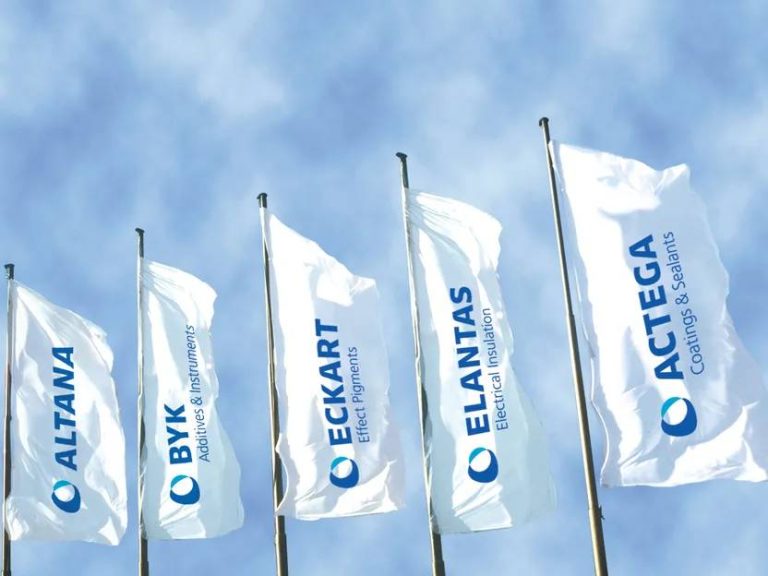
ALTANA Achieves Sales of More Than 3 Billion Euros for the First Time in 2022

ALTANA Achieves Sales of More Than 3 Billion Euros for the First Time in 2022

  • Sales increase by 13 percent to 3,021 million euros
  • EBITDA margin at 15 percent due to inflation
  • Continued high investment in innovation and sustainability

ALTANA generated sales of 3 billion euros for the first time in the 2022 fiscal year. Sales rose by 13 percent to 3,021 million euros (previous year: 2,667 million euros). The specialty chemicals group has thus achieved growth of almost 40 percent in the past two years despite the very challenging and volatile environment.

Following significantly higher volumes in 2021, growth in 2022 was mainly driven by price/mix and positive foreign-exchange effects. Adjusted for acquisition and exchange-rate effects, sales increased by around 8 percent. Earnings before interest, taxes, depreciation and amortization (EBITDA) were above the average of the previous years, at 452 million euros, but 6 percent below the figure for 2021 due to high material, energy, and freight costs. The EBITDA margin was 15 percent due to inflation and therefore below the long-term target range.

“In spite of all the challenges, ALTANA once again completed a successful year in 2022,” said Martin Babilas, CEO of ALTANA AG. “The past year once again made two qualities of the entire ALTANA team clear: Our company is highly resilient even in very turbulent times, primarily due to our financial and innovative strength as well as our flexible and customer-oriented positioning. Secondly, we not only react to external factors of influence, but actively make important contributions to meeting the great challenges of our time, first and foremost climate change.”

Despite the volatile environment, in 2022 ALTANA further increased its already high research and development expenditure to 193 million euros, a rise of more than 7 percent over the previous year.

ALTANA’s innovation pipeline produced, among other things, the market launch of ECOLEAF, a technology for producing metallic label decorations with a significantly improved environmental profile. The system, developed in the ACTEGA division, not only eliminates the use of plastic carrier foils, but also avoids wasting metals by using only the amount of metallic pigments required for the respective application. As a result, the carbon footprint can be reduced by more than 50 percent vis-à-vis conventional processes.

Further expansion of renewable energies at the sites

In 2022, ALTANA also continued to drive forward its program aimed at reducing its greenhouse gas emissions. In November, the BYK division commissioned a 2,000-square-meter solar plant at its production site in Shanghai. The facility supplies around 400,000 kWh of green electricity a year. In Germany, a solar plant is currently under construction at ACTEGA in Bremen that will generate up to 855,000 kWh annually in the future. Meanwhile, ECKART is planning a solar plant that will cover the base load of the electricity supply at the division’s largest manufacturing site in Hartenstein near Nuremberg. ALTANA already generates its own energy from renewable sources, including hydropower and biogas, at eight of its worldwide sites.

Growth in all divisions

In the 2022 fiscal year, all four divisions contributed to the growth. The largest division, BYK, achieved sales of 1,371 million euros, up 12 percent on the previous year. Adjusted for exchange-rate effects, sales grew by 7 percent.

The effect pigments specialist ECKART recorded sales of 397 million euros, corresponding to 4 percent growth. The acquisitions that were made in 2021 to expand the division’s business with metal powders for functional 3D were a contributing factor. In operating terms, sales were at the previous year’s level.

The ELANTAS division, whose innovative insulating materials are increasingly being used to expand e-mobility, posted sales of 698 million euros, 18 percent above the prior-year figure. Adjusted for currency effects, the sales growth was 11 percent.

ACTEGA’s sales increased by 20 percent to 555 million euros. The acquisition of the closure materials business in 2021 to strengthen PVC-free solutions also had an impact here. Adjusted for acquisition and exchange-rate effects, growth amounted to 13 percent.

Sales growth in all regions of the world

In fiscal 2022, ALTANA achieved growth in all of the world’s regions. Europe, which continues to be the strongest region in terms of sales, reached 1,081 million euros. This corresponds to an increase of 5 percent (4 percent in operating terms). Sales growth in Germany was 8 percent (7 percent in operating terms). In the Americas, the Group recorded the most significant increase, with sales rising by 31 percent (18 percent in operating terms) to 895 million euros. This development was driven by sales in the U.S. market, which rose by 34 percent (19 percent in operating terms). In Asia, ALTANA generated sales of 989 million euros, 9 percent more in a year-to-year comparison. Adjusted for currency effects, sales in this region climbed by 4 percent. The ALTANA Group achieved the highest operating growth rate in India, at 27 percent.

Outlook

Depending on when the economy starts to recover, ALTANA expects sales to increase slightly in 2023. Depending on the development of the price situation in the field of material, logistics, and energy costs and the remaining uncertainties related to the sufficient availability of certain raw materials and energy sources, ALTANA forecasts slightly improved earnings profitability for 2023.

www.altana.com


#modernplasticsindia #plasticmagazine #indianmagazine #indianplasticmagazine #modernplasticsaward #ginujoseph #modernplastic #plasticindia #plasticnews #plasticrecycling #modernplasticsglobalnetwork #modernglobalnetwok #modernplasticsaward2023 #PlasticIndustry #altana


NETZSCH named “Fair Company” for the Twelfth Time in a Row

NETZSCH named “Fair Company” for the Twelfth Time in a Row

Fair working conditions and development prospects for employees

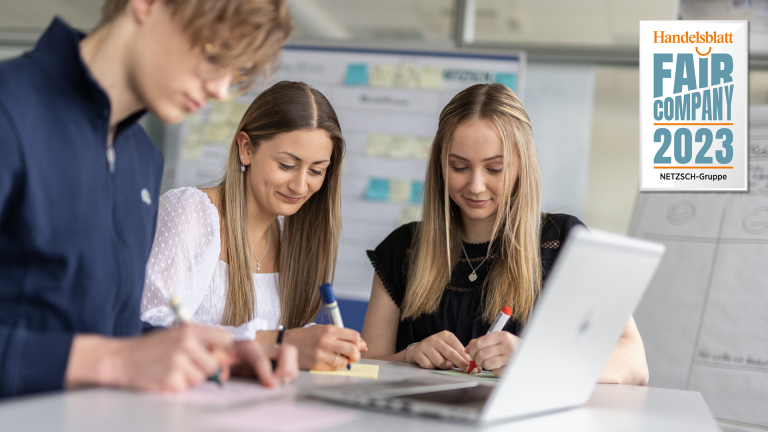
NETZSCH Pumpen & Systeme has received the “Fair Company” award for the twelfth time in a row. The initiative, founded by the Handelsblatt newspaper, is sustainably committed to a fair working environment.

Fair Company is the largest and best-known employer initiative in Germany. The initiative is aimed specifically at career starters and young professionals, such as apprentices, interns, working students and trainees. It creates transparency and orientation.

Rita Buchner, Human Resources Manager at NETZSCH Pumpen & Systeme, is delighted about the renewed award: “Fair Company and NETZSCH: that’s a perfect symbiosis. The goals of the initiative correlate perfectly with the corporate values practiced at NETZSCH. We are proud to receive the Fair Company Award for the twelfth year in a row. Thanks to our new NETZSCH Campus in Waldkraiburg, we will also be able to offer the best conditions and exciting prospects in the future.”

Employee satisfaction and performance are drivers of NETZSCH’s continued success. The renewed award as a “Fair Company” shows once again that the global specialist for complex fluid management creates fair working conditions and development prospects for its employees.

In doing so, NETZSCH accompanies its employees on the path to excellence and offers the following benefits, among others: Mobile working, the NETZSCH Academy or flexible working hours.

In addition to fair working conditions, the following factors are also taken into consideration when awarding a company : Work organization, corporate culture and values, diversity and equal opportunities, and much more. All of these values are lived out at NETZSCH Pumpen & Systeme – every day anew. The first application for the award was made in 2012, and the company has been able to prove itself as a “Fair Company” every year since then.


#modernplasticsindia #plasticmagazine #indianmagazine #indianplasticmagazine #modernplasticsaward #ginujoseph #modernplastic #plasticindia #plasticnews #plasticrecycling #modernplasticsglobalnetwork #modernglobalnetwok #modernplasticsaward2023 #PlasticIndustry

Sustainable TPEs Make Hot Substitutes for Iron Applications

Sustainable TPEs Make Hot Substitutes for Iron Applications

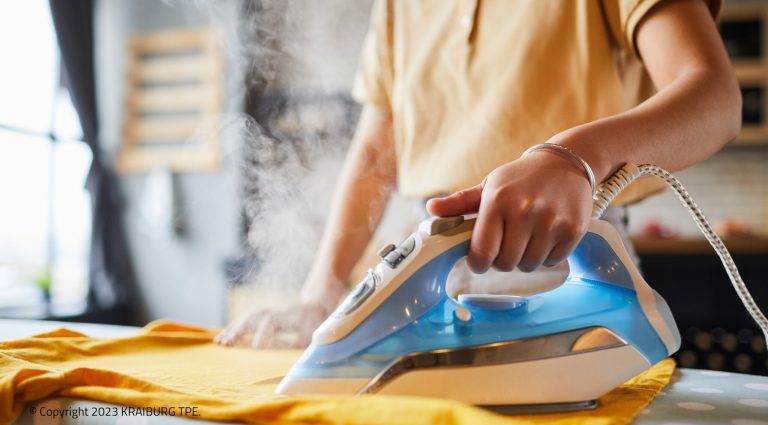
KRAIBURG TPE, a global TPE manufacturer of thermoplastic elastomer products and custom engineered TPE solutions for an extensive variety of consumer product applications, offers the THERMOLAST R RC/PCR/AP series of compounds, with up to 35% post-consumer recycled content for applications in irons and other appliances.

The quest to reduce the carbon footprint has gained traction in modern appliances that use electricity. Today’s market offers a wide range of low carbon-emission electric irons, from standing irons and compact irons to conventional irons and steamer irons that have smart features, energy-efficient systems, and advanced controls.

These types of irons are now made of environmentally friendly plastics and other cutting-edge materials such as thermoplastic elastomers (TPEs), which are lightweight, recyclable, and long-lasting.

TPEs are non-conductive to electricity, heat and are chemical-resistant, with other properties that make them suitable for use in personal and commercial electric irons.

KRAIBURG TPE, a global TPE manufacturer of thermoplastic elastomer products and custom-engineered TPE solutions for an extensive variety of consumer product applications, has recently launched the THERMOLAST R RC/PCR/AP series of compounds, which is a material solution with post-consumer recycled content targeted at sustainable grips, handles, connectors and other appliances.

Sustainability and safety major advantages

Manufacturers today are mindful of the materials used in their products as they strive for sustainability. The post-consumer recycled content in KRAIBURG TPE’s THERMOLAST R RC/PCR/AP compound series ranges from 9% to 35% (hardness-dependent).

Thus, the TPE materials are suitable for applications such as functional and design elements, handles, grips, connectors, and more. They can be used as an alternative to EPDM and PVC-P as well as elastomers, offering a cost-effective solution to ease the burden on the environment.

KRAIBURG TPE’s THERMOLAST R RC/PCR/AP series of compounds meets the RoHS compliances. The compound series boasts good mechanical properties and temperature stability up to 80 °C, allowing for use in a range of appliances.

Stylish, comfortable designs

KRAIBURG TPE’s THERMOLAST R RC/PCR/AP series of compounds also has good bonding with PP resin, allowing for flexibility in product design.

Furthermore, through multi-component injection molding, it can be overmolded to allow for comfortable and non-slip handles, grips, and buttons. As well, when consumers use the iron products, the TPE series’ non-sticky surface property provides a comfortable and non-slip grip, which makes it suitable for applications in iron products.

Sustainability successes of our TPE

Besides the materials for iron applications, KRAIBURG TPE’s recent sustainability innovations include a specially developed material solution for consumer, and industry applications comprising post-consumer recycled (PCR) and post-industrial recycled (PIR) content.

www.kraiburg-tpe.com


#modernplasticsindia #plasticmagazine #indianmagazine #indianplasticmagazine #modernplasticsaward #ginujoseph #modernplastic #plasticindia #plasticnews #plasticrecycling #modernplasticsglobalnetwork #modernglobalnetwok #modernplasticsaward2023 #PlasticIndustry #kraiburgtpe

KRAIBURG TPE to Launch New Automotive Interior Surface TPE Solutions for the Asia Pacific Market

KRAIBURG TPE to Launch New Automotive Interior Surface TPE Solutions for the Asia Pacific Market

THERMOLAST K FG/SF/AP, which will be unveiled at CHINAPLAS 2023, is a game changer for innovative automotive interior applications in Asia Pacific

The Asia-Pacific automotive industry, which is a major hub for vehicle manufacturing and accounts for a sizable market share of sales across all vehicle segments, will be at the center of an innovation boom in key industries over the next decade, driven by rising adoption of electric vehicles and connected vehicles, as well as growth in the luxury car segment. As users seek mobility solutions that match their changing mobility habits and lifestyle, the region’s automotive industry is set to undergo unprecedented transformation. As a result, new vehicles with user-centric designs and construction are expected to enter Asia-Pacific markets. Advanced materials such as thermoplastic elastomers (TPEs) widely used for exterior and interior parts will have more functionalities geared toward user comfort and style.

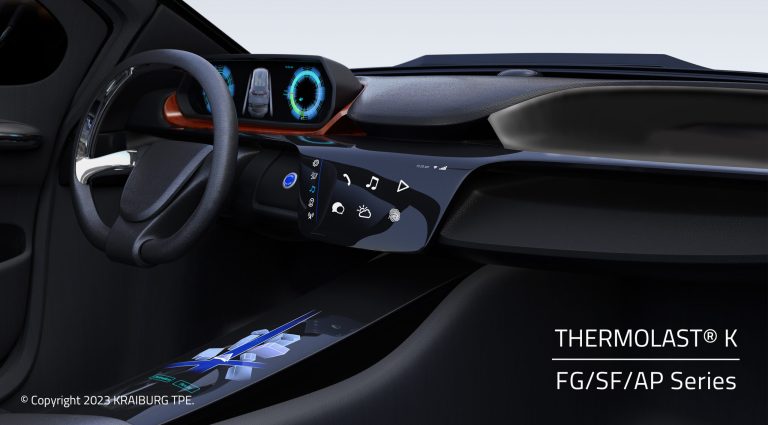
KRAIBURG TPE, a global TPE manufacturer, offers multifunctional TPE solutions for product innovations requiring excellent mechanical properties and ease of processing via the multi-component injection molding process to achieve the best adhesion property. For the Asia Pacific automotive interior market, KRAIBURG TPE introduces its latest THERMOLAST K FG/SF/AP series featuring surface quality design advantages and solutions.

Project Manager of KRAIBURG TPE, Marcus Cheah, says, “TPE with low viscosity capabilities expands the possibilities for plastic part design. They shorten the process cycle time and open up a larger processing window in injection molding for large surfaces and thin parts. Our TPE solutions with low odor and emission meet the stringent OEM requirements for automotive applications.”

Enabling ease in processing without compromising quality

Consisting of hardness range between 60 – 80 shore A, the THERMOLAST K FG/SF/AP series produces even surfaces with two component injection molding. The series has superior flow properties which makes the compound easy to be process. It offers good adhesion with PP, low density, comply with the low odor and emission requirements for automotive interiors. Also, the series featured good surface mapping as well as temperature stability up to 100°C.

Providing design advantage to a range of applications

The THERMOLAST K FG/SF/AP series satisfies the demand for sophisticated automotive aesthetic appeal. The series offers refined hard-soft composite components with a high level of surface appearance and quality. The THERMOLAST K FG/SF/AP series, available in black, is an ideal material solution for automotive interiors applications such as handle and covers, mats, door sills, glove box, sealing, soft touch surfaces, and more.

THERMOLAST K FG/SF/AP at the CHINAPLAS 2023

KRAIBURG TPE will launch the new THERMOLAST K FG/SF/AP for automotive interior surface solutions for Asia Pacific at Booth no. P73 at CHINAPLAS 2023, which will take place from the 17th to the 20th of April at the Shenzhen World Exhibition & Convention Center in Shenzhen, PR China.

KRAIBURG TPE will be a key participant in CHINAPLAS 2023’s TECHTALK forum on the topic of New KRAIBURG TPE Automotive TPE for Interior Surface Applications on 18 April 2023 at Hall 16.

Sustainability successes of our TPE

Besides the materials for automotive interior surface applications, KRAIBURG TPE’s recent sustainability innovations include a specially developed material solution for consumer, and industry applications comprising post-consumer recycled (PCR) and post-industrial recycled (PIR) content.

www.kraiburg-tpe.com


#modernplasticsindia #plasticmagazine #indianmagazine #indianplasticmagazine #modernplasticsaward #ginujoseph #modernplastic #plasticindia #plasticnews #plasticrecycling #modernplasticsglobalnetwork #modernglobalnetwok #modernplasticsaward2023 #PlasticIndustry #kraiburgtpe