Thursday, July 2, 2026
spot_img
Home Blog Page 178

SABIC’s ULTEM Resin Provides Lightweight Comfort for Hearing-impaired and Multi-Language Users of LLVision’s Augmented Reality Eyeglasses

SABIC’s ULTEM Resin Provides Lightweight Comfort for Hearing-impaired and Multi-Language Users of LLVision’s Augmented Reality Eyeglasses

Hearing loss compensation and spoken language translation can now be provided using an unlikely yet elegant technology – augmented reality (AR) eyeglasses from Beijing LLVision Technology Co., Ltd., which display voice translations in text on the lenses in real time. The company’s LEION Hey glasses feature legs (or temples) molded from SABIC’s tough, lightweight and inherent, non-halogenated flame-retardant ULTEM™ 1000 resin. ULTEM resin enables thin-wall molding of the hollow legs, which contain both a lithium-ion battery and a computer chip to enable rapid, multi-language translations. SABIC’s innovative material helped LLVision minimize the weight of the legs to give users all-day comfort, while providing high strength that enables key components to be integrated into the legs with maximum functionality.

“At the beginning of the design phase, we set a goal to make the lightest AR glasses on the market,” recalled Mr. Liang Xianglong, Co-Founder and Leader of Hardware Department of LLVision. “Every gram mattered to the comfort of our customers. However, with all the components required for AR glasses, including the optical module, microphone and computer chip, it was a difficult challenge. After comparing and testing materials from more than 20 suppliers globally, we found SABIC’s ULTEM resin to be the lightest, with additional advantages of strength, resilience and inherent, non-halogenated flame retardance. With the help of ULTEM resin, we lowered the overall weight of our LEION Hey glasses to just 79 grams, or 2.8 ounces.”

According to the World Health Organization, about 1.5 billion people (nearly 20 percent of the global population) live with hearing loss – a number that could rise to 2.5 billion by 2050. Another trend is the growing need for international communications that has arisen with the loosening of COVID-19 restrictions. The LEION Hey glasses can enable individuals to cope with both scenarios. They can help avoid the challenges of hearing in noisy environments or lip-reading when people are wearing masks. Also, they can facilitate communication in multilingual work environments and enable more-active business and social interactions.

LLVision employs automatic speech recognition technology and artificial intelligence to create, stream and display voice translations in milliseconds. The computer chip integrated in the legs of the glasses translates voice input into text data. The glasses connect wirelessly to a smartphone app that handles user authentication.

Lighter Legs
During LLVision’s selection process, ULTEM resin surpassed incumbent materials used for eyeglass legs, such as amorphous polyamide (PA) resin. SABIC’s polyetherimide (PEI) material provides a balance of ductility and stiffness that enables thin-wall molding to cut weight by up to 30 percent vs. PA and provide more space for embedded components. This specialty resin also provides better dimensional stability than PA for efficient assembly, and delivers combined stiffness and strength that allows the legs to clamp securely to the wearer’s head. ULTEM resin’s flame retardance enhances the safety of devices that incorporate electronic components, and the non-halogenated formulation avoids the use of chlorine and bromine, which are associated with adverse health and environmental effects.

ULTEM 1000 resin is an unreinforced, general-purpose grade offering high heat resistance, high strength and modulus, and broad chemical resistance. It is rated for fire safety under the UL94 V0, V2 and 5VA standards. SABIC supplies the material to LLVision in a custom gray color. In addition, SABIC has a broad portfolio of other materials well suited for eyeglass frames and legs depending on customers’ design needs.

“LLVision’s AR smart glasses are a novel and effective way to help people communicate more easily and accurately,” said Scott Fisher, director, ULTEM Resins & Additives for SABIC’s Specialties business. “Our high-performance ULTEM resin, which has been chosen for eyewear applications for more than a decade, helped the company address key product design and manufacturing challenges. Subject to user testing, any maker of AR or conventional eyewear can benefit from the light weight and high-strength properties of ULTEM resin. We look forward to working with LLVision on a next-generation version of the LEION Hey glasses using a certified renewable, bio-based grade of ULTEM resin.”

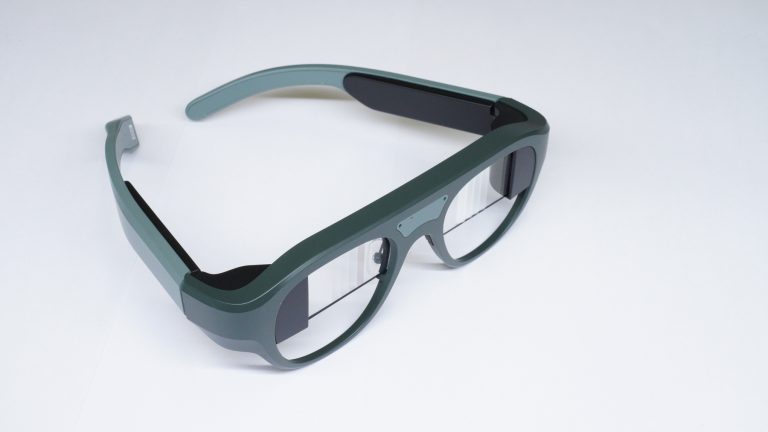
LEION Hey augmented reality (AR) eyeglasses from Beijing LLVision Technology Co., Ltd., display voice translations in text on the lenses in real time. The company’s glasses feature legs (or temples) molded from SABIC’s ULTEM™ 1000 resin. SABIC’s innovative material helped LLVision minimize the weight of the legs to give users all-day comfort, while providing high strength that enables key components to be integrated into the legs with maximum functionality.


www.sabic.com


#modernplasticsindia #plasticmagazine #indianmagazine #indianplasticmagazine #modernplasticsaward #ginujoseph #modernplastic #plasticindia #plasticnews #plasticrecycling #modernplasticsglobalnetwork #modernglobalnetwok #modernplasticsaward2023 #PlasticIndustry #sabic
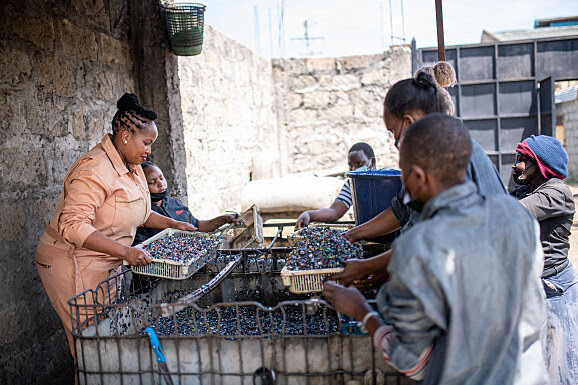

Stopping Plastic Leakage Into the Environment: Borealis Supports Ecopost to Drive Circular Economy in Kenya

Stopping Plastic Leakage Into the Environment: Borealis Supports Ecopost to Drive Circular Economy in Kenya

  • Borealis and Ecopost announce a collaboration to drive circular economy and support marginalized communities in Kenya.
  • Borealis will specifically support Ecopost’s activities in capacity building, training and engaging more waste collectors as well as the formalization of their work by funding entrepreneurial start-up kits for the youth and women groups.

Nairobi, the capital city of Kenya, generates more than 2,400 tons of solid waste every day, in entire Kenya this is estimated to be more than 22,000 tons of waste per day. Furthermore, the country faces challenges with poverty with 36% of Kenyans living below the poverty line, earning less than US$1.90 a day, as well as is highly exposed to deforestation with only 6% of the country’ surface covered by forest, which is being further degraded by increased demand for building materials.

Ecopost addresses all these three challenges by driving a circular economy via collecting and recycling plastic waste through a replicable and scalable model, while at the same time creating jobs for operators, plastic waste collectors, and distributors. Its solutions divert plastic waste from open burning, dumping in waterways, sewers and landfilling by creating eco-friendly alternatives to fossil-based plastics for applications like fencing, signage & building material.

A key pillar of Ecopost’s business model is to work with marginalized youth and women groups who collect, sort, shred and prepare waste material for producing pellets and plastic lumber. These women are the most important people in the recycling value chain, while at the same time they are exposed to being underpaid for the waste they collect as middlemen selling the collected waste to waste recyclers typically capture the majority of the sales margin. Ecopost formalizes the informal waste picking community and incorporates training and capacity building across the value chain to achieve impact at scale and providing a fair and regular income to waste pickers.

As Borealis and Ecopost share the same vision to stop waste leaking into the environment through the enhancement of circularity and to create a positive socio-economic and environmental impact, both companies agreed on a collaboration where Borealis will fund Ecopost’s activities to boost waste recycling in Kenya and to promote a circular economy in line with the UN Sustainable Development Goals.

Borealis supports a portfolio of similar initiatives via the Borealis Social Fund, whose aim is to contribute to the social welfare of communities by financially engaging in three focus areas, being education and social integration, water and energy, as well as waste and resource efficiency.

Borealis will specifically support capacity building, training and engaging more waste collectors, as well as formalization of their work by funding entrepreneurial start-up kits for the youth and women groups.

“We very much welcome Borealis’ support of our activities to implement the selected modules to improve the informal waste collection.”, says Lorna Rutto, CEO of Ecopost Ltd. “The funds will make a positive impact to Ecopost as well as thousands of young people and women in the marginalized areas. It will be incredibly valuable in creating a more positive socio-economic and environmental impact.”

“Mismanaged waste adversely impacts livelihoods, human health and hinders sustainable development. Partnering with Ecopost not only complements Borealis’ vision towards a circular economy, but also helps reducing socio-economic differences, a key target area of the Borealis Social Fund.”, Markus Horcher, Director Sustainability & Public Affairs at Borealis comments.

www.borealisgroup.com | www.borealiseverminds.com


#modernplasticsindia #plasticmagazine #indianmagazine #indianplasticmagazine #modernplasticsaward #ginujoseph #modernplastic #plasticindia #plasticnews #plasticrecycling #modernplasticsglobalnetwork #modernglobalnetwok #modernplasticsaward2023 #PlasticIndustry #borealisgroup #borealiseverminds

Intelligent E-Mobility Solutions – Dieffenbacher at Jec World 2023

Intelligent E-Mobility Solutions – Dieffenbacher at Jec World 2023

German machine and plant manufacturer Dieffenbacher will present intelligent plant concepts for producing composite components for e-mobility at booth M81 in Hall 5.

The company will highlight efficient and sustainable production solutions for components such as battery housings, battery box and underbody covers and protection sheets. Solutions will feature technologies ranging from SMC to LFT-D/GMT to wet molding, all with the hydraulic press as the core element of the production process. The new digital platform Evoris complements the forward-looking Dieffenbacher Jec World presence.

Marco Hahn, Director Sales of the Forming Business Unit at Dieffenbacher, will describe the company’s latest advances in a speech in Hall 5 on Wednesday, April 26, at 3:00 p.m. In “Turnkey plants and solutions for the production of composites components for E-Mobility,” Hahn will focus on SMC technology, wet molding, hybrid thermoplastic technologies and Evoris.

With Evoris, Dieffenbacher introduces a new approach to the digitization of hydraulic press systems and complete plants that takes advantage of artificial intelligence’s self-learning capabilities. With apps for condition monitoring and process analysis, plant operators gain transparency throughout the entire plant, can make important decisions more quickly and thereby improve processes, enhance machine availability and optimize maintenance. The results are production capacity increases and higher-quality components.

Additionally, visitors to the Dieffenbacher booth can expect to see a wide range of solutions for saving materials and energy. For example, Dieffenbacher short-stroke presses are designed for minimum energy consumption, high press forces and short cycle times. Presses close with small cylinders until just before the position where forming takes place. Thereafter, large cylinders act with the corresponding press force. This makes it possible to reduce the oil volume by 88% compared with conventional concepts. Adaptive accumulator management also optimizes energy consumption by automatically determining during the first press strokes the exact energy required for forming. For subsequent production cycles, the hydraulic drive accumulator is charged only to the corresponding required pressure level.

The special nesting method of the Dieffenbacher Fiberforge tape laying system helps plant operators use valuable raw materials as efficiently as possible. The Fiberforge can cut UD tapes at any angle between -45° and 45° to produce a contour with minimum waste. In one sample application, waste was reduced from 50% to 6.7% compared to using organo sheets. Dieffenbacher’s fully automatic SMC cutting and packaging system also reduces material consumption. By combining length and width cuts, it can generate all conceivable cutting patterns. In accordance with the desired lay pattern, the intelligent nesting control determines the cutting pattern and optimizes material use.

Nesting, Evoris and fully automated processes also ensure that Dieffenbacher plants effortlessly meet the high output requirements of e-mobility. “High output, best quality and reproducible manufacturing processes are the core requirements for e-mobility,” explains Marco Hahn. “We do not stop there. Our systems are also characterized by a consistent and uniform control concept for all line participants, cycle time optimization, maximum reliability, a unique visualization system and smart digitalization solutions,” he adds.

“We invite everyone to come and see our solutions at Jec World. We are looking forward to once again meeting our customers, partners and friends in person at our booth. Plus, we have an important milestone to celebrate. Founded in 1873, Dieffenbacher is celebrating its 150th anniversary this year,” Hahn concludes.


#modernplasticsindia #plasticmagazine #indianmagazine #indianplasticmagazine #modernplasticsaward #ginujoseph #modernplastic #plasticindia #plasticnews #plasticrecycling #modernplasticsglobalnetwork #modernglobalnetwok #modernplasticsaward2023 #PlasticIndustry

One Year of Digital Print Folders: Hubergroup Print Solutions Takes Stock

One Year of Digital Print Folders: Hubergroup Print Solutions Takes Stock

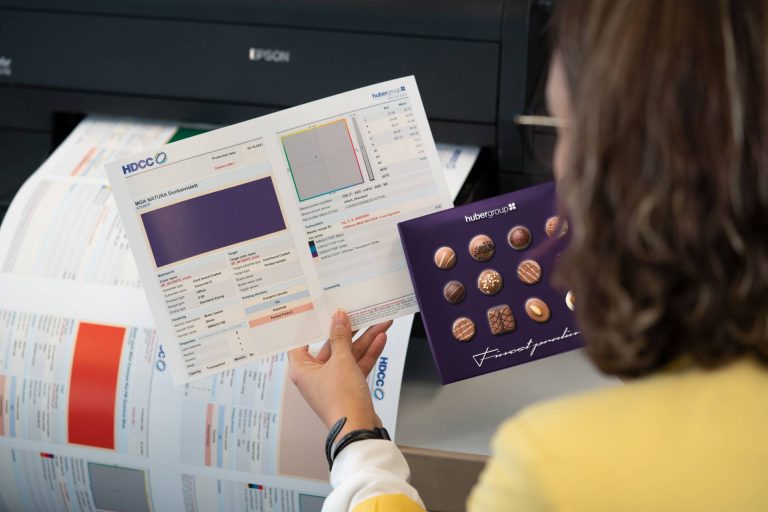
About a year ago, ink manufacturer hubergroup Print Solutions launched the digital print folder for its offset portfolio, which is intended to enable customers to benefit from faster and more efficient production, among other things. Now the international ink specialist is taking stock: according to hubergroup, the reaction of customers to the digital solution was consistently positive, and they were impressed by the high colour accuracy that is possible thanks to the integration in the company’s own colour management system HDCC. In the meantime, the ink manufacturer has therefore already connected four hubergroup sites in Europe and North America to the production of digital print folders and switched a large number of customers to the digital solution.

Heinz Aumüller, who is responsible for prepress and process standardisation at hubergroup, recounts: “At the beginning, we expected that we would have to convince our customers to test the digital print folders – but the opposite has been the case: almost all the customers we have approached so far were immediately willing to test our digital print folder and switched to it after a short time. Some have even approached us proactively. The quality and colour accuracy of the digital print folders, combined with the more efficient and flexible production process, are simply convincing.”

The special feature of the hubergroup solution is the complete integration into the company’s own colour management system HDCC. This means that the digital print folders go through the same quality control processes as analogue print folders and are also verified against their analogue reference. In addition, customers benefit from a faster and more efficient production process, which is particularly noticeable in the creation of multiple copies and multi-site productions.

One of hubergroup’s biggest customers in Northern Germany that has already switched to digital print folders is the printing company H.O.Persiehl, which specialises in printing high-quality packaging. Marco Erdmann and Soehnke Schildt, Managers Sheet Printing Department at H.O.Persiehl Norderstedt, explain: “The digital print folders did not only convince us with their very high colour accuracy but also with their long durability without physical changes. Furthermore, the quick availability, even in larger quantities, and the fast response time is a great advantage for us in everyday life.”

To meet the demand for digital print folders, hubergroup is setting up a global network of locations. Currently, the inks manufacturer produces digital print folders at four sites: Celle (Germany), Nottingham (UK), Arlington Heights (USA) and Mississauga (Canada).

Heinz Aumüller adds: “Our global network of production sites and their centralised access to our HDCC opens up completely new possibilities for flexibility and resource availability. Especially in global colour projects, we benefit from location independence and digital print folder output at the destination. The next site integrations are already being planned so that our customers can benefit even more from our flexibility and efficiency.”


#modernplasticsindia #plasticmagazine #indianmagazine #indianplasticmagazine #modernplasticsaward #ginujoseph #modernplastic #plasticindia #plasticnews #plasticrecycling #modernplasticsglobalnetwork #modernglobalnetwok #modernplasticsaward2023 #PlasticIndustry

Get in the Loop at Interpack 2023

Get in the Loop at Interpack 2023

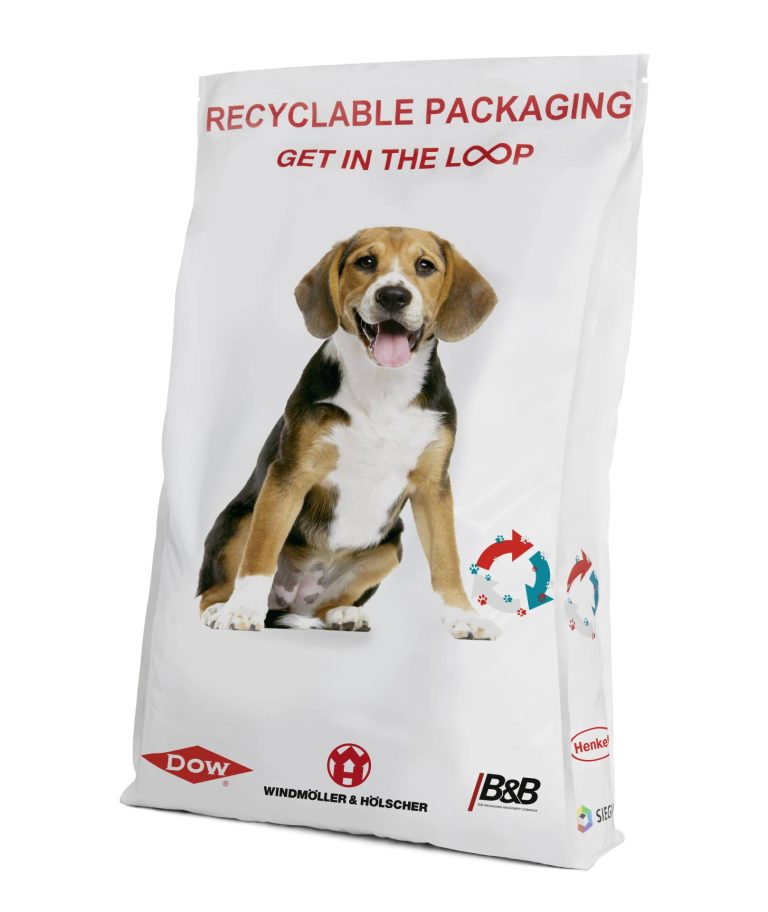
Windmöller & Hölscher, specialist for machinery in the flexible packaging market, will present new developments regarding the industry’s hot topics: Efficient production, Circular Economy, and Digitization. The W&H slogan “Get in the Loop” and the infinity symbol illustrate the way these three topics influence each other and contribute to the success of sustainability.

W&H will highlighting new packaging solutions ready for the Circular Economy. On the booth there will be examples that are made for recycling as well as solutions that use high percentages of recycled materials. All solutions have been extruded and printed with W&H lines and have been tested for their practicability with W&H sack making lines or with converting partners. The subsidiary GARANT Maschinenhandel, a specialist in paper bag machines will focus on its technical developments in the field of paper packaging solutions for tomorrow. GARANT will also provide a comprehensive understanding of the innovative machines and their applications at an IN-HOUSE EXPO at the GARANT technical center in Lengerich. This will take place on May 4, 5, 8 and 9, 2023, from 10:00 a.m. to 3:00 p.m. each day.

Highlights from W&H

Circular Economy – Solutions ready for recycling
Recyclable pet food bags: W&H is showing two different approaches to this recyclable packaging solution, that is trending in the market: a blown film with a co-extruded EVOH barrier layer and one made with a functional barrier coating during the printing process.

Recyclable Coffee Pouch: A stretched MDO PE-film with an EVOH barrier layer combined with PE sealing film. With a total amount of only 2% EVOH this solution exceeds the current recycling regulations, while at the same time providing the barrier properties for oxygen and water vapor required for this kind of packaging.

Circular Economy – Solutions using recyclates

PE Valve Sack: All new film recipe with 30 % post-industrial material that displays similar mechanical properties as a conventionally produced film.

DIGITIZATION

RUBY App: With the IoT system RUBY from W&H, the value chain can be digitized and the data used to monitor, automate and improve packaging production. Now it’s even easier with the new RUBY app: keep an eye on the production – no matter wherever you are.

Highlights from GARANT Maschinenhandel

As a servo champion, GARANT’s carrier bag machine TRIUMPH 5-F6 produces high-quality carrier bags with flat or twisted handles with significantly reduced changeover times and increased output.

With the e.BAG series, GARANT offers demand-oriented machines especially for e-commerce packaging. Whether flat and satchel bags, block bottom bags or cross bottom bags – the e.BAG series offers the possibility to select a machine that meets the requirements for paper shipping and return mailer bags.

The highlight of GARANT’s technical developments is the exclusive premiere of the latest cross bottom bag machine (based on the renowned TRIUMPH 5-F6). It carries cost effectiveness for compact cross bottom bags to a new level, with over a dozen options for additional modules. The cross bottom paper bags are ideal for applications in the hygiene sector and are compatible with common filling stations.

www.wuh-group.com


#modernplasticsindia #plasticmagazine #indianmagazine #indianplasticmagazine #modernplasticsaward #ginujoseph #modernplastic #plasticindia #plasticnews #plasticrecycling #modernplasticsglobalnetwork #modernglobalnetwok #modernplasticsaward2023 #PlasticIndustry

Interpack 2023: Constantia Flexibles Highlights Its Materials’ Runability

Interpack 2023: Constantia Flexibles Highlights Its Materials’ Runability

Constantia Flexibles, a leading provider of packaging solutions, is proud to announce its contribution to the trade fair INTERPACK from May 4-10, 2023, in Duesseldorf. The company will demonstrate the performance of its materials in collaboration with 30 renowned international machine suppliers, highlighting its commitment to delivering quality products that meet the needs of its customers.

Constantia Flexibles will highlight its 360-degree material approach for the Pharma and Consumer business during the trade fair. “We are excited to collaborate with 30 machine suppliers at INTERPACK and demonstrate the capabilities of our materials,” said Marc Rademacher, Executive Vice President Consumer Commercial. “Our team has worked hard to develop high-quality substrates that deliver exceptional performance, and we look forward to sharing our expertise with the trade fair audience. With our product range Ecolutions, we can prove that sustainability and performance go hand in hand,” Marc Rademacher adds.

Visitors will have the opportunity to see the materials in action and learn about their benefits, such as increased efficiency and recyclability. Highlights of the show will be:

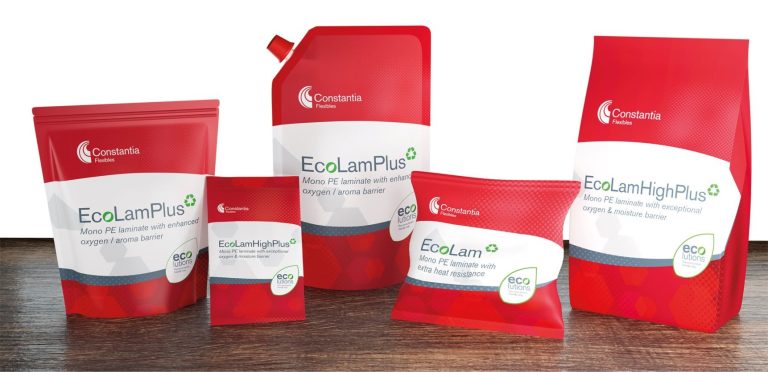
Designed for the PE recycling stream: Our EcoLam product family

EcoLam laminates are based on polyethylene (PE) compounds developed by Constantia Flexibles. Oriented polyethylene (OPE), barrier OPE, and metalized high barrier OPE (in combination with the appropriate sealant PE) will replace non-recyclable laminates such as PET/PE, PA/PE, or even PET/ALU/PE.

Several characteristics make the mono PE laminate EcoLam more sustainable and efficient than other products in its league: they are lighter than others, have a solid thermal resistance, and use a lower barrier polymer content due to the combination of processes and resins. Another advantage of the EcoLam Range is that its barrier properties can be customized to the product. All EcoLam grades are certified by RecyClass and are compliant with all existing sorting and recycling technologies commonly used at an industrial scale in Europe.

Based on mono PP: The EcoVer family

EcoVer is Constantia Flexibles’ mono polypropylene (PP) offer which is available in different barrier grades: EcoVer, EcoVerPlus, and EcoVerHighPlus. Applicable on VFFS and HFFS lines, its high transparency, low initial sealing temperatures, its heat resistance, and stiffness facilitate the use for beverages, snacks, dairy, confectionery, home and personal care (HPC), pet care or processed food. EcoVer, a PP mono structure, is recyclable in the mixed PO stream.


Based on aluminum: die cut lids that combine sustainability and versatility

Constantia Flexibles has already laid the groundwork to revolutionize the lid market. EcoPeelCover is the thinnest possible aluminum / coex die cut lid which lowers the material use and weight but still guarantees an easy peel for consumers. The new smooth-finish-embossing pattern significantly enhances the aesthetic appeal compared to traditional embossing techniques. Moreover, this advancement ensures perfect pick-and-place operations on the packaging machinery, further optimizing the process. At the same time, the reduced material thickness still provides seal-through properties and a high puncture resistance.

Constantia Flexibles strives for a 360-degree-approach consequently, in addition to the aluminum-based EcoPeelCover, has developed specifications with multiple other substrates and is delighted to present die cut lids based on these materials running live on packaging lines at INTERPACK. Highlights are the PPCover, a metal-free die cut lid based on polypropylene, paper-based EcoPaperLid, and another more sustainable solution which is the rPETLid die cut lid that is created from recycled plastic to reduce virgin feedstock.


Based on paper: The EcoPaper family

The EcoPaper family consists of a wide range of recyclable paper-based packaging solutions. EcoPaperPlus is dedicated to medium-barrier applications. It is particularly suitable for products that require aroma and grease barriers, such as confectionery, snacks, and even home and personal care (HPC) applications. The material is available with a smooth or rough surface shine and is printable by Rotogravure, Flexo, or Digital. Paper FSC or PEFC certification is available on demand.

Constantia Flexibles also demonstrates its solutions in the Pharma sector:

Based on aluminum: Blister solutions for pharmaceuticals

NORMA is a high-performance lidding foil for pharmaceutical blister packaging.

NORMA is our benchmark for lidding foils. It has been successfully utilized for more than 50 years in the pharmaceutical packaging market, not only protecting the integrity of pharmaceutical products but also supporting the preferred packaging format by patients and medical staff alike. A very versatile product that can be manufactured with different heat seal coating- and lacquer systems and printed with all in- and offline printing systems. Additional protection can be achieved by including our child-resistant or anti-counterfeiting features that help protect curious children and patients from potential harm.


PERPETUA: sustainable packaging solution with high barrier properties

PERPETUA is made of recyclable polypropylene-based mono-material. Its excellent barrier properties make it ideal for pharmaceuticals. PERPETUA protects products in the best conceivable way from oxygen, water vapor, and light. This is essential to maintain the efficacy of medicines. Additionally, the product line is cyclos-HTP certified, meaning its recyclability is between 90 and 96%, depending on the individual material specification. PERPETUA ALTA is a high chemical resistance variant of recyclable laminates approved by RecyClass.

VELAR is the packaging for pharmaceutical flow wrap and overwrap laminates based on PET/ALU/PE. It is designed to provide exceptional barrier properties against light, oxygen, and water vapor. VELAR is recommended for the packaging of medical and pharmaceutical products such as blisters, inhalers, plastic vials, and diagnostic devices.


www.cflex.com

#modernplasticsindia #plasticmagazine #indianmagazine #indianplasticmagazine #modernplasticsaward #ginujoseph #modernplastic #plasticindia #plasticnews #plasticrecycling #modernplasticsglobalnetwork #modernglobalnetwok #modernplasticsaward2023 #PlasticIndustry #cflex

That’s a Wrap. Mondi and ATS-Tanner Launch Paper Band for Food Bundles and Multipacks

That’s a Wrap. Mondi and ATS-Tanner Launch Paper Band for Food Bundles and Multipacks

  • Mondi has partnered with Swiss converter ATS-Tanner to create new kraft paper
    bundle packaging.
  • The innovative solution is strong enough to replace plastic on single or bundle
    packages and ideal for drink, fruit and vegetable and eCommerce end-uses.
  • The band is recyclable in existing paper recycling streams.

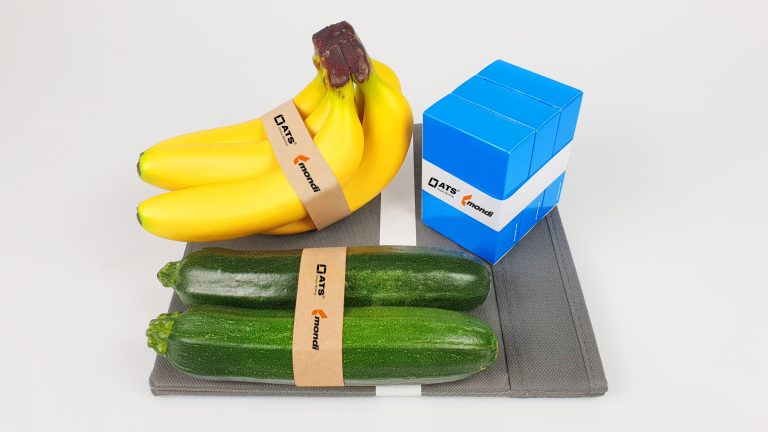
Mondi, a global leader in sustainable packaging and paper, has collaborated with Swiss converter ATS-Tanner to create an innovative paper band, which can hold individually labelled products or bundles reducing unnecessary plastic. ATS-Tanner uses Mondi’s kraft paper Advantage MF SpringPack and converts it into a band by adding a functional barrier on both sides of the paper. The paper is then sealed using ultrasound, eradicating the need for any adhesive. This ensures that the products are secured with minimum packaging, reducing waste and delivering a cost-efficient solution.

ATS-Tanner markets the coated bands under the brand name TruePaper. The strength of Mondi’s kraft paper means it can hold weights of up to 20 kg, making the band perfect for fruit and vegetable bundles as well as multipacks of bottles and other consumer goods. The paper ensures excellent printing results meaning brand, product, return and responsible waste management messaging can be communicated to the end user. Mondi’s kraft paper used for the paper band is made from renewable, responsibly sourced and certified materials. It is recyclable in existing paper recycling streams across Europe, even fulfilling Germany’s ratio of 95/5.

Carsten Breiter, International Key Account Manager Speciality Kraft Paper, Mondi says: “By combining world-leading expertise in sustainable packaging with ATS-Tanner’s machinery and skills, we have together created a system that offers great product protection while reducing unnecessary plastic. This is the perfect example of strong collaboration producing a new solution that does just that.”

Serge Tanner, Owner & CEO, ATS-Tanner says: “We trialled various paper grades and Mondi’s kraft paper offers the required strength to substitute plastic packaging with this paper band. TruePaper is a resource efficient solution that can – depending on the banding machine used – wrap products measuring up to 1300 x 500 mm and is convenient to store. Using paper instead of plastic is not the only advantage: an ultrasonic banding machine from ATS-Tanner consumes 98% less energy than it would take to pack a like-sized delivery using a shrink wrapping machine.”

www.mondigroup.com


#modernplasticsindia #plasticmagazine #indianmagazine #indianplasticmagazine #modernplasticsaward #ginujoseph #modernplastic #plasticindia #plasticnews #plasticrecycling #modernplasticsglobalnetwork #modernglobalnetwok #modernplasticsaward2023 #PlasticIndustry #mondigroup

Textiles Recycling: The Sorting Challenge

Textiles Recycling: The Sorting Challenge

To this day, only a tiny fraction of discarded textiles is recycled. While the clothing industry has doubled production in the last 15 years, the time garments are worn has fallen by more than 30%. At the same time, the rising demand for low-cost fast fashion is driving a decline in the quality of the materials, which makes them
more difficult to re-use or recycle. According to the Ellen MacArthur Foundation, it is estimated that 114 million tonnes of textile waste are generated every year. Of the clothing that is collected for recycling, 12% is downcycled into lower-value applications such as insulation material, and less than 1% is used to make new clothing in a closed-loop circular economy. The high content of polyester in fast fashion also means that an increasing quantity of discarded textiles are incinerated in waste-to-energy plants because of its high calorific value.


The environmental impact of textile waste

The rising consumption of clothing, coupled with the decreasing wearing time and increasing use of synthetic materials such as polyester and nylon, is worsening the negative impact on the environment. Large quantities of plastic microfibres shed through the washing of textiles are leaked into the ocean, accounting for 35% of microplastic pollution. Improper disposal can also result in flat textiles released into the environment, endangering wildlife on land and marine life.

Regulatory drive for the development of textile recycling

Policymakers have a key role to play in driving an increase in recycling. In Europe, in 2022 the Commission presented an EU Strategy for Sustainable Textiles, which includes extending the lifetime of textiles by recycling the materials they contain into new quality products. The revised Waste Framework Directive requires EU member countries to establish systems for separate collection of textile waste by the beginning of 2025, and at the same time, new collection and recycling targets will kick in. The infrastructure for collecting, sorting and recycling these materials will need to expand fast in readiness for the new regulations.

The textile sorting challenge

Clothing is made of different fabrics, fixtures and accessories, such as buttons or zips, and they contain a variety of raw materials – combinations of natural and synthetic fibres, plastics and metals. This makes disposing of it sustainably a complicated matter. “The recycling industry requires pure fractions or very specific mixtures,” explains Annika Ludes, Engineer for Digital Solutions at STADLER. “This means removing the fixtures and accessories from the fabric. The different materials in the garment – the outside fabric, the lining, the seams – need to be separated, then the different fibres in each fabric (cotton, elastane, polyester, etc.) must be sorted.”

Today, textile sorting is done manually, and only a small portion of the output material is suitable for recycling. However, research is ongoing on automating the process with the aim of producing the high-quality fractions required to address the recycling challenge.

Automated sorting: the path to a textile circular economy

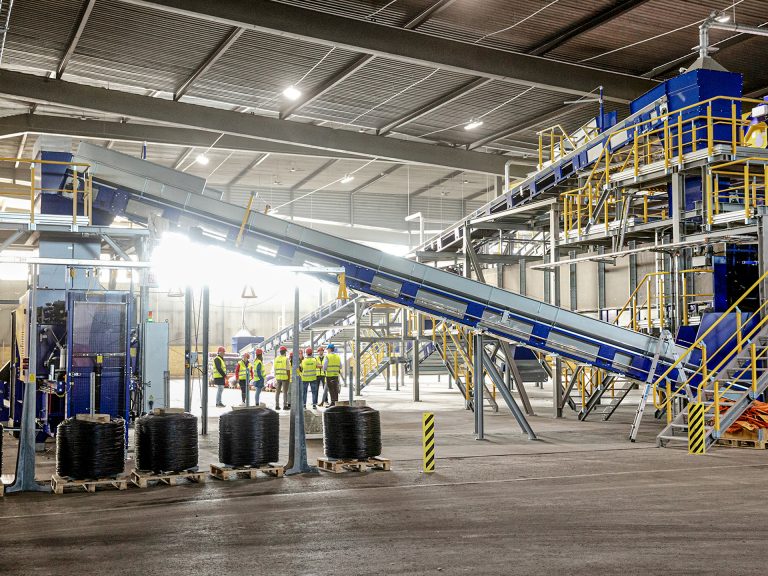
STADLER – a leading supplier of sorting plants for the recycling industry – is researching automated sensor-based solutions for textile sorting. In 2017, in artnership with TOMRA, it has designed and built a small pilot project plant in Avesta, Sweden, in the second phase of the government-funded Swedish Innovation Platform for Textile Sorting (SIPTex) project, which aims to develop a sorting solution tailored to the needs of textile recyclers and the garment industry. This was followed in 2020 with the third phase of the project: the first industrial-scale fully automated mixed textile waste plant in the world, which is capable of achieving the purity and recovery required for recycling and reutilization. This facility, located in Malmö, processes pre-consumer waste from textile producers (clippings and rejects) and post-consumer waste, which consists of clothing and household textiles, and may contain non-textile parts such as buttons and zippers. The material is delivered in bales weighting from 350 to 500 kg and is sorted whole. The plant has the capacity to process up to 4.5 tonnes/hour in one line.

The textile sorting process

The process developed by STADLER with the cooperation of TOMRA in the SIPTex project starts with the waste textiles entering the plant in batches, dosed, fed by conveyor belts into four sensor-based TOMRA AUTOSORT units.

“Because of the nature of the textile material fed into the plant, the feeding system and dosing are very important to the success of the sorting process,” explains Dr. Bastian Küppers, Engineer for Digital Business Development at STADLER. “The STADLER dosing drum features mechanical components specially designed to handle the soft, flexible textile materials, of various shapes and unpredictable sizes, prone to tangling. Similarly, the design and layout of the conveyor belts, hoppers and chutes need to be designed to avoid tangling of long pieces of fabric.”

The TOMRA NIR (Near Infrared) sorting technology is also key to the process and capable of recognizing and differentiating various types of textiles in a first step. A second optical sorter is added for further cleaning of impurities.

Towards a textile circular economy

As the textile industry is moving towards a circular economy, driven by public opinion and legislation, the demand for textile sorting equipment is set to grow at an accelerated pace. STADLER has already seen an increase in interest for textile sorting plants and has been approached by companies in the recycling sector. “At STADLER we are seeing many interested parties who would like to visit the textile sorting plant we designed and built in Malmö,” comments Annika Ludes.

STADLER is uniquely well placed to meet this new demand, bringing to the table its extensive know-how in the design and construction of sorting plants and the specific experience it has acquired through the SIPTex project, as well as the expertise of its technological partners such as TOMRA. With its holistic approach, it is able to develop complete solutions tailored to the requirements of the individual customers.

For more information, visit http://www.w-stadler.de


#modernplasticsindia #plasticmagazine #indianmagazine #indianplasticmagazine #modernplasticsaward #ginujoseph #modernplastic #plasticindia #plasticnews #plasticrecycling #modernplasticsglobalnetwork #modernglobalnetwok #modernplasticsaward2023 #PlasticIndustry

Hasco Award for Innovative Products

Hasco Award for Innovative Products

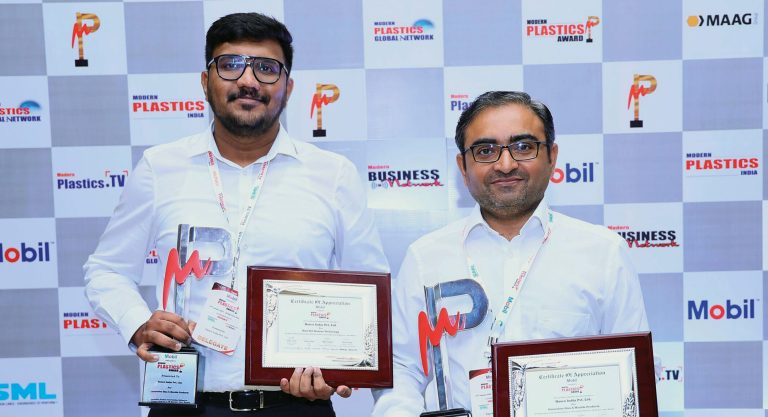
In a competition held by the trade journal Modern Plastics India, HASCO India, which is based in Bangalore, was able to convince the jury with its innovative new products in two categories.

Tool and mouldmaking:

HASCO Loc Check enables fast localisation of moulds

The new HASCO Loc Check A5900/… makes it possible at any time to establish the location of a mould worldwide, wherever GSM network is available. With the GSM tracking, the location can be called up via an easy-to-use web interface. Maximum data security is guaranteed through the use of certified servers. A battery charge lasts for more than 3,000 transmission cycles, which, depending on the transmission frequency, corresponds to an operation period of up to three years. With a magnet attachment, the Loc Check A5900/… can be easily mounted directly on the mould.

Hot runner technology:

HASCO Streamrunner – the first additively manufactured hot runner

The additive manufacturing technology offers maximum design freedom and breaks through the previous limitations in the design of hot runners. Developed with state-of-the-art technologies for innovative, future-oriented solutions, the Streamrunner stands out through its compact design, perfect balancing, particularly gentle passage of the melt and excellent colour change characteristics. Every Streamrunner is designed individually to deal with a particular task and is optimised on the basis of rheological simulations.

HASCO Support in India

General Manager Rajnikant Patel looks proudly at the award presented to him. “For us, this is motivation to make the day-to-day work of tool and mouldmakers in India easier with the help of innovative products and top service.”

As an internationally leading standard-component specialist, HASCO has been active in India since 1998. It first entered the market as a branch of HASCO Singapore Pte Ltd. The growing success of the branch enabled HASCO India to be founded as an independent, limited liability company in 2003. Currently, a ten-member HASCO team with in-depth toolmaking expertise serves around 1,200 mouldmakers across India.

www.hasco.com


#modernplasticsindia #plasticmagazine #indianmagazine #indianplasticmagazine #modernplasticsaward #ginujoseph #modernplastic #plasticindia #plasticnews #plasticrecycling #modernplasticsglobalnetwork #modernglobalnetwok #modernplasticsaward2023 #PlasticIndustry #hasco

HASCO Multicoupling System – Extension of Product Range

HASCO Multicoupling System – Extension of Product Range

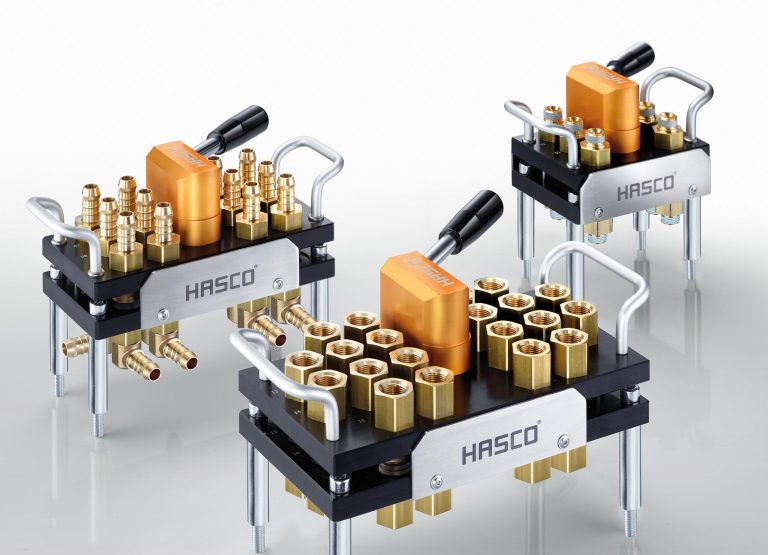
The innovative HASCO multicoupling system enables the central connection of several cooling circuits in one single step, and offers numerous advantages in process optimisation. Setting-up procedures can be carried out through a reliable and simple connection of the machine and mould side with only one lever movement and without any risk of mixing up the different cooling circuits and hoses.

New: Multicoupling system USA, French and clean-break system HT

In addition to the standard system, the new USA (ZI) and French (FRA) systems are now also available as open or closed versions with valve. In addition, HASCO offers the clean-break multicoupling system exclusively also as a HT version with flat sealing front surfaces, which reliably prevents cooling fluid leaking when decoupling. The temperature resistance of the multicouplings can be increased to 180°C with water applications, creating considerable competitive advantage.

Modular structure

HASCO thus offers a wider range of services for customers throughout the world. Overall, the extension to the product range comprises 60 new products, each with three model series. Plates are available for 6, 12 and 20-connections, whereby the couplings can also be replaced without dismantling the hoses. The modular structure allows individual configuration as well as simple integration into all existing systems.

Variety of combination possibilities

The exceptional diversity of combination possibilities with nipples, couplings and hoses opens the door to future-oriented solutions for all tasks in cooling technology. These include versions with inner or outer thread, Push-Lok or hose nipples, rounding off the comprehensive range.

Competent partner in cooling technology

High-quality products go hand in hand with top-class service. This begins at HASCO with competent and individual consulting. With over 50 years of experience, HASCO is available to its customers around the world as a leading expert and partner in the field of cooling technology.

www.hasco.com


#modernplasticsindia #plasticmagazine #indianmagazine #indianplasticmagazine #modernplasticsaward #ginujoseph #modernplastic #plasticindia #plasticnews #plasticrecycling #modernplasticsglobalnetwork #modernglobalnetwok #modernplasticsaward2023 #PlasticIndustry #hasco