PT Amandina Bumi Nusantara: Recycled PET for Coca-Cola’s First 100 % Rpet Bottles in Indonesia
The Indonesian plastics recycler produces the rPET for Coca-Cola, Fanta, Sprite and Sprite Waterlymon bottles on two recoSTAR PET 165 HC iV+ bottle-to-bottle recycling systems from Starlinger.
in partnership with Coca-Cola Europacific Partners Indonesia (CCEP Indonesia), launched the first bottles made from 100 % rPET (excluding bottle caps and labels) for its most popular soft drink brands. The recycled PET is supplied by one of Indonesia’s recycling pioneers, Amandina Bumi Nusantara. The company operates a plastics recycling plant on the outskirts of Jakarta with two Starlinger recoSTAR PET HC iV+ bottle-to-bottle recycling systems and processes 3,000 tons of collected PET bottles every month. Two types of clear bottle-grade rPET pellets are produced – one for carbonated beverages and one for spring water. In addition, the company supplies hot-washed flakes in clear and light-blue colours.
“We chose Starlinger PET bottle-to-bottle recycling equipment because Starlinger is recognized as a leading provider of top-tier recycling machinery known for its exceptional performance and reliability”, said Suharji Gasali, Managing Director of Amandina Bumi Nusantara. “Furthermore, the decision was influenced by the prestigious approval it received from Coca-Cola System Indonesia – a testament to the equipment’s high standards and compliance with industry requirements. In essence, the combination of Starlinger’s stellar reputation and the endorsement from Coca-Cola System made it the ideal choice for Amandina in the pursuit of efficient and trustworthy recycling solutions.”
The installation of the two PET recycling systems was carried out by local technicians from Starlinger’s Indonesian branch office PT Starlinger SEA in autumn 2022. The Starlinger team in the branch office in Surabaya handles machine installations, service and maintenance works as well as spare part orders for Starlinger customers in the South East Asian region and provides immediate support if needed.
Amandina Factory
Responsible sourcing
Amandina assists companies in achieving their sustainability targets by providing competitive recycled PET products produced from responsibly sourced input material. For the collection of post-consumer PET bottles, Amandina Bumi Nusantara collaborates with Mahija Parahita Nusantara Foundation, a non-profit organization founded by CCEP Indonesia and Dynapack Asia. As in many other Asian countries, over 90 % of plastic waste collection activities in Indonesia are carried out by waste pickers in the informal sector – called “recycling heroes” by Amandina and Mahija. The remaining percentage is managed through formalized systems such as waste banks and other organized collection efforts.
CCEP Indonesia aims to make 100% of its packaging recyclable and to ensure that at least 50 % of the plastic bottles are made of rPET by 2025. The company’s targets for 2030 are to collect 100 % of their plastic bottles to enter the recycling stream, and to eliminate virgin plastic in their plastic bottles.
Besides PET, other types of plastics such as PE bottles or PP cups are collected and recycled in Indonesia. The government has been working on developing strategies and roadmaps to address plastic waste and promote recycling practices. In 2019, it adopted a regulation aiming to reduce waste by 30 % by 2029. However, the enforcement and implementation of regulations varies. The involvement of private businesses in supporting recycling initiatives is common and they often play a significant role in creating environmental awareness and promoting sustainable practices. This can include financial support as well as resources and expertise to drive recycling programs, especially in collaboration with local communities and organizations. Coca-Cola and Dynapack Asia, for example, are supporting social activities of the above-mentioned responsible sourcing platform Mahija Parahita Nusantara.
Certified food-grade quality
PT Amandina Bumi Nusantara is the first PET recycling company that has obtained the SNI Marking Product Certificate (SPPT) from the National Standardization Agency (BSN) for implementing the Indonesian National Standard (SNI) 8424:2017. This standard, which was established by the Indonesian Ministry of Industry, protects consumer interests and ensures that the quality of products made of recycled PET resin is maintained. It includes strict qualification stages, high-standard sampling, as well as testing and product assessment procedures to ensure that the PET recycling process meets the desired safety, sustainability and performance criteria. Since its launch in 2017, it has become an important reference in the PET recycling sector. Furthermore, Amandina Bumi Nusantara has obtained standards from the National Agency of Drug and Food Control (BPOM), Halal, and FSSC 22000, which have approved the use of rPET in food and beverage packaging.
Industry interview with Frank Petrolli, VP Strategic Market Development at Plasmatreat
Mr. Petrolli, why is OPC UA important for Plasmatreat?
With our CO2-reducing surface treatment technology, we have a strong focus on the plastics industry. With the OPC UA standard, our machines can communicate independently with other machines in a plant. Regardless of which manufacturer they come from. Interoperability and manufacturer independence are the biggest advantages of this standard. Many years ago, we were already involved in working groups on the Euromap interface together with companies from the injection molding sector and automation specialists. The basic idea was already a standardized exchange of information. What was still missing at that time was consistent communication in the various applications.
Which customer sectors in the USA are more skeptical about the use of OPC UA and which are more open to it?
I believe that there is widespread skepticism towards OPC UA, not only in the USA, but also there. This is essentially due to a general skepticism towards anything new. Companies often simply don’t have the time to deal with a new topic. And they don’t know how much staff they need to train for it. As in many parts of the world, there has been a serious shortage of skilled labor in the USA for some time now. In the face of these uncertainties, companies in all parts of the industry prefer to rely on what they have, the tried and tested. If the operator, the automation provider of a plant, for example the traditional OEM, does not explicitly want OPC UA in their plant, it will not be used.
Are the advantages of a global machine standard that you mentioned not convincing?
Many of our customers have simply never heard of it. Some of them have heard of it, but they don’t know exactly what it means. We are making great efforts to publicize the topic and explain the benefits. Because the benefits are the most important thing here in the USA.
Where do you have to start to show the benefits?
Ideally with the production operator, with the end user. They need to be convinced. The fact is that the end customer, i.e. usually the OEM, sometimes also a TIER 1, determines what a new system should look like. They have to assemble the machines and units and then ensure that the system runs. The OEM defines the specification for a new system in advance. However, it is not realized until years later. If we as a supplier demonstrate the advantages of OPC UA to our customer, say to a machine manufacturer within this plant, we are virtually always too late. But if you convince an OEM, then the new standard will be rolled out in all their plants, worldwide. In my opinion, this will give OPC UA the greatest resonance.
Suppliers, for example companies like us that supply process technology, would also be picked up much earlier. They would take much greater care of their connection to OPC UA, i.e. invest money in it, because they would see the added value of being automatically included in the specifications at the very beginning of the planning process. But it’s not just the OEM.
Who else?
The manufacturers of applications and components should also take a close look at the topic of OPC UA. Just like Plasmatreat is doing. They should put aside their concerns that this will make them comparable and therefore replaceable. Because in reality, it is a competitive advantage if you can offer your system in a simple and intuitive way. OPC UA also gives smaller companies, such as Plasmatreat, greater reach among end customers and users.
How should you explain the benefits of OPC UA to an OEM?
As Germans and Europeans, we are very data-focused. We emphasize what can be measured in figures. When we talk to American customers, we have to stop always discussing and promoting everything from the technical side. We have to show the added value for the end customer and companies like Plasmatreat. The American customer always asks: What’s in it for me? It’s not just about the technology. Instead, it’s about the simplicity of integrating and parameterizing a system – regardless of the machine. You have to tell the OEM that they need fewer trained personnel after implementation. You can score points in the USA with simplicity, because it is extremely important for companies. At the end of the day, it’s not our data and facts that count, but the perspective of the person using it. If we bring OPC UA to the OEMs in this way, we will be successful in the long term.
How important are trade fairs such as the NPE for raising awareness of OPC UA?
It’s good to present the standard at trade fairs. NPE 2024 is a great platform in itself. For us as a process supplier, but also for injection molding manufacturers, automation specialists, suppliers and the entire plastics supply chain. Everyone meets potential customers there. We expect visitors to come from the various industries and to be open to everything that has changed. After all, the last NPE was six years ago and many of the North American customers were unable to travel to the K trade fair in Germany due to Covid in order to obtain the relevant information there. But it is also very important to promote OPC UA outside the trade fairs. There needs to be more communication with the relevant industry associations. It would be easier to explain the actual benefits of a common interface. There are cross-sector industry organizations in the USA. It would certainly be useful to present OPC UA more intensively there.
Navigating the Bioplastics Packaging Market: Trends, Projections, and Insights
Introduction:
The global bioplastics packaging market is undergoing a transformative phase, driven by the escalating demand for sustainable packaging solutions across industries. With a projected compound annual growth rate (CAGR) of approximately 12.5% from 2023 to 2033, reaching a valuation of about US$ 23,818.9 million, the market presents a compelling opportunity for stakeholders. This article offers a comprehensive exploration of the bioplastics packaging landscape, encompassing current trends, future projections, key drivers, challenges, and regional dynamics, as per data according to Persistence Market Research
Current Market Dynamics:
As of 2022, the global bioplastics packaging market size stood at approximately US$ 7,678.7 million, with projections estimating a substantial increase to around US$ 8,913.1 million by the end of 2023. This growth trajectory is indicative of the rising adoption of bioplastics as a viable alternative to conventional plastic packaging materials. Moreover, the market is poised for significant expansion over the forecast period, driven by increasing consumer awareness, regulatory interventions, and technological advancements..
Drivers of Growth:
Several factors are propelling the growth of the bioplastics packaging market:
Sustainability Focus: With heightened environmental consciousness, there’s a growing preference for biodegradable and eco-friendly packaging solutions. Bioplastics, derived from renewable resources, offer a sustainable alternative to traditional plastics, aligning with consumer preferences and regulatory mandates.
Food and Beverage Sector Demand: The food and beverage industry represents a significant end-user segment for bioplastics packaging. Factors such as contamination risk mitigation, consumer preference for natural polymers, and the pursuit of environmentally friendly packaging solutions are driving the adoption of bioplastics in this sector.
Technological Advancements: Major industry players are investing in research and development to enhance the physical properties of bioplastic materials. Innovations aimed at improving durability, flexibility, and barrier properties are expanding the application scope of bioplastics across diverse industries.
Regulatory Initiatives: Stringent regulations aimed at curbing plastic pollution, such as the European Union’s ban on single-use plastics, are catalyzing the adoption of bioplastics packaging. Regulatory interventions incentivize businesses to transition towards sustainable packaging solutions, thereby fostering market growth.
Regional Insights:
Europe: The European market is at the forefront of bioplastics adoption, driven by stringent regulatory frameworks favoring sustainable packaging practices. Countries like Germany, France, and the UK are witnessing increased investments in bioplastics research and development, bolstering market growth.
North America: The United States leads the North American bioplastics packaging market, propelled by a combination of regulatory measures, consumer awareness campaigns, and technological innovations. Initiatives aimed at reducing single-use plastics are driving the adoption of bioplastics across various sectors.
Asia Pacific: Emerging economies like India and China are experiencing rapid growth in the bioplastics packaging market. Government initiatives to phase out single-use plastics, coupled with increasing consumer demand for sustainable products, are fueling market expansion in the region.
Challenges and Restraints:
Despite the promising growth prospects, the bioplastics packaging market faces certain challenges:
Raw Material Sourcing: The complexity involved in sourcing agricultural raw materials for bioplastics production poses logistical challenges for manufacturers.
Technological Constraints: The development of bioplastic packaging with comparable performance characteristics to conventional plastics remains a technological challenge.
Waste Management: Effective disposal and recycling of bioplastics present logistical and infrastructural challenges, hindering widespread adoption.
Future Outlook:
The future of the bioplastics packaging market is characterized by innovation, sustainability, and regulatory compliance. Continued advancements in bioplastics technology, coupled with evolving consumer preferences and regulatory landscapes, will drive market growth. Key players in the industry are expected to focus on research and development, strategic collaborations, and market expansion initiatives to capitalize on emerging opportunities.
Conclusion:
The bioplastics packaging market represents a paradigm shift towards sustainability and environmental stewardship in the packaging industry. With robust growth projections and increasing adoption across diverse end-user segments, bioplastics are poised to reshape the global packaging landscape. As stakeholders navigate challenges and capitalize on opportunities, the stage is set for a sustainable, eco-friendly future driven by bioplastics innovation.
Allrounder 520 A: Highly Innovative IML Application for Medical Technology
Innovative: In-mould labelling (IML) for centrifuge tubes creates added value.
Sustainable: Medical technology products with adhesive-free IML labels made from mono-material.
In partnership: Joint project around high-performance electric machine.
While in-mould labelling (IML) is standard for packaging products, this process is still rarely used in the medical industry. Using a centrifuge tube plus label made of PP mono-material as an example, Arburg will be presenting a sustainable IML application with high repetition accuracy and added value for the pharmaceutical and medical technology industries at NPE 2024. The ready-to-use product is manufactured in a fast, space-saving and cost-efficient way using a turnkey system centred around an electric Allrounder, without any additional hygiene risks.
Prestigious partners Kebo (mould), MCC Verstraete (label), Beck (automation) and Intravis (camera inspection) are all involved in the innovative joint IML project centred around an electric Allrounder 520 A in clean room design.
Sustainable: Product made from mono-material
The pioneering technology was first presented as a proof of concept at Fakuma 2023 and met with a great response. The product is also particularly interesting in terms of sustainability: the tube and label are both made of PP, meaning that the mono-material product can be easily recycled. Because the integrated label can contribute to the stability of the tube, its wall thickness can be reduced if necessary and plastic material can be reduced in volume production. In addition, work steps such as bonding and printing are eliminated, meaning that no adhesives are required and there is no waste due to contamination with liquid colour.
Electric: High-performance machine for medical technology
Another important aspect is the compact footprint of the production cell, which fits into predefined production grids. The centrepiece is an electric Allrounder 520 A “Ultimate” with a clamping force of 1,500 kN, designed for fast and sophisticated processes. The high-performance machine in clean room design meets the requirements of class ISO 7. With an 8-cavity mould from Kebo, ready-to-use tubes, each with a capacity of 15 millilitres, are produced from PP in a cycle time of around 10 seconds. The servo-electric drives of the injection moulding machine ensure precise and reproducible mould positioning. A label adjustment head from Beck ensures that the labels are precisely aligned and applied, while a camera system from Intravis integrated into the automation handles the visual inspection of the finished parts in real time. In a real application, the tubes could also be screwed together and packaged in tubular bags in the production cell.
Precise: Accurate positioning of the functional labels
While the print to cut distance for IML decorations for packaging products is usually around 1 to 1.5 millimetres, it is only around 0.2 millimetres for the centrifuge tube application example. The labels with a wall thickness of 57 micrometres must be positioned as precisely as possible in the cavities. The labels are precisely aligned and applied using an automated system from Beck. A label adjustment head equalises the manufacturing tolerance to a few hundredths. This is an important requirement for functionality and significantly reduces quality fluctuations and rejects.
Thanks to functional IML labels, the centrifuge tubes have features such as a filling scale and temperature-sensitive elements. Automation from Beck ensures precise positioning.
Integrated: Additional functions
Primarily, the tubes have a scale on the scratch-resistant label that indicates the exact fill level. These types of labels with inscriptions are also interesting for insulin pens and medical measuring cups, for example. Another function is the monitoring of temperature profiles. An additional temperature-sensitive element allows any interruption in the cold chain to be detected at a glance: as soon as the temperature of the filled tube rises above seven degrees Celsius, for example, the thermochromic printing ink changes irreversibly. Additional information on recycling and warehouse management can also be added to the product using a QR code, for example. In the future, it is also conceivable that the process, quality and patient data for each individual part will be 100% traceable via an RFID code.
Allrounder 1600 T: Automated Rotary Table Application for The Mobility Sector
Automated: Turnkey system based around a rotary table machine with a six-axis robot.
Complete: Production cell with upstream stamping and pin separation.
Complex: Fluid distributors with metal inserts for use in automotive applications.
The combination of rotary table machine and automated parts handling produces a high-end application that is extremely attractive for many industries. At Chinaplas 2024, a turnkey system based around an Allrounder 1600 T will attract the attention of interested parties from the mobility sector in particular. An upstream stamping unit with conveyor system is integrated in the production cell. Parts handling is performed by a six-axis robotic system.
The Allrounder T vertical injection moulding machines from Arburg are ideal for the production of challenging moulded parts. Their servo-electric three-station rotary table can perform various rotary sequences. It has no pillars, so as not to restrict the free space for moulds and media connections.
Overmoulding of metal inserts
The exhibit, an Allrounder 1600 T, features a rotary table with a diameter of 1,600 millimetres and 2,000 kN of clamping force. The product, a complex fluid distributor, contains different metal inserts, which are overmoulded with 35 per cent glass-fibre reinforced PBT. A 4-cavity mould from Concraft produces four finished parts in a cycle time of around 60 seconds. The shot weight is 74.5 grams.
Complex: Automation with two robotic systems
The automation system provides three different types of inserts in a tray via a three-axis micro-robot. Then a six-axis robot with Concraft grippers and a load of 10 kg picks up a total of twelve inserts from this tray, and places them in the four cavities of the mould. After each injection process, it removes both the sprue and the finished parts.
The complex fluid distributors made from glass-fibre reinforced PBT each contain three different metal inserts.
The turnkey system has been customised with a stamping unit with stamping line conveyor system, also from local partner Concraft. There, the inserts are first stamped out and have the pins separated, before they are placed in the mould and overmoulded. Implementation of the Kuka six-axis robot and the total system sequence was handled in the Arburg Technology Factory (ATF) in Pinghu.
Practical: Features of the Allrounder rotary table machine
The electric drive together with precision position system ensures the high accuracy of the system and thus reliably protects the mould against damage and wear. Simultaneous insertion, overmoulding and removal ensure short cycles.
The large selection of options for a flexible configuration is as advantageous as the high safety standard, which is above the CE standard. Particularly in challenging areas like medicine or mobility, the Allrounder T provides precise results – also thanks to the pressure accumulator and lots of smart features on the Selogica control system that simplify setup and operation of the systems.
New Special Forum Touchpoint Sustainability Proves: The Print and Paper Industry has Already Made Huge Gains in Sustainability
As a central forum at drupa 2024 which does not depend on any single supplier, from 28 May to 7 June the new Touchpoint Sustainability (tps) will for the first time focus on the holistic role of the print and paper industry within the global sustainable transformation. The industry has made major achievements, which is however often overlooked. Around 30 exhibitors will present pioneering best practice examples from all areas of the value chain, sometimes featuring several exhibits. In doing so, they provide both an overview of the status quo as well as attractive perspectives for the future. The more than 400 m² booth, which is dialogue platform and show room at once, will be hosted and designed by the German industrial association VDMA Printing and Paper Technology.
Print and paper are important parts of our world: Many sophisticated technologies from mechanical engineering and plant construction are part of their production. And it is these who also guarantee the quality and safety of processes during production and their sustainability. Digitalisation and artificial intelligence are key factors, not only with regard to the transformation process of the industry, but also for scaling effects. This makes them especially relevant for central goals like increased energy efficiency and improved waste avoidance.
“drupa is the industry’s globally leading trade fair. As a platform for the exchange of ideas, discussions and transfer of knowledge, it is the place to find out how sustainability, digitalisation and technological innovations will affect the future of the print and paper industry. Forums that are open to several exhibitors, like the Touchpoint Sustainability, are very special points of attraction”, says Dr. Andreas Pleßke, Chairman of the Board and CEO at Koenig & Bauer and drupa president, describing the importance of the trade fair and the Touchpoint Sustainability.
At the special forum, very different stakeholders like manufacturers, scientists or brand owners together demonstrate how transformation can succeed across the industry by using technology that is ready for the future. The spectrum of companies participating in the exhibition and in the programme on stage ranges from industry giants like Epson, HP, Koenig & Bauer, Kurz, Heidelberger Druckmaschinen, Müller Martini or Voith down to specialised start-ups.
With regard to sustainability, the joint exhibition by different companies and the high quality accompanying programme on stage make Touchpoint Sustainability one of the highlights of drupa 2024. More than this, it offers young talents seeking passionate and forward-looking employers a valuable insight into the industry – which is investing on a large scale in order to become “enablers” and support customers in managing their challenges and unlocking new potentials on the market.
“With the Touchpoint Sustainability we are dealing with a very important topic for the entire print and paper industry. This is where the VDMA, its members and other important companies in this sector demonstrate their great dedication to possible solutions for the numerous challenges. The concept to have students as partners for talks and discussions at the entire booth is intended to make young people more interested in our industry”, says Thomas Schiemann, member of the board of management at VDMA Printing and Paper Technology, who is responsible to the VDMA for the project ‘Touchpoint Sustainability’.
A discussion forum for new solutions
The exhibition area of the Touchpoint is divided according to the different areas of the added value chain – raw materials, production, usage and recycling – and according to the time factor: What is already available on the market? Where does the development lead? The focus is on related issues such as the consumption of energy and resources during production processes, use of material and printing inks, recycling of colours or finishing processes that do not harm the environment. Possible approaches for solutions are demonstrated using relevant use-cases. What starts with increased efficiency, digital solutions, climate neutrality and circular economy soon reaches meeting regulatory standards and introduces novel business models.
Well-known speakers from politics and business
Apart from the extensive exhibition of best practices, visitors can expect an attractive accompanying programme. Included are different speakers from politics and business management, but also product developers, scientists and further experts.
Each of the eleven days at the trade fair offers eight to ten items from the agenda distributed over the entire booth. The total of more than 100 items reflect almost every topic addressed at the trade fair. Last but not least, players from other industries and their applications are to be given a platform that will support cooperation, exchange of ideas and partnerships. The varied programme is divided into different formats like keynotes, lectures and panel discussions. One of the highlights are the daily offers in the late afternoon, away from the stage: Here, different experts and representatives answer questions about their personal views on sustainability. Further, there is a special format in which different co-exhibitors are interviewed directly about their pieces on show.
Uflex Begins Commercial Production of Poly-Condensed Polyester Chips in Panipat, India, and a Cpp Packaging Film Production in Russia
UFlex, India’s largest multinational flexible packaging and solutions company, announces a significant milestone in its global journey of expansion and innovation. Starting March 31, 2024, the company has successfully commenced commercializing poly-condensed polyester chips at its manufacturing facility in Panipat, India. In addition, it announced the commissioning of a 6.5-meter-wide Cast Polypropylene (CPP) Film Line with an installed capacity of
18,000 metric tons per annum (MTPA) in Russia through its subsidiary Flex Films Rus LLC, Russia.
UFlex’s polyester chips manufacturing plant has an impressive installed capacity of 168,000 metric tons per annum (MTPA) and reaffirms the company’s commitment to expanding its vertical integration footprint. The Panipat plant will primarily manufacture poly-condensed polyester chips, which is a key raw material required to produce BOPET packaging films. In addition to catering to its in-house packaging film production, the facility will cater to third-party customers, contributing to the growth and sustainability of the packaging film industry in India. The Panipat facility complements the company’s packaging films India footprint in Noida, the National Capital Region, and Dharwad, Karnataka, further solidifying UFlex’s presence and capabilities in serving its packaging film customers across the country.
The CPP packaging film line in Russia will complement the existing capacity of one 8.7-meter-wide Biaxially Oriented Polyethylene Terephthalate (BOPET) Film Line with a capacity of 30,000 TPA and one 2.85-meter-wide plasma enhanced avant-garde metallizer with a capacity of 8,000 TPA.
Speaking on the occasion, Mr. Ashok Chaturvedi, Chairman and Managing Director, UFlex Limited, said, “We are extremely buoyant about the commissioning of our Polyester chips plant in Panipat, and the CPP line in Russia. Now more than ever, our customers are interested in reliability, speed, and quality in their supply chain, and this expansion will allow us to deliver on those expectations. We are relying on our vertical integration strategy to meet the ever-increasing demand of the packaging industry and are betting on new capacities, expanded global footprint, and the ability to deliver quality, innovation, and customized solutions that the industry expects from UFlex. Leveraging advanced technology and sustainable practices, the company remains dedicated to delivering superior products and solutions that address the dynamic needs of the packaging market”.
Leading micro molding expert and innovator, Accumold, is proud to announce that it has embarked upon its 7000th customer project since it was founded back in 1985. Accumold specializes in high-precision micro molding technology, offering solutions for creating extremely small, detailed thermoplastic parts and components with micron-level precision. Its 7000 projects have been across various industries including medical, microelectronics, and automotive, emphasizing the company’s expertise in manufacturing parts requiring exacting specifications.
Accumold’s long-standing experience stands it apart from suppliers that may claim a long pedigree in micro molding, but instead they have a foundation in precision engineering that goes back years, but are relatively new when it comes to actually producing micro and precision plastic parts.
Paul Runyan, VP Sales & Marketing at Accumold says, “Only with decades of micro plastic part production under its belt does a micro molding supplier have the experience and strength and breadth of knowledge to tackle the most exacting of customer applications. Yours does not want to be the first project of its kind that your supplier deals with. You need longevity in manufacturing, and also evidence like we can show at Accumold that your supplier has been around the block numerous times with projects such as yours, maybe even 7000 times round the block!”
Also of pivotal importance is the fact that the Accumold is truly vertically integrated, with design and material assistance, micro tool design and fabrication, micro molding, metrology and validation, and automated assembly/packaging all under one roof. This is fundamental in being able to repeatably meet the tight tolerances demanded by its customers, and mitigates the risk of losing tolerances if parts are passed from supplier to supplier.
Paul Runyan, continues, “You may have looked under the hood of a micro molding supplier, and seen evidence of vertical integration. You may also have seen a relatively healthy level of experience. So far so good. But what about the size of the operation you are dealing with? Capabilities are only one part of the equation. Just as important are scalability and sustainability. Alternative suppliers may have ticked the vertical integration box, but in terms of production, is the infrastructure big enough to support your volume requirements over an extended period of time? Some customers require millions and millions of parts with a continuity of supply running over years. Put quite simply, without the space to accommodate this scale of supply and the associated manufacturing cells, then your chosen partner may be found wanting.”
Accumold boasts a 130,000 square-foot advanced facility, built to guarantee supply chain security. The company is home to 350 dedicated employees and delivers its intricate parts and components to a global clientele. Because of this the company can handle the high-volume production demands of its customers, reliably delivering millions of precision parts annually. To sustain this level of supply, Accumold also has the financial robustness as a supply partner that ensures it can survive recessionary (or pandemic-associated) downturns, this continuity being vital for long-term customers.
German Quality with Internationally Competitive Unit Costs
RING Kamm und Haarschmuck manufactures autonomously for up to 18 hours with WITTMANN injection molding technology.
Manufacturing at lower cost than in Eastern Europe and on a competitive level with Asia – this was the target when RING Kamm und Haarschmuck GmbH, based in Bavaria, decided to relocate parts of its injection molding production back to its own facility. WITTMANN accepted the challenge and supplied a highly integrated production cell grouped around a SmartPower injection molding machine with in-line recycling, able to manufacture autonomously for up to 18 hours. RING thus saves material, energy and manpower and achieves internationally competitive unit costs.
Jointly exploiting all possible energy saving potentials: Gottfried Hausladen from WITTMANN BATTENFELD in Germany, Walter and Stephanie Renner, and Stefan Hofner, Sales Manager of RING Kamm und Haarschmuck (from right to left).
The RING brand has a long tradition. “My great-grandfather established the company in 1931”, Stephanie Renner told us during our visit in Regensburg, South Germany. Together with her mother Elfriede Renner-Weigert and her brother Walter Renner, she manages RING Kamm und Haarschmuck GmbH today, a company known primarily for its top-quality combs. “In the 1970s, there were 200 merchants selling combs in Germany”, she reports from what she has been told. Today, the business is concentrated on major drugstore chains. The numbers of units per customer have increased, but so has the price pressure, too.
The grandparents already adjusted to the changing times and started to diversify the product range. Today, the portfolio includes more than 3,000 products in 3 different business segments, which are being sold in more than 30 countries worldwide.
For a long time, RING manufactured all its products at its own facility. Then part of its production had to be relocated abroad, due to rising labor and production costs.
The Corona pandemic brought about another change. “We had problems with having our products delivered on time from our supplier”, Renner reports. “What is more, the supplier also wanted to increase the price by up to 30 per cent because of the higher energy costs. In that case, we would have ceased to be competitive.”
Sprue is granulated directly. For making the drugstore items, up to 10% regrind can be blended in with the virgin material.
So, the family council decided to relocate part of the production back to the company’s own premises. At first this concerned the most important tooling for making bathroom accessories, such as tooth mugs, toothbrush boxes, soap dishes and combs, which are now being manufactured in Regensburg in large quantities for a German drugstore chain.
On the day of our visit, tooth brush boxes are running off the production line on a SmartPower injection molding machine from WITTMANN. Made of polystyrene, in mother-of-pearl white, one of the current trend colors in the drugstore range.
For more than half a year now, the SmartPower has been producing around the clock, with breaks only for set-up and servicing. The production cell is designed so that it can operate autonomously for up to 18 hours.
Counselling and service made all the difference
The path was not entirely smooth between deciding to resume in-house production and actually starting up the new WITTMANN production cell. “My grandfather and my father have long since passed away, and with them, we have lost much of our injection molding expertise”, Elfriede Renner-Weigert remembers. “We had to start all over again to recover the know-how.” Here, the family-owned company received extensive support from WITTMANN.
The two-level product carousel makes autonomous production for up to 18 hours possible.
“My father knew Werner Battenfeld personally”, says Renner-Weigert. “Formerly, all our injection molding machines came from Battenfeld. So, I know that these are good-quality machines.” Nevertheless, enquiries were not only made to the WITTMANN Group, of which Battenfeld is a part today. On the contrary, the entire market was thoroughly scrutinized and negotiations conducted with several injection molding machine manufacturers. But in the end, WITTMANN won the contract, and so this tradition is also being continued at RING.
“With WITTMANN, we felt from the beginning that we were very well advised”, Stephanie Renner emphasizes. “WITTMANN had the best answers to meet our requirements. For our decision to purchase, their counseling and excellent service tipped the balance in their favor.”
Autonomous production for up to 18 hours
Extreme efficiency and autonomous production to minimize unit costs – these were the requirements in a nutshell for the new production cell. “One crucial point for us was that we did not have to hire any additional staff”, says Renner, “which would have pushed up our unit costs too far. Quite apart from the fact that our region already suffers severely from skilled labor shortage anyway.”
“We looked very carefully into what really makes sense in this case”, reports Gottfried Hausladen, Regional Sales Manager of WITTMANN BATTENFELD in Germany. “As little as possible, as much as necessary – this principle was the key factor to reach the optimal solution for our customer. “
The comparatively large mold platens of the SmartPower injection molding machine offer ample flexibility for mounting a great variety of molds including relatively large specimens.
In the end, a turnkey production cell was delivered, grouped around a servo-hydraulic SmartPower 120/350 injection molding machine equipped with a WP80 sprue picker, as well as a temperature controller, blenders and material handling devices, a material dryer and a G-Max grinder for in-house recycling of sprue and production scrap. In addition, the WITTMANN engineers had integrated into the line concept a conveyor belt and a parts carousel. The carousel consists of two levels, each with four large product collecting boxes, where there is enough room for injection-molded parts from up to 18 hours of production.
“Product changeovers take place as rarely as possible, since every mold change costs time”, Renner explains. Nevertheless, the machine’s flexibility was another requirement with long-term production planning in view. “We are well known for our fast response to customers’ wishes”, says Renner. “For quick deliveries of sample parts, we have invested in a 3D printer as well.”
The particularly large mold platens of the injection molding machines from the SmartPower series contribute substantially to the new production cell’s flexibility. We are able to set up relatively large molds efficiently on our 120-ton injection molding machine”, says Renner. “This gives us a good basis for further expanding our own production at our facility in Regensburg.”
Everything from a single source
“One big advantage for us is that WITTMANN delivers complete production cells from a single source”, emphasizes Elfriede Renner-Weigert. “We have only one central contact partner for the entire system. That gives us a feeling of security.”
So WITTMANN also took care of the public funding application, for example. Due to the high energy efficiency of the SmartPower series, RING was able to make extensive use of the German government’s funding opportunities.
The core of the production cell is a SmartPower injection molding machine with a sprue picker. Thanks to the high energy efficiency of the servo-hydraulic machine, RING Kamm und Haarschmuck was able to benefit from the German government’s public funding program.
RING also received ample support from the WITTMANN application technology department in setting up the tools, and the application engineers continue to support the customer for further process optimization. For this purpose, primarily the online support tools are being used. Via a secure Internet connection, the WITTMANN process specialists can link up with the SmartPower machine’s control system’s interface, view the parameters and make suggestions for even more efficient settings. “We have already acquired a lot of process know-how”, says Stephanie Renner. Her brother Walter is still taking part in seminars and workshops at the WITTMANN training center.
Saving material and energy
The family is particularly proud of not only reaching but even exceeding the efficiency goals originally set. Various different factors are contributing to these results, for example shorter cycle times, reduced storage costs through just-in-time production, lower transport costs and higher material and energy efficiency.
“We need less masterbatch for dyeing the granulate”, Renner explains. One reason for this is the high-precision dosing technology integrated into the system design by the WITTMANN sales engineers. What is more, in the production of these drugstore items, granulate from direct sprue recycling can be reused in production with a ten percent share.
The SmartPower machine reaches its extremely high energy efficiency level thanks to ultra-modern servo hydraulics and the patented KERS system. This kinetic energy recovery system (KERS) transforms the kinetic energy of deceleration processes into electrical energy, which can subsequently be used, for example, for barrel heating. WITTMANN offers this form of energy recovery also for servo-hydraulic injection molding machines as part of the standard equipment – a unique selling point to this day.
RING Kamm und Haarschmuck produces tooth mugs, soap dishes and tooth brush boxes for a major drugstore chain.
With a photovoltaic power generation system of its own, RING Kamm und Haarschmuck has also achieved partial independence from the electricity market.
Social commitment – a part of sustainability strategy
In-house production also very strongly supports the sustainability goals the family has set itself for their company and its products. “We purchase our raw materials from Europe. Together with our production in Germany, this makes for short transport distances and an extremely small CO2 footprint for our products”, says Renner-Weigert. “Consumers are increasingly coming to appreciate this type of added value. We can guarantee that the materials processed by us are free of PBA and melamine, and in some cases even approved for contact with foodstuffs.”
RING keeps a close watch on the development of new materials from non-fossil sources. Post-consumer recyclates are already being used today to produce combs, which do not require an approval for food safety. Another product line strongly in demand are bathroom accessories from the Natural series, which are made from bio-based raw materials such as liquid wood.
RING Kamm und Haarschmuck produces tooth mugs, soap dishes and tooth brush boxes for a major drugstore chain.
Social commitment is a part of the company’s sustainability strategy. The tooth mugs, tooth brush boxes and soap dishes manufactured on the new WITTMANN production cell are transported to neighboring sheltered workshops in large cartons. In these establishments, the products are labeled and packaged ready to sell.
With its decision to return production to its own premises, RING Kamm und Haarschmuck has strengthened its competitive position on a long-term basis. “Our largest competitors are located in Asia. “With our new production strategy, we are able to offer competitive unit costs even compared with China”, Stephanie Renner emphasizes. “That has only become possible because we have taken this course of action.”
The MAAG Group will participate in NPE 2024 in Orlando, Florida from May 6 to 10, 2024. MAAG Group is a leader in solutions for manufacturing, processing, conditioning and recycling plastics. At NPE 2024, MAAG will be located in the West Hall, booth W3961. MAAG Group will be presenting its latest innovations in integrated solutions for the plastics industry.
Die Plates – The heart of plastic pellet production
MAAG Group has long been a leader in the development of die plates for underwater pelletizing systems for compounding. Now with the acquisition of AMN, die plates for virgin polyolefin production can be provided. With the combined know-how from industry leaders AMN, Automatik and Gala, MAAG Group offers next level solutions for all underwater pelletizing applications.
MAAG will also exhibit the new PEARLO X Series pelletizer for throughputs of up to 40 t/hr. Its high level of automation allows start-up and shut-down at the push of a button, while wear-optimized cutting tools maximize production times while minimizing downtimes and waste.
Filtration solutions from extrusion to virgin polymer to mechanical and chemical recycling
MAAG, a long-time leader in melt filtration solutions, will display a variety of solutions for all plastics filtration. For extrusion applications, the FSC, flat screen changer, offers ultra compact design and optimized residence time.
With the DFS-BF, our Duplex large area filtration systems are now backflush capable. This capability is due to the Divexpro valve. In addition, Maag will display new innovations in candle filter and vessel connections that eliminate pain-points in these products.
Another new product that MAAG will be presenting at NPE 2024 is the ContiNeo. The backflush screen changer combines the advantages of a single-bolt screen changer with those of a continuous dual-piston screen changer with backflush functionality. Ideal for extrusion processes requiring low pressure fluctuations and fully automatic operation in a small space.
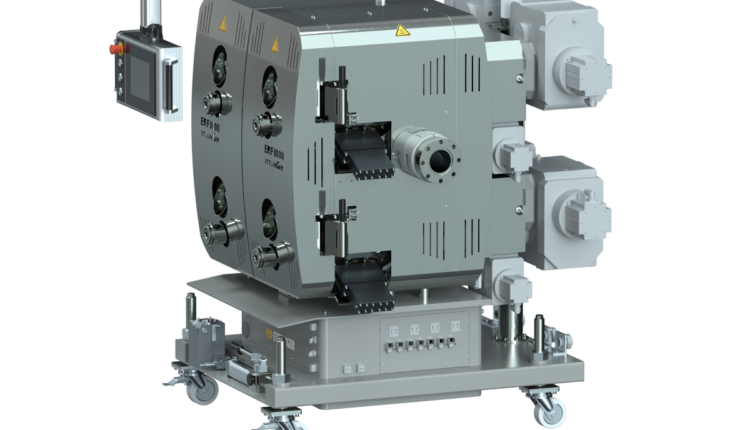
At the heart of the mechanical recycling portfolio is the high-performance melt filter from Ettlinger. The continuous-running machines are specially designed for highly contaminated post-consumer recycling applications. The ERF and ECO series can deliver throughputs of up to 10 t/h depending on the application. On display at NPE 2024, will be an ERF 1000, the largest Ettlinger continuous filter available.
The REX Duo plus with Vectored Air Technology enables a throughput increase of up to 25% while improving powder quality.
Flexible pelletizing for compounding and master batch applications
The tried and proven PRIMOPlus 300 dry-cut pelletizer with double-sided bearings of the cutting rotor ensures high stability and precision, resulting in excellent quality of the cylinder pellets. A JSG pelletizing system model will also be on show at NPE 2024. The fully automatic system is suitable for compounding applications up to 9 t/h. Flexible cooling lengths allow processing of a wide range of materials, and broken strands are automatically rethreaded into the pelletizer.
Increase Pulverizer throughput with Vectored Air Technology
Developed with CFD analysis, the new Vectored Air Technologytm mill housing enables throughput increase of up to 25% on the REX Duo Plus pulverizer. This new pulverizer technology also improves powder quality and flow for rotomolding applications.
Service and after-sales based on personal commitment and know-how
Service from MAAG means: Support around the clock, worldwide, in person or remotely. In addition to MAAG Group service and support, customers can find information and sign up to the recently launched “my MAAG” e-shop, which offers custom and plant-specific spares and wearing parts at the click of a mouse any time 24/7.









 Speaking on the occasion,