Mondi Celebrates Eight Worldstar Awards for Outstanding Packaging Solutions
The WorldStar Global Packaging Awards is the most prestigious global packaging competition, recognising the best industry innovations from across the world.
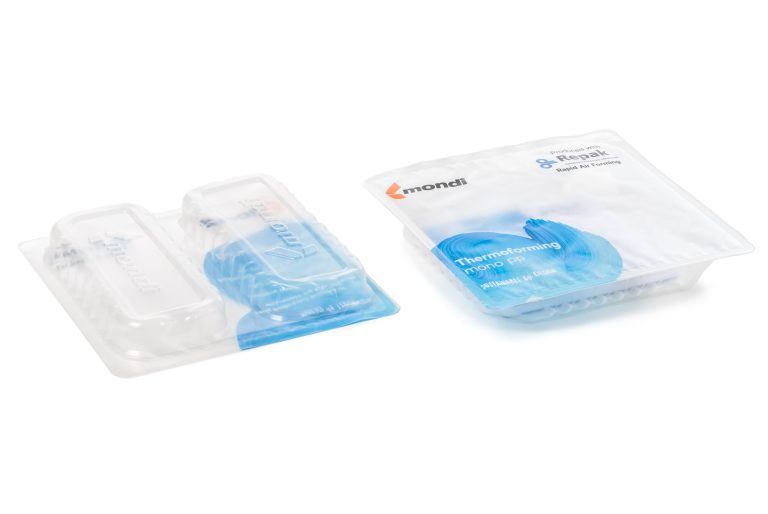
Mondi wins eight awards this year, highlighting the Group’s sustainable packaging solutions and commitment to creating circular driven solutions.
Mondi, a global leader in sustainable packaging and paper solutions, has received eight awards in five categories at this year’s WorldStar Global Packaging Awards.
The WorldStar Awards recognise the best ideas, innovations and technologies on the market, with a focus on sustainability, product protection and end-user convenience. They are open to entries from packaging companies around the globe.
“We are very proud to have our sustainable and innovative packaging solutions recognised. Together with our valued customers, we work hard to create distinctive solutions that serve societal needs, and receiving prestigious awards like these is incredibly satisfying for our hard working teams! We are already excited about making many more of our ideas a reality over the next year,” says Markus Gaertner, CEO Mondi Corrugated Packaging.
“We are honoured to be recognised by the WorldStar Awards. Our award-winning products illustrate Mondi’s commitment to developing packaging that is sustainable by design. Our broad range of product innovations help our customers reach their sustainability goals, since we always evaluate what the best solution is for our customers, our planet and the end-user. Using paper where possible and plastic when useful, we are determined to make packaging part of a circular economy,” says Thomas Ott, CEO Mondi Flexible Packaging.
Plastindia Foundation Set to Host Asia’s Largest Plastic Exhibition – The 11th Edition of PLASTINDIA 2023
Around 1800 exhibitors from all across the world to showcase their products and technology
More than 200,000 footfall expected at the show over the 5 days
Leading exhibitors like Reliance , Lohia,, Supreme, HMEL, Mamata, Exxon, IOCL Bruckner, Starlinger, W&H, Rifenhoser, Borouge from India, and various countries like Germany, Austria, Singapore, Japan to participate in the spectacular show
Hon’ble Prime Minister invited to inaugurate the exhibition
Plastindia Foundation, an internationally recognized organization devoted to promoting excellence in the field of plastics is all set to host the 11th edition of the International Plastics Exhibition, Conference, and convention – PLASTINDIA 2023 from 01st to 05th February 2023, at newly revamped Pragati Maidan in New Delhi. Asia’s largest plastic exhibition will bring together over 1800 Exhibitors from across the world. Besides India, Germany, Austria, Japan and Singapore are some of the key participating countries.
PLASTINDIA 2023 will focus on innovation, sustainability, and growth, facilitating modern techniques that will help to maintain the development of the plastics industry in India and will work towards developing India into a preferred sourcing hub for plastics globally. The five-day event will provide an excellent opportunity for Exhibitors to showcase their new innovations in Processing, Machinery, Moulds, and Dies, Auxiliary Equipment, Printing and Packaging, raw material, and more.
Innovative products/ technologies to be showcased by leading participants like RIL, IOC, HMEL, Alok Masterbatches, Fine Organics, Kuraray, OQ, SABIC, in raw material; Lohia, Mamata, Rajoo, Pelican, JP, Milacron, ASB, Husky, ENGEL, Rifenhauser, W&H, Bruckner in machinery; UFLEX, EREMA, Starlinger in recycling equipment; Supreme, Vishakha, in Finished Products.
Speaking on the occasion, Shri Jigish Doshi – President of Plastindia Foundation said, ”We are delighted to present PLASTINDIA 2023. After an unwilling pause of four years due to the pandemic, Plastics industry professionals from all over the world will again get a chance to present future perspectives and solutions for the plastic and polymer industry. The mega exhibition will be the biggest one till date and is expected to consolidate its position as one of the largest pure Plastics exhibitions in the global plastics scene.”
“This event will truly be an incredible platform and opportunity for Indian plastics industry. Not just the main exhibition itself, there will be a stunning bouquet of associated offerings that make Plastindia exhibitions a ‘must not miss’ affair for global plastics honchos,” added Shri Doshi. Shri Ajay Shah – Chairman, National Executive Council, PLASTINDIA 2023 said, “PLASTINDIA has grown into a global experience, covering the entire gamut of plasticsproducers, processors and users of plastics, together with recyclers of plastics and it witnesses intense participation by both Indian and International Plastics Fraternity”.
“This exhibition is likely to change the face of plastics as it will help create more awareness about sustainability and recycling. All the participants will be part of this change. If you are in the plastics industry, you simply cannot miss the opportunity of being in the show of such magnitude. I urge everyone from the plastics industry to come forth and be a part of PLASTINDIA 2023.”
Over the years, the plastics industry has reinvented itself with advanced innovations and developed environment-friendly processing and utilization techniques that do not affect the environment.
Highest Court in China Renders Final Judgement to Maintain Asahi Kasei’s Patent for Bat-Tery Separators
The Japanese technology company Asahi Kasei has been successful in winning various litigation disputes relating to patents for lithium-ion battery separators. On November 2, 2022, The Supreme People’s Court of the People’s Republic of China rendered the final judgement to maintain Asahi Kasei’s patent for battery separators in China.
The recent judgement was preceded by four years of litigation disputes related to patents for lithium-ion battery separators in Asia. In August 2018, Asahi Kasei filed a patent infringement lawsuit with Shenzhen Intermediate People’s Court against Shenzhen Xu Ran Electronic Co., Ltd. and Shenzhen Xu Ran Electronic Co., Ltd. in Shenzhen, China, as joint defendants, based on the patent owned by Asahi Kasei, aiming at prohibiting Xu Ran Electronic and Others from selling their “single-layer W-scope” battery separators in China and compensation for damages (a total of 1 million yuan). In December 2020, the Supreme People’s Court of the People’s Republic of China rendered a final decision which fully accepted Asahi Kasei’s claim of patent infringement and ordered to stop selling the above products and to pay compensation for damages.
In response to the court’s decision, Shenzhen Xu Ran Electronic Co., Ltd. requested the invalidation of Asahi Kasei’s patent. The China National Intellectual Property Administration made a decision to maintain the patent, and in response, the other party filed an appeal with the Beijing Intellectual Property Court of the People’s Republic of China. However, a judgement to maintain the Patent was rendered on September 28, 2021.
The other party further filed an appeal with the Supreme People’s Court of the People’s Republic of China, however, this time the final judgment was rendered as above. Asahi Kasei will pay close attention to issues concerning intellectual property rights, and if deemed necessary, take specific measures proactively against any infringement.
Novel 3D Printing Method to Fabricate Complex Metal–Plastic Composite Structures
Researchers from Japan and Singapore have developed a new 3D printing technique to create precise patterns on the external and internal surfaces of 3D plastic structures
In recent years, research interest in the 3D printing of metal patterns on plastic parts has grown exponentially, due to its high potential in the manufacturing of next-generation electronics. But fabricating such complex parts through conventional means is not easy. Now, researchers from Japan and Singapore have developed a new 3D printing process for the fabrication of 3D metal–plastic composite structures with complex shapes.
Three-dimensional (3D) metal–plastic composite structures have widespread potential applicability in smart electronics, micro/nanosensing, internet-of-things (IoT) devices, and even quantum computing. Devices constructed using these structures have a higher degree of design freedom, and can have more complex features, complex geometry, and increasingly smaller sizes. But current methods to fabricate such parts are expensive and complicated.
Recently, a group of researchers from Japan and Singapore developed a new multimaterial digital light processing 3D printing (MM-DLP3DP) process to fabricate metal–plastic composite structures with arbitrarily complex shapes. Explaining the motivation behind the study, lead authors Professor Shinjiro Umezu, Mr. Kewei Song from Waseda University and Professor Hirotaka Sato from Nanyang Technological University, Singapore state, “Robots and IoT devices are evolving at a lightning pace. Thus, the technology to manufacture them must evolve as well. Although existing technology can manufacture 3D circuits, stacking flat circuits is still an active area of research. We wanted to address this issue to create highly functional devices to promote the progress and development of human society.”
The MM-DLP3DP process is a multi-step process that begins with the preparation of the active precursors—chemicals which can be converted into the desired chemical after 3D printing, as the desired chemical cannot be 3D printed itself. Here, palladium ions are added to light-cured resins to prepare the active precursors. This is done to promote electroless plating (ELP), a process that describes the auto-catalytic reduction of metal ions in an aqueous solution to form a metal coating. Next, the MM-DL3DP apparatus is used to fabricate microstructures containing nested regions of the resin or the active precursor. Finally, these materials are directly plated, and 3D metal patterns are added to them using ELP.
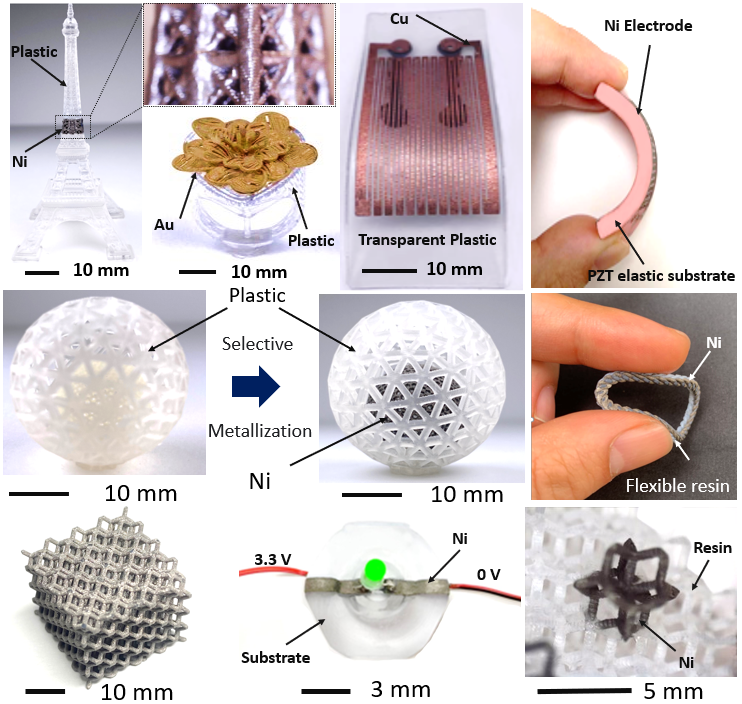
The research team manufactured a variety of parts with complex topologies to demonstrate the manufacturing capabilities of the proposed technique. These parts had complex structures with multimaterial nesting layers, including microporous and tiny hollow structures, the smallest of which was 40 μm in size. Moreover, the metal patterns on these parts were very specific and could be precisely controlled. The team also manufactured 3D circuit boards with complex metal topologies, like an LED stereo circuit with nickel and a double-sided 3D circuit with copper.
“Using the MM-DLP3DP process, arbitrarily complex metal–plastic 3D parts having specific metal patterns can be fabricated. Furthermore, selectively inducing metal deposition using active precursors can provide higher quality metal coatings. Together, these factors can contribute to the development of highly integrated and customizable 3D microelectronics,” Umezu, Song, and Sato state.
The new manufacturing process promises to be a breakthrough technology for the manufacturing of circuits, with applications in a diverse variety of technologies, including 3D electronics, metamaterials, flexible wearable devices, and metal hollow electrodes.
Borealis and YILDIRIM Announce Completion of the Sale of Borealis’ Shareholding in Rosier Sa to YILDIRIM Group’s YILFERT Holding
On 26 September 2022, Borealis AG and YILDIRIM Group’s YILFERT Holding announced that they signed a binding agreement for the acquisition of Borealis’ shares in Rosier SA. On 2 January 2023, such sale of Borealis’ shares in Rosier SA to Yilfert Holding has been completed. Following the completion of the sale, Borealis no longer holds any shares in Rosier SA. In accordance with the press release dated 8 November 2022, YILFERT Holding, which following the completion of the sale holds 98.09% of the shares in Rosier SA, will launch a mandatory takeover bid followed by a squeeze out for the remaining Rosier shares at a price of EUR 20 per share, in accordance with article 50 of the Belgian Royal Decree on Public Takeover Bids.
TotalEnergies Joins NEXTLOOPP to Accelerate the Development of Food-Grade Recycled Polymers
TotalEnergies has joined NEXTLOOPP, an initiative bringing together 47 companies from the plastics value chain that aims to create food-grade recycled polymer from advanced me-chanical recycling.
Launched in October 2020 by Nextek Ltd, NEXTLOOPP is a global multiparticipant and award-winning project with the objective to produce high-quality recycled polypropylene that is suitable for food-grade applications and made from post-consumer packaging material.
The project deploys pioneering technology to efficiently and cost-effectively sort food-grade polypropylene (PP) from post-consumer material and then decontaminate the polymer to comply with stringent food-grade standards. NEXTLOOPP has recently completed a landmark study of background contamination of post-consumer PP packaging for its submissions to food safety authorities in Europe (EFSA), in the United States (USFDA) and in the United Kingdom (UK FSA).
TotalEnergies is committed to the development of a circular economy for plastics and to meet the growing customer demand for high-quality recycled polymers. In that context, TotalEnergies will leverage this technological partnership to accelerate the feasibility review of advanced mechanical recycling projects targeting food contact and fur-ther expand its recently launched RE:use polymers range which contain mechanically recy-cled raw materials.
“We are delighted to join and support the NEXTLOOPP project, alongside other major industry players,” said Nathalie Brunelle, Senior Vice President Polymers at TotalEnergies. “This initiative will allow us to go one step further in developing technologies to produce food-grade recycled material from advanced mechanical recycling and broaden our options for projects that contribute to our ambition to produce 30% circular polymers by 2030.”
Professor Edward Kosior, founder and CEO of Nextek Ltd and NEXTLOOPP says: ”The whole of the NEXTLOOPP project is strengthened by TotalEnergies’ adding to the programme their extensive technical capabilities in creating circular solutions for PP resins. They contribute to the growing body of expertise in controlling the properties and formulation of their range of both virgin and recycled PP for a myriad of applications.”
Packaging for Beverages is Growing More Sustainable
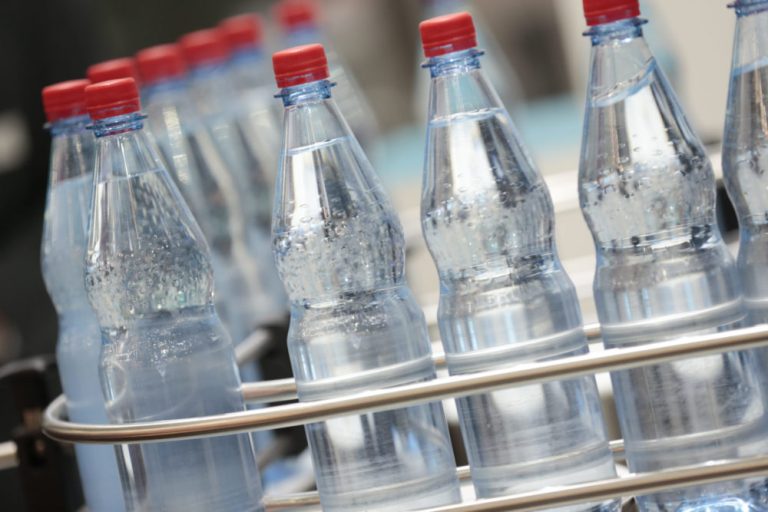
PET or glass bottle, aluminium can, beverage carton or maybe even a paper bottle, single use or multiple use – there is a huge range of choices for packaging beverages. But which is the most sustainable? The focus has increasingly been placed on ecological aspects over the last few years in this sector. And not only for packaging material: these aspects have also become important for filling and actual packaging processes.
Some beverages simply come with classic packaging. We usually buy beer or wine in a glass bottle, milk in a carton and soft drinks in a PET bottle. Over the last few years, however, customers have become ever more critical, and sustainability issues have grown in importance for the beverages sector. Plastics especially now have a bad reputation – which is often undeserved. How well a type of packaging fares when looking at the ecological balance depends on many different factors. Experts therefore are hesitant to give general advice.
The weight-reduced bodies of the bottles developed by KHS are made of 100 percent rPET and a hair-thin inner coating of glass.
A short overview: Glass bottles are neutral in taste, but also fragile and heavy. However, they are more suitable for multiple uses than any other type of packaging. PET bottles, too, can be refilled several times and then recycled. They are shatterproof and notably lighter than glass bottles. Plastics, however, have had a bad reputation with customers for some time now, in spite of the very high recycling quota for PET beverage bottles in Germany at more than 94 percent. Beverages in aluminium cans still enjoy popularity. But the extraction of the raw material and the production of the cans from raw aluminium comes with a huge cost in terms of energy, so everything comes down to the collection quota, because there is no limit to the number of times the cans can be recycled. Beverage cartons are also always single use, but they are for the most part made from renewable raw materials. Improved procedures meanwhile ensure that the cardboard, aluminium and plastics components are separated. The Umweltbundesamt, the German Environmental Agency, therefore classifies them as “single use packages with ecological advantages”.
Will there be paper bottles?
At the end of 2016, the Carlsberg Group presented the “Green Fiber Bottle”, their prototype for a paper bottle, for the first time. In the summer of 2020, the beverages corporation Diageo announced the first paper-based spirits bottle for Scottish Johnny Walker whisky, but so far there has been no large introduction to the market. In the beginning of 2021, for the first time in Europe, Coca Cola offered a plant-based beverage to 2,000 consumers in Hungary that came with a paper bottle. No further steps were taken after this test offer, however.
Since the development of sustainable bottles made of fibre, work on their optimisation has never ceased. The goal: a completely organic paper bottle. Currently, the “classic” paper bottle still consists of paper coated with a thin layer of PE, which, however, can be easily peeled off during the processing of waste paper, separated and then recycled. One disadvantage of polyethylene is that it doesn’t work very well for carbonated beverages, and these usually require a PET coating that is a bit thicker.
The Carlsberg brewery took things a step further this year: The bottles for a large-scale consumer test are coated with PEF (polyethylene furanoate) an organic polymer with similar properties to PET. It acts as a highly effective barrier between the beer and the outer hull made of fibres, protects the taste and is supposed to retain the carbonic acid of the beer better than conventional PET. The biopolymer is also both compatible with PET recycling systems and biodegradable. The current prototypes are an already improved variant which features the PEF coating as well as a new bottom to improve the stability of the bottle. The next generation of bottles are planned to be made available with a fibre-based lid and cap, too.
Lightweight glass bottle for multiple use
Glass is a popular packaging material for beverages. Its greatest disadvantage is only its high weight, because in direct comparison, PET bottles can be up to 90 percent lighter than the multiple use variety made of glass. But manufacturers of glass packaging are working on light versions, for example made of tempered lightweight glass. Reusable bottles produced this way are not only up to 30 percent lighter than the standard variety, they are also more resistant to abrasion, which can turn them into a real alternative both economically and ecologically. However, the thermal treatment that in the end gives the glass its greater stability limits the possibilities of product design. Variations in wall thickness present an especially difficult challenge during the process.
With the stretch winder Saturn S6 by Mosca, even fragile bottles can be transported to the supermarket with optimum safety.
Better safety on the road
In order for bottles, cans and beverage cartons to reach their point of sale without damage, they need proper safety measures during transportation. Usually, thin stretch wrap is used for stable packing on a pallet. For this purpose, machine manufacturers like interpack exhibitor Mosca offer strapping machines for pallets and stretch winders. Depending on the type of packaging, safety requirements for the pallet can be very different. Cans must be protected against warping, glass bottles against breaking. In order to transport lightweight, empty beverage cans, for example, they not only need to be held in place from the side or from the top, but also require light pressure to be kept secure on their way to the beverage bottlers. A new strapping machine for pallets by Mosca creates the necessary pressure on the empty cans through vertical strapping. The system uses sustainable PET straps made from recycled materials and packages/wraps up to 61 pallets per hour for transport, without wasting resources. As a narrow strip of plastic is enough to secure even the heaviest pallets, the use of material and the carbon footprint are kept to a minimum.
Alternative to plastic shrink wrap
Inside modern stretch winders, a reel of foil circles the pallet horizontally, while the goods – full cans or fragile bottles – remain static. Elastic stretch wrap is used very often, as pre-stretching the foil increases its stretchability up to 300 percent. Manufacturers are already working on a more sustainable solution using renewable material. For example, packaging a pallet with elastic, puncture-resistant paper is a packaging solution that can be fully recycled. For wrapping PET bottles, too, a paper-based solution that can be completely recycled has recently entered the market: a package band made from 100 percent kraft paper that wraps around bottles, has a high tensile strength and is able to support enough weight to secure the bottles during transport. The second part of this solution is a clamp made of corrugated cardboard that grips the bottle neck. Individual bottles can be easily separated from the package.
Filler and seamer part of the combined block solution SmartCan by KHS/Ferrum feature optimised hygienic properties.
Hygiene is a priority
The beverage can still remains popular. While it used to be the case that cans were primarily filled with beers and carbonated drinks, for some time now there has been a trend towards canning more sensitive products like iced teas, plant-based drinks, juices, smoothies or near-water products. This development poses new hygienic challenges to beverage bottlers. The system manufacturer KHS reacted to this by developing the fill-and-seal block SmartCan together with the Swiss mechanical engineering company Ferrum, which represents the first time that their respective machines have been seamlessly joined and also features optimised hygienic measures. The hygienic space inside the filler part of the block consists of raised sheathing plates on one side, and an enclosure on the other side that has a notably smaller product space around the filler carousel: Following the so-called donut principle, this creates a ring-shaped enclosure, reduces the volume of the hygienic space by 40 percent and allows an optimised, targeted jet of sterile air to stream around the sensitive zone.
Filling technology
Hygiene is also important for the new aseptic filling system developed by Sidel for the growing market for sensitive beverages in PET bottles. The integrated stretch-blow-fill-seal solution is a further development of Aseptic Combi Predis technology, intended to help bottling companies serve the growing market for drinks with a long shelf life, like for example juice, fruit beverages, soft drinks, isotonic drinks and tea, as well as liquid dairy products. The demand for these products, says Sidel, is expected to reach a volume of 192 billion units by 2024, which is an increase of 44 percent compared to 2011. Sensitive products are said to represent 55 percent of the market for non-alcoholic beverages, and the predicted growth of this segment (annual growth rate of 2.3 percent from 2019 to 2025) is higher for PET bottles than for other materials.
Flexible response to demands
Regarding the packaging of their products, bottling companies today face multiple challenges, both economic and ecological. On the one hand, they are subject to pressure from growing time constraints and rising costs, on the other hand, the beverages industry is under scrutiny from the legislature right now – especially regarding recycling quotas and carbon emissions. Considering these developments, interpack exhibitor KHS is offering their customers a large portfolio of adjustable block solutions, especially for filling PET bottles, among them a new, modular platform that can be customised and expanded. First used for filling glass bottles in 2020, the machines now also fulfil customer wishes for adaptability and a guaranteed future when it comes to plastic bottles. “Nobody can say which trends the industry will follow in five years”, says Manfred Härtel, Product Manager Filling at KHS. “This is the reason we made our platform modular, so it can be fitted any time for different drinks or PET containers, depending on the demands of the market.” This way, additional individual components can be bought at a later time and integrated into existing solutions with a minimum of effort. In addition, many improvements in construction already help to save energy. The new filler allows filling temperatures to rise to 24 degrees Celsius, which lowers the investment and maintenance costs for energy-intensive cooling technology. At these temperatures there is also no condensation of water, which would have to be dried using a lot of energy before further packaging in foil or cardboard.
The ClipAside Tethered Caps connected to the beverage bottle already fulfil the requirements of the EU Guideline 2019/904 for better recycling.
“Tethered Caps” soon to be mandatory
Caps and valves are often a problem when it comes to littering and the recycling of plastic bottles. EU legislation is therefore making the use of closures that are permanently connected to the bottle mandatory from 2024. Many manufacturers have already reacted and developed so-called “Tethered Caps”. Earlier than necessary, manufacturers of beverages are already following the EU guideline, among them Coca-Cola: The corporation already introduced their attached caps in 2021, and has been expanding them to an increasing number of PET single use bottles. Little has changed for consumers: The opening mechanism is the same, and the cap which is now attached to a safety ring can still be moved round the neck of the bottle as desired or secured in a specific position. By January 2024, the beverage corporation aims to have successively converted all its German plants. At the end of 2021, the bottling plant in Dorsten, North Rhine-Westphalia, was the first to make the change.
Manufacturers assume that the new caps will only resonate well with consumers if the handling is right. Consumer studies reveal that a “Tethered Cap” by interpack exhibitor Bericap did well because of its intuitive handling, the 180-degree-opening and its hygienic advantages. An early switch to “Tethered Caps” can allow beverage companies to increase the attractiveness of their products in the market.
Intelligent caps
Freshness indicators are helpful for the beverages sector as well. United Caps and the start-up Mimica have marketed a clever cap solution that includes a freshness indicator. The “Touchcap” changes its surface from even to uneven when a product is no longer fit for consumption. This is possible thanks to a gel in a special label that can change its structure. The cap can be recycled and consists of a lid base and a closing cap. After filling, this is mounted by a specialised machine that, like other modules – for example for labelling or stretch wrapping – can be seamlessly integrated into production. It is the consumer who activates the effect by opening the lid for the first time by twisting the cap. Currently, there is a pilot project in the UK with an orange juice brand.
Which other sustainable and innovative solutions the beverage industry will present will be revealed at interpack. From 4 to 10 May 2023, the exhibitors of the world’s leading trade fair for processing & packaging in Düsseldorf will present their newest developments along the entire value chain – from machines, systems and packaging options to materials and recycling. In hall 13 there is a special focus on bottling and packaging solutions for the beverages sector.
Further information on interpack is available at www.interpack.com
Pre- Budget Expectations for the Plastic & Polymer Industry 2023-24
Jigish Doshi, President, Plastindia Foundation
Plastindia Foundation urges the government to lower the import on polymer and increase the custom duty on finished plastic products in Union Budget 2023-24 to support the domestic plastic industry
Finance Minister Smt. Nirmala Sitharaman is all set to present the Union Budget for the financial year 2023-24. Plastindia Foundation is hopeful that the hon’ble Finance Minister will frame the budget keeping in mind the overall growth and development of the entire plastic industry – from raw materials, and converter to machinery manufacturers. Plastindia Foundation’s motto is to put the Indian plastic industry on a high growth path – from USD 5 trillion in 2025 to an ambitious USD 25 trillion by 2045.
To drive this growth and to make India the global sourcing hub for plastic, Plastindia Foundation wholeheartedly supports the Make in India and Aatmanirbhar Bharat initiatives. However, we need support from the government to make this a reality:
The import duty on polymer should be between 5 – 7.5 %. India does not produce enough polymer and import is inevitable. Import duty on polymer needs to be lowered to make the Indian plastic industry more competitive
Custom duty on the finished plastic product should be a minimum of 20% or more to support the domestic plastic processing industry
The government is focusing on renewable energy, and this presents an opportunity for the plastic industry. However, at present 90% of the components for solar panels and windmills are imported and the products are only assembled in India. To encourage the local manufacturers, the custom duty on the import of components like EVA, back sheet, metal frame, solar glass etc., should be at least 20%. The plastic industry can play an important role in manufacturing EVA and back sheets
To promote industrialization in India, I would also request the hon’ble Finance Minister to consider the following:
Make uninterrupted power available at less than Rs 5 per unit. India has a high electricity rate and power fluctuation is also very high. This rate is at par with
neighbouring countries that makes uninterrupted power available to industries at a low cost
India should have a free labour law however the wages should not be so high that it makes the manufacturing industry globally uncompetitive. Labour law should come
under the purview of the Central government and wages across the country – in tier 1, tier 2 and tier 3 cities, should be uniform
GST should not be higher than 12% across product categories
Government should make land acquisition easy by identifying zones of land that are non-agricultural. Land from those zones should be made available easily without
industries having to go through the formality of converting agricultural land to non-agricultural land. Also, the Government should start a new formula wherein developed land should be made available to industries on long-term leases. This will significantly lower the investment on land and make Indian industries globally competitive. Currently, the price of land is so high that project costs skyrocketed. China is using this formula for a very long time
Easy finance at reasonable interest rates from both banks and NBFCs should be made available to the industry
Compliances should be kept minimum. Also, if there are any technical errors in following these compliances then it should be handled by a separate court. It should not be treated as criminal activity
Overall, we are expecting a budget that is industry-friendly and makes the domestic plastic industry more dynamic and globally competitive.
KRAIBURG TPE’s Solutions for Automotive Window Encapsulation
KRAIBURG TPE, a global TPE manufacturer of a diverse range of thermoplastic elastomer products and custom solutions for a variety of industries, offers THERMOLAST K series of TPE compounds for automotive window encapsulation that render surface aesthetics and functional finishing.
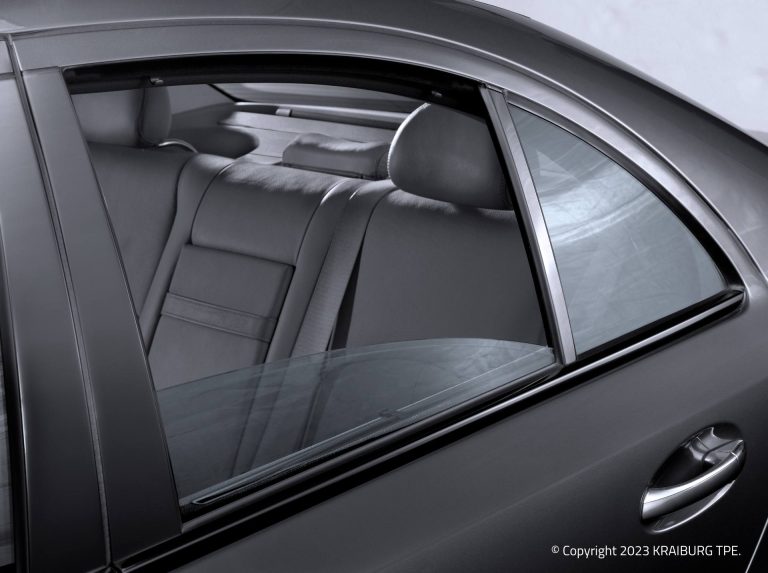
Window encapsulation in a vehicle allows a perfect fit of the glazing module on a vehicle’s body. It not only is a prevailing solution for vehicle fittings and aesthetics, but it is also a functional solution that deters water and dirt from entering a vehicle. As well, window encapsulation provides comfort in a vehicle by reducing noise and improves the aerodynamics of a vehicle, especially for flush design structures of automobiles.
Thermoplastic elastomers (TPEs) are being selected by automotive manufacturers as a replacement for rubber, TPV and PVC in window encapsulation for their cost-effective, lightweight and eco-friendly benefits. For automobile manufacturers and designers, TPEs offer not only a functional design option but also the desired surface aesthetics.
KRAIBURG TPE, a global TPE manufacturer of a diverse range of thermoplastic elastomer products and custom solutions for a variety of industries, offers thermoplastic elastomer solutions that meet all the practical and aesthetic requirements for automotive window encapsulation.
UV/HF/SF series as a high-end TPE option
KRAIBURG TPE’s UV/HF/SF series is a material of choice for window encapsulation applications that require long flow paths, UV resistance and high surface quality. Other benefits are its good adhesion with PP, allowing for ease of processability, as well good surface.
Furthermore, the series has passed accelerated weathering tests such as Kalahari and Florida and meets OEM requirements, such as BMW GS 93042, Ford WSS-M2D517, GM GMW16233, Mercedes-Benz DBL 5562, PSA B62 0300, Renault 03-10-104, and VW 50123.
Sustainability successes of our TPE
Besides the materials for window encapsulation, KRAIBURG TPE’s recent sustainability innovations include a specially developed material solution for consumer, and industry applications comprising post-consumer recycled (PCR) and post-industrial recycled (PIR) content.
Are you looking for a sustainable TPE solution? Talk to us!
Our experts are happy to answer any questions you have, as well as to offer the right solution for your application.
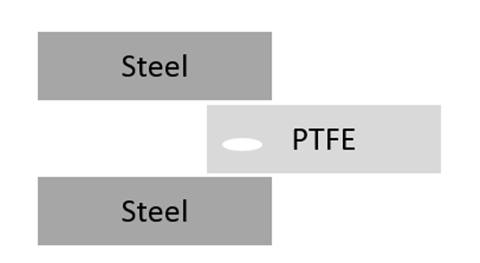
Tribo-Chemical Film as Superlubricity for Polymers
When two crystalline surfaces slide over each other in dry medium with negligible friction known as super lubricity. Basically the with two low surface energy of polymers moderately induce with pouring liquid of highly thin layer may obtain the superlubricity property. Teflon is known for self-lubricating and anti-corrosive property. To replace the conventional lubricating liquids such as oils. It was better to blend with two green ionic liquids prepared with alkyl amine and carboxylic acids produce the long molecular chains, feasible for a robust superlubricity under high contact pressure. Example to demonstrate such interested property is Teflon metal surface. Basically tribio chemical film were produced with very thin dense layer for super lubrication property. Carbon allotropes and carbon nano structures were highly crucial to achieve the superlubricity. Graphene layers, graphene ribbons, carbon nanotubes, ultra nano crystalline diamonds, carbon onion, fullerene deployed for the superflow friction properties. The percolation of thermal flux during two surface contact-friction process was achieved with the nano carbon structures. Rational design for the dimensional scaled nano materials follows the aspect ratio criteria more important parameter to achieve the superlubricnat surface properties too. However, the coating of bulk or surface by carbon allotropes nano structures act as tribochemical medium for achievement of super lubricant property of polymer surfaces. It is worthwhile for entire polymer surface energy applications. Nanoelectromechanical properties were optimised by using the concept of superlubricity.