Sulapac Launches Sulapac Luxe, a New Sustainable Material for Luxury Fragrance Caps as Part of its Expanded Cosmetics Portfolio
Beauty brands are seeking sustainable alternatives for conventional plastic packaging – but high-end brands have high-end demands. Sulapac’s expanded portfolio, including a novel bio-based material ideal for fragrance bottle caps, allows cosmetic brands to meet their sustainability targets with a comprehensive range of applications, without compromising quality or aesthetics.
An award-winning material innovation startup, Sulapac, has launched Sulapac Luxe, a new bio-based material ideal for substituting hard plastics, including ABS, as part of its expanded portfolio for cosmetics and beauty packaging. The new material comes in response to demands from the beauty industry’s leading brands for more environmentally conscious packaging solutions that still offer high-end luxury feel, function, and aesthetics.
“One major challenge beauty brands face in replacing conventional plastics is the strict performance criteria of the chosen materials,” says Colin Strobant, International Sales Director at Sulapac. “With Sulapac Luxe, we have shown that conventional plastics can be easily replaced without compromising on quality. We have listened to our customers’ challenges, and the material has been through an extensive development process to ensure it stands up to the highest demands for luxury performance.”
High density, resistance to temperature fluctuations, ceramic feel and sound, and a glossy, smooth surface are some of the material’s characteristics, which are important for luxury brands. Sulapac Luxe is not only recyclable, but as all Sulapac materials, it can also be made with recycled content, another feature important for many premium brands. “Sulapac is a pioneer in recycled bio-based materials and our aim is to use only recycled biopolymers within the next five years,” says Sulapac’s CEO and Co-founder, Dr. Suvi Haimi. Sulapac Luxe is made from industrially compostable materials; it leaves no permanent microplastics or toxic load behind.
Several high-end beauty brands have already shown interest in utilizing Sulapac Luxe in combination with their existing glass fragrance bottles or jars. The material is commercially available to all manufacturers and slips seamlessly into existing injection molding production lines.
Sustainable solutions for various applications and manufacturing technologies
With the expanded portfolio, Sulapac’s customers can now create packaging for various product areas, including skincare, makeup, and fragrances. Shiseido’s brand Ulé utilizes Sulapac for their lids, while a diverse group of skincare brands from Lumene to Manik package their products in Sulapac jars. The selection of materials and production techniques allows brands to choose between a matt, glossy, or natural appearance complimented by a wide range of color options.
The successful launch of the BetterBarrel by Schwan Cosmetics last year, and Toly’s popular Infinity Line of powder compacts made with Sulapac further demonstrate the versatility of Sulapac’s offering. Sulapac has also developed premium quality solutions in collaboration with CHANEL, including sustainable bottle caps created exclusively for the fragrance range LES EAUX DE CHANEL and the lid for the N° 1 de CHANEL Cream.
Besides materials for injection molding and extrusion, Sulapac’s portfolio includes solutions for thermoforming, allowing cosmetic companies to create sustainable logistic trays and point-of-sale displays, as well as for 3D printing enabling sustainable prototyping.
Regulation and ambitious sustainability targets urge brands to switch to biobased, circular solutions
Demand for sustainable solutions is accelerating rapidly as companies are actively seeking alternatives for certain conventional plastics widely used in cosmetics packaging, including thermoset materials. They are unrecyclable and thus potentially subject to restrictions by the European Commission’s upcoming Packaging and Packaging Waste Regulation (PPWR). There are also upcoming country-specific restrictions for certain materials, such as ABS, that push companies towards more sustainable solutions. Sulapac’s expanded portfolio enables cosmetic brands to replace controversial materials, such as thermosets and ABS, with truly sustainable alternatives – without compromising quality or aesthetics.
“We are happy to see the positive movement within the cosmetic sector as more and more brands are turning away from conventional plastic. Our job is to make this transition as easy and beneficial as possible – for brands, their customers, and the environment,” says Haimi.
“In Sulapac materials, the pioneering sustainability features of circularity, functionality, and aesthetics come together in a unique way, enabling our cosmetic customers to meet their sustainability goals and regulative requirements while fostering a high-end image and exquisite customer experience,” concludes Strobant.
A Overview about Nepal Plastics Industry and its development by Ginu Joseph Global Group Editor of Modern Plastics Global, Modern Plastics India and Newly launched Modern Plastics Nepal
Nepal’s plastics industry has been experiencing significant growth in recent years, driven by a combination of domestic demand and increasing exports to neighboring countries. The industry has been expanding in terms of both production capacity and product range, with a particular focus on the manufacture of plastic bags, pipes, and packaging materials.
One of the key factors driving the growth of Nepal’s plastics industry is the country’s favorable investment climate, with the government actively promoting foreign investment and offering various incentives and tax breaks to businesses. Additionally, the availability of low-cost labor and raw materials has made it an attractive location for plastics manufacturers.
In recent years, Nepal has also made efforts to promote sustainable plastics production and reduce its environmental impact. This has included measures such as banning single-use plastic bags and promoting the use of biodegradable plastics.
Despite these positive developments, the plastics industry in Nepal still faces challenges such as inadequate infrastructure, limited access to finance, and a lack of skilled labor. Addressing these challenges will be crucial to sustaining the industry’s growth and competitiveness in the years to come.
Overall, Nepal’s plastics industry is poised for further growth and development, driven by a combination of favorable investment conditions, increasing demand from domestic and regional markets, and a growing focus on sustainability.
OE-A Business Climate Survey: Printed Electronics with tailwind into 2023
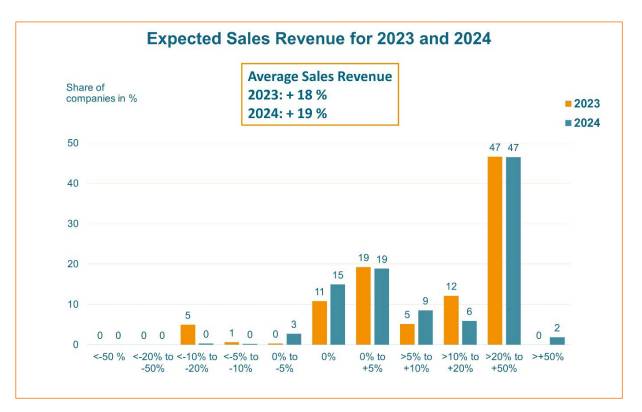
For 2023 revenue growth of 18 percent forecasted compared to 2022
Companies anticipate growth to continue in 2024: +19 percent
More jobs in flexible and printed electronics industry
The results of the recent 2023 OE-A Business Climate Survey demonstrate expectations of continued growth, consistent with projections made in the 2022 survey. For 2023 the responding association members anticipate sales revenue increases of 18 percent for the Flexible and Printed Electronics Industry. The outlook for 2024 is promising as well with an estimated growth of 19 percent. “The consistently optimistic results year-on-year in the face of current global uncertainties reflect an underlying confidence in the technologies and applications before us,” summarizes Stan Farnsworth, chair of the OE-A board and chief marketing officer of PulseForge. The results of the OE-A Business Climate Survey were presented in a special session for the international press at LOPEC 2023 in Munich, Germany. The semi-annual survey is conducted by OE-A (Organic and Printed Electronics Association), an international Working Group within VDMA.
For each survey, every OE-A member organization from throughout the supply-chain, from R&D to material suppliers to end users, are asked to provide qualitative data on the state of the industry, expected sales development and markets. The results are on a high level with 76 percent of the survey participants expecting the industry to continue its positive development in 2023. Leading industries for printed electronics applications are identified by the survey responses as being Consumer Electronics, Automotive, Medical & Pharmaceutical and Building & Architecture.
OE-A expects 18 percent sales growth for 2023 With an expected 18 percent growth in sales revenue, the printed electronics community turns out to be slightly less optimistic compared to fall 2022 (+24 percent). For 2024 the positive outlook for the sales revenue growth from October 2022 has been confirmed with 19 percent. Despite the good results the industry battles the impact of the global crisis. Seventy-three percent (73 percent) of respondents note negative effects like supply chain disruptions or price increases. “The flexible and printed electronics industry members anticipate negative impact due to higher energy cost, inflation, and difficulties in procurement of electronics components,” explains Stan Farnsworth. “Near-term improvements are not expected.” Yet, the “back to normal” business recovery period is now thought to be shorter than predicted in the past surveys. More than half of the participants (57 percent) expect a recovery within the next 12 months. Additionally, member companies are reporting an increasing recovery of customer demand, especially in USA and Europe, compared to October 2022.
A strong foundation for the future 70 percent of the surveyed companies will increase investment in production, and more than two thirds will strengthen their R&D activities in the upcoming half year. Furthermore, the employment situation is encouraging with 55 percent of the companies planning to increase staff. ”We release the annual Business Climate Survey results here at LOPEC, amongst all of the conference talks, exhibitions, and product demonstrations, because LOPEC is the world’s leading dedicated event to flexible hybrid electronics” stated Farnsworth. “The flexible and printed electronics industry is expanding, and further growth is expected. Here at LOPEC, surrounded by innovation and opportunity, we continue forward towards a positive 2023.”
FMI’ Analyst View: Sustainability is Encouraging the Use of Cassava-based Packaging. The Industry Likely to Reach $2 Billion by 2023!
The global cassava packaging market is anticipated to accumulate a market value of US$ 1.86 billion in 2023 and is expected to garner a valuation of US$ 4.1 billion by exhibiting a CAGR of 8.2% in the forecast period 2023 to 2033. The cassava packaging market reflected a growth of 6.8% CAGR in the historical period 2018 to 2022.
The biodegradability and increasing environmental concern toward compostable packaging alternatives is boosting the adoption of cassava-based packaging. Cassava packaging is the most suitable alternative to plastic and Styrofoam packaging. The flourishing food sector is one of the key driving forces for the cassava packaging market, as the containers made up of cassava are compatible with hot and cold food and are microwave-friendly.
With the increasing burden of packaging waste generated across the globe, governments are adapting to alternative sources, such as biodegradable packaging like cassava.
The rising use of starch-based bioplastics as an alternative packaging option due to their barrier properties, which restrict moisture transfer from food to the atmosphere, and implementation of strict environmental regulations over the use of these packaging, which have a lower negative impact on the environment than traditional plastics, are acting as a key driver for cassava packaging market.
Besides this, volatility in oil prices forces manufacturers to look for a consistent source of raw material, which is creating lucrative opportunities for industry expansion, thereby leading to market expansion.
The use of starch-based biodegradable packaging for cosmetics packaging, food packaging, pharmaceutical packaging, and commodities packaging is anticipated to boost the market growth.
On the other hand, ongoing investments and subsidies provided by the government of developing nations on the use of biodegradable plastics to reduce the disposal issues of conventional plastics in sea and landfills are further expected to drive market growth. Also, governments are promoting the use of bioplastic by providing subsidies and charging taxes, which significantly contributes toward market expansion. The overarching concern of climate change and the scarcity of fossil resources in future are accelerating the search for compostable packaging concepts.
Stringent government regulations against the use of traditional plastics have fuelled the demand for bioplastics. Bioplastics have the capability to bypass the environmental impacts of petroleum-based plastic packaging. This is contributing to increased product demand for cassava-based packaging. Cassava-based packaging is created by combining several biodegradable materials like starch blends. This material can be utilized to reduce the reliance on fossil fuel-based plastic packaging, eventually increasing the use of green packaging and boosting sustainability and an inclination toward environmental protection.
Region-wise, Europe is appearing to dominate the market by accumulating over 40% market share by end of the forecast period. Increasing awareness of consumers toward the effects of plastic and non-biodegradable packaging on the environment is driving the demand for cassava-based packaging in this region. Governments and other regulatory bodies in the region are coming up with more and more ways to promote and incentivize the use of cassava for packaging.
North America is expected to reflect significant growth by growing a CAGR of 7.6% during the forecast period. This region is expected to witness tremendous growth as a result of increasing government efforts toward the use of an environmentally safe packaging approach that drives the demand for cassava-based packaging.
How Competitive is the Market?
Recent developments and breakthroughs in technology, mergers, acquisitions, tie-ups, and partnerships within the companies involved in manufacturing cassava-based packaging solutions are expected to create lucrative opportunities for market growth during the forecast period.
In May 2022, Amcor Rigid Packaging announced the development and launch of PowerPostTM. This technology produces nearly one-third of lighter bottles with 30% less energy and 30% less carbon than most 20 oz. bottles by dislodging the vacuum in the container post-filling.
In January 2022, Amcor Plc. showcased AmFiberTM, a new platform for paper-based packaging products. AmFiber’s innovations aim to reimagine the functionality of traditional paper packaging, offering a broad range of functional benefits to meet the changing needs of consumers. AmFiber’s product is an innovative solution tailored to provide snacks and confectionery items to European customers with recyclable packaging that offer a high barrier to oxygen and moisture.
Cassava is derived from cassava roots and used as a biodegradable packaging. Cassava packaging is renowned for its environmentally friendly and lightweight design, it has gained considerable development in developed countries with the fast-paced lifestyle and growing food distribution and takeout facilities, as it protects and preserves its freshness from air contamination.
Cassava Packaging Market: Regional Outlook
North America is showing tremendous growth as a result of government restrictions on the use of an environmentally safe packaging approach that drives the demand for cassava packaging. As the adoption of eco-friendly products grows, Europe dominates the market for cassava packaging due to a growth in demand for the product.
Thailand and Indonesia are the main cassava producers, so cassava packaging is projected to have the largest market share, with South Asia and East Asia being the third largest producers.
Enthusiastic: 5,700 customers from 53 nations at the Arburg Anniversary Days 2023 in Lossburg
In demand: New anniversary machine, solutions for energy efficiency, digitalisation and sustainability
Rich in experience: Over 50 exhibits, Efficiency Arena, Automation Arena, service topics, specialist lectures and company tours
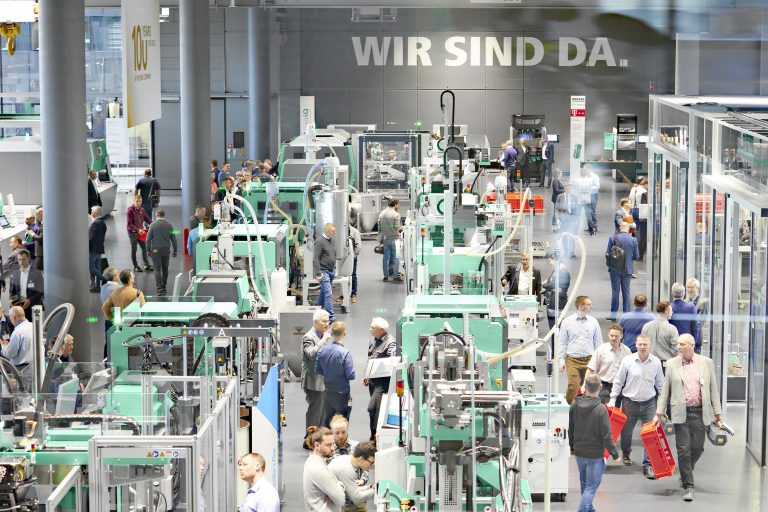
5,700 customers from 53 nations came to the Arburg Anniversary Days at the “Think Tank” in Lossburg, Germany, from 8 to 11 March 2023. At the event, which is called Technology Days in other years, everything that makes plastic hearts beat faster was to be found. The exhibition area covered the entire company: In addition to more than 50 exhibits and innovative applications, Arburg impressed with its combined expertise on important topics such as sustainability, digitalisation, energy efficiency and automation.
The enthusiastic guests were able to experience live and in colour what the family-owned company with its 100-year history is all about at the exhibits in the Customer Center, in the Efficiency Arena, in the training and service areas, in the Automation Arena, as well as during tours of the company and specialist lectures: Sustainable action, innovative ideas, forward thinking and combined expertise in resource-saving and production-efficient plastic parts manufacturing.
There was enormous interest in automation and turnkey systems. In the Automation Arena, selected exhibits and current customer projects were on display – from the automated production of the coveted tool box in the anniversary design to highly complex turnkey systems.
Highlight: Milestone machine with new technology
A hybrid Allrounder 470 H against a golden background attracted a great deal of interest in the Customer Center. The milestone machine sets the stage for a new machine technology from Arburg – it saves energy, conserves resources, is production-efficient, user-friendly and reliable all at the same time. The technical features include a new oil management concept, flow splitting for simultaneous movements of hydraulic secondary axes and the extended use of the Arburg servo hydraulic system. With the “Comfort”, “Premium” and “Ultimate” performance variants, various injection units and a wide range of options, the new Allrounder 470 H machines can be precisely adapted to specific customer requirements.
The portfolio of ARBURGadditives was on display in the Customer Center and the Arburg Prototyping Center. Here, visitors were able to learn all about additive manufacturing and 3D printing from the machine exhibits and numerous component examples.
Live: Plastic processing you can touch
In total, over 50 exhibits produced live injection-moulded and 3D-printed components at the Anniversary Days. Numerous new products, exciting applications and innovative processes were on show. Around every second machine processed alternative plastics or recyclates. For example, an Allrounder 470 S produced dosing spoons from corn starch that dissolve in water and are compostable, while an Allrounder 320 C Golden Edition processed post-consumer recyclate obtained from used refrigerators and returned to the cycle. An invisible “tracer” was also compounded into the material, through which each part could be identified in a forgery-proof manner. In a particularly resource-saving application for the packaging industry, special emphasis was placed on a material-saving component design and energy efficiency: An Allrounder 720 A “Ultimate” produced four thin-walled IML round cups with a wall thickness of only 0.37 millimetres in a cycle time of 3.95 seconds. Combining the new all-electric packaging machine with the injection compression moulding process improves the energy footprint by 20 percent while significantly reducing the component weight from 13 to 10.8 grams. Other application highlights included, for example, the fully automated injection stretch blow moulding of vaccine containers, the production of ready-to-use Luer Lock connectors for the pharmaceutical industry and the production of tyre levers that can be traced via an “invisible fingerprint”.
In the service area, the complete range of after-sales products services was presented – from genuine spare parts to preventive maintenance and digital services. There was particular demand for “Ready2Go” machines available at short notice and energy-saving options such as fully insulated cylinder modules for retrofitting existing machines.
Freeformer exhibits and 3D printers from innovatiQ presented the entire range for industrial additive manufacturing. One highlight was the new Freeformer 750-3X with a build chamber around 2.5 times larger and with a higher construction speed compared to the Freeformer 300-3X – with the same external dimensions. The process is also faster and more economical. Also on display were Freeformers in high-temperature and soft versions for processing plastic granules, as well as the TiQ and LiQ series, which 3D print on the basis of filaments and liquid silicone.
Energy efficiency was an important theme of the Anniversary Days 2023. The “Action Plan: Energy”, with which Arburg offers its customers, for example, comprehensive advice, machine upgrades and energy measurements, generated a correspondingly high response.
“Action Plan: Energy”: Advice and retrofitting in demand
Energy efficiency was an important theme of the Anniversary Days 2023. The new “Action Plan: Energy” is particularly interesting in this respect. This includes advice on a host of measures to help customers significantly reduce costs in injection moulding production and optimise energy requirements throughout the entire production process, beyond the machine itself.
How existing machines can be energy-optimised through retrofits – for example with fully insulated cylinders, Arburg energy saving systems AES and IE3 class motors – was demonstrated in a practical manner in the service area. There, visitors were also able to find out how to quickly get a new warehouse machine via the customer portal app “Ready2Go”. Arburg can also provide documented consumption measurements for businesses that require detailed energy data for certification.
The Efficiency Arena with its focus on arburgGREENworld and arburgXworld was once again a key port of call this year. Together with selected partners, innovative solutions relating to resource conservation, digitalisation and the circular economy were presented.
Efficiency Arena: Focus on sustainability and digitalisation
Everything in the Efficiency Arena revolved around the key topics of digitalisation, resource conservation and the circular economy. At a total of nine stations, six on the topic of arburgGREENworld and three on arburgXworld, Arburg and selected partners along the entire value chain demonstrated how digitalisation and innovative solutions enable a sustainable circular economy. Taking centre stage was a hybrid Allrounder that produces Fischer dowels from the “Greenline” series. The plastic product consists of 50 percent castor oil. The machine was equipped with the recyclate package and Arburg’s new “aXw Control RecyclatePilot”, which ensures a stable shot weight by means of adaptive process control and can compensate for fluctuating material qualities. The sprues were ground immediately and fed back into the process as post industrial recyclate (PIR).
Selected partners provided information on current topics such as marking, identifying, sorting and recycling, supported by the transmission of data along the value chain.
Arburg also presented its sustainability strategies, the arburgXworld customer portal and the ALS host computer system in the Efficiency Arena.
The Efficiency Arena with its focus on arburgGREENworld and arburgXworld was once again a key port of call this year. Together with selected partners, innovative solutions relating to resource conservation, digitalisation and the circular economy were presented.
Automation Arena: Major interest in turnkey solutions
Probably the most sought-after give-away at the event was the tool box already known from the world’s leading trade fair K 2022, this time in the anniversary design. It was manufactured by a turnkey system around a hybrid Allrounder 1120 H and finished with gold Arburg lettering. Together with its partner Zahoransky, Arburg presented an innovative turnkey solution and a new process for injection stretch blow moulding in the Automation Arena: Medical vaccine containers, “vials”, are produced from crystal-clear, unbreakable COC in just one work step. The pre-moulded parts were produced by a vertical Allrounder 1600 T in a special version without a rotary table. They were then transferred directly in the mould to two other stations and stretched and inflated in the process. The plan is to produce around 22 million parts a year with this system and a 16-cavity injection mould. A turnkey system based around a hybrid Allrounder 630 H in cleanroom design was particularly sustainable and a prime example of digitally networked plastic parts production. The injection moulding machine processed crystal clear recycled PET and communicated with the mould, hot runner controller, material dryer and automation via the Gestica control system and OPC UA. 32 blood vials each were produced in a cycle time of around 6.5 seconds, which corresponds to well over 17,000 blood vials per hour.
5,700 customers from 53 nations came to the Arburg Anniversary Days at the “think tank” in Lossburg, from 8 to 11 March 2023. The first port of call was the Customer Center (picture 187907) with numerous exhibits and exciting applications in injection moulding and 3D printing.
Another highlight was a customer project with a vertical rotary table machine Allrounder 1600 T and a total of five integrated robotic systems. Another turnkey system with two integrated Allrounders boasted a high level of autonomy of around twelve hours for pallets, intermediate layers and finished products.
Success story: 100 years of the Hehl family company
On the occasion of the anniversary, there was also a special event location to visit this year: the Arburg Cube. There, visitors were able to embark on a multimedia journey through the 100-year history of the Hehl family business and also enjoy culinary delights. Another special feature of the Anniversary Days 2023 was the welcoming of the 100,000th visitor to the industry event on 8 March, which has attracted thousands of customers from all over the world to Lossburg every year since 1999.
Milestone machine: The hybrid Allrounder 470 H sets the stage for a new machine technology that saves energy, conserves resources, is production-efficient, user-friendly and reliable.
Further information about Arburg can be found at www.arburg.com
Toyo Ink Group to Feature Packaging Solutions for Enhanced Sustainability at Interpack
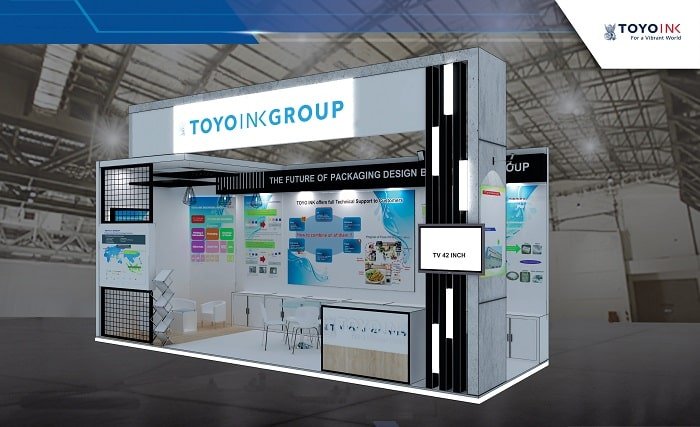
Toyo Ink Co., Ltd., Toyo Printing Inks Inc. and Toyo Ink Europe, N.V., all member companies of the Toyo Ink Group of Japan, will be jointly exhibiting at interpack 2023. Under the banner of “Packaging Innovation for a Sustainable Future,” the Group will feature at its stand (Hall 18, Stand F16) solutions that can help brands and packaging converters make the transition to a more circular economy. This entails functional inks and coatings, adhesives and other specialty materials that help to reduce the amount of plastics used in packaging and that support the shift from multi-material to mono-material packaging. After a six-year pandemic-induced hiatus, the trade event will take place from May 4 to 10, at the Fairground Düsseldorf in Germany.
“Consumers and brand owners are putting greater emphasis on sustainable packaging now more than ever before,” states Hideki Ohba, General Manager, Marketing Division at Toyo Ink Co. “Brands demand materials that reduce their environmental footprint as they seek to align their brand with consumer expectations. This means all of us in the packaging supply chain need to work closely together to realize better structural designs that ensure the packaging of tomorrow can be recycled or reused after its first use. At this year’s interpack, visitors to the Toyo Ink Group stand can expect to find solutions that address these requirements and much, much more.” ”
Solutions for Increased Circularity
Kicking off this product portfolio is a new lineup of functional coatings used to replace plastic in paper or film packaging as part of the growing drive toward increased recyclability. Product highlights include oxygen barrier coatings and transparent UV-block coatings RV-20010 that serve as a substitute for aluminum in flexible packaging structures. Not only do they shut out unwanted UV rays that can harm packaged content, but they help boost the recyclability of the total package. In addition, a new soft-feel matte coating that protects carton packaging and eliminates the need for a protective plastic layer will make its interpack debut as a product currently undergoing evaluation.
Ultra Energy Efficient, Low VOC Ink Systems
For paper label and package printers looking to learn more about the energy-saving benefits of Toyo Ink’s high-sensitivity UV LED ink systems, the Toyo Ink Group will be showcasing an updated line of low-energy, low-VOC ink systems for sensitive packaging and label printing applications. Steraflex™ LED Food is the low-odor, low-migration flexo ink engineered to be food-grade compliant in accordance with Swiss Ordinance. Moreover, the Group will show a complete portfolio of UV LED offset inks that exhibit outstanding print and press performance, making it well suited for most label and narrow web applications, and in-mold labeling.
Solutions for Enhanced Food Safety
As for solutions that address food safety, the Toyo Ink Group will showcase the LP-9000 Toyo Life Premium Food LO/LM series of sheetfed offset inks. In addition to being INGEDE-certified for deinkability, LP-9000 systems are engineered and manufactured in accordance with EuPIA guidelines and Good Manufacturing Practices standards.
The Group will also showcase its total solution approach to metal package production, including its popular internal can coatings that are free of any intentionally added bisphenol A (BPA-NI) and fully compliant with food contact regulations.
In other products, the Group will spotlight water-based flexo and gravure inks used in flexible packaging, mineral oil-free sheetfed offset inks for food applications, and many other solutions that are safer for human health but also better for the environment and recycling.
Pioneering the Transformation of Public Transport in Europe, Karsan Makes a Atrong Entry into 2023!
Two More Historic Cities in Romania will be Electrified by Karsan e-JEST!
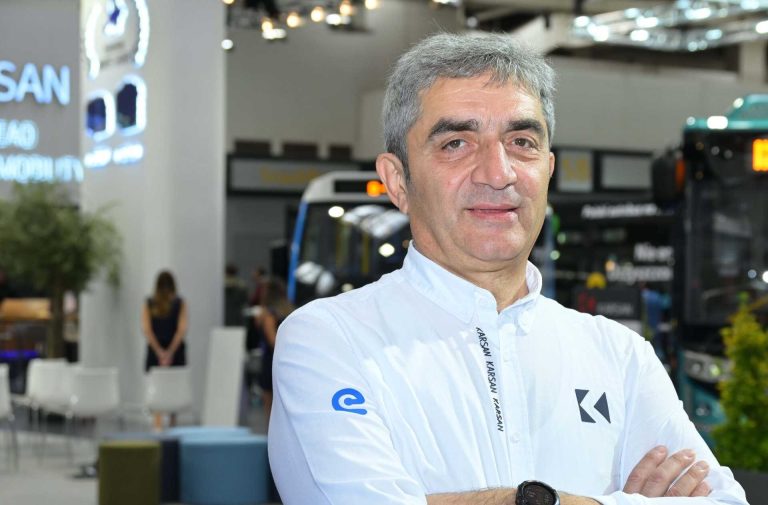
Offering high-tech mobility solutions with the vision of being “One Step Ahead in the Future of Mobility”, Karsan continues to grow in its main target markets in Europe. Karsan’s local distributor Anadolu Automobil Rom. S.R.L won two tenders and sold a total of 20 e-JEST buses. In this context, Karsan has received 16 e-JEST orders for the historical city of Aiud in Romania and 4 e-JEST orders for the city of Siret. Karsan e-JEST, which will be the first electric minibuses of both cities, will be delivered in the last quarter of the year. Noting that the number of Karsan-branded electric vehicles in Romania will increase to over 200 this year, Karsan CEO Okan Baş said, “With these new agreements, we have made a strong start to 2023.” Emphasizing that Karsan played a leading role in the transformation of electric public transportation in Romania, Okan Baş said, “It is possible to see Karsan-branded electric buses in many cities in Romania. Romania is one of the countries leading the transformation of electric public transport in Europe. This vision of Romania and our electric transformation journey as Karsan, which started five years ago, coincide with each other.”
Pioneering the transformation of public transportation with its high-tech products, Karsan continues to strengthen its presence abroad. Karsan, which made a name for itself especially in the European market with the tenders it won, made a strong entry into 2023. Karsan’s Romanian distributor Anadolu Automobil Rom. S.R.L (AAR) won the tenders , which included 16 e-JEST sales in the city of Aiud and 4 e-JEST sales in the city of Siret. Karsan will further expand its electric bus fleet in Romania, after having signed contracts for both tenders its distributor AAR.
It will be delivered in the last quarter of the year!
In addition to e-JEST buses, 20 charging stations will be installed within the scope of the tender. . Stating that e-JEST buses to be delivered will be the first electric minibuses of both Auid and Siret cities, Karsan CEO Okan Baş said, “With these new orders, we have made a strong start to 2023. This year, the number of Karsan brand electric vehicles in Romania will increase to over 200.”
Karsan e-JEST is the market leader in Europe!
Emphasizing that Karsan played a leading role in the transformation of electric public transportation in Romania, Mr. Baş said, “It is possible to see Karsan-branded electric buses in various cities in Romania which is one of the countries leading the transformation of electric public transport in Europe. This vision of Romania and our electric transformation journey as Karsan, which started five years ago, coincide with each other.” Stating that Romania is one of the main target markets of Karsan, just like France and Italy, Mr. Baş said, “Karsan recently became the Turkish brand with the largest bus fleet in Romania’s electric vehicle market, where we are expanding with all product range from 6 meters to 18 meters. We are happy to be a part of the electric transformation of Aiud and Siret cities with European electric minibus market leader Karsan e-JEST.
Mapping the Future of Flexible and Printed Electronics
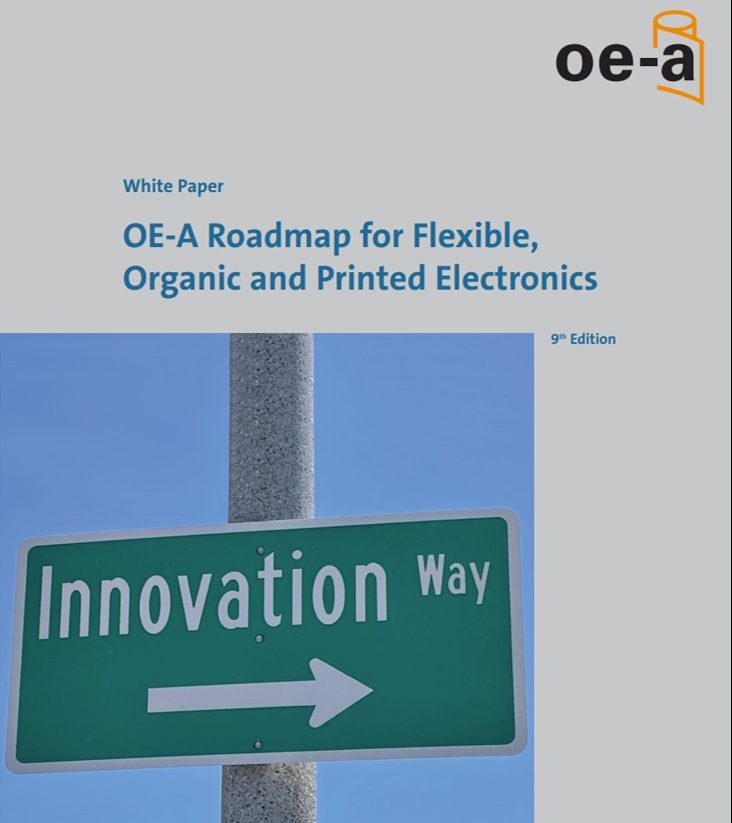
The new edition of the OE-A Roadmap is out now. The key market focus includes: Automotive, Consumer Electronics, Healthcare, Printing and Packaging, Smart Building, and Internet of Things. The Roadmap analyses the status and forecasts where flexible, organic, and printed electronics is heading.
“The last couple of years since the release of the previous Roadmap have seen continued innovation regarding the adoption of printed, flexible, and hybrid electronics in a wide range of products and markets”, states Stan Farnsworth, Chair of the OE-A Board and Chief Marketing Officer at PulseForge. This 9th edition of the Roadmap published by the OE-A (Organic and Printed Electronics Association), a working group within VDMA, is presented today at LOPEC 2023 and outlines the present status, current and future opportunities for the industry.
Major trends in key markets
The “OE-A Roadmap for Flexible, Organic and Printed Electronics” white paper provides a close look into the advancing maturity of the industry. In addition to updates on key technologies and capabilities, more than 100 industry experts have contributed detailed short, medium, and long-term forecasts for markets including Automotive, Consumer Electronics, Healthcare, Printing and Packaging, Smart Building, and Internet of Things.
In the automotive sector, where the use of the technology has already been widely adopted for rear lights, OLED lighting has now reached the car interior. Use of OLED displays for curved displays, lighting concepts and touch sensors inside the car are anticipated to see continuing growth. When considering trends in consumer electronics the roadmap focuses on HMI, as increasingly touch sensors are replacing mechanical knobs and buttons. Smart phones with foldable displays are growing in popularity. The use of printed electronics in the healthcare industry and packaging market was accelerated by Covid. Smart patches for monitoring body functions are more widespread, and tracking of environmental parameters such as temperature and shock is of growing importance. The seamless integration of printed electronics into objects is of special relevance for the Internet of Things. RFID and NFC labels, smart tags, which can now also include integrated GPS, are working as a strong driver. For the Smart Building industry, the increasing need of improved sustainability has led to significant innovations. Organic and large area printed photovoltaic installations on roofs are becoming more widely used, while the need for advanced sensors is opening opportunities for printed electronics in building monitoring and control.
Printed electronics drives Sustainability
“Printed electronics technologies have a lot to offer when it comes to sustainable production processes and materials. Printing, as an additive process, consumes less material and energy, and reduces the amount of waste. Printing plus related advanced processing enables broader use of recycled or eco-friendly materials to support product lifecycle circularity”, explains Stan Farnsworth.
What is afoot?
The trend is towards more stretchable materials which fit for applications in medical, sports and for clothing. The mobility sector, via electric cars and autonomous driving, offers new possibilities such as printed sensors, integrated control and interface systems, and evolved battery-related technologies. “Product development must think printed electronics by design. Printed and hybrid electronics do present opportunities for incremental product improvements, but even more so the opportunities are deeper. In our experience, manufacturers are ready”, explains Farnsworth.
The new OE-A Roadmap summary will be available soon on the OE-A website.
Danimer Scientific VP Keith Edwards to Join Department of Energy-Hosted Sustainable Chemistry Roundtable
Edwards will join other chemicals sector value chain leaders for discussion aimed at achieving chemicals sector decarbonization and environmental justice
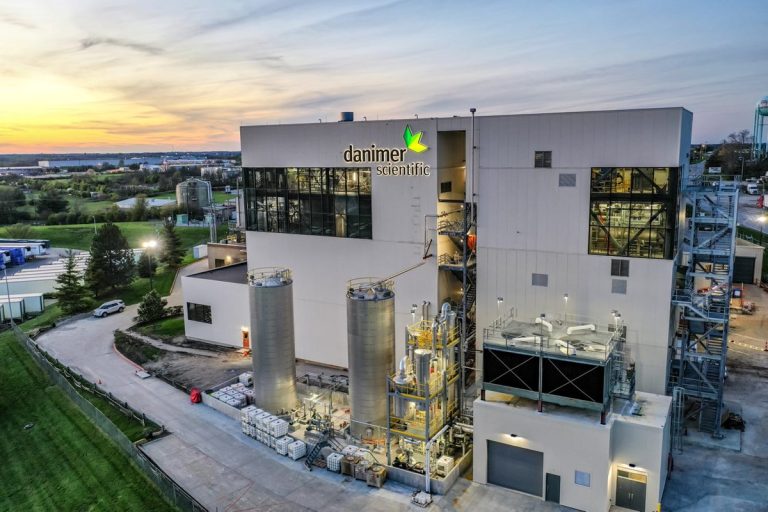
Danimer Scientific, Inc. (NYSE: DNMR) (“Danimer” or the “Company”) vice president of business development Keith Edwards will join other leaders from across the chemicals sector value chain today at the Sustainable Chemistry in RD&D to Transform the Chemicals Industry Roundtable. The event, co-hosted by the U.S. Department of Energy’s (DOE’s) Office of Energy Efficiency and Renewable Energy (EERE) Industrial Efficiency and Decarbonization Office (IEDO) and the Green Chemistry & Commerce Council (GC3), will take place in Arlington, Virginia.
Edwards will join a broad mix of stakeholders from industry, government, national labs and small businesses at the roundtable to voice their perspectives on technical and financial opportunities and barriers to sustainable chemistry RD&D, with the aim of achieving chemicals sector decarbonization and environmental justice. The input gained from this roundtable will help the IEDO identify where federal investment is needed to accelerate the commercial readiness of emerging and environmentally just sustainable chemistry technologies and practices.
“I’m pleased to be representing Danimer as we join with the U.S. Department of Energy and key stakeholders at this roundtable to contribute to sustainable chemistry growth,” Edwards said. “The ambitious target set by the Biden Administration to achieve net-zero greenhouse gas (GHG) emissions by 2050 is only possible through embracing renewable chemistry across many industrial sectors. Biobased and annually renewable sources of raw materials can both transform the current chemical industry’s environmental footprint and contribute to growth of rural economies and STEM-related jobs. Danimer is committed to growing renewable biopolymers and working with all stakeholders to help achieve the ambitious targets and our transition to a circular economy.”
In 2020, the industrial sector accounted for 30% of U.S. primary energy-related CO2 emissions, with chemicals being the largest emitter of all subsectors. Despite billions of dollars in public funds being devoted to industrial decarbonization through the Bipartisan Infrastructure Law and the Inflation Reduction Act, the complexity of the industrial sector means that it faces unique decarbonization challenges.
For more information, please visit www.DanimerScientific.com
OE-A Business Climate Survey: Printed Electronics with Tailwind into 2023
2023 revenue growth of 18 percent forecasted compared to 2022
Companies anticipate growth to continue in 2024: +19 percent
More jobs in flexible and printed electronics industry
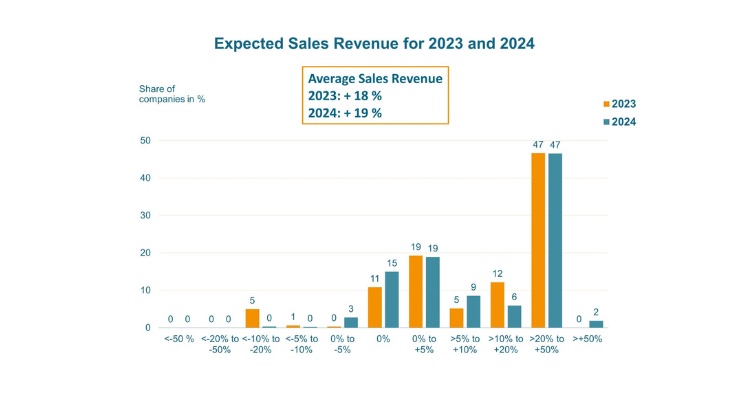
The results of the recent 2023 OE-A Business Climate Survey demonstrate expectations of continued growth, consistent with projections made in the 2022 survey. For 2023 the responding association members anticipate sales revenue increases of 18 percent for the Flexible and Printed Electronics Industry. The outlook for 2024 is promising as well with an estimated growth of 19 percent. “The consistently optimistic results year-on-year in the face of current global uncertainties reflect an underlying confidence in the technologies and applications before us,” summarizes Stan Farnsworth, chair of the OE-A board and chief marketing officer of PulseForge. The results of the OE-A Business Climate Survey were presented in a special session for the international press at LOPEC 2023 in Munich, Germany. The semi-annual survey is conducted by OE-A (Organic and Printed Electronics Association), an international Working Group within VDMA.
For each survey, every OE-A member organization from throughout the supply-chain, from R&D to material suppliers to end users, are asked to provide qualitative data on the state of the industry, expected sales development and markets. The results are on a high level with 76 percent of the survey participants expecting the industry to continue its positive development in 2023. Leading industries for printed electronics applications are identified by the survey responses as being Consumer Electronics, Automotive, Medical & Pharmaceutical and Building & Architecture.
OE-A expects 18 percent sales growth for 2023
With an expected 18 percent growth in sales revenue, the printed electronics community turns out to be slightly less optimistic compared to fall 2022 (+24 percent). For 2024 the positive outlook for the sales revenue growth from October 2022 has been confirmed with 19 percent. Despite the good results the industry battles the impact of the global crisis. Seventy-three percent (73 percent) of respondents note negative effects like supply chain disruptions or price increases. “The flexible and printed electronics industry members anticipate negative impact due to higher energy cost, inflation, and difficulties in procurement of electronics components,” explains Stan Farnsworth. “Near-term improvements are not expected.” Yet, the “back to normal” business recovery period is now thought to be shorter than predicted in the past surveys. More than half of the participants (57 percent) expect a recovery within the next 12 months. Additionally, member companies are reporting an increasing recovery of customer demand, especially in USA and Europe, compared to October 2022.
A strong foundation for the future
70 percent of the surveyed companies will increase investment in production, and more than two thirds will strengthen their R&D activities in the upcoming half year. Furthermore, the employment situation is encouraging with 55 percent of the companies planning to increase staff. ”We release the annual Business Climate Survey results here at LOPEC, amongst all of the conference talks, exhibitions, and product demonstrations, because LOPEC is the world’s leading dedicated event to flexible hybrid electronics” stated Farnsworth. “The flexible and printed electronics industry is expanding, and further growth is expected. Here at LOPEC, surrounded by innovation and opportunity, we continue forward towards a positive 2023.”