Tuesday, October 6, 2026
spot_img
Home Blog Page 118

Shaping the EPS Industry: A Conversation with Alliance (EPS-IA) on Market Trends and Environmental Initiatives


1. Tell us a little bit about the EPS Industry Alliance.
The Expanded Polystyrene Industry Alliance (EPS-IA) is a trade association representing North American manufacturers of expanded polystyrene (EPS) that produce transport packaging and building and construction solutions. We advocate for the responsible use of EPS, as well as research-backed solutions and policies that will positively benefit the environment and the economy.

2. You recently applauded the Biden-Harris Administration’s $100 million investment in recycling infrastructure to promote a circular economy. Why do you think this is an important step?
The Biden Administration’s $100 million allocation could allow more communities to implement EPS recycling into their municipal collection efforts. Existing programs demonstrate the ability to efficiently collect the material, identify end markets, and realize increased revenues by freeing up valuable landfill space for heavier refuse. Curbside recycling is not suitable for all residential waste, and this investment to expand recycling infrastructure could be a pivotal step for communities to identify ways to recycle these materials.

3. We’ve heard you say that EPS is often misunderstood. How so?
EPS is sometimes misunderstood due to confusion with other foam plastics. For example, foam meat trays are made from extruded polystyrene (XPS). It has different properties that make it the best choice for this application – primarily due to its superior adhesion to plastic wrap. Other types of polystyrene include GPPS, HIPS, OPS, and co-polymers, that are used to make tens of thousands of different applications. Materials with food contamination can be more challenging to recycle, for plastic and paper both.
Because of this many people assume EPS transport packaging is not recyclable, when in fact it is being recycled in practice and at scale in many countries, in accordance with the International Organization for Standardization (ISO) guidelines. Another point of confusion stems from recyclability in commercial versus residential waste sources. It is a misnomer that only residential waste recycling counts. However, whether commercial or residential waste, it is disposed of in the same landfill if not recycled.

4. What do you most want people to know about EPS?
The importance of EPS is becoming clearer as some companies try to replace it with substitute materials that do not work. It is an essential packaging material for appliances, large format electronics, fresh fish, fragile light fixtures, and especially for cold chain shipping where low temperatures are required over long distances. These are just some examples of its utility in the distribution supply chain, and the lynchpin of its function is damage avoidance. Increased damage erodes profit margins, comprises brand loyalty and most importantly, exponentially increases environmental impacts.
Using conservative assumptions to calculate the cost associated with in-transit damage and subsequent return rates, $4.21 per unit is a starting point to begin envisioning the economic impacts that could result from just 1% in increased damage. The environmental impacts are ten-fold considering transportation is quadrupled, and remanufacturing of a replacement product and new packaging are needed.

5.The Intergovernmental Negotiating Committee (INC-3) will meet at the UN Environment Programme headquarters in Nairobi, Kenya, from November 13 – 19 to detail the historic, and soon-to-be, legally binding international “instrument” on plastic pollution. What are your thoughts leading up to this?
Recently, expanded polystyrene foam has been a point of discussion within international policy circles. The week of November 13th, we will be attending the third meeting of the United Nations Environment Programme International Negotiating Committee (INC-3) that is being held in Nairobi, Kenya, to establish a legally binding treaty on plastic pollution. Participating as an accredited observer gives the EPS industry a chance to understand environmental solutions for EPS on a broader scale. While the UNEP Zero Draft of the instrument alludes to restrictions for problematic and avoidable plastics, the criteria to evaluate a material’s environmental impacts has not benefited from any in-depth discussion.
INC-3 marks the beginning of the actual negotiations which could shed some light on this policy option, and it will likely be assigned as an intercessional activity. For now, recyclability is the only perceptible benchmark leading to many premature conclusions. It will be interesting to see what is accomplished at the third meeting, as up until now, inputs have largely been on a theoretical level. Moving forward there will need to be balance between ambition and reality, which we hope to see evolve at INC-3.
To achieve this balance, EPS-IA believes the treaty scope should aim to address plastic pollution, and not duplicate efforts when it is possible to defer to other multilateral environmental agreements (MEAs) such as the Basel and Stockholm Conventions, except when potential solutions fall outside the scope of existing MEAs. This would allow more time to focus on implementation and financing challenges within the short time frame in which the treaty is scheduled for completion. There is a dire need to create mechanisms for the scientific community to contribute. The lack of reliance on science this far into the process creates the potential for misinformation and misperceptions to take its place.

6.What would you like to see as part of that global agreement?
EPS-IA has recommended the treaty adopt a life cycle assessment approach to material comparisons. There is a large body of evidence showing plastic cannot be summarily replaced by alternative materials without taking the full product life cycle into account. This could be achieved by establishing policy that requires Environmental Product Declarations, which are based on regional Product Category Rules under ISO 14025, Environmental Labels and Declarations, Type III Environmental Declarations – Principles and Procedures. This would create the basis for data rich material comparisons that rely on full life cycle inventory analysis that is third-party certified.

7.Is there anything I didn’t ask that you’d like people to know?
Many member states have made encouraging remarks about the value of the plastics industry’s important role of informing negotiators about innovations, to ensure the treaty meets its goal to end plastic pollution. EPS-IA is honored to participate in this daunting challenge, and we are encouraged with the opportunity to contribute innovative policy solutions and concepts.

www.epsindustry.org

#ginujoseph #interview #Q&A #modernplasticsindia #indianplasticmagazine #modernplasticsaward #plasticnews #modernplasticsgermany #ginujoseph #modernplastic #plasticindia  #plasticrecycling #sustainability #modernplasticsglobalnetwork #modernglobalnetwork #modernplasticsaward2023 #plasticmagazine #PlasticIndustry  #modernplasticsmiddleeast #indianmagazine #innovations #modernplasticsamerica #modernplasticsbangladesh #modernplasticsasia #modernplasticsitaly

Husky Returns to Gulfood Manufacturing Showcasing Technologies, Solutions and Services Enabling Regional Packaging Producers to Achieve Sustainability and Circularity

Husky Returns to Gulfood Manufacturing Showcasing Technologies, Solutions and Services Enabling Regional Packaging Producers to Achieve Sustainability and Circularity

Husky Technologies, a pioneering technology provider enabling the delivery of essential needs to the global community, is returning to Gulfood Manufacturing in Dubai, UAE from November 7-9. Husky’s booth, located in Hall 2, Stand B 2-4, is showcasing the company’s latest technologies, solutions and services designed to enable regional food and beverage packaging producers to increase sustainability while achieving growth, flexibility, differentiation and world-class production capabilities.

“As we celebrate our 70th year in business and close to 20 years serving the Middle East, we are excited to be exhibiting at Gulfood Manufacturing and are now even more resolute in our commitment to enabling producers to be more competitive in this dynamic and growing region,” said Wassim Labban, Husky’s Vice President, Rigid Packaging, EEMEIA, SEA, ANZ. “In today’s global economy, there is an immediate need to address the challenges of evolving markets while driving sustainable practices. At Gulfood Manufacturing, we are presenting how we are responding to this demand by delivering essential innovations that enable the circular economy, in this region and around the world.”

Investing in the production of sustainable packaging molding solutions has long been a top priority for Husky. The company has been at the forefront of developing a diverse range of technologies, solutions and services that enable producers to operate more sustainably while delivering circular packaging that has a lower carbon footprint.

Highlights will include:

  • Husky’s latest generation platform of proven HyPET systems tailored for the production of up to 100% recycled PET that include a purpose-built drying solution, optimized energy management, enhanced melt control, automated mold cleaning, integrated part quality inspection, and more.
  • Lightweighting solutions to enable producers to effectively reduce the amount of virgin resin in each complete package, including closure, preform and bottle, minimizing carbon footprint while lowering material, production and shipping costs.
  • Decades of packaging expertise and part design experience to enable producers to meet new and upcoming circular packaging regulations by facilitating the successful conversion from alternate packaging materials to durable, reliable, and infinitely recyclable PET.
  • The adoption of world-class manufacturing processes that reduce energy consumption, minimize variability, and optimize operational efficiency. This includes Husky COMPLETE, the industry’s only complete, connected, end-to-end production solution modelled to transform variability into stability throughout every stage of PET preform production, including Husky’s Advantage+Elite real-time proactive, predictive, and transparent monitoring solution that reduces the variability risk associated with running higher percentages of post-consumer resin.

https://www.husky.co/

#husky #modernplasticsindia #indianplasticmagazine #modernplasticsaward #plasticnews #modernplasticsgermany #ginujoseph #modernplastic #plasticindia  #plasticrecycling #sustainability #modernplasticsglobalnetwork #modernglobalnetwork #modernplasticsaward2023 #plasticmagazine #PlasticIndustry  #modernplasticsmiddleeast #indianmagazine #innovations #modernplasticsamerica #modernplasticsbangladesh #modernplasticsasia #modernplasticsitaly

Clariant Inaugurates Daya Bay Exolit OP Flame Retardant Plant

Clariant Inaugurates Daya Bay Exolit OP Flame Retardant Plant

  •  CHF 60 million investment in new high performance halogen-free flame retardant facility completed on time in the first stage of an overall CHF 100 million investment
  • Will support rapidly growing demands from China- and Asian-based component manufacturers for innovative & sustainable fire protection in E-mobility, E&E, transportation, 5G communications, infrastructure, and appliances
  • Establishes flame retardant production & local teams with technical expertise close to customers’ operations
Angela Cackovich, Business President Adsorbents & Additives and Clariant EMEA Member of the Executive Steering Committee: “With this world-class manufacturing plant, we strengthen our leading position and global competence in innovative and sustainable fire safety solutions.” (copyright Clariant)

Clariant, a sustainability focused specialty chemical company, today marks another milestone in its China Strategy with the official opening of its new state-of-the-art production facility for halogen-free flame retardants in Daya Bay, Huizhou.

The CHF 60 million investment into the plant’s first production line will provide local customers with access to innovative and sustainable Exolit OP flame retardants and related technical expertise to support the significant growth of engineering plastics applications in E-mobility and electrical & electronic segments. A second line is under construction and expected to be onstream during 2024, representing a further CHF 40 million investment.

“With this world-class manufacturing plant, we strengthen our leading position and global competence in innovative and sustainable fire safety solutions. We have the proximity to better service customers in China and across the Asia Pacific region behind the innovative components, devices and systems advancing technological developments in e-mobility, infrastructure,5G communications, energy delivery and more. Local production means we can improve cooperation and design tailored solutions to their developing needs as well as significantly reduce delivery lead times,” comments Angela Cackovich, President of BU Adsorbents & Additives, and Clariant EMEA Region.

The new plant will produce Clariant’s global range of patent-protected organophosphorus flame retardants and supplements the capacity of Clariant’s two Exolit OP plants in Knapsack, Germany. The team at the One Clariant Campus in Shanghai will support customers in the joint development and in-application testing of flame retarded solutions.

Angela Cackovich continues: “Brands and equipment manufacturers are switching to non- halogenated flame retardants to address the challenges of increasing safety, sustainability and technical performance requirements in E-mobility and Electronics. For engineering plastics, our Exolit OP solutions can help fulfil needs for application safety improvements and the reliability of maintaining mechanical, electrical and fire retardancy performance properties over a product life cycle and after recycling.

Importantly, they also offer environmental and health profiles verified by third parties. By collaborating across value chains we can capture unmet needs as applications become more demanding, innovate faster together, and ensure the optimum solution to meet evolving regulatory and physical property as well as processing requirements.” Despite the challenges posed by delays in equipment delivery, travel restrictions, and unpredictable supply chain interruptions, the teams from Clariant China and Europe, local authorities in the chemical park, and external partners pulled together to ensure the project was accomplished within 18 months, on schedule and on budget. All 1.2 million man hours worked since construction began were accident free.

The new flame retardant plant is operated by a 100-strong team of local employees and is located within the Huizhou Daya Bay Economic and Technological Development Zone (Daya Bay Chem Park) in Guangdong Province. Clariant’s Daya Bay site utilizes green electricity, enabling a significant reduction in Scope 2 (CO2) emissions, and is also home to its Care Chemicals Ethoxylation plant, which is currently undergoing a CHF 80 million expansion.

www.clariant.com


#modernplasticsindia #indianplasticmagazine #modernplasticsaward #plasticnews #modernplasticsgermany #ginujoseph #modernplastic #plasticindia  #plasticrecycling #sustainability #modernplasticsglobalnetwork #modernglobalnetwork #modernplasticsaward2023 #plasticmagazine #PlasticIndustry  #modernplasticsmiddleeast #indianmagazine #innovations #modernplasticsamerica #modernplasticsbangladesh #modernplasticsasia #modernplasticsitaly  #cortecadvertising


Asahi Kasei Invests in US Startup NFW – Cooperation to Deliver Scale in the Field of Non-Petroleum-Based, Fully Circular Leather Alternatives for Automotive Interiors

Asahi Kasei Invests in US Startup NFW – Cooperation to Deliver Scale in the Field of Non-Petroleum-Based, Fully Circular Leather Alternatives for Automotive Interiors

Asahi Kasei has decided to invest in US-based startup NFW, a producer of non-petroleum-based leather alternative for car interiors. As part of Asahi Kasei’s medium-term growth strategy and in close cooperation with Sage Automotive Interiors, Inc. (Sage), an Asahi Kasei company and a leading global provider of innovative and functional materials for the automotive interior, this strategic partnership enables another major step to support global automotive OEMs in reducing the environmental burden of automobiles.

Based in Peoria, Illinois, NFW was founded in 2015 and has developed the only platform capable of producing precision-engineered, natural (non-petroleum-based) leather, foam, and textiles to replace animal and petrochemical-based materials. Certified by the United States Department of Agriculture as having 100% biobased content, MIRUM, the company’s patented leather alternative, is made from natural rubber, natural fibers, plant oils, natural pigments, and minerals. The material offers superior durability and quality that can replace traditional animal-based or synthetic leather products without the use of any polyurethane or other coatings.

Sage is engaged in developing, manufacturing, and selling innovative functional materials used in automobile interiors globally. Since its acquisition by Asahi Kasei in 2018, Sage has strengthened its business activities in Europe and China through mergers and acquisitions in parallel to expanding its lineup of growth-potential materials such as suede and synthetic leather. As one of the leading global suppliers in the car seat fabric market, Sage has a strong presence among automakers and suppliers.

Dirk Pieper, Chairman of the Sage Board of Directors and Lead Executive for the development and growth of Asahi Kasei’s overall automotive product offering, stated, “The cooperation with NFW will enable Asahi Kasei and Sage to assist global automakers in reducing the environmental burden of their cars. By jointly developing and manufacturing a non-petroleum-based and fully circular leather alternative, the Asahi Kasei Group takes a leading position in revolutionizing the market for car interior materials.”

First project within the “Care for Earth” investment framework
The cooperation with NFW is the first project within Asahi Kasei’s “Care for Earth” investment framework, announced in April 2023. Asahi Kasei allocated up to $100 million for investments worldwide in early-stage startups that aim to solve issues in environmental fields such as hydrogen, energy storage, carbon management, and bio-based chemicals over the 5-year period up to fiscal 2027. As described in its April 2022 medium-term management plan, the car interior material business is one of Asahi Kasei’s “10 Growth Gears” (GG10)—businesses that are to drive future growth, targeting more than 70% of operating income around 2030.

About NFW
NFW is a platform for plastic-free performance materials spanning sheet goods, textiles, molded composites, and foams. NFW follows three Ground Rules in everything they develop: start well, stay clean, and end well. The multi-material platform serves a wide range of industries—from fashion and footwear to automotive and upholstery. NFW technology seamlessly embeds into existing supply chains, enabling the world’s most iconic brands to design and scale products with high-performance, naturally circular materials. NFW makes global brands more sustainable, empowering them to create without plastics. Alongside the boldest brands and visionary designers, NFW is pioneering a post- linear, post-oil economy.

About Sage Automotive Interiors
Sage Automotive Interiors (www.sageautomotiveinteriors.com) is one of the world’s leading providers of automotive interior materials—seating, door panel surfaces, and headliners—to automotive Original Equipment Manufacturers (OEMs). Global offices and manufacturing locations include North America, South America, EMEA, and Asia. Sage’s core strengths are consumer research, sustainability, and innovative problem-solving for OEMs. Sage’s vision is to continually lead the market in design, engineering, and technical capability, supported by world-class manufacturing. Sage Automotive Interiors is an Asahi Kasei company.

About the Asahi Kasei Corporation
The Asahi Kasei Group contributes to life and living for people around the world. Since its founding in 1922 with ammonia and cellulose fiber businesses, Asahi Kasei has consistently grown through the proactive transformation of its business portfolio to meet the evolving needs of every era. With more than 48,000 employees worldwide, the company contributes to a sustainable society by providing solutions to some of the world’s toughest challenges through its three business sectors: Material, Homes, and Health Care. Its Material sector, comprised of Environmental Solutions, Mobility & Industrial, and Life Innovation, includes a wide array of products, from battery separators and biodegradable textiles to engineering plastics and sound solutions.

www.asahi-kasei.com


#modernplasticsindia #indianplasticmagazine #modernplasticsaward #plasticnews #modernplasticsgermany #ginujoseph #modernplastic #plasticindia  #plasticrecycling #sustainability #modernplasticsglobalnetwork #modernglobalnetwork #modernplasticsaward2023 #plasticmagazine #PlasticIndustry  #modernplasticsmiddleeast #indianmagazine #innovations #modernplasticsamerica #modernplasticsbangladesh #modernplasticsasia #modernplasticsitaly  #cortecadvertising


Packaging and Technical Growth Drives BOPET Film Demand

Packaging and Technical Growth Drives BOPET Film Demand

Global market demand for BOPET film continues to grow despite current economic uncertainty and market challenges, according to a new report by leading industry consultants, AMI Consulting. BOPET producers are adapting to the shift towards more regional supply and increasing tariffs, and taking short-term measures to address falling prices and widespread de-stocking throughout the customer base. In spite of all this, growth opportunities abound and BOPET manufacturers are setting out on the race to supply the burgeoning packaging growth across Asia and for the manufacture of the next generation of high technology and green energy products.

Packaging remains the largest end-use market for BOPET films and in spite of sustainability pressures, is growing strongly across developing markets and within profitable niches globally. The use of flexible packaging including BOPET film for non-food items is lower than for food providing good opportunity to switch from rigid packaging, and BOPET lids and labels in combination with PET trays and bottles offer a mono-material solution.

Use of BOPET in food packaging is steadily increasing in low per capita consumption regions such as the Indian Sub-Continent and SEA, where packaged food is becoming more widely available. End-users are recognising that BOPET films can offer properties vital for food security such as good barrier and materials reduction, whilst providing a cost-effective solution. Mono-material PET solutions are seeing R&D interest, with promising developments in sealing properties.

Technical and non-packaging applications are emerging as the better growth opportunity for BOPET film in the next five years, with 5% growth expected to 2027, compared with 3% for packaging films. The stand-out growth application for BOPET in volume terms continues to be photovoltaics, although low prices which continue to offer limited investment opportunities. Supportive government policies may yet persuade those who exited this market to re-enter and support the regional development of green energy industries. Electrical applications are forecast to show ongoing healthy growth, thanks to new battery applications, the growth in flexible electronics and new energy segments. To serve a greater range of growth opportunities, thin film lines are being stretched to their limits and modified to produce both thinner and thicker BOPET films.

The market remains attractive in the longer term both for existing players who continue to invest in broadening their product ranges for new applications, and for new BOPET producers aiming to benefit from the growth of both packaging films and industrial BOPET markets. Both markets are anticipated to exceed global GDP growth in the forecast period with many converters and end-users optimistic about continued growth in demand for BOPET across both packaging and industrial markets in the future.

https://www.amiplastics.com/

#modernplasticsaward #plasticnews #modernplasticsgermany #ginujoseph #modernplastic #plasticindia  #plasticrecycling #sustainability #modernplasticsglobalnetwork #modernglobalnetwork #modernplasticsaward2023 #plasticmagazine #PlasticIndustry  #modernplasticsmiddleeast #indianmagazine #innovations #modernplasticsamerica #modernplasticsbangladesh #modernplasticsasia #modernplasticsitaly

Optimally Expandable Polypropylene For Sustainable Applications

Ultrapolymers has expanded its polyolefins portfolio with the expandable PP grade Moplen EP490H. Developed by LyondellBasell as a special basic type for foamed applications, it allows a reduction in the use of materials and thus the CO 2 footprint in a wide range of applications. In addition, the very good mechanical properties enable mono-material solutions that can be reused or fed directly into the polyolefin recycling cycle after use. This heterophasic copolymer, which offers many properties that were previously only achievable with expandable polystyrene, proves to be an optimal choice in terms of sustainable packaging.

The main applications of Moplen EP490H are extruded foamed films, profiles and sheets, thermoforming and extrusion blow molding, for example rigid packaging for food and consumer goods. The material combines higher foamability than any conventional polypropylene with good rigidity, high impact strength at room and low temperatures, good dimensional stability as well as very good resistance to creep and good resilience.

With its very good deep-drawing properties, Moplen EP490H offers the packaging industry expanded options for developing lightweight, material-saving and therefore environmentally friendly mono-material solutions. Thanks to the good thermal insulation and temperature resistance as well as the high water and chemical resistance, containers for hot meals and drinks are also among the possible applications. The fine and evenly distributed cell structure results in a significantly smoother surface with significantly better aesthetics than when using conventional polypropylene. Due to their high dimensional stability and durability, corresponding products offer an attractive, reusable alternative to expandable polystyrene. The possibility of manufacturing from ISCC PLUS-certified raw materials and the good suitability for recycling make further contributions to greater sustainability.

Moplen EP490H is manufactured with a phthalate-free catalyst, is plasticizer and BPA-free and has the relevant food regulatory approvals. Ultrapolymers supplies the complete PP formulation including the endothermic blowing agent Polybatch BA 9090 and the nucleating agent Polybatch CFPP 0260 NU.
Business Development Manager Hermann Diem says: “With the new Moplen EP490H, we can now offer a material that, thanks to its good foamability, enables particularly sustainable solutions in the area of ​​lightweight packaging. Based on our decades of experience with polyolefins, our customers also receive comprehensive application technology advice from molding design to product-specific recipe creation and tool design to starting the production process.”

www.ultrapolymers.com

#modernplasticsaward #plasticnews #modernplasticsgermany #ginujoseph #modernplastic #plasticindia  #plasticrecycling #sustainability #modernplasticsglobalnetwork #modernglobalnetwork #modernplasticsaward2023 #plasticmagazine #PlasticIndustry  #modernplasticsmiddleeast #indianmagazine #innovations #modernplasticsamerica #modernplasticsbangladesh #modernplasticsasia #modernplasticsitaly

Asahi Kasei to Present Diversified Material Solutions for EV Batteries and Circular Economy at Fakuma 2023

Asahi Kasei to present diversified material solutions for EV batteries and circular economy at Fakuma 2023

Japanese technology company Asahi Kasei will showcase diversified material solutions for safe and compact EV batteries, improved connectivity and lightweighting, as well as circular economy at Fakuma, the world’s leading trade event for industrial plastics processing, from 17 – 21 October 2023 in Friedrichshafen, Germany.

Thermoplastic composites for EV battery applications

This year, Asahi Kasei will put a special focus on its broad range of materials for lightweight, compact, and safe electric vehicle battery solutions. The company is currently developing a new continuous glass fiber reinforced thermoplastic, LENCEN, and will present it for the first time at the European trade show Fakuma. This composite material is formed by stacking layers of continuous glass fiber textiles with polyamide 66 (PA66) films. Due to its tensile strength, high heat resistance, and impact properties similar to metal, this material improves collision safety and weight reduction of EV batteries.

In addition, the company will showcase a carbon fiber reinforced thermoplastic unidirectional tape (CFRTP-UD tape) that utilizes both recycled continuous carbon fiber and the company’s LEONA polyamide resin. Boasting a higher strength than metal, this CFRTP-UD tape can be applied to automobile frames and bodies, further enabling the recycling of end-of-vehicle-life parts into different, new automobile parts.

Asahi Kasei will also showcase cooling pipes for EV battery packs made of the modified polyphenylene ether (m-PPE) XYRON, as well as 2170 cell trays based on the m-PPE particle foam SunForce.

Solutions for improved HMI and glass replacement

AZP is a transparent polymer that overcomes the disadvantages of conventional optical plastic materials. Featuring a close-to-zero birefringence equivalent to glass as well as a superior designability, this material allows high transmittance and low color distortions at all viewing angles. Clear images without luminance variations, color distortion and blurring can be achieved in polarized optical equipment such as AR/VR headsets and head-up-displays (HUDs). The premium quality appearance is also maintained when looking at the display through polarized sunglasses.

Bio-based feedstock and new recycling technology for PA66

Asahi Kasei will display a bio-based and biodegradable cellulose nano fiber (CNF). This material is made from cotton linter and features a high heat resistance and network-forming ability. CNF-reinforced polyamide shows a thixotropic behavior, making it highly suitable for 3D printing applications in terms of easy printing, dimensional accuracy, smooth appearance, and mechanical performance. Furthermore, CNF has superior material recyclability compared to glass fibers.

Cleaning the equipment after processing the plastics in an efficient and cost-effective manner is a major challenge for many companies. Asaclean is the worldwide leader in commercial purging compounds. Asaclean purges are optimized for injection molding, extrusion, film and sheet, blow-molding, and blown-film applications. Its benefits include faster changeovers/reduced downtime, effective removal of color/carbon contamination, reduced screw-pulls, lower scrap/reject rate, increased productivity, and greater cost savings.

The company will also present its comprehensive solutions for establishing a sustainable life cycle for PA66 utilizing bio-based feedstock and a new technology for chemical recycling. Together with Japanese partner company Microwave Chemical, the company is working on a new technology for chemical recycling of PA66. The process utilizes microwaves to depolymerize automotive airbags and other PA66 parts and directly obtain the monomers hexamethylenediamine (HMD) and adipic acid (ADA), which is expected to be accomplished at high yield with low energy consumption. The monomers obtained can then be used to manufacture new PA66.

https://fakuma.asahi-kasei.eu/.

#modernplasticsindia #indianplasticmagazine #modernplasticsaward #plasticnews #modernplasticsgermany #ginujoseph #modernplastic #plasticindia  #plasticrecycling #sustainability #modernplasticsglobalnetwork #modernglobalnetwork #modernplasticsaward2023 #plasticmagazine #PlasticIndustry  #modernplasticsmiddleeast #indianmagazine #innovations #modernplasticsamerica #modernplasticsbangladesh #modernplasticsasia #modernplasticsitaly  #cortecadvertising

Dreyplas will show where UHMW-PE-based thermoplastics can replace fluorine-containing polymers

At Fakuma 2023, Dreyplas will showcase a variety of options for replacing fluoropolymers caught up in the controversy around PFAS with melt-processable UHMW-PE at booth B1-1004 in hall B1. UHMW-PE can be used for molded parts as well as for profiles, sheet products, films and coatings in applications where very low friction and abrasion, depending on the case in conjunction with high chemical resistance, are of primary importance. Dreyplas bases its advice about this versatile resin on Mitsui Chemicals’ products, which are available both as pellets and as powders and micropowders and are also suitable for 3D printing. Dreyplas will continue to offer an extensive range of fluoropolymers for those applications which simultaneously require high temperature resistance.

Highly abrasion-resistant molded parts, extruded sheets, profiles and hoses are some of the applications for LUBMER™ pellets, a self-lubricating, high-impact grade of UHMW-PE suitable for injection molding in both hot runner and tunnel gate systems. Thanks to its food safety and acoustic and electrical insulation properties, potential applications include automotive, electronic, and industrial parts, together with use as a friction-reducing additive in other polyolefins.

MIPELON™ with its spherical, particularly readily dispersible fine particles can be produced with diameters of 10 to 30 μm, whereas the usual dimensions of UHMW-PE powder are 150 to 200 μm. It can thus be an alternative to PTFE for formulating low wear, chemically resistant coatings, where it not only increases abrasion resistance but also reduces the coefficient of friction even more than does PTFE. A further typical application is use as a friction-reducing additive.

Another spherical UHMW powder grade with particle diameters in the range from 120 µm to 160 µm is HI-ZEX MILLION™, which is mainly used for electronic or industrial materials, medical devices, food manufacturing, etc. Its wide range of applications extends from screws, slide rails and gears to battery separators and prostheses. As a friction-reducing blend component, its low density of 930 to 950 kg/m3 helps to reduce product weight.

As Norbert Hodrius, Technical Marketing Director at DREYPLAS explains, “Numerous collaborative projects with customers have demonstrated that, where elevated thermal stability is not essential, it is often possible to do without fluoropolymers In such cases, our alternative is UHMW-PE, which has up to twenty times the abrasion resistance of conventional PE, combined with good chemical resistance, high flexibility and low-temperature impact strength as well as further advantages such as acoustic and electrical insulation and compliance with food safety requirements. In addition, UHMW-PE has good sustainability since all grades are suitable for the PE recycling loop, while its melt processability means low levels of manufacturing waste.”

Sales Manager Markus Geister adds, “If specific requirements mean there is no alternative but to use fluoropolymers, we can supply a wide range of high-performance polymers including PTFE, FEP, PFA, etc. together with comprehensive application engineering know-how to ensure successful use in our customers’ applications.”

www.dreyplas.com

#modernplasticsaward #plasticnews #modernplasticsgermany #ginujoseph #modernplastic #plasticindia  #plasticrecycling #sustainability #modernplasticsglobalnetwork #modernglobalnetwork #modernplasticsaward2023 #plasticmagazine #PlasticIndustry  #modernplasticsmiddleeast #indianmagazine #innovations #modernplasticsamerica #modernplasticsbangladesh #modernplasticsasia #modernplasticsitaly

Digitally Controlled Grinders For Energy-Saving Plastics Recycling

At Fakuma, Hellweg Maschinenbau will be presenting a selection of its pioneering, digitally controlled grinders for efficient, energy-saving plastics recycling at booth A1-1005 in hall A1. These include the MDSi 340/150 Smart Control machine-side grinder with fill level monitoring, the MDSi 600/300 Smart Control Plus central grinder and the MDSGi 1500/600 as a representative of a newly developed series of wet grinders with forced feed which have particularly low power consumption.

The MDSi 340/150 Smart Control machine-side grinder is the highest power model of the series with drive powers of 1.5  kW to 4 kW for grinding capacities of 10 kg/h to 80 kg/h. Its primary application is to save raw materials by enabling the recirculation of even the bulkiest sprue stars, spiders or ladders directly beside one or more injection molding machines. Material can be fed in by chute, feed hopper or conveyor belt, and discharged by suction. A film edge strip feeder is available as an option.

Hellweg’s 300 series central grinders combine a compact design with high performance. Thanks to the sturdy machine housing and the high moment of inertia of the massive, solid rotor they enable powerful grinding of thick-walled moldings, sheets, sprue cakes, pipes and profiles and, when using the special BR rotor, even single-stage shredding of solid lumps from production start-ups. The MDSi 600/300 Smart Control Plus version on display at Fakuma features power consumption analysis to optimize economy and automated lubrication with Bluetooth monitoring to minimize maintenance effort.

Hellweg will be presenting the new MDSGi 1500/600 wet grinder featuring a forced feed system for film recycling to visitors as a 3D printed model due to its considerable weight of around 25 metric tons. In addition to its rugged, durable design typical of this manufacturer, it offers an unprecedentedly good ratio of throughput to energy consumption, enabling very low operating costs. Its cutting geometry is also outstanding, producing flakes of consistently optimum quality, as well as a particle size distribution and geometry which are perfect for further processing with a very low proportion of unusable “fines”.

Smart Control for Optimized Operation

All these systems feature Hellweg’s in-house developed digital Smart Control System which captures parameters such as power consumption, motor speed and bearing temperatures, as well as blade, screen and V belt status. Because the control system is capable of continuously optimizing the relationship between motor load and throughput, it ensures particularly economical operation while requiring little input from operators. Smart Control is generally available for all models and sizes of Hellweg’s systems, starting from the 150 series machine-side grinders for granulating small parts and sprues up to the 600 series heavy duty grinders designed for the toughest applications.


#modernplasticsaward #plasticnews #modernplasticsgermany #ginujoseph #modernplastic #plasticindia  #plasticrecycling #sustainability #modernplasticsglobalnetwork #modernglobalnetwork #modernplasticsaward2023 #plasticmagazine #PlasticIndustry  #modernplasticsmiddleeast #indianmagazine #innovations #modernplasticsamerica #modernplasticsbangladesh #modernplasticsasia #modernplasticsitaly


Futech Machinery: Powering the Future of Plastic Processing

0

Futech Machinery: Powering the Future of Plastic Processing

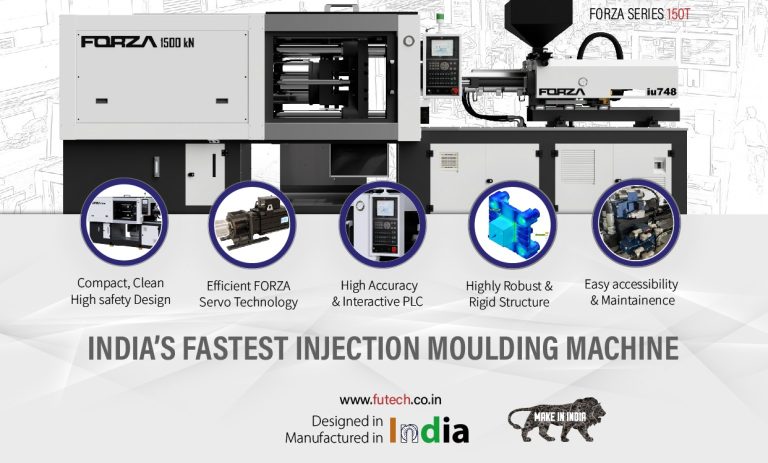
Futech Machinery Pvt Ltd was set up in the year 2004.  It engaged in manufacturing Plastic Injection Moulding Machines at its Rohad manufacturing facility Near India’s Capital, New Delhi.  Its location gives advantages to its on operation and to its customers as well.  It is very well connected by Airways, Railway and & National Highways, near New Delhi Boarder in Bahadurgarh, just about 30 miles from Delhi International Airport.

Futech Machinery is one of the leading companies in the field of plastics machine manufacturing, we offer our customers integrated system solutions.  This means: Injection Moulding technology from a single source.  Machine, automation, process, training, and service are all perfectly integrated with Futech. And we always look to the future, innovation and the latest technologies offer to our customers to give competitive advantage as compared to our competitors.

We offers a comprehensive range of products and services to the Automotive, Medical Equipment, Consumer Electronics, Food Packaging, Cosmetics and PET Packaging etc. Futech is among the very few manufacturers that offer both Hydraulic and Toggle locking machines.

At Futech, we stay ahead of the curve and constantly strive to be frontrunner in enhancing the future of our customers.  Our latest generation machines are a perfect blend of highest quality and superior performance.  Our latest Forza machines globally renowned for enhanced reliability and higher machine up-time, providing the most advanced technology to the world.

Futech Machinery is in process to enter JV with foreign based entity to expand our manufacturing and technologies to meet ever increasing expectation of our customers in the year to come. Further expansion plans are underway and will be implemented during the year 2024-25.

Futech Machinery is planning to start our sales, service, and training facility at new Sales Office at Bawana, New Delhi (India) for quick turnaround time for our customers.

The company is constantly improving the design of its products to achieve the improved product quality, and this is ongoing exercise at Futech.Some of solution will be on display during PLASTFOCUS-2024 at New Delhi (India).

We are committed to maintain our leadership in Plastic Injection Moulding Machines by providing unmatched product quality, exceptional technological innovation, and superior customer service, resulting in the best cost per piece produced for our customers.

Our Mr. Balaraj Singh, Managing Director of Futech Group, the ongoing investments in equipment’s are an important step to secure continuing the corporate success for the years to come.  The employees training continues as part of our on-going philosophy “To set and maintain standards of quality and performance that exceed customer expectations”.

Kapil Arora Regional Sales Manager North Futech Machinery Pvt Ltd

“I believe there are 4 P’s (Product, Price, Place and Promotion) of Sales which are very Crucial and must be studied. These 4 P’s will gear up the sales. Product plays an important role in sales, and it solves the real business need if we provide the perfect and exact solution to buyer as per the requirement. Price is an evaluation of the value that the product brings, the current price within the market and price of product with relevant discounts and how buyer will view the price. Place – customer is available at different locations so targeting them we are adopting digital platforms, door to door visits and display product within premises. Promotion is an incredibly important element of any marketing campaign. It is fuel to fire that takes our best laid plans and turns into reality.”

Mukesh Sachdeva
General Manager
Futech Machinery Pvt Ltd.

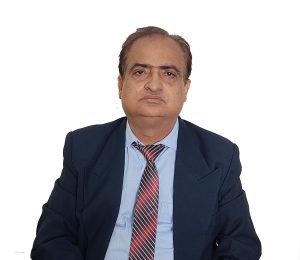
“India’s Manufacturing Eco-system is now very strong in terms Of Raw Material Supply Chain, Production Capacities, Availability of Skill full Human Resource etc. Make in India initiative has given us many benefits to become stronger in manufacturing and now we are able to compete in terms of quality and price with other Manufacturing Nations for Local as well as international Markers.”

www.futech.co.in

#Futech

#Modernplasticsindia #Pasticsnews #ModernPlasticsIndiaMagazine
#PrintPublication #PrintMagazine #Modernplasticschina