Thursday, July 9, 2026
spot_img
Home Blog Page 70

The PAM success story: Reifenhäuser delivers 150th mechatronic flat die automation system

The PAM success story: Reifenhäuser delivers 150th mechatronic flat die automation system

  • Patented and proven: 150 PAM systems in use worldwide
  • Greater efficiency, safety and easy operation: PAM makes flat film producers less dependent on qualified personnel
  • Manufacturer-independent: PAM can be retrofitted to flat film dies from Reifenhäuser and third-party suppliers
The 150th PAM automation system was delivered to a customer in Germany for a PET thermoforming sheet line.

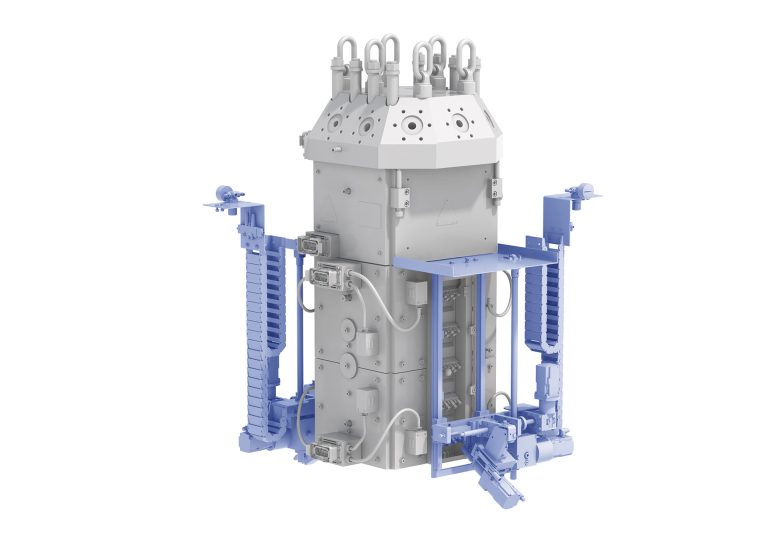
After extrusion machine specialist Reifenhäuser presented the automation system PAM (precise, autonomous, mechatronic) for flat dies and coextrusion adapters for the first time at the K 2022 plastics trade fair, the 150th system has now been installed on a customer line. The patented mechatronic control system has decisive advantages over conventional automatic thermal expansion bolt systems. PAM uses high-precision electric actuators to automatically control the adjusting screws for setting and regulating the flexible die lip. Depending on the die design, it is also possible to autonomously adjust the dust bar, the width adjustment and the lip opening by adjusting the lower die lip. PAM is available for all new Reifenhäuser flat dies and as a retrofit for dies from all third-party manufacturers.

The 150th unit was delivered to a customer in Germany who has automated his PET thermoforming sheet line with PAM. The system is characterized by its simple design and handling. At the same time, the sophisticated control works with absolute reliability and precision. In addition to the increase in efficiency, the system is now much easier, more convenient and safer to operate. Once settings have been saved, they can be called up via the system HMI and PAM delivers perfect and reproducible film quality at the touch of a button. Processors are therefore less dependent on the qualifications and experience of the system operators, achieve a faster start to film production, higher output and consume significantly less energy. This is because the motorized actuators only need to be supplied with power for a short time during adjustment and not permanently, like conventional thermal expansion bolts. The overall equipment efficiency (OEE) improves significantly overall.

Movable mechatronic actuators precisely set the adjustment screws of the die.

Tim Bänsch, Product Manager at Reifenhäuser Extrusion Systems, explains: “With PAM automation, we can offer our customers a unique system that offers decisive competitive advantages thanks to the patented mechatronic control system and has proven itself in every respect with 150 systems on the market.”

The technology was developed by maku AG, which was founded by Robert Maeder in 1983. In 2022, Reifenhäuser Extrusion Systems (RES) – the Reifenhäuser Group’s business unit specializing in extrusion components – entered into a strategic partnership with maku to jointly develop the PAM system further and market it worldwide. Reto Maeder, the current managing director, co-owner and son of the company founder, continues to be active in the development and customer support of the PAM system and is available with his many years of expertise in the field of mechatronic die control.

Simple operation and high work safety make producers less dependent on highly qualified personnel

Usually, starting up an extrusion line or changing products requires many skilled operations. Producers are therefore dependent on well-qualified  machine operators, which is a huge problem in times of a shortage of skilled labour and high staff turnover. With PAM, producers become more independent, as the system itself can restore the optimum die setting at any time.

Another decisive advantage of PAM automation is the increased work safety. With a manually controlled flat film line, the machine operator works directly on the so-called hot part of the line. When using PAM, the operator does not have any contact with hot metal elements of the line or with the hot melt itself. Burns or other injuries caused by working on the running extrusion line are therefore ruled out. In this way, producers can easily fulfil the mandatory occupational safety requirements in high-tech markets, such as North America or Europe, and protect their employees in the best possible way.

PAM for coextrusion adapters

The PAM control system is not only available for flat dies but also for the Reifenhäuser Coextrusion Adaptor Pro. This feedblock is the only coextrusion system on the market that enables the profiling of individual film layers while the system is running. Unlike conventional solutions, the elements in the adapter do not have to be removed, processed and reinstalled in a time-consuming manner. Instead, profilers can be flexibly controlled individually or together during operation via a central adjustment. With the PAM option, Reifenhäuser goes one step further and automates the setting of the layer distribution and simplifies adjustments and optimizations thanks to integrated recipe management. This is particularly worthwhile for manufacturers of films with many layers and many product changes.

While the coextrusion adapter for simple 3-layer laminates can be set in a few simple steps, up to 70 profilers need to be adjusted for barrier laminates with 11 layers, for example. Compared to manual adjustment by a machine operator, automation saves around half an hour of changeover time, depending on the number of profilers to be adjusted.

Reifenhäuser is one of the few machine manufacturers on the market that produces all hot part components itself – extruder, coextrusion adapter and die. Thanks to this hot part expertise within the group, all process-related interfaces can be perfectly designed to work together. PAM takes the whole package to a new level.


www.reifenhauser.com

#reifenhauser#modernplasticsindia #modernplasticsasia #modernplastics#plasticsnews

#plasticsplanet #modernrecyclingindia#modernplasticsglobal#modernplasticsworld

#plasticstalk#modernplasticsgermany #modernplasticsnetwork #plasticdevelopment

Tosca Publishes 2024 Sustainability Report, Driving Transformational Sustainability Impact

Tosca Publishes 2024 Sustainability Report, Driving Transformational Sustainability Impact

Tosca, a global leader in reusable packaging solutions, is proud to announce the release of its 2024 Sustainability Report. This comprehensive document highlights the company’s progress in 2023, outlining its efforts to drive transformative sustainability impact across its operations and through deepening customer partnerships. The report reinforces Tosca’s position at the forefront of the reusable packaging revolution.

With sustainability at the heart of Tosca’s mission, the 2024 report showcases how the company has supported its customers in achieving ambitious environmental goals while simultaneously reducing operational waste. It highlights Tosca’s use of cutting-edge technologies, operational innovations, and commitment to developing its workforce, all of which drive meaningful sustainability outcomes.

“At Tosca, sustainability remains at the core of our DNA,” says Eric Frank, Chief Executive Officer. “In 2023, our ‘all together better’ sustainability strategy generated impressive results as we worked together in customer partnerships, operational excellence and team engagement. We have made significant progress, but above all else, I am personally proud of the ongoing commitment of all of Tosca’s stakeholders to the betterment of people and planet, individually and together.”

Tosca’s 2023 Sustainability Achievements

In 2023, Tosca made significant strides in reducing its environmental impact and operational waste. The company achieved a 37.8 percent reduction in carbon emissions intensity by revenue and achieved Ecovadis ISO Platinum standard accreditation in EMEA – a reflection of its relentless pursuit of operational excellence. It diverted 284,000 metric tons of cardboard from global supply chains, contributing to a total diversion of over 2.4 million metric tons since 2000 through customers’ adoption of its reusables. This result underscores Tosca’s ability to optimise its operations, working effectively in partnership with its customers, while driving sustainability forward. It has also continued to invest in attracting talented people and providing opportunities for team members to develop their careers. The attendance of skills training of 100% of staff is a testament to this commitment.

“As an industry leader, our mission to revolutionise the flow of goods through the food supply chain, eliminating waste at every turn creates a global ripple effect for achieving sustainability goals for our customers and beyond. That’s why we’re relentless about seeking new ways to help our customers move to reusable packaging while increasing the resiliency of our organisation,” says Karin Witton,  Global Sustainability Director.

Customer Partnerships Driving Sustainability

Tosca works with customers as a trusted partner, aiming to generate transformative change through the opportunities that end-to-end supply chain optimisation can unlock. Its support extends beyond the supply of sustainable pooling and reusable packaging assets to include consulting on related areas, such as navigating new regulations, identifying supply chain applications of emergent technologies, and helping customers implement automated environments.

In 2023, Tosca partnered with Simpsons Beverages to address supply, safety and sustainability challenges. By transitioning to Tosca’s Superior Hybrid Intermediate Bulk Containers (IBCs) for liquid and pooling model, it achieved enhanced sustainability and operational efficiency, while reducing overall costs. This collaboration also positioned Simpsons Beverages for future growth and environmental compliance.

Tosca’s vision for the future – at the Forefront of the Reusable Revolution

Tosca has a bold vision to harness data, increase digitisation and partner with customers using its expertise to reduce food waste, emissions and costs. It aims to move to a more integrated approach to packaging which supports the elimination of single-use alternatives by leveraging reusable secondary and tertiary packaging.

In 2025 and beyond, Tosca will continue to advocate for regulatory changes that prioritise reusable assets and pooling services over recycling packaging wherever possible as a more sustainable alternative, and push for exemptions from packaging taxes for reusables. It will also leverage innovations such as Tosca Asset IQ to minimise food damage, improve stock control, and enhance sustainability throughout the supply chain. Working in partnership with customers, Tosca will support them in their sustainability journey by providing advice and data to help limit Scope 3 emissions, reduce costs and bring their goods to market. With its clear vision, Tosca will continue to lead the reusable revolution.

www.toscaltd.com

#toscaltd#indianplasticmagazine #modernplasticsaward #plasticnews #modernplasticsgermany #ginujoseph #modernplastic #plasticindia  #plasticrecycling #sustainability #modernplasticsglobalnetwork #modernglobalnetwork #modernplasticsaward2023 #plasticmagazine #PlasticIndustry

First Stop: ArburgSOLUTIONworld: Consulting and Solution Expertise

First Stop: ArburgSOLUTIONworld: Consulting and Solution Expertise

  • Added value: arburgSOLUTIONworld brings together Arburg’s knowledge and expertise
  • Customised: Advice on topics such as efficiency, productivity increases, sustainability and subsidies
  • New: Exhibition wall with “transparent” machine shows insights into benefits of digital products and services

At Fakuma 2024 in Friedrichshafen, Arburg (hall A3, stand 3101) will once again be offering an interactive exhibition area: the striking arburgSOLUTIONworld brings together Arburg’s comprehensive consulting and solution expertise in all aspects of plastics processing, and is a space where trade visitors can obtain individual answers to their questions on key topics of the future. Arburg experts will be on hand to offer advice at six stations around the four-metre-high LED column. There will also be an interesting new exhibition wall with an integrated “transparent” machine, where the company’s digital products and services will be brought to life. 

Many plastics processors are currently working on making their injection moulding plants fit for the future and competitive. arburgSOLUTIONworld is home to a wealth of knowledge in this area.

“More than a machine” – expert solution provider

The focus of arburgSOLUTIONworld is on productivity increases, efficiency, sustainability, the shortage of skilled labour, and subsidies. Trade visitors will receive valuable suggestions and specific tips on finding the right levers and optimisation potential. For intelligent production solutions that increase efficiency and reduce costs – customised to individual requirements. The company’s “Action Plan: Energy”, which includes energy advice, machine updates and consumption measurements, as well as the Gestica control system with its intelligent assistance and pilot functions, are useful components for saving valuable resources and energy.

Digital products and services brought to life

Arburg is not only an innovative manufacturer of machines and associated control systems, but also the industry’s number one when it comes to digital transformation. The new exhibition wall will show trade visitors how digitalisation can specifically increase the energy and production efficiency of machines and systems.

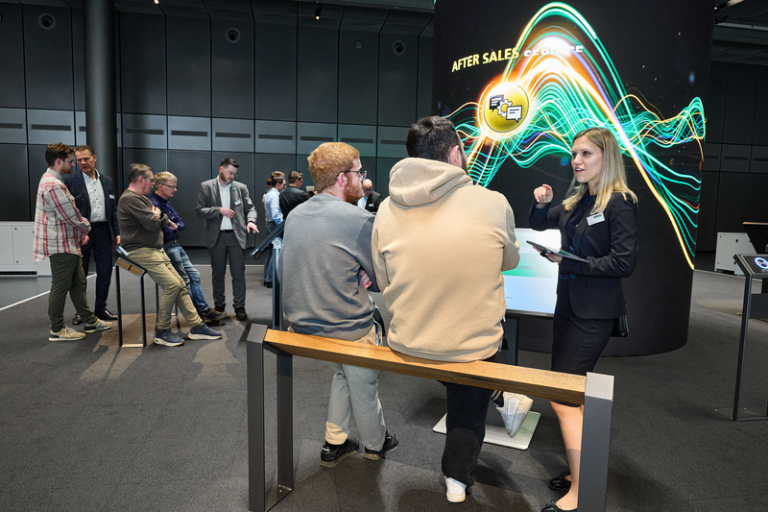
The centrepiece is a “transparent” Allrounder 270 A injection moulding machine, which provides insights into interesting details – such as the electric drive components of Arburg subsidiary AMKmotion and the IIOT gateway for information technology cross-linking. In addition, four monitor stations will be used to demonstrate the benefits and added value of the ALS host computer system, the arburgXworld customer portal that can be cross-linked with this, the Arburg Remote Service ARS, and Arburg’s after-sales services.

Digital tools: Increase efficiency and find smart solutions

IT-networked injection moulding production requires machines to be connected to a manufacturing execution system (MES). Arburg’s own ALS host computer system, version 8.0 of which has been available since spring 2024, offers transparency, improves data quality and reduces machine standstills. As a representative survey has shown, this allows OEE (overall equipment effectiveness) to be increased by more than 26 per cent on average.

A very useful AI-supported feature of the arburgXworld customer portal is its new “Ask ARBURG” premium app, which is based on the well-known large language model ChatGTP – but with the advantage of a secure, self-contained environment. “Ask ARBURG” contains very easy-to-access, comprehensive injection moulding knowledge from Arburg and can answer specific questions about machines and processes while also identifying and eliminating the causes of faults.

www.arburg.com/en/press

#arburg.com/en #modernplasticsindia#modernplasticsasia #plasticsislife #plasticstalk #modernplastics#modernplasticsworld#pasticsnews #plasticsisgood#plasticsplanet#plasticsrecycling#plasticmagazine#PlasticIndustry#modernplasticsmiddleeast#indianmagazine#innovations#modernplasticsamerica#modernplasticsbangladesh #modernplasticsasia #modernplasticsitaly

Algiers positions itself as a key market for plastics and packaging technologies in the Maghreb region

Algiers positions itself as a key market for plastics and packaging technologies in the Maghreb region

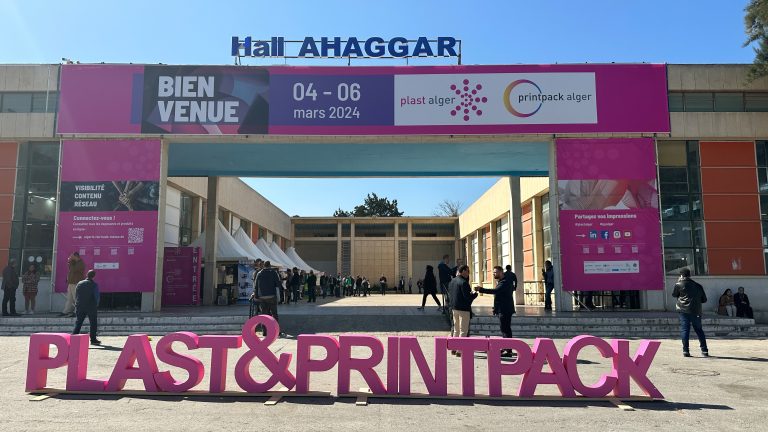
The 9th plast & printpack alger will be held at SAFEX Alger from 24 to 26 February 2025. After its resounding success in 2024 the trade fair will switch to an annual cycle now.

24 to 26 February will see plast & printpack alger opens its doors in Algiers for the ninth time. Following the great success of the event in 2024, attracting 5,199 trade visitors from 42 countries as well as 297 exhibitors from 22 nations, the trade fair will be staged annually going forward. With this move the organisers fairtrade and Messe Düsseldorf intend to further strengthen Algiers as a regional hub for the plastics, print and packaging industries. The trade fair offers a platform for international companies and brings together the region’s industry and technology leaders.

In the Maghreb region Algiers has become established as the leading market for plastics and packaging technologies. According to the VDMA (Machinery and Equipment Manufacturers’ Association), this country is the second biggest importer of plastics technology on the African continent with investment amounting to EUR 210 million in 2023. Demand for print and packaging technology has also risen substantially: in 2022 Algiers imported print and paper technologies worth EUR 77 million, thereby counting among the largest buyers on the African continent.

plast & printpack alger is subdivided into various themed pavilions and will be showcasing amongst others the latest machinery for plastics and packaging applications as well as raw materials. On the international level the trade fair is supported by the participation of more than twenty countries as well as national pavilions from Germany, Austria, China, France, India, Italy, and Turkey. Institutional partners such as the German-Algerian Chamber of Industry and Commerce, the Italian Trade Agency ITA and the Turkish Ministry of Trade are sponsoring the event.

Owing to the strong support received from Algerian and international associations, plast & printpack alger is not only considered a trading platform in the industry but also a relevant forum for technological innovation and exchange on environmental issues. The trade fair focuses on the relevance of recycling and circularity to name but two themes, to make Algiers’ industries more environmentally friendly.

For Algiers, increasing investment in these technologies is a key component in its economic strategy, as it is intended to strengthen domestic production, promote exports and reduce dependence on imports. In the segment of plastic pipes and tubes alone imports have risen from 304 kt to over 1,000 kt in 2023 since 2007, corresponding to a value of over 2 billion US dollars (EUROMAP). This means plast & printpack alger provides a pivotal platform for introducing innovative technologies and bringing sustainable materials to the market.

www.printpackalger.com.

www.k-online.com

www.plastalger.com

#plastalger#modernplasticsindia #modernplasticsasia #modernplastics#plasticsnews

#plasticsplanet #modernrecyclingindia#modernplasticsglobal#modernplasticsworld

#plasticstalk#modernplasticsgermany #modernplasticsnetwork #plasticdevelopment

Innovative Cooling Tornado Z9665/… – Saving Energy Directly in the Mould

0

Innovative Cooling Tornado Z9665/… – Saving Energy Directly in the Mould

With the new HASCO Cooling Tornado, HASCO is providing an innovative solution for increasing efficiency and saving energy during the cooling of the mould.

The Cooling Tornado Z9665/… offers a variety of application possibilities and can be used both in combination with runners in core cooling systems and directly in the corresponding cooling bores. Through the production of a turbulent flow, the effectiveness of the cooling is increased by up to 20 % (depending on the flow l/min). This turbulence interrupts the laminar lower layer of the cooling medium and has the effect that also the inner core of the cooling medium flows to the outer sheath, and thus considerably improves the heat transfer.

Turbulent flow for efficient cooling

The Cooling Tornado allows, through the turbulent flow, efficient cooling for shorter cycle times and the avoidance of hot spots, which ensures uniform temperature distribution. Compared with conventional cooling bores, temperature differences of up to 10 °C can be attained. The turbulence of the cooling medium leads to an energy saving of between 20 and 40 %. The Cooling Tornado allows easy retrofitting as well as the possibility of customised shortening, making for uncomplicated installation on existing systems.

The installation itself is also extremely simple. The Cooling Tornado can be quickly retrofitted and is simply positioned and fixed at the end via a clamping ring. The mounting can both be carried out in combination with cooling pipes such as Z962/… for core cooling and also directly mounted in the cooling bores.

Energy saving directly in the mould

Extensive tests confirm the effectiveness of the Cooling Tornado Z9665/…. In a comparison of the cooling circuits with and without the use of the Cooling Tornado, a reduction in the surface temperature of 10 % was measured. With a flow rate of, for example, 6 l/min, the surface temperature of the cavity fell from 86 °C to 78 °C. These results show that, by fitting the complete mould with the Cooling Tornado Z9665/…, an energy saving of 20-40 % can be achieved.

https://www.hasco.com/

#modernplasticsindia #modernplasticsasia #plasticsislife #plasticstalk #modernplastics #modernplasticsworld #plasticsnews #plasticsisgood #plasticsplanet #plasticsrecycling

Value Shot H203/… with new possibilities

Value Shot H203/… with new possibilities

Based on the proven nozzle range H202/…, HASCO hot runner will present the modified and improved nozzle range, Value Shot H203/…. Ideas and suggestions from customers as well as experiences from practice have been directly incorporated into the development of the new nozzle range. A total of 28 different nozzle sizes are available.

The choice between CuCoBe and highly heat conductive tips from a molybdenum alloy for more demanding applications, and the option of open torpedoes enable a broad processing spectrum from classic, mass-produced plastics to engineering plastics. Compatible coatings also enable the processing of filled plastics.

The one-component hardened nozzle body offers maximum protection against leaks. The set hardness offers the possibility of removing and re-installing the mould insert many times without any risk of damaging the tight fit of the nozzle. The new tip/dome area with the right reducing caps (along the lines of the HASCO Vario Shot nozzle range) guarantees a minimum dome volume and thus an optimum exchange of material in front of the nozzle. Long, flexible areas of the connections near to the heating make it possible to create a front-changeable system with all nozzle variants.

The well-known, long-tested heating/thermocouple combination has been incorporated into the new nozzle range, and thus also ensures maximum service life and temperature stability for the new models. Apart from that, thanks to an optimised production process, the now even more efficient Value Shot H203/… can be offered at very attractive prices.


https://www.hasco.com/

#hasco#modernplasticsindia #modernplasticsasia #modernplastics#plasticsnews

#plasticsplanet #modernrecyclingindia#modernplasticsglobal#modernplasticsworld

#plasticstalk#modernplasticsgermany #modernplasticsnetwork #plasticdevelopment
VERTICAL INTERGRATION DRIVES SUCCESS IN TOLERANCE ATTAINMENT FOR MICRO MOLDING

VERTICAL INTERGRATION DRIVES SUCCESS IN TOLERANCE ATTAINMENT FOR MICRO MOLDING

Brett Saddoris, Technical Marketing Manager, Accumold

Achieving tight tolerances in micro molding is a complex process that requires carefulattention to every stage of production, from design through to assembly. The precision required for micro molded components, often used in industries such as medical devices, electronics, and micro-mechanical systems, demands a level of control that extends far beyond traditional manufacturing techniques. Tolerances, measured in micrometers, are crucial for ensuring the functionality, performance, and quality of these components.Success in this field relies on expertise in several key areas: design, material selection, the molding process itself, tool making, validation and metrology, and automated assembly. Moreover, vertical integration, where a single company controls all stages of production, offers a significant advantage in maintaining tight tolerances.

DESIGN ISSUES

The journey toward precision in micro molding begins with the design phase. Micro molding demands a unique approach to design, as the limitations and capabilities of the process must be considered from the outset. Traditional design principles cannot always be directly applied to micro molding, which necessitates specific adjustments to ensure the manufacturability of the part without compromising on precision. For example, plastic materials shrink as they cool, and this shrinkage can vary based on the polymer type and part geometry. In micro molding, even a minute variation in shrinkage can lead to significant deviations in tolerance. Therefore, accurate modeling and compensation for shrinkage are critical during the design phase.

Another challenge lies in maintaining consistent wall thickness, which is essential for achieving dimensional stability. Variations in wall thickness can cause non-uniform cooling, leading to inconsistent shrinkage and resulting in tolerance issues. The intricate nature of micro-molded parts, which often include features such as micro-channels or fine ribs, also requires precise attention during design. Even tight radii must be crafted with care to ensure that the mold can replicate these features without introducing dimensional inaccuracies. Draft angles, used to facilitate part ejection from the mold, must be carefully calculated to avoid warping, while avoiding complex undercuts can help reduce the likelihood of tolerance issues during the molding process.

MATERIALS

The material chosen for micro molding plays a pivotal role in ensuring that the final part meets the desired tolerances. Different polymers exhibit varying degrees of shrinkage, flow characteristics, and mechanical properties, all of which impact the ability to achieve precision. High-performance thermoplastics like PEEK and liquid crystal polymers (LCP) are often preferred for their superior dimensional stability. The ability of these materials to maintain their dimensions under stress and during temperature fluctuations makes them ideal for micro-molded parts where tolerances are crucial.

Material flow is another important factor to consider. In micro molding, the plastic must flow into very small, often complex mold cavities. Materials with high flowability are essential to ensure that every detail of the mold cavity is filled, preventing defects such as short shots or incomplete features. Additives like glass or carbon fibers may also be incorporated to enhance material strength or thermal properties, though these can also affect flow and shrinkage behavior. A thorough understanding of the material’s characteristics is crucial, and this is where vertical integration proves beneficial. In-house material science expertise allows for tailored material selection and optimization that aligns with both the design and the specific requirements of the micro molding process.

MOLDING

The molding process itself presents its own set of challenges in maintaining tight tolerances. Achieving the necessary precision in micro molding requires specialized machinery capable of controlling parameters such as injection speed, pressure, and temperature with extreme accuracy. Small deviations in these parameters can result in significant changes in part dimensions. For instance, if injection speed is too high or too low, it can affect how the material fills the mold, potentially leading to defects that affect tolerance. Similarly, maintaining consistent temperatures throughout the process is critical to avoid issues such as warping, shrinkage, or other dimensional inaccuracies.

Optimizing cycle time is also important in the micro molding process. While shorter cycle times are often pursued for efficiency, in micro molding, cooling time is particularly important to ensure that the part cools evenly and maintains its shape. Too short a cycle time can lead to parts being ejected from the mold before they have fully cooled, resulting in warping or dimensional inaccuracies.

TOOLING

Tool making, or mold fabrication, is another critical factor in achieving precise tolerances. The mold itself must be manufactured to extremely tight tolerances because even the smallest deviation can result in an out-of-spec part. Micro molds often have intricate features, and maintaining consistency across all cavities within a multi-cavity mold is crucial for uniform part production. High-precision machining techniques such as electrical discharge machining (EDM) and CNC milling are used to create the intricate details required for micro molds. Cooling channels within the mold must also be carefully designed to ensure even temperature distribution, as uneven cooling can lead to shrinkage issues that impact tolerances.

Vertical integration again proves advantageous in the context of tool making. A vertically integrated micro molder with in-house tooling capabilities can maintain tighter control over the mold-making process, ensuring that the tool is optimized for both the design and material requirements. This approach minimizes the risk of errors and ensures that the mold is capable of producing parts with the desired tolerances.

VALIDATION

Once the parts are produced, validation and metrology play a crucial role in ensuring that they meet the required specifications. Advanced metrology techniques are needed to accurately measure micro-molded components, given their small size and intricate features. Traditional measurement tools are often insufficient for this task. Coordinate measuring  machines (CMMs) and optical inspection systems are commonly used to verify the dimensions of micro parts with high precision. Micro computed tomography (Micro-CT) is another tool that allows for both external and internal features to be measured without damaging the part, which is especially useful for components with complex geometries.

The ability to validate part dimensions with precision is a key part of the micro molding process, and a vertically integrated molder will typically have dedicated metrology departments equipped with cutting-edge technology. This in-house capability allows for continuous quality control throughout the production process, identifying potential issues early and ensuring that parts remain within tolerance from the first to the last batch.

ASSEMBLY

For many micro-molded parts, tight tolerances must be maintained not only through the molding process but also during assembly, where these components are integrated into larger systems. Automated assembly processes are often necessary to ensure that these delicate parts are handled with the required precision. Human error in assembly can introduce variability that affects tolerances, making automation an important aspect of maintaining consistency. Automated systems equipped with vision-guided robots or alignment tools can handle the delicate nature of micro parts, ensuring that they are placed and aligned correctly during the assembly process.

In this regard, vertical integration once again plays a key role. A micro molder with in-house automated assembly capabilities can streamline the process, ensuring that tolerances are maintained from the initial molding stage through to final assembly. This end-to-end control  is a significant advantage when dealing with micro-molded parts, where even minor deviations can lead to significant issues in performance and functionality.

www.accu-mold.com


Foodservice Packaging Market is Expected to Expand by 6% CAGR Through 2034

Foodservice Packaging Market is Expected to Expand by 6% CAGR Through 2034

A recent industry report by Fact.MR estimates the global foodservice packaging market size to be valued at US$ 67.9 billion in 2024. The market is projected to grow at a compound annual growth rate (CAGR) of 6%, reaching US$ 121.7 billion by 2034.

Due to shifting customer preferences and the ever-changing demands of the food sector, the market has experienced substantial development and evolution. This market includes a broad range of packaging options made to specifically address the need of different foodservice businesses, such as cafes, restaurants, fast-food outlets, and catering services.

The need for easy and environmentally friendly packaging solutions is being driven by the growing trend of on-the-go dining and the expansion of online food delivery services. As environmental concerns have grown, sustainable packaging materials—such as compostable and biodegradable options—have become more popular.

Advancements in packaging technologies, such as barrier coatings and intelligent packaging, are contributing to the market’s expansion. The global foodservice packaging market is characterized by a competitive landscape where key players are focusing on innovation, product differentiation, and sustainability to gain an edge.

Key Takeaways from Market Study:

  • The global foodservice packaging market is forecasted to expand at a CAGR of 6% through 2034.
  • Global sales of foodservice packaging products are estimated at US$ 67.9 billion in 2024.
  • The market is projected to reach US$ 121.7 billion by 2034-end.
  • The North American market is projected to expand at a CAGR of 6.1% through 2034.
  • Polyethylene terephthalate is estimated to account for 29.9% market share in 2024.
  • East Asia is projected to account for 20.3% of the global market share by 2034.

“Technological advancements in the foodservice packaging market are enhancing consumer convenience and driving product sales by offering sustainable solutions,” says a Fact.MR analyst.

Market Developments:

Key foodservice packaging manufacturers are Pactiv LLC, Gold Plast SPA, Anchor Packaging Inc., Berry Global Inc., and Novolex Packaging. Key companies in the industry are joining forces by merging and acquiring other companies. They are also launching new products to make their position stronger and grab a larger share of the market.

  • In 2022, Sabert Corporation revealed its latest product line, the Kraft Collection. This collection comprises a diverse range of food packaging solutions crafted from corrugated and paperboard materials. Notably, these packaging options are designed to be recyclable and compostable, featuring post-consumer fiber content, aligning with Sabert’s enduring dedication to sustainability.
  • In 2022, Amcor introduced a new series of paper-based packaging products called AmFiber. This platform underscores Amcor’s commitment to consumer-centric and adaptable innovation. AmFiber seeks to redefine the capabilities of traditional paper packaging by offering a broader range of features and functional benefits, addressing the evolving needs of consumers.

Market Insights: Global Trends and Dynamics in Foodservice Packaging Industry:

According to a recent analysis by Fact.MR, a leading provider of market research and competitive intelligence, East Asia is anticipated to capture a significant 20.3% share of the global market by 2034. The presence of foodservice packaging producers across various regions globally, including Southeast Asia, Central and South America, and Australia, has enabled market players to cater to the growing demand while reducing reliance on specific sourcing locations.

In North America, the United States dominates the foodservice packaging market, accounting for a substantial 89.9% market share. Economic conditions play a pivotal role in shaping consumer spending habits and overall demand for packaged food. Additionally, regulatory frameworks and environmental policies drive producers towards sustainable and compliant packaging solutions. Evolving consumer preferences, particularly a rising demand for convenient on-the-go packaging options, further influence market dynamics.


www.factmr.com

#factmr#modernplasticsindia #modernplasticsasia #modernplastics #plasticsnews

#plasticsplanet #modernrecyclingindia #modernplasticsglobal #modernplasticsworld

#plasticstalk #modernplasticsgermany #modernplasticsnetwork #plasticdevelopment


A New, Safer Solution with Exceptional fire Performance: Clariant’s Exolit AP 422 A

A New, Safer Solution with Exceptional fire Performance: Clariant’s Exolit AP 422 A

  • New SVHC-free fire retardant with no melamine content (<0.1%)1 Exolit AP 422 A meets stringent safety and sustainability demands
  • Innovative composition provides superior fire resistance across multiple applications

Clariant launched it’s next-generation melamine-free flame retardant, a safer and forward-thinking solution that provides superior fire resistance and meets the stringent demands of modern industries.

In 2023, melamine was classified as a Substance of Very High Concern (SVHC) making Exolit AP 422 A a valuable asset for the firestop industry, enabling the creation of coating and sealant products that maintain high performance standards without relying on melamine.

In anticipation of the current and future regulatory challenges around melamine, Clariant has been proactively working on this innovative solution for several years, developing an SVHC-free alternative to the existing melamine-containing Exolit AP 422 flame retardant.

“Exolit AP 422 A upholds the trusted reliability that Exolit products are recognized for in the market and ensures that our clients’ fire protection offerings remain competitive, particularly in terms of chemical compliance. It allows manufacturers to adapt to evolving legislation while preserving the effectiveness of their fire safety solutions,” said Sebastian Moschel, Clariant’s Technical Business Development Manager Passive Fire Protection.

The new Exolit AP 422 A addresses the concerns surrounding melamine as a Substance of Very High Concern at the same time as providing superior fire resistance across multiple applications including intumescent coatings, firestop sealing systems, and PIR insulation panels. Its non- halogenated nature helps minimize hazardous emissions, providing safer usage in critical industries.

“Exolit AP 422 A responds to key market trends around tightening fire safety standards, environmental and health concerns, regulatory compliance needs, operational efficiency demands, and the need for versatile solutions across many applications,” added Clariant’s Global Business Development Manager Polymer Solutions, Christian Battenberg.

Customers that have already incorporated Exolit AP 422 A into their firestop products describe the new melamine-free flame retardant as a game changer as it provides reliable fire protection performance at the same time as aligning with sustainability commitments. One client commented on their new competitive edge in the market, by being able to offer safer, more environmentally friendly solutions to customers.

Flame retardants are found in many applications around us, including electronic devices; transportation systems and buildings. As e-mobility expands, they provide safer protection for everything from charging points to circuit breakers. With evolving chemical regulations like REACH, Exolit AP 422 A provides manufacturers a future-proof solution to create more sustainable, superior and fully compliant flame-retardant formulations, ensuring reliability and trust.

www.clariant.com

#clariant#indianplasticmagazine #modernplasticsaward #plasticnews #modernplasticsgermany #ginujoseph #modernplastic #plasticindia  #plasticrecycling #sustainability #modernplasticsglobalnetwork #modernglobalnetwork #modernplasticsaward2023 #plasticmagazine #PlasticIndustry

3D PEOPLE INTRODUCES TPU01 MATERIAL FOR AM PARTS SERVICE

3D PEOPLE INTRODUCES TPU01 MATERIAL FOR AM PARTS SERVICE

3D People, a leading additive manufacturing (AM) service provider of high-quality 3D printed parts on demand, is pleased to announce that it has added a new material to its service offering, namely Ultrasint TPU01.

According to Felix Manley, Co-Founder of 3D People: “Flexibility is the key to the TPU01 material, and in more than one way. The material itself is the most advanced elastomeric material, developed specifically for the MultiJet Fusion (MJF) AM system from HP, and as a result it produces the highest quality, flexible parts. Introducing this material also provides more flexibility for our customers, a significant number of whom have been asking for it. Now they can get their PA12 Nylon and TPU parts from the same partner, with quality assured.”

3D People has years of experience running MJF technology and all of the company’s technicians have completed HP’s comprehensive “Train to Maintain” program. This specialised training has instilled a deep understanding of the machines, ensuring optimised performance, enhanced reliability, and consistent delivery of high-quality results with MJF parts. The TPU01 material is a perfect addition to the 3D People service offering with its exceptional suitability for end-use parts for a variety of applications where performance and durability are essential.

This is especially true considering TPU01 has been developed for the MJF AM process. Sasha Bruml, Co-founder of 3D People explains: “It is well known, that one of the headline benefits of AM is the ability to produce complex geometries — such as lattices — efficiently and cost-effectively. Combine that capability with this material and we are able to offer a distinct advantage for our customers who are looking to fine-tune the hardness, flexibility, and shock absorption of their applications. We are seeing some highly customisable solutions that outperform traditional elastomeric materials as a result. It’s exciting.”

A further key advantage of TPU01 parts produced by 3D People is the ability to achieve significantly advanced finishes. Unlike other elastomeric materials used in additive manufacturing that often face challenges when attempting smooth finishing, the TPU01 material is uniquely compatible with vapour smoothing processes. The benefits of this extend well beyond the aesthetics of the finish, because applying vapour smoothing to TPU01 AM parts also significantly enhances its properties — increasing water tightness and reducing the likelihood of crack initiation. This results in part performance that is closer to that of moulded polyurethane parts.

There are also favourable cost implications with this new material because the MJF process typically offers more competitive pricing than SLS. With this in mind, 3D People are able to produce and supply TPU01 parts at a cost comparable to PA12 MJF, making batch production more efficient and cost-effective for clients.

The 3D People team has allocated a dedicated TPU01 schedule on its in-house MJF machines. This is to align with customer demand and allows the company to offer this flexible material with rapid turnaround times without compromising on quality. The team believe that they are now able to provide the fastest turnaround TPU printing service in the UK.

Finally, 3D People has developed detailed design guidelines to support customers to get the most out of TPU01. From refining lattice structures to enhancing durability and flexibility, the guidelines have been produced by the company’s expert team and offer guidance to ensure optimal results, whether that is for improving shock absorption or achieving smoother finishes.

www.3dpeople.uk

#3dpeople#modernplasticsindia #modernplasticsasia #plasticsislife #plasticstalk #modernplastics #modernplasticsworld #plasticsnews #plasticsisgood #plasticsplanet #plasticsrecycling