Tuesday, June 23, 2026
spot_img
Home Blog Page 275

BOREALIS PARTNERS WITH NUPI FOR HIGH-PERFORMANCE PIPES BASED ON THE BORNEWABLES™

BOREALIS PARTNERS WITH NUPI FOR HIGH-PERFORMANCE PIPES BASED ON THE BORNEWABLES™

ISCC PLUS-Certified renewable feedstock Bornewables™ helps NUPI to reduce its eco footprint and to stay ahead of more stringent pipe production regulations
First pipe supplier in Italy to use Bornewables in high-performance polypropylene random copolymer pipes for plumbing and heating systems under the ISCC PLUS certification scheme
Partnership is embodiment of the Borealis EverMinds™ spirit of taking action to accelerate the move towards plastics circularity
Borealis, one of the world’s leading providers of advanced and circular polyolefin solutions and a European market leader in base chemicals and fertilizers, has announced that Nupi Industrie Italiane (NUPI) has selected the Bornewables™ polypropylene (PP) for the next generation of their NIRON BETA PP-RCT (Polypropylene Random Crystalline Structure Temperature) piping solutions for domestic plumbing, heating as well as heating, ventilation, and air conditioning (HVAC) systems designed to perform under higher stress conditions and temperatures. Manufactured with renewable feedstock, Bornewables PP offer the same material performance as virgin PP yet decoupled from fossil-based feedstock.

The partnership positions NUPI as a front-runner in the market, getting ready for the time when legislation will require the use of renewable materials in pipe production, and makes the company the first pipe supplier in Italy relying on mass balanced Bornewables PP accredited under the International Sustainability & Carbon Certification Plus (ISCC PLUS) scheme. It also aligns with Borealis’ EverMinds™ activities and initiatives to advance the circularity of plastics through partnerships across the value chain and connects with Borealis Pipe’s commitment for ‘Enabling life’s essentials.

Going renewable with advanced material technology
PP-RCT, as defined by ASTM F2389 and EN ISO 15874, refers to a chemistry of ‘Polypropylene Random Copolymers with modified Crystallinity and Temperature’ resistance. Since the material formulation uses Bornewables PP as a drop-in replacement of fossil-based virgin PP, it eliminates the need for NUPI and end-users to seek renewed approval from water regulation authorities.

“By adopting the Bornewables PP from Borealis for our new PP-RCT pipes, we are taking a major step forward in our efforts to reduce the carbon footprint of our products and stay ahead of more stringent regulations by which the use of renewable feedstock may soon become mandatory for plastic pipes,” says Roberta Brusi, Quality Director at NUPI Group. “The ISCC PLUS certification of the material also helps us document the renewable content in our PP-RCT formulation and pipes in a clearly traceable way.”

Reach ambitious sustainability targets faster
The ISCC PLUS accreditation is based on a mass balance accounting process that allows Borealis and NUPI to prove and quantify the effective renewable content at each manufacturing step from the Bornewables material to the final pipe. The Bornewables feedstock is derived from second-generation natural resources, such as waste from pulp production or residues from food processing oils.

“The use of certified renewable polymers is considered an instrumental lever to accelerate the transition from a linear to a circular plastics economy,” adds John Webster, Global Commercial Director Infrastructure for Borealis. “It mitigates fossil depletion, helps all pipes & fittings value chain players reach their sustainability targets faster and supports the industry’s aims to become carbon-neutral. Together with our pipe industry partners, we are committed to reinventing the plastics system for more sustainable living.”

Innovative ZS-B MEGAfeed Side Feeder Makes Plastics Recycling Markedly More Economical

With the goal of making recycling of lightweight, high-volume fiber andflake recyclate much more economical and, in some cases even possible, Coperion has developed a new version of its ZS-B side feeder. Using the innovative ZS-B MEGAfeed, plastic recyclate with a bulk density under 200 kg/m³, long considered intake-limited and thus not worth recycling, can be reliably fed in large quantities into Coperion’s ZSK twin screw extruder and be concurrently recycled and compounded.

The ZS-B side feeder’s novel design makes it possible to feed very high rates of fiber and flakes, such as PA, PE, PET, and PP. As a result, the ZSK twin screw extruder’s high capacity can be fully exploited when the ZS-B MEGAfeed is used. Very high throughputs in both mechanical and chemical recycling of post-industrial and post-consumer waste are achieved.

Increased Throughput in Numbers
With a ZSK 58 Mc 18 twin screw extruder, the throughput increase and thus the potential of the new ZS-B MEGAfeed becomes very clear. When recycling PA fibers with a bulk density of ~40- 50 kg/m 3 , throughputs of 70 kg/h were previously achieved using conventional equipment. When the PA fibers were fed into the ZSK extruder using the ZS-B MEGAfeed, throughputs increased about fourteenfold to 1,000 kg/h. Similar results were achieved recycling carbon fibers with a bulk density of ~50-70 kg/m 3 ; in this case, throughputs increased from 50 kg/h to 2,500 kg/h using the ZS-B MEGAfeed. When recycling PCR (Post-Consumer Recycled) flakes, throughputs increased from 50 kg/h to 700 kg/h, and from 80 kg/h to 1,300 kg/h with multilayer film flakes.

Key to Economical Recycling of A Wide Variety of Plastics

Plastics previously considered not recyclable are becoming a valuable raw material using the new Coperion ZS-B MEGAfeed. For example, PCR flakes or recyclate from carbon fiber-reinforced plastics can now be fed into the ZSK extruder at high feed rates and recycled economically.

In the case of mechanical upcycling, upstream processes necessary for compounding, such as compacting, melting and agglomeration, are completely eliminated using the ZS-B MEGAfeed technology. In this recycling process, flakes and fibers can be fed directly into the ZSK extruder, where they are melted, compounded, devolatilized, and filtered in a single step. In so doing, both investment costs and energy consumption drop. The production process becomes significantly more efficient. Moreover, the thermal product stress is reduced and recyclate quality increases.

Even when recycling PET, the feed rate is no longer a limiting factor. With the ZS-B MEGAfeed, PET flakes and fibers can be fed into the ZSK twin screw extruder in large quantities with no pre-drying or crystallizing, where they can be processed with the highest degree of profitability.

The ZS-B MEGAfeed can also feed large quantities of post-consumer waste, adding appreciable value to the chemical recycling process with the ZSKs. ZSK throughput rates are very high with the ZS-B MEGAfeed. Preheating of the recyclate via mechanical energy input of the twin screws thus becomes even more economical for further processing in the reactor.

Existing Coperion extruders can be retrofitted with ZS-B MEGAfeed technology to greatly expand their spectrum of applications and increase their throughput rates.

Marina Matta, Team Leader of Process Technology Engineering Plastics at Coperion, is enthusiastic about the latest Coperion development: “We’re convinced that the new ZS-BMEGAfeed will play a pioneering role in plastics recycling. In particular, plastic fibers, which will be available in ever increasing quantities from textiles, had always been considered hardly recyclable until now. With the ZS-B MEGAfeed, this is now possible. Far more plastic waste can be recycled – and much more efficiently. For the plastics industry, the ZS-B MEGAfeed is another step forward on the path to a circular economy, and we are very proud of that.”

Borealis Bornewables help Uponor create the world’s first cross-linked polyethylene (PE-X) pipes based on renewable feedstock

Borealis Bornewables help Uponor create the world’s first cross-linked polyethylene (PE-X) pipes based on renewable feedstock

In line with its EverMinds™ initiatives to work with partners along the value chain and accelerate action on circularity, Borealis has been collaborating with pipe specialist Uponor to enhance the sustainability of cross-linked polyethylene (PE-X) pipes. The resulting PEX Pipe Blue is the world’s first pipe portfolio made from PEX with renewable feedstock accredited by mass balance accounting under the International Sustainability & Carbon Certification Plus (ISCC PLUS) scheme.

Based on Borealis’ Bornewables™ polyethylene (PE) derived from second-generation natural resources, such as waste from pulp production or residues from food processing oils, the new PEX Pipe Blue products boast an unprecedented carbon footprint reduction of up to 90% when compared to conventional fossil-based PE-X pipes. This also marks a major step forward to help customers in the building and construction industry achieve their sustainability targets in plumbing, heating, ventilation and air-conditioning (HVAC) installations. At the same time, it serves as an outstanding example of Borealis’ and Borouge’s commitment to pipe solutions ‘Enabling life’s essentials’.

Setting a new industry standard with Bornewables
Since introducing PE-X pipes to the world 50 years ago, Uponor has continuously improved their product offering and processes. “The fact that we can now offer our customers 100% renewable based PEX Pipe Blue means that they can greatly reduce the climate footprint of their installations and meet tomorrow’s regulations for a more circular and renewable construction industry, today”, explains Robert Molund, Managing Director, Uponor AB. “With the use of Bornewables feedstock and the huge CO2 reduction opportunity, we are convinced that PEX Pipe Blue will soon be the new reference standard in this important market.”

The significantly lower carbon footprint of PEX Pipe Blue compared to traditional fossil-based PE-X pipes is based on Environmental Product Declaration (EPD) calculations according to EN15804+A1 and CML/ISO21930 standards. EPD evaluates the environmental impact of products by means of life cycle assessment (LCA). All the data is verified by an independent third party.

Fully transparent mass balance accounting
Likewise, ISCC PLUS accreditation is based on third-party mass balance, a chain of custody model that enables sustainable content to be tracked, traced, and verified through the entire value chain, offering sustainability-assured products from feedstock to end product. This means that for every tonne of certified Bornewables PE-X used in production, an equivalent amount of PEX Pipe Blue can be claimed as certified renewable, without compromising on quality or efficiency. To ensure that all requirements are met, Borealis and Uponor’s ISCC PLUS certificates are audited annually.

“We are delighted to be able to make such a significant contribution to the circular progress of the plastics infrastructure and pipe industries,” says John Webster, Global Commercial Director, Infrastructure for Borealis. “Real advances toward greater sustainability and carbon neutrality require dedicated collaboration with value chain partners that share common goals. PEX Pipe Blue with Bornewables is an impressive example of what can be achieved when market leaders join forces.”

https://www.borealisgroup.com/

BD and Mitsubishi Gas Chemical have signed a letter of intent (LOI) to discuss a partnership agreement to explore new ways to advance biologic drug delivery

BD and Mitsubishi Gas Chemical have signed a letter of intent (LOI) to discuss a partnership agreement to explore new ways to advance biologic drug delivery

BD (Becton, Dickinson and Company) (NYSE: BDX), a leading global medical technology company, and Mitsubishi Gas Chemical Company, Inc. (MGC), a R&D-oriented chemical manufacturer based in Tokyo, Japan, today announced that they have entered into an agreement to investigate further development of OXYCAPT™ – an innovation from MGC that integrates the best of plastic and glass for plastic syringes. Together, the companies will look into applying the OXYCAPT™ technology to the next generation of prefillable syringes (PFS) for advanced biologic pharmaceuticals. BD has been working for decades to optimize the performance of PFS, which improves the delivery of drugs and vaccines. Today, BD is the world leader in supplying PFS to the biopharmaceutical industry – with more than 70 percent of the top 100 biopharmaceutical companies utilizing our devices. BD is proud to manufacture both glass and plastic PFS to meet the unique needs of drugs. “The biopharmaceutical industry continues to rely on PFS for the effective, reliable and consistent administration of medications,” said Bruno Baney, Vice President, R&D BD Medical – Pharmaceutical Systems. “As our customers continue to grow their drug pipelines, we are constantly exploring solutions to deliver newer compounds in robust, stable, and ready-to-administer formats. This agreement will further help us do so – as MGC’s experience in providing technical innovation in materials will serve as a strategic complement to our legacy of supporting the latest innovations in drug delivery for our customers.” MGC has developed the OXYCAPT™ multilayer structure applied on silicon free plastic syringe barrels to provide high breakage resistance, oxygen and vapor barrier, low protein adsorption, very low extractables, high UV barrier and pH stability. “Since launching OXYCAPT™, more and more pharmaceutical companies have been interested in applying it to their biologics or regenerative medicines such as gene/cell therapies”, said Ko Kedo, an executive officer of R&D division. “As we have looked for a strategic partner to enhance presence of OXYCAPT™ in the pharmaceutical industry, the partnership with BD will be an ideal solution for MGC. We believe this agreement will make it possible for customers to choose the best syringes for their drugs.”

https://www.mgc.co.jp/

Fresh impulses for wind energy

Fresh impulses for wind energy

  • Investment in innovation: Covestro researches material solutions for sustainable energy generation at its new wind technology center
  • Optimization and new development of PUR resins in cooperation with customers
  • Simulation of manufacturing processes for optimal results

On the road to alternative energy generation: Covestro is developing innovative PUR resins for use in wind turbine rotor blades at its new Wind Technology Center. A win-win-win situation for Covestro, customers and the environment.

“The development of these resins is very important to us. After all, it contributes to the expansion of alternative energies and strengthens our strategic orientation to sustainably reduce the CO2 footprint and take even more steps towards climate neutrality,” explains Klaus Franken, Head of Application Development Wind and Pultrusion at Covestro. “To be competitive, the wind industry faces the constant challenge of reducing the Levelized Cost of Electricity. We can help here by enabling our customers to produce rotor blades faster and thus more cost-effectively. At the same time, higher energy yield through optimized blade properties and longer service life also play a role.”

Close cooperation with customers
One goal of the Wind Technology Center is to develop robust materials that combine the properties important for rotor blades, such as strength, stiffness and temperature resistance. Existing products are continuously optimized and completely new formulations are developed and tested. Another goal: application technology development in close cooperation with customers. Klaus Franken explains: “Here we can simulate our customers’ manufacturing processes and show how our PUR resins help them to realize both their rotor blade designs and the manufacturing process in the best possible way.”

Covestro attaches great importance to optimally tailoring its products to the needs of its customers. That is why a number of cooperative ventures with European and Asian wind turbine manufacturers are already in place. The focus here is on constructing and testing prototypes.

The high-tech center is located in Leverkusen and was completed and put into operation at the beginning of this year. It comprises two interconnected units: a laboratory area for chemical development and an Upscaling Plant. The latter is home to processing technology and application development.

Development and application go hand in hand
The center offers clear advantages: “Chemical development and application technology can work hand in hand here. On top of that, the physical proximity makes it easier to exchange information directly and quickly. We use identical resources and the same infrastructure and quickly obtain a comprehensive depiction of the process. This helps us to pursue our goals in a results-oriented manner and without losing knowledge, and enables us to offer new, innovative solutions to our customers,” explains Technical Center Manager Frank Grimberg. “Process and plant safety, explosion protection, machine safety and, of course, occupational safety are always in the spotlight here,” explains Tobias Wollersheim, who as Project Management was responsible for planning and implementing the investment.

Another positive aspect: with the innovative technology center, Covestro is increasing its attractiveness as an employer. Indeed, wind technology offers a wide range of new, interesting fields of work that arouse curiosity and offer diversity. Covestro has taken on a newly qualified chemical technician from its own training program to operate the machines. He is being intensively trained in the processes and machine technology.

This much is clear: Things are moving in the area of wind energy.

Fresh impulses for wind energy
The team of the Wind Technology Center. © Covestro

We have to reduce our carbon footprint sustainably

“We have to reduce our carbon footprint sustainably”

Interview with Dr. Christoph Schumacher, Director Marketing at Arburg GmbH + Co KG

Dr. Schumacher, how can you reconcile plastics and the environment?
From our point of view, plastic is not the main problem for our environment, it is the way it is handled. One of the ways to ensure proper handling is the recycling economy, however the sensible recycling of plastics alone is not enough. It is also necessary to be particularly careful with all our resources. For us as machine builders, this means that we are responsible for using as few resources as possible in the manufacture of our machines, but it also means that our customers can run processes with our machines that preserve resources. The complex problem is always having to look at the entire value chain. At the end of the day, it is about sustainably reducing the carbon footprint in plastics processing.

What role does technology play here?
Technology undeniably plays a central role. It is necessary on all levels. We as machine builders are the enablers for climate protection and sustainability so to speak. Without our machines and processes, this cannot succeed. For example, we develop the technologies to sensibly design or support cycles. Sensibly means both in an ecological and economical sense simultaneously. Because sustainability will become a well-functioning business model.

How can digitalisation help in that regard?
From our perspective, digitalisation currently supports mainly in two ways: the first is recycling. If we want to transform the chain of recyclable materials in the plastics industry into a recyclable material cycle, it is necessary, for example, for products to be collected after use and properly separated according to the type of plastic, so the materials can then be appropriately reprocessed, recycled and reused. To do this, the products must be labelled, and this can be done with the help of digitalisation, for example via watermarks or QR codes. Of course, this digital labelling must be integrated into the production process.
The second way concerns us in particular as a machine manufacturer. At present, we equip our injection moulding machines with many digital assistance systems in order to make the lingering major problem of fluctuating material quality manageable for our customers. Today, we are still in a situation where the quality of recycled materials is not yet standardised. Anyone who orders recyclates these days does not know exactly what they will get, in terms of composition and properties. We have to help our customers in this regard, and that can also be done through digitalised processes. Our systems and application technologies help customers to manufacture products that are as low-CO2 and cycle-oriented as possible.

At K 2019, the circular economy was already a sustainability topic on the agenda. What has changed since then?
The German-speaking mechanical and plant engineering sector already displayed a lot of technology in that period and presented itself as an enabler for sustainability. Already at K 2019 we stated that we have solutions for the environmental and climate problems, which just have to be used. We are not the problem, we are part of the solution. That is still true, of course. We as machine builders have always faced up to social tasks and therefore see it as our task today, also in this context, to recognise pressing global problems and to contribute towards solving them. This consists of showing technological possibilities and the resulting business models.

Awareness is poor in many parts of the world.
In many non-Western and not very highly developed countries, the problem is quite different from ours. If you don’t know about waste collection, you don’t know about the material cycle. And those who have been throwing their waste into the river in the village for generations cannot be reached with an appeal not to do so. Our contribution as an industry is to present technological solutions to turn materials into recyclable materials. That is our considerable task. We have to create and support the awareness that it makes absolutely no sense to manufacture products from fossil raw materials, use them once and then throw them away. We have to show how the processing of such raw materials becomes easier and that a material cycle also yields profits. This is a huge task for German-speaking mechanical and plant engineering, but it is also a great opportunity. Thanks to our good reputation all over the world, we can succeed.

What is Arburg doing as a company in the northern Black Forest in terms of sustainability?
We have been practising environmental protection and the careful use of resources for decades, it’s in our DNA, so to speak. This is also based on the idea of “traditional Swabian thriftiness”, which means that nothing is wasted as a matter of principle. We operate using a global one-location production strategy. We can thus guarantee sustainable high-tech production. We are convinced that this production policy currently makes much more sense in terms of CO2 than producing at many locations worldwide. We are also triple certified, for environmental protection, quality and energy. For us, environmental protection and sustainability are therefore demonstrably in the nature of things.

Video statement Dr. Christoph Schumacher: https://vimeo.com/704102218

ST BlowMoulding at JEC World, the most important event for the composites

ST BlowMoulding at JEC World, the most important event for the composites industry

The international community of composite materials met at JEC World 2022, the important event held in Paris from 3rd to 5th May, for three days of innovations and sharing of knowledge and experiences.

ST BlowMoulding has been designing and manufacturing blow moulding machines for technical applications since 1980 and, thanks to continuous developments, it has become the world leader of extrusion-blow moulding technology.

The company participated at this important exhibition presenting the benefits offered by blow moulding machines for the production of CPV liners (LPG – CNG – CHG).

Nowadays, the automotive companies are making big investments in Hydrogen technology (fuel cell and storage tanks) for passenger cars and commercial vehicles like trucks and buses.

Reducing to zero the Green House Gases emission is therefore the challenge for the automotive industry of the future and fuel cells vehicles powered by Hydrogen will be the final solution for the next decades.

Generally, both CNG and CHG require high pressure to ensure a reasonable driving range and Composite Pressure Vessels, plastic liners wrapped by carbon fibers, provide both the mechanical strength to withstand the internal pressure and the lightness required for the installation on vehicles.

Composite Pressure Vessels are also the perfect solution for the LPG cylinders as they are lighter and safer than the common steel cylinders. Extrusion-blow moulding is the most efficient technology to get complete liners for composite pressure vessels in a single process: much faster than rotational moulding, much simpler than injection moulding and welding.

ST BlowMoulding is working on this application since long time and developed a wide experience with its customers in Europe with specific machines to properly plastify special PA grades and to produce different sizes of liners.

Its blow moulding machines can consistently produce PA liners for CHG tanks proven to match the Hydrogen industry requirements, in terms of safety, quality and durability, avoiding failures, machine downtimes and expensive replacements/repairs.

At JEC World, ST BlowMoulding hosted at its booth MTS-Moulage Technique Soufflage, expert company in the extrusion blow moulding of technical plastic parts, which is currently adopting ST BlowMoulding machines to produce modified PA liners for Hydrogen tanks.

The collaboration with this important French partner provided a mutual growth thanks to the exchange of skills, knowledge and technologies.

The balance of participation at the fair is decidedly positive with a good attendance of visitors.

ST BlowMoulding is very satisfied with the contacts made at its booth which allowed a fruitful and interesting exchange of knowledge of great professional value.

Hamar Laser introduces L-703 Bore & Spindle Alignment Laser

Hamar Laser introduces L-703 Bore & Spindle Alignment Laser

Hamar Laser is pleased to introduce its L-703 Bore & Spindle Alignment Laser, a compact and versatile laser with many applications, including bore alignment, barrel and cylinder straightness, spindle alignments and hard-to-align twin-barrel extruders.

“One of our overall design goals is to make our lasers smaller, more versatile and at a lower price whenever possible,” said Rod Hamar, President of Hamar Laser Instruments. “So, when we designed our L-703 to replace our L-706 Bore laser a nice ‘problem’ happened: we found out it quite nicely solved a long-standing application request we’ve had for twin-barrel extruders. Lo and behold, we sold several units before we had finished the design and now have yet another application for this multi-purpose laser!”

Hamar Laser’s new L-703 is combined with the company’s patented self-centering bore-measuring targets for extruders in the L-703 Twin-Barrel Extruder Alignment System kit, which also includes Hamar Laser’s new A-703T Spline-Shaft Adapter, A-510 2-Axis Target, bore adapters, readout and accessories. Additional L-703 Laser kits for other applications, including bore and spindle alignment and surface plate calibration, will roll out later this year.

Customers who already have the L-705 Extruder Borescope Laser for single-barrel extruders can now align twin-barrel extruders by purchasing just the L-703 Laser and A-703T Adapter and use the rest of the L-705 system components. Designed specifically for the L-703 Laser, the A-703T Adapter positions the laser on the end of the spline shafts on twins for alignments in tight spaces and features an adjustable centering plate to accurately indicate-in the center mounting hole to the rotation axis.

“The small L-703 Laser solves the space-limitation problem that makes aligning twins difficult,” said Hamar. “The laser is short, so it’s easy to use with the typical limited space off the end of the gearbox shaft. This allows the laser to be aligned to the shaft rotation axis so each barrel section can be aligned to a common reference, resulting in much better alignment. This eliminates errors that come from trying to use the outside of barrel sections to check the alignment, since these may not be parallel to the inside.”

“Extruder misalignment causes barrels and screws to wear out quickly and leads to expensive repairs, not to mention causing heavier electrical consumption” continued Hamar. “Our L-703 makes aligning twins much easier and faster so we’re excited about getting this news out to our customers and prospects.”


Homepage

Hamar Laser introduces L-703 Bore & Spindle

Hamar Laser is pleased to introduce its L-703 Bore & Spindle Alignment Laser, a compact and versatile laser with many applications, including bore alignment, barrel and cylinder straightness, spindle alignments and hard-to-align twin-barrel extruders.

“One of our overall design goals is to make our lasers smaller, more versatile and at a lower price whenever possible,” said Rod Hamar, President of Hamar Laser Instruments. “So, when we designed our L-703 to replace our L-706 Bore laser a nice ‘problem’ happened: we found out it quite nicely solved a long-standing application request we’ve had for twin-barrel extruders. Lo and behold, we sold several units before we had finished the design and now have yet another application for this multi-purpose laser!”

Hamar Laser’s new L-703 is combined with the company’s patented self-centering bore-measuring targets for extruders in the L-703 Twin-Barrel Extruder Alignment System kit, which also includes Hamar Laser’s new A-703T Spline-Shaft Adapter, A-510 2-Axis Target, bore adapters, readout and accessories. Additional L-703 Laser kits for other applications, including bore and spindle alignment and surface plate calibration, will roll out later this year.

Customers who already have the L-705 Extruder Borescope Laser for single-barrel extruders can now align twin-barrel extruders by purchasing just the L-703 Laser and A-703T Adapter and use the rest of the L-705 system components. Designed specifically for the L-703 Laser, the A-703T Adapter positions the laser on the end of the spline shafts on twins for alignments in tight spaces and features an adjustable centering plate to accurately indicate-in the center mounting hole to the rotation axis.

“The small L-703 Laser solves the space-limitation problem that makes aligning twins difficult,” said Hamar. “The laser is short, so it’s easy to use with the typical limited space off the end of the gearbox shaft. This allows the laser to be aligned to the shaft rotation axis so each barrel section can be aligned to a common reference, resulting in much better alignment. This eliminates errors that come from trying to use the outside of barrel sections to check the alignment, since these may not be parallel to the inside.”

“Extruder misalignment causes barrels and screws to wear out quickly and leads to expensive repairs, not to mention causing heavier electrical consumption” continued Hamar. “Our L-703 makes aligning twins much easier and faster so we’re excited about getting this news out to our customers and prospects.”


Homepage

Lindner at IFAT 2022: Be A Waste Transformer

Lindner at IFAT 2022: Be A Waste Transformer

This year, Austrian recycling pioneer Lindner is highlighting once more the importance of the Circular Economy. Over its many decades, Lindner has developed, produced and installed countless shredders and system solutions – both mobile and stationary – to efficiently process various waste streams. Now more than ever, the focus is on energy efficiency, productivity and the economically viable transformation of the old into new – and this includes plastics, as well as waste wood recycling, and the production of high-calorific solid recovered fuels. The innovative technology for this is developed in-house, by Lindner’s R&D team with its decades of experience, yet Lindner’s customers also benefit from its many cooperative research projects. One of these is the lead project, circPLAST-mr, carried out in partnership with universities and other industry leaders to find new solutions for mechanical recycling.

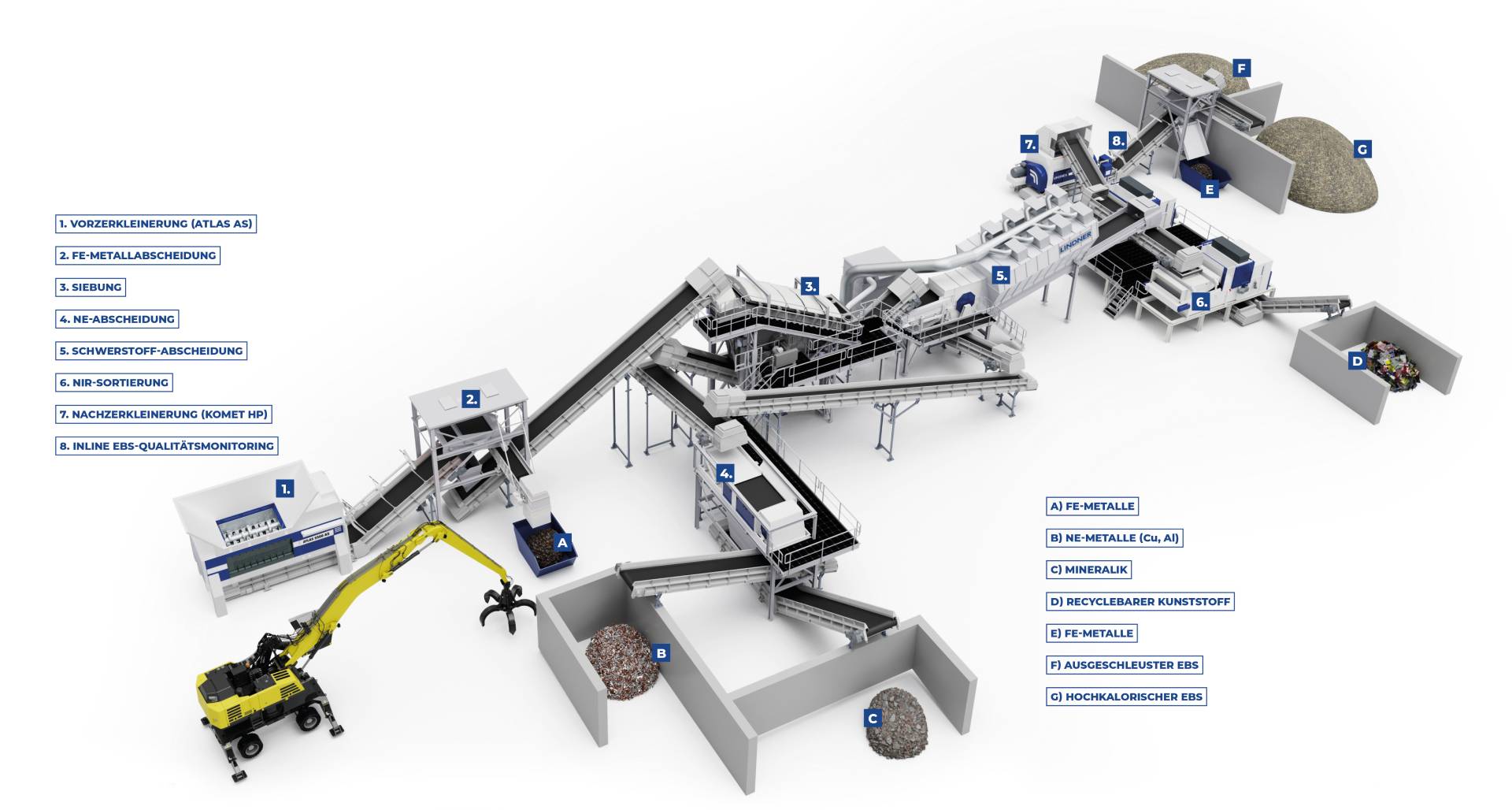
Be A Waste Transformer – is Lindner’s call, but also its promise to the entire waste and recycling industry at the IFAT 2022. In recent years, recycling has become increasingly important, both socially and politically. The EU’s Green Deal, specifying recycling quotas, and the drive to keep secondary raw materials in the cycle for as long as possible are shaping the waste management industry just as much as the shortage of skilled workers, rising energy costs, and the demand for higher productivity – challenges that Lindner’s team faces with enthusiasm. Dedicated to recycling, Lindner not only offers individual but also comprehensive system solutions, which make it possible to separate potential raw materials as efficiently as possible from various waste streams, such as municipal, commercial or industrial waste. At the same time, the non-recyclable material is transformed into another valuable raw material – medium- and high-calorific alternative fuel – in the secondary shredding process and with the additional use of quality monitoring.

From Waste Disposal to Resource Recovery
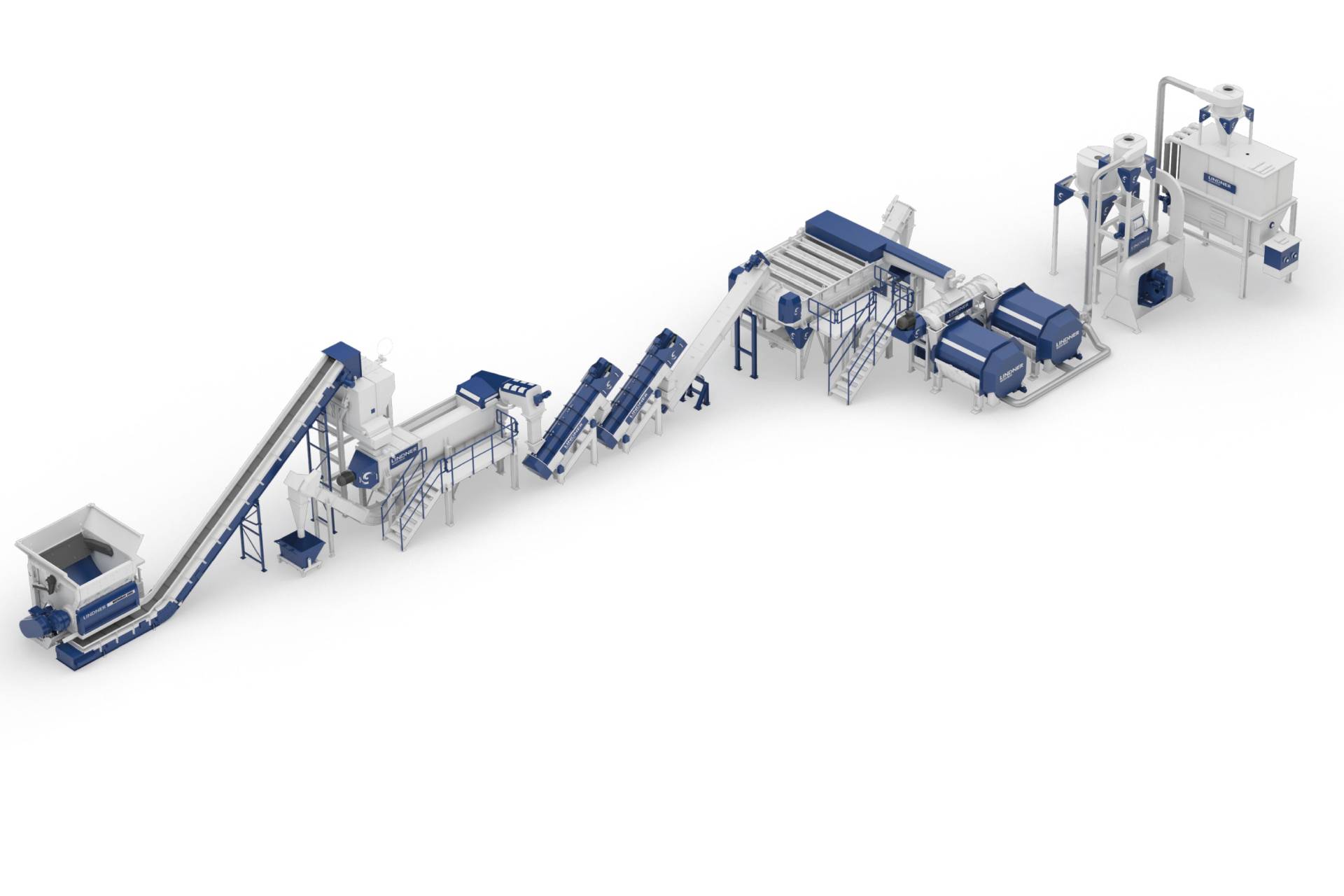
A smart concept can transform a company from a waste collector to a recycler, thanks to the many possibilities of waste processing. The more potential raw materials can be extracted from the material flow, the better the economic balance. Especially with regard to the recovered plastics, more and more waste processors are recognising the additional value that can be created. Together with its subsidiary Lindner Washtech, Lindner has been operating successfully in this segment worldwide for many years. The cornerstone for successful plastics recycling is above all the perfect coordination of the four process steps shredding, sorting, washing and drying. In this way, it is possible to install comprehensive plants – to date, more than 200 plastics recycling plants have been put into operation – to recycle various plastics such as PE-LLD films, PE-HD bottles, PP household goods and PET bottles. In addition to numerous international companies, Europe’s first independent research centre, the NTCP (National Test Centre Circular Plastics), has also chosen Lindner lines (more information: https://www.lindner.com/ntcp-modular-washing-system).

circPLAST-mr – Lead project for mechanical plastics recycling
Under the project management of the Johannes Kepler University (JKU) Linz, eleven scientific and fourteen well-known company partners, most of them market leaders in their segment, including Lindner, are working on how to obtain high-quality recyclates from used plastics. For the first time, experts from all areas of plastics recycling have been brought together to make the best possible use of possible synergies. In total, the research program is divided into seven work packages (WP): Material flow preparation I (collection and pre-sorting), material flow preparation II (shredding, sorting, washing), data management & digitalisation and LCA-oriented process design. Lindner has taken the industrial lead in the material flow processing work package and is sitting at the table there together with Alpla, the world market leader for plastic packaging, in order to be able to sort and clean packaging even better. The latest technological innovations are used here, which are not yet available on the market.

In the research project, different tasks are being investigated, such as what influence the processing quality has on the sorting quality and which technologies are most effective here – single or twin-shaft shredders – and how must the shredder communicate with the sorting unit. These and other questions, from shredding to washing and drying, are being researched in several test series, thus further expanding the knowledge in each of these segments and better coordinating all interfaces. In this way, it should be possible to optimise plastics recycling significantly and also optimally adapt Lindner’s solutions to the market and customer needs.

Lindner at IFAT 2022: Be A Waste Transformer
Multi-step processing of premium solid recovered
fuels (SRF)
(also see system solutions solid recovered fuels
“Maximum Energy” page 8/9)
Lindner at IFAT 2022: Be A Waste Transformer
Multi-step processing of premium solid recovered
fuels (SRF)
(also see system solutions solid recovered fuels
“Maximum Energy” page 8/9)
Lindner at IFAT 2022: Be A Waste Transformer
Lindner system solution for plastics recycling
Lindner at IFAT 2022: Be A Waste Transformer
Multi-step system solution for post-consumer plastics
recycling
(also see system solutions plastics recycling “Pure Value”
page 10/11)