Wednesday, June 24, 2026
spot_img
Home Blog Page 260

Submit Your Design for the 2022 Packaging Innovation Awards

Submit Your Design for the 2022 Packaging Innovation Awards

It is once again time to determine the most innovative packages in the world! The entry period for the 2022 Packaging Innovation Awards is now open at www.dow.com/packagingawards. First launched over 30 years ago, the Packaging Innovation Awards honor the best, most innovative designs in the packaging industry. Past winners have redefined categories and challenged the status quo, a tradition that will continue this year when the winners are announced in November of 2022. Building on this decades-long heritage, this year’s awards will highlight groundbreaking technical expertise, top-notch user experiences, and advances in sustainable packaging.

The 2021 Awards drew 189 submissions from companies all over the world. The best-in-class Diamond Award winner, OF Packaging’s high barrier stand up pouch for Brookfarm, provided a sturdy, protective package for granola and muesli that could be rolled into a cylinder when empty so it ready for curbside recycling. Learn more about this and other finalists here

“We’re emerging from two years that saw a fundamental shift in how people interact with packaging, and in what they expect from brands and retailers,” said lead judge David Luttenberger, the global packaging director for Mintel Group Ltd. who will be marking his tenth year serving in a judging role. “We see time and again that packaging professionals rise to this challenge with a level of creativity and foresight that continues to surprise me, even after so many years.”

The Packaging Innovation Awards are the industry’s longest-running independently judged awards program. Dow, serving as title sponsor, assembles an international panel of independent judges to provide a truly global perspective on design, engineering, retail, e-commerce, converting and academia.

Entry in the competition is free, and applicants are not required to use Dow materials in their products. All entries must be commercial products that have been on the market for more than six months. Deadline for submission is August 30, 2022. Visit the Packaging Innovation Awards

for more information and to enter. Click here

PET to PET Reaches New Record With over 15,000 Tonnes of Recycled PET Materia

PET to PET Reaches New Record With over 15,000 Tonnes of Recycled PET Materia

After a pandemic-related decline last year, PET to PET Recycling Österreich GmbH in Müllendorf, Burgenland, has drawn a successful interim balance for 2022 with a new record value: 15,131 tonnes of PET beverage bottles were kept in the resource cycle – this corresponds to an increase of 5.3% compared to the pre-crisis level (2019: 14,329 tons). “Together with our employees, we were able to overcome the major challenges posed by the pandemic. The armed conflicts in Ukraine have once again shown us the critical dependencies and thus the dramatic developments on energy markets,” explains DI Christian Strasser, Managing Director of PET to PET.

In the course of the increasing demand for recyclates, the company’s property was expanded by 19,000 m² this year in order to create additional storage space at the site. Interesting archaeological finds came to light during the work. A burial ground from the late Bronze Age was excavated by archaeologists and handed over for restoration. After careful processing, the finds are to be presented to the public in a suitable manner – among other things, at the upcoming celebration of the company’s 15th anniversary in September.

In addition to the expansion, PET to PET GmbH is also investing heavily in energy efficiency this year. The newly created area will be equipped with a photovoltaic system. Around 12,000 m² of PV panels will be used, which in future will cover about 10 % of the required electrical energy from the company’s own production. In further expansion stages, this figure is to be further increased. In the past, the company has already relied on 100% renewable energy for the operation of its plants.

Percentage of recyclate in beverage bottles already above European target for 2030Austria plays a pioneering role in bottle-to-bottle recycling. The majority of beverage packaging placed on the market in Austria already consists of high-quality reprocessed used beverage bottles. “We are particularly pleased that major beverage producers are already using 100% recyclate from our company to produce new bottles,” says Christian Strasser. The different use rates across all products in the market lead to an average recyclate use of well over 30%, which already exceeds the European Union’s targets (30% for the year 2030). “The PET bottle cycle in Austria is a showcase project for how high-quality packaging can be kept in the cycle and a best-practice example for many other packaging plastics,” explains Strasser.

Since June 2022, Mag. (FH) Thomas Billes has been part of the PET to PET management team as the new CFO. The native of Burgenland (40) graduated from a university of applied sciences in international economic relations and has already been working for the Burgenland-based company since 2010. After a short familiarisation period, he took over the tasks as authorised signatory for the areas of accounting, purchasing and sales. In his new position, he continues to be responsible for the commercial area of PET to PET, while Christian Strasser is in charge of the technical area, strategic corporate development and the company’s external image.

Chemical Production Breakthrough Could Make £9bn Industry Greener And Cleaner

Chemical Production Breakthrough Could Make £9bn Industry Greener And Cleaner

Researchers at a Scottish university have found a greener, cleaner way to produce a common chemical relied on by multibillion-dollar industries.

Researchers from the University of Glasgow demonstrate a new method of creating anilines – chemicals commonly used in the manufacture of products including dyes, plastics and insulation, and pharmaceuticals like paracetamol.

For decades, industrial chemical plants have created anilines by reacting organic compounds called nitrobenzenes with hydrogen at high temperatures and pressures. The reactions often involve catalysts made from precious metals.

These processes, which often produce tons of anilines at once, are energy-intensive, frequently inefficient, and can create chemical waste by-products which can be harmful to the environment. The hydrogen used in the reactions is often derived from unsustainable sources including fossil fuels.

The Glasgow team have developed a method of aniline production which works at room temperature and pressure, and which uses protons and electrons created by the electrolysis of water to drive the process of reducing the nitrobenzenes to anilines.

Usually, electrolysis involves passing an electrical current through a positively-charged electrode and a second, negatively-charged electrode, both of which are submerged in water. The electricity splits the water molecules into hydrogen gas at one electrode and oxygen gas at the other.

The Glasgow team’s breakthrough process works by passing an electrical current through water, into which a special type of molecule called a redox mediator has been dissolved. The mediator molecules collect the protons and electrons produced by electrolysis of water and deliver these to the nitrobenzenes. The mediator molecules also prevent direct electro-reduction of nitrobenzenes at the electrode surface. In this way, the process of nitrobenzene reduction is made cleaner, cutting down the likelihood of unwanted side-products being created during electrolysis.

The Glasgow researchers are the first to find a way to use a mediator for the process of reducing nitrobenzenes into anilines. In the paper, the researchers show the effectiveness of their technique by reducing 12 different types of nitrobenzenes to form anilines, ranging from those commonly used in industry to more unusual products. Their results show that the process is more than capable of cleanly producing anilines, in four cases producing yields of over 99%.

Dr Mark Symes, senior lecturer at the University of Glasgow’s School of Chemistry, developed the technique with graduate student Athanasios Stergiou.

Dr Symes said: “This is an exciting result, which builds on a decade of work here at Glasgow in developing new forms of mediators. Although direct electrochemical reduction of nitrobenzenes has been investigated for more than 40 years, it produces a number of undesirable side products and delivers low yields of anilines. We’ve been able to demonstrate for the first time a way to produce high yields of common anilines using the mediator we’ve developed at room temperature, without the need for high pressures.

“Electrochemistry is inherently scalable, so we believe that it would be possible to stack mediator modules to enable industrial production of anilines. If those large-scale reactions were powered using renewable sources of electricity, it could go a long way towards making the $11bn (£9.2bn) aniline production industry more environmentally-friendly.

“At the other end of the scale, we’ve been able to show that it is possible to cleanly produce smaller quantities of more exotic anilines, like ortho-iodides, which are difficult to create by other methods. That could help make those anilines more economical to produce, and more accessible to researchers and industry in the future.

“Now that we’ve demonstrated the effectiveness of this approach to aniline production, we are beginning to explore the potential of applying it to other reactions. We hope to create similarly transformative benefits elsewhere.”

https://www.gla.ac.uk/


SABIC’S new SMT-capable ULTEM 3473 resin helps reduce weight of RF filters in 5G macro cells by up to 40%

SABIC’S new SMT

-capable ULTEM 3473 resin helps reduce weight of RF filters in 5G macro cells by up to 40%

SABIC, a global leader in the chemical industry, today introduced ULTEM 3473 resin, its first polyetherimide (PEI)-based material with surface mount technology (SMT) capability. This new product addresses the growing trend toward smaller, lighter 5G macro cells by providing a possible replacement for metal. For example, ULTEM 3473 resin can help reduce the weight of an aluminum radio frequency (RF) cavity filter by up to 40 percent. In a typical macro cell with 64 filters, this weight saving can be significant. Furthermore, this new resin can help facilitate the design of new, integrated antenna filter units (AFUs), which is not achievable with metal. Using injection molding, the dipole antenna matrix and RF cavity filter body can be produced as one piece. This approach simplifies production and may lead to additional weight savings and system cost reductions.

During close collaboration with the industry’s leading companies, we have witnessed a growing number of 5G infrastructure manufacturers validating the use of lighter materials to make it easier and faster to assemble, transport and install these components,” said David Wang, senior business manager, SABIC. “By offering an effective alternative to metal and helping enable the design of integrated antenna filter units, we aim to help them achieve these goals.”

Performance, Processing and Assembly Advantages
New ULTEM 3473 resin offers performance, processing and assembly advantages over die-cast metal and thermoplastics such as filled polyphenylene sulfide (PPS). The new SMT-capable resin enables components to withstand very high temperatures, up to 260°C, during the assembly process. With a coefficient of thermal expansion (CTE) similar to that of metal, ULTEM 3473 resin provides dimensional stability under a wide range of operational temperatures, from -40°C to 150°C, over the long term. Dimensional stability of the material, in turn, helps ensure consistent signal filtering of the RF cavity filter by minimizing dimensional variations over these temperature ranges. In contrast, the CTE of filled PPS products increases significantly at temperatures above 85°C to 90°C, according to SABIC internal testing.

Apart from ULTEM 3473 resin’s advantages of low CTE and SMT capability, it provides excellent surface metallization performance during the chemical plating process. The result is good adhesion of the metal layer to the matrix, with low surface roughness. These factors help ensure low signal loss and long-term reliability.

Customers that opt for new integrated AFU designs made with ULTEM 3473 resin can significantly reduce cycle times compared to casting and machining aluminum. Injection molding multiple one-piece components can help manufacturers increase throughput, respond more rapidly to growing demand for 5G components and potentially reduce additional weight and system cost of 5G macro cells.

“Our new ULTEM 3473 resin is the first product in the portfolio that targets 5G macro cells and other electrical devices,” said Siguang Jiang, staff scientist, SABIC. “In addition to critical properties such as good dielectric constant and dissipation factor performance, the material offers increased heat resistance for the SMT assembly process. Its improved flowability helps customers achieve miniaturized, complex designs. Besides being an excellent candidate for 5G networking, ULTEM 3473 resin is potentially applicable to other sectors, such as industrial or electrical segments that require weight reduction solutions.”

Arburg at MSV: Showing What the Industry Needs!

Arburg at MSV: Showing What the Industry Needs!

  • Production efficiency: electric Allrounder for for energy-efficient series production
  • Automation: powerful solutions with local partners
  • Digitalisation: “arburgXworld” customer portal and ALS host computer system

MSV, which will take place in Brno from 4 to 7 October 2022, is the most important mechanical engineering trade fair of the year for the Czech Republic and Slovakia. The Arburg stand (Hall G1, no. 029) reflects that market is traditionally very important for the company. Two exhibits will demonstrate production-efficient series manufacturing on an electric Allrounder as well as the possibilities that adapted automation solutions can open up in day-to-day operation. The stand will also feature a demo station of the portal “arburgXworld” and its apps, as well as for the ALS Arburg host computer system as an overarching manufacturing execution system (MES).

Daniel Orel, Managing Director of the Czech Arburg subsidiary in Brno, explains the significance of MSV for the region and for Arburg: “This trade fair is extremely important for our customers in the Czech Republic and Slovakia. With its 50-year history and around 70,000 visitors attending every event, MSV enables us to present our technology portfolio to attendees and also gives us plenty of time to discuss the latest developments in the plastics industry with them.”

Digitalisation and production efficiency
For Daniel Orel, two key topics are digitalisation and production efficiency with a focus on energy requirements. The topic of digitalisation will be represented by an info station showcasing all the apps of the “arburgXworld” customer portal and explaining their functions and how they are combined in the different equipment packages. This station will clearly demonstrate how customers can boost flexibility in their day-to-day work and save time and money through intensive use of the apps.
The topic of energy requirements is also closely linked to the arburgGREENworld programme and its focus on circular economy and saving resources. For Czech and Slovak processors, the main priority is to make savings in this area in order to make production more efficient and avoid high energy costs. The hybrid and electric Allrounders are particularly helpful thanks to their highly energy-efficient operation.
At the MSV, an electric Allrounder 520 A with 1500 kN clamping force and size 400 injection unit is presented. This machine is equipped with a single-cavity mould from a Czech company to make a lunch box out of PP as an example of a classic packaging item. The cycle time is 20 seconds. The free gift – one for every visitor – clearly demonstrates a production-efficient and energy-efficient series manufacturing process can be used to produce plastic parts.

High-performance automation solutions
MSV also gives the Czech subsidiary an opportunity to demonstrate the capabilities of the Arburg Technology Factory (ATF) which houses a showroom, consulting service, spare parts facility and training opportunities alongside a machine warehouse, customer-specific machine modifications and the implementation of turnkey systems with local partners.
The second exhibit is a Kuka six-axis robot, whichs showcasse the possibilities offered by robot systems in automation solutions and turnkey systems from Arburg. The robot will build a model of the hybrid Allrounder 1120 H out of Lego bricks and take it apart again, demonstrating its accuracy and precision every time. The building kit consists of four different components and there will be a separate gripper, which can be changed automatically, for each of these component assemblies. The robot features a QR code scanner which can be used to read the codes of each subcomponent. This allows an image of the relevant component to be displayed on a screen along with an accompanying description.
Daniel Orel describes the aim of this demo setup: “As well as showing our customers the model of the Allrounder 1120 H with its parameters on the screen, we also want to demonstrate the potential robot, the gripper change and the scanner and how external products and peripheral equipment can be fully integrated.” This application is of particular interest for the companies from the extensive Czech and Slovak automotive production industry, who will need to keep automating and digitalising their processes in order to remain competitive both now and in the future.

MSV will showcase economic development
Daniel Orel also sees MSV as an opportunity to take stock of the situation in the plastics industry over the next few months up to the end of the year: “We should be able to identify the trends that are set to shape short-term developments in these uncertain times. By speaking to our customers, we get an idea of their situation and find out what is important to them at the moment and we have a good mix of information that will help us to give our customers appropriate advice and support them with their work.”

Arburg at MSV
At MSV 2022, the production and energy-efficient series production of plastic parts will be presented with an electric Allrounder 520 A.
Arburg at MSV
As at Fakuma 2021, the “arburgXworld” customer portal will also be explained at an information station at MSV 2022.

Arburg at Drinktec: innovative reusable cups

Arburg at Drinktec: innovative reusable cups

  • Unique: reusable foam-moulded cups with future potential
  • Strong together: combined expertise of our partners
  • Versatile: broad Arburg portfolio for the beverage industry

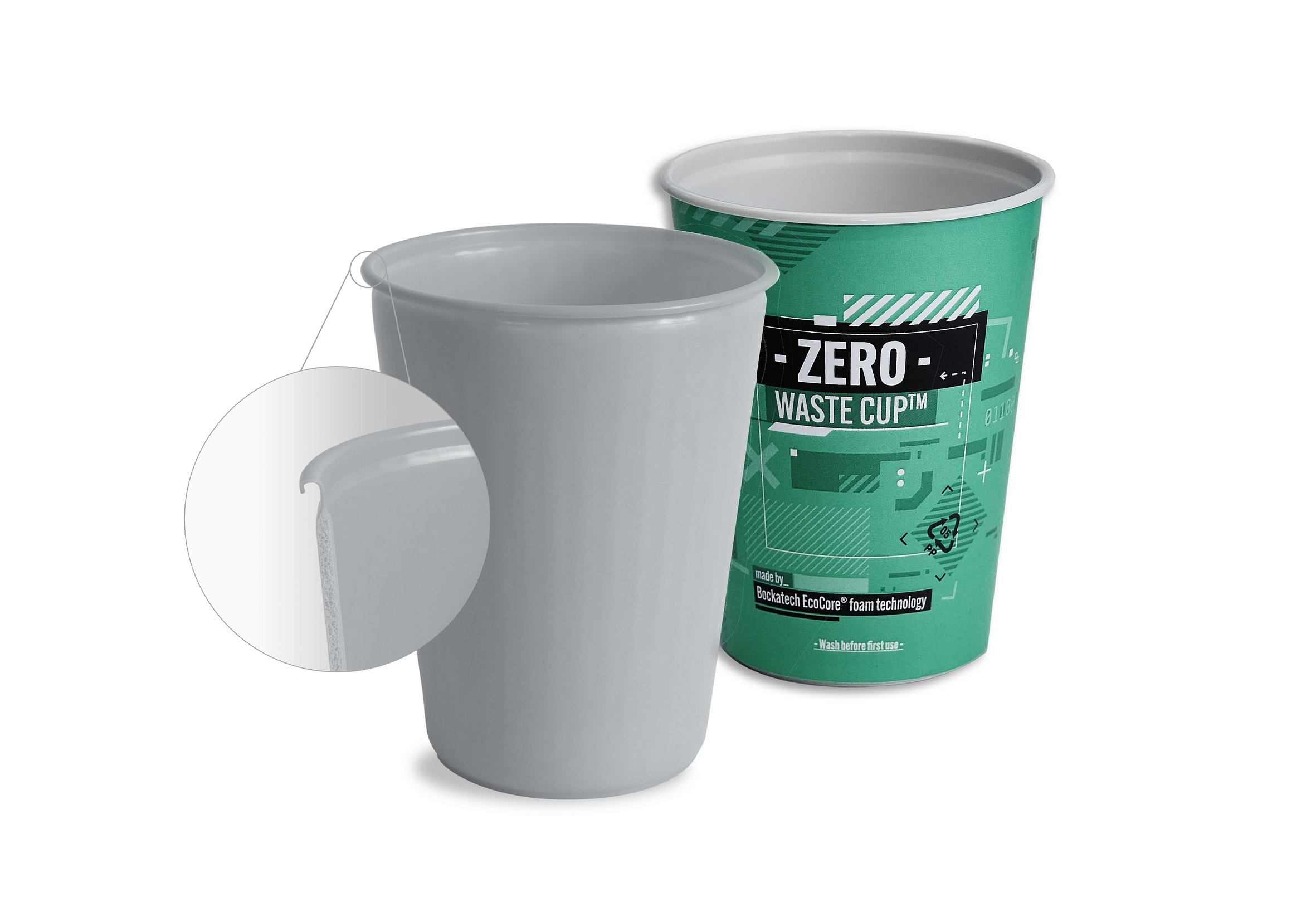
Arburg will attend Drinktec in Munich from 12 – 16 September 2022 to showcase a pioneering application: at the Arburg stand 224 in Hall C 5, visitors will discover an outstanding innovation in the field of reusable cups. Arburg will demonstrate how an electric Allrounder 520 A injection moulding machine can produce foam-moulded IML cups from Bockatech, which are not only very light and very well insulated but also recyclable after multiple uses.

“At the World’s Leading Trade Fair for the Beverage and Liquid Food Industry, we will present a real innovation in packaging,” says Andreas Reich, Arburg’s Director Central Sales & Applied Technologies. “Manufacturing individual, reusable thermo cups using the Allrounder 520 A combines the EcoCore and MuCell processes with in-mould labelling for the first time – ensuring stable, quick and cost-effective series production.” This reusable cup by Bockatech is more stable than a paper or thermoformed cup of the same weight. In addition, the manufacturing process uses significantly less material. The end product is a very well insulated reusable cup that is even dishwasher-safe.

Strong partners
The cups, which are injected on an electric Allrounder 520 A with Gestica control system and MuCell package, are the product of a partnership with Bockatech and the other partners Borealis (material), Trexel (MuCell), Roboplas (IML automation) and MCC Verstraete (IML labels).
By combining EcoCore technology from Bockatech and Arburg’s high-performance machine with the “aXw Control ScrewPilot” for stable mould filling and the “aXw Control PressurePilot” for bionically optimised pressure control, the cups can be manufactured quickly and with low energy consumption. The cycle time for a 430-millilitre container is only around 5.5 seconds.

Light, stable and insulating, with an individual design
The material is enriched both chemically with a blowing agent (CO2) and physically using the MuCell process with nitrogen. This homogeneous solution is injected through a hot runner with a needle shut-off nozzle. The single-cavity mould then opens and the part expands. The resulting integral foam structure, with fine foam cells with diameters between five and 50 micrometres, is ultimately crucial for cooling and thermal insulation. The foam-moulded walls have a thickness of two millimetres, making them almost four times larger than those at the beginning of the process. The foam-moulded cup therefore has very good insulating properties and is suitable for hot and cold drinks. At the same time, it is very stable and can be produced with any design using the IML process.

Broad portfolio for the beverage industry
As a system partner, Arburg has many years of experience in the manufacture of closures for beverages and special items, specifically of multi-component closures. For which cube technology and Allrounder Cube machines are predestined. To implement optimised solutions in this sector, Arburg has the very experienced partner Foboha on its side. The Cube machines can manufacture standard and special closures from one, two or three components at very high levels of output with a small footprint. Not only that, but this is a reliable process, even for the processing of recyclates, PCR materials or bio-plastics. This topic, alongside resource efficiency, CO2 footprint and Circular Economy is an important component of the ‘arburgGREENworld’ programme.

A one-stop shop
Mould technology often has a big role to play in the manufacture of closures, e.g. for unscrewing and fitting lids. Electric mould functions of this kind can be implemented efficiently using the products from AMKmotion, since 2021 a company in the Arburg family.
Arburg therefore does more than supply injection moulding technology. It also provides its customers with professional project management and comprehensive consultancy support for the development of turnkey solutions for the beverage industry.

Arburg at Drinktec
The reusable foam-moulded cups have a wall thickness of two millimetres and can also be produced with an IML label.
Arburg at Drinktec
At the Arburg Technology Days in June 2022, the manufacturing system for reusable foam-moulded cups made its debut. For Drinktec, this will be complemented by an IML system.

The interpack alliance takes you to the Middle East and Africa: pacprocess MEA and Food Africa will take place in December

The interpack alliance takes you to the Middle East and Africa: pacprocess MEA and Food Africa will take place in December

The Middle East and Africa (MEA), and especially Egypt as a hub for the entire region, is an attractive market for the international packaging and related process industries. pacprocess MEA and Food Africa are the perfect platform.

A 20% increase in demand in the Middle East and Africa – this is the kind of growth that the German Mechanical Engineering Industry Association (VDMA) is currently expecting to see. The need for packaged food in this region will presumably increase to 93 million tons over the next four years. This shows the huge potential hidden in this segment of the market alone for the international packaging sector and the related process industry.

pacprocess MEA and Food Africa are coming at exactly the right time. The trade fair duo will take place in 2022, from December 5th to 7th in Cairo, under the umbrella of the interpack alliance fair. The synergy between the events is huge, as the food industry is the biggest consumer of packaging.

“The enormous dynamics of the market in the Middle East and Africa were already palpable during past events,” says Thomas Dohse, Director of the interpack alliance. “Now is the ideal moment to enter this fascinating market.”

A rising profile: pacprocess MEA
pacprocess MEA has been the most important trade fair for processing and packaging in the region since 2019. In 2021, around 16,000 visitors came to Cairo for pacprocess MEA and Food Africa. Both events profit from support by local businesses, public authorities, associations and Egyptian governmental organisations.

The African food industry’s number one: Food Africa
As the largest professional trade fair for the food industry in Africa, Food Africa is a unique platform for entry into the African mega-market for food and agriculture. This is even more relevant in the face of the burgeoning global food crisis. At the trade fair, exporters can engage in targeted networking with local, regional and international industry representatives.

Food Africa has been part of the interpack alliance portfolio since last year. Here, as well as for pacprocess MEA, Messe Düsseldorf is working with the event organisers IFP Egypt and Konzept.

Taking advantage of the opportunities in the MEA region
After South Africa, Egypt is the most industrialised nation on the continent, and one of the fastest growing food markets in the world. Numerous trade agreements and an advantageous geographic position on one of the most important trade routes, the Suez Canal, offer ideal conditions. For manufacturers of food producing machines and packaging machines from Egypt, but also from all of North Africa and the Middle East, this is an important sales market. The African food market is expected to more than triple by 2030 and reach one trillion dollars. Accordingly, investments in production capacities are being made. Manufacturers with large export quotas in particular are focusing on modern technology to meet the demands of their different national sales markets.

Exhibitors can register directly at www.pacprocess-mea.com or www.foodafrica-expo.com for both trade fairs.

SABIC launches blockchain pilot for digital traceability of certified circular TRUCIRCLE feedstock

SABIC launches blockchain pilot for digital traceability of certified circular TRUCIRCLE feedstock

  • SABIC’s consortium blockchain pilot project is a collaboration with technology company Finboot, advanced recycling pioneer Plastic Energy, and packaging specialist Intraplás
  • The project intends to create additional transparency and digital traceability for certified circular feedstock used in SABIC’s TRUCIRCLE™ solutions

SABIC, a global leader in the chemicals industry, has launched a pilot project with technology company Finboot, advanced recycling pioneer Plastic Energy, and packaging specialist Intraplás to investigate the possibilities of blockchain technology in supporting end-to-end digital traceability of circular feedstock in customer products.

Tracing the journey of feedstock through the complex petrochemical value chain is currently a difficult undertaking. To improve this process and support the delivery of its circular feedstock to customers – part of SABIC’s TRUCIRCLE™ portfolio and services –, SABIC has launched this pilot project to demonstrate the feasibility of using a blockchain-based, value-chain IT application. SABIC’s is the first project of its kind in the industry to trace the product from feedstock production to converter, going further than previous industry applications of blockchain in end-to-end tracing. The platform offers reduced costs, time and improved data integration for all value chain partners.

Another of the key benefits of blockchain technology in the delivery of more sustainable solutions lies in its ability to validate sustainability proof points and organizations’ ESG credentials. This is of significant benefit to all members of the value chain, including external parties, as it reduces the administrative efforts associated with the certification process of materials. It is also a more reliable process, due to the reduced risk of human error.

Waleed Al-Shalfan, Vice President Polymers Technology & Innovation at SABIC, said: “At SABIC, we have a deep commitment to innovation and technology that can help us to deliver more sustainable solutions to our customers. Our vision to create a circular economy for plastics requires a total transformation of the value chain, and pioneering partnerships with partners both upstream and downstream. Blockchain technology holds exciting potential for the provision of our TRUCIRCLE products to customers, and therefore for our commitment to supporting customers in their sustainability ambitions.”

Finboot’s MARCO software solution acts as middleware layer and will track the TACOIL produced by Plastic Energy from their recycling process, the delivery of this oil to SABIC for conversion into its TRUCIRCLE circular polymers, and finally the delivery of the polymers to Intraplás for conversion into their packaging solutions. The technology also ensures that all data gathered remains immutable while shared across suppliers, customers and regulators – providing transparency, auditability and accountability in a complex industrial ecosystem.

Juan Miguel Pérez Rosas, CEO of Finboot, commented: “We are excited to embark on this pilot as it will significantly contribute to the development and progression of a circular economy, while setting the example for best practice for the global manufacturing sector. SABIC is at the forefront of its industry, always looking to the future and investing in technology and innovation to accelerate its digital transformation that supports the circular economy.”

Marisa Alves, Chief Procurement Officer at Intraplás, added: As a global provider of packaging solutions, Intraplás has the clear ambition to make sustainable packaging broadly available to the market, without compromising the environment and food safety, something that boosted the participation on this important project with our supplier and long-term partner SABIC. The blockchain technology project will reinforce our objectives even more, as it will help us to improve performance, create additional transparency to the supply chain and promote digital traceability for our certified circular packaging. This is an Intraplás contribution, through more concretely sustainable solutions, to a real circular economy.”

Carlos Monreal, Founder and CEO of Plastic Energy commented, “As a company who has developed our own innovative technology, we at Plastic Energy are excited to explore the opportunities that new technologies like blockchain can offer. This pilot has the potential to make a big impact in the value-chain, providing a new level of traceability and transparency for recycled plastics, and demonstrating how advanced recycling can play a valuable role in the circular economy of plastics.”

MEAF shows best in class ‘green’ extrusion solutions at K 2022

MEAF shows best in class ‘green’ extrusion solutions at K 2022

At K2022, the world’s largest trade show for the polymer industry in Düsseldorf, Germany, 19 to 26 October, MEAF Machines will demonstrate its best in class extrusion solutions at booth A22 in Hall 17.

Thanks to its highly efficient design, MEAF’s extrusion have a 30 to 65% smaller carbon footprint than many of its competitors while allowing for a further reduction in raw material use. In addition its in-build flexibility allow MEAF’s extruders to work with almost any thermoplastic material, including biopolymers and recycled materials like bottle flakes and post-consumer regrind, thus helping plastics processors to go ‘green’.

Manufacturers in the food packaging sector are under huge pressure from regulators, supermarkets and consumers to reduce the amount of plastics used, while still maintaining food safety, attractiveness and recyclability. By partnering with Swiss manufacturer Promix Solutions, MEAF has added physical foaming capabilities to its extrusion lines. This allows for a further reduction in material use and lower weight, without compromising on features such as stackability and strength. Thanks to the use of nitrogen rather than the often used butane and propane, the process has almost no environmental impact.

An industry sector which only recently has started to move towards a ‘greener’ future is the carpet and artificial turf sector. Where previously they would use non recyclable materials like bitumen and latex, they are now looking at switching to thermoplastic elastomers (TPE) and TPU for their carpet backing to allow for their products to become fully recyclable rather than being incinerated or ending up in a landfill . This however requires a considerable switch in the production process and a new way of thinking for many carpet manufacturers, reason for MEAF to adjust its in-house extrusion test line for various carpet backing solutions.

Energy and material efficiency have always been at the heart of MEAF’s design philosophy, longbefore it became fashionable. This has helped to company to gain a foothold in far-away placeswhere reliable energy and raw materials come at a premium. “That is the advantage of being arelatively small company,” says Elwin Houtekamer, Director at MEAF Machines BV. “We are more agile than the big manufacturers and work as equal partners with specialised innovative suppliers. This way we are always at the forefront of extrusion technology.”

MEAF shows best in class ‘green’ extrusion solutions at K 2022
PET and PP physical foamed trays from sheet made on MEAF extrusion line (Source: MEAF)
MEAF shows best in class ‘green’ extrusion solutions at K 2022
Artifical grass is another product for which MEAF can provide an extrusion line to produce recyclable backing (Source: MEAF)

Analyzing and optimizing cleaning processes

Analyzing and optimizing cleaning processes

Cleaning processes often offer considerable potential for improvemen when it comes to making parts cleaning operations more reliable, economical and sustainable. The first step is to carry out a systematic process analysis that also takes a close look at upstream and downstream production steps.

To ensure the quality of subsequent process steps, avoid rejects and guarantee the functionality of the end product, consistent parts cleanliness is an essential quality criterion. Ever-stricter or even modified cleanliness specifications must be met. In addition, demands on the speed, cost-effectiveness and sustainability of the cleaning process are constantly rising. However, how well, fast and efficiently the cleaning work is carried out depends not only on the equipment, the process technology and the medium
used, but also on factors relating to the cleaning process itself.

Systematic process analysis – looking at the big picture
So what do you do if parts suddenly come out of the system stained, if specifications for particulate or thin-film cleanliness are no longer met, the cleaned parts arrive at the customer’s corroded, or cleaning is too slow/too cost-intensive? In the case of these and other problems, a systematic process analysis such as that carried out by the Ecoclean Academy at Ecoclean GmbH can pinpoint the root cause of the error. The cleaning experts not only focus on the actual cleaning process and equipment, but also assess the overall manufacturing environment. The smallest change to the part, part spectrum or material, type of contamination, or modifications to upstream or downstream processes is enough to seriously impair cleaning results.

Stains and thin-film residues on parts
According to the cleaning experts, a p oor cleaning result or one that does not meet new higher requirements is a “classic” reason for carrying out a process analysis. The first step is to identify the exact problem – are thin-film cleanliness specifications not being fulfilled or are there stains on the parts?
If staining is the problem, one of the questions to be asked is whether the quantity and composition of the contaminants (processing media and other substances) have changed or whether the constituents and concentration of the cleaning medium are still appropriate. Other factors, such as rinsing water quality, bath treatment, process technology and process sequence, as well as
the drying step, are also closely examined. These are further influencing variables which play a role if thin-film cleanliness results are unsatisfactory.

Inability to meet particulate cleanliness requirements
If the cleanliness analysis after the cleaning cycle shows that too many or too large particles are still adhering to the parts, this may also be due to the cleaning program and process sequence used. Possible causes include residual particles in the working chamber or on the part carriers, an unsuitable filtration system or a clogged filter. Sometimes, it is the wrong choice of cleaning containers, such as crates made of perforated galvanized sheet metal, which hinders the efficient and reliable detachment and removal of the
particles. This type of crate blocks ultrasonic waves and prevents them from developing their full effect on the wash load. Likewise, the spray pressure does not reach the inside of the perforated crates. Compared to baskets made of round wire, a further problem is that the cleaning medium does not drip off these crates as effectively. This may result in the unwanted transfer of contaminants and/or cleaning chemicals. In any case, much longer and thus more energy-intensive drying processes are required.
A further cause of a failed cleanliness inspection is often burrs that are still attached to the parts, which detach when the parts are handled during the residual contamination check and then show up on the particle filter. If these particles are examined under a microscope, it can be determined whether they are chips or burrs. If the latter is the case, upstream processes must be evaluated to find out where the burrs occur and how their formation can be avoided. Particulate cleanliness can also be impaired by magnetism that is “bought in” with raw materials or arises during the manufacturing process. Magnetism binds chips to the parts and hinders or prevents their removal during the cleaning process.

Handling parts after cleaning
However, the cleaning process is not over when the parts come out of the machine with the required level of cleanliness. To prevent recontamination or corrosion, which can occur even with preserved or passivated parts, it is important to look at how parts are handled after the cleaning step. The following questions need to be answered: Where, how and for how long are the parts stored? How are they transported to the next processing step? What kind of packaging is needed for this? In addition, high cleanliness
requirements often make it necessary for processes such as internal transport, assembly or packaging to be performed in a clean environment or cleanroom.

Updating the cleaning process
Besides cleaning problems, modified cleaning programs can be a further reason for carrying out a process analysis. The aim is generally to shorten process times or enhance the cleaning result. As always, the analysis starts by documenting the actual state, which includes verifying the process parameters, process sequence and process times. Based on the analysis results, potential for improvement can be identified and appropriate measures can be defined. These may include modernizing the system, such as by
retrofitting or upgrading ultrasonic equipment.

Qualified personnel
It is essential that the parts cleaning staff are involved in the process analysis and optimization measures. Raising staff awareness about cleanliness, as well as about the capabilities of the cleaning technology and the impact of parameter settings on the cleaning result, is a key factor. If there is a change of personnel, it is also important that knowledge of how the cleaning system works and how, for example, bath treatment measures or regular maintenance work on the cleaning system are carried out is passed on. Otherwise, problems that had been eliminated in the past may occur again. Investing in the training and continuing education of cleaning staff is therefore a cornerstone in order to achieve reliable cleanliness requirements in an economical and sustainable manner. The Ecoclean Academy therefore also combines process analyses with classic training courses.

Thanks to systematic process analysis, which also includes the analysis of upstream and downstream production steps, sources of error and potential for improvement can be quickly identified.

Analyzing and optimizing cleaning processesRegular inspection and maintenance of machine components such as filters are essential factors when it comes to meeting particulate cleanliness requirements in a consistent and economical manner.

Analyzing and optimizing cleaning processesKey to reliable, efficient and sustainable cleaning processes are well-trained staff who understand how the cleaning system works and how, for example, bath treatment measures or regular maintenance work on the cleaning system are carried out.