Friday, June 19, 2026
spot_img
Home Blog Page 20

Düsseldorf Hosts K 2025 Where Automation Becomes Key to Industrial Competitiveness

Düsseldorf Hosts K 2025 Where Automation Becomes Key to Industrial Competitiveness

Under the guiding motto “Your Partner for Presses and Automation”, WICKERT will present itself at this year’s K 2025, taking place from October 8–15 in Düsseldorf, as a full-service provider of tailor-made automation solutions for hydraulic presses. Visitors will find the company at booth 14A41 in Hall 14, where WICKERT will showcase not only its long-standing expertise in press technology but also its innovative strength in automation and system integration.

As one of the leading specialists in custom-engineered press systems, WICKERT offers solutions that cover a wide variety of applications. Its portfolio extends across the processing of composites, rubber, friction materials, plastics, and powder—including production environments that require cleanroom conditions. By combining deep engineering knowledge with forward-looking automation concepts, WICKERT has established itself as a reliable partner for manufacturers in demanding industries such as automotive, aerospace, energy, and medical technology.

Fully Automatic Spraying System for Rubber and Plastics Processing

One of the highlights at K 2025 will be WICKERT’s newly developed fully automatic spraying system, designed specifically for rubber and plastics processing in hydraulic presses. Traditionally, the application of release and flow agents has been carried out manually—an approach that is not only time-consuming but also prone to human error. Manual spraying often results in inconsistent coating, which can negatively impact both product quality and process reliability, while also creating workplace safety risks due to operator exposure to aerosols.

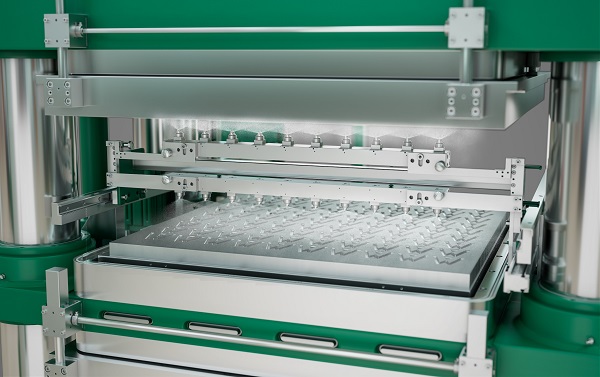
The automated spraying innovation from WICKERT solves these challenges. The system operates with movable distribution beams, which are fitted with individually adjustable nozzles. A dedicated spraying unit moves back and forth between the upper and lower die, applying release and flow agents homogeneously and reproducibly. This guarantees consistent coating, stable part quality, and improved occupational safety.

Another advantage of the system is its retrofit capability. It can be easily integrated into existing hydraulic presses without major structural modifications, enabling manufacturers to upgrade their production processes efficiently and cost-effectively. By replacing manual spraying with automation, companies not only gain higher reproducibility and throughput but also contribute to safer working environments.

Automation as a Strategic Reaction to Industry Requirements

Due to the persistent lack of qualified personnel and the increasing expenditure on high-qualified staff, the urge to automate manufacturing processes is higher than ever. Especially, hydraulic press technology manufacturers find themselves under mounting demands for enhanced productivity, flexible system design, and sustainable cost reduction.

WICKERT meets these challenges in the industry with a wide spectrum of automation services. Its service reaches from component creation and concept confirmation right through to feasibility studies, system planning, and project management in total. With its status as a general contractor, it is possible for the company to provide entire production lines on a turnkey basis, with perfect integration of presses, handling systems, and peripherals.

Depending on customer requirements, WICKERT develops tailor-made automation concepts that range from partially manual solutions to fully automated production lines. This flexible approach allows manufacturers to select the degree of automation that best fits their current and future needs, whether for small-scale systems or large-capacity presses.

From Smart Automation to the Smart Factory

WICKERT’s innovation strategy is closely aligned with the vision of the Smart Factory. Upon request, its presses can be fully equipped with sensors and actuators, enabling comprehensive data collection during production. The range of data includes information on machine wear and performance for predictive maintenance, as well as detailed metrics on production output, process stability, and product quality.

By leveraging such operational and process data, manufacturers can optimize their production in real time and extend equipment lifespan. Moreover, WICKERT presses can be integrated into higher-level process control platforms and networked with other machines and systems. This creates a digitally connected production environment that supports Industry 4.0 initiatives and ensures customers remain competitive in global markets.

From Machine Manufacturer to System Integrator

Over the past decade, WICKERT has undergone a significant transformation—from a pure manufacturer of hydraulic presses into a holistic system integrator and automation partner. This strategic evolution reflects the increasing demand for complete solutions rather than stand-alone machines.

In fact, within the last five years, the share of press systems sold with automation has grown from 20% to 60% of WICKERT’s total sales. This demonstrates the clear market trend towards integrated automation solutions and highlights the company’s successful positioning in this area.

Beyond automation, WICKERT also places strong emphasis on intelligent machine design. By incorporating energy-efficient drive concepts, optimized hydraulic systems, and ergonomically designed operator interfaces, the company helps its customers reduce operating costs, lower energy consumption, and improve workplace efficiency.

Conclusion

With its presence at K 2025 in Düsseldorf, WICKERT underscores its role as a forward-looking partner for companies seeking to enhance their competitiveness through press technology and automation. The company’s offering—ranging from individual presses to fully networked production lines—demonstrates how customized automation, digitalization, and intelligent machine design can provide real answers to today’s manufacturing challenges.

At booth 14A41 in Hall 14, trade visitors will have the opportunity to experience firsthand how WICKERT combines technical expertise, innovation, and customer orientation to deliver future-proof solutions for a wide spectrum of applications.

https://www.wickert-presstech.de/en/

#wickert #Modernplasticsindia #Pasticsnews #ModernPlasticsIndiaMagazine
#PrintPublication #Modernplasticschina

EFSA Approval Marks Key Milestone for PET Recycling in Food Packaging

EFSA Approval Marks Key Milestone for PET Recycling in Food Packaging

The European Food Safety Authority EFSA confirms the compliance of the decontamination performance of the recoSTAR PET art recycling process in a positive “Scientific Opinion” based on the new regulation in force since 2022.

Starlinger and its customers already received a total of 120 “Positive Opinions” under the previous Regulation EU 282/2008—more than any other manufacturer of PET recycling technologies. The positive assessment of the PET bottle-to-bottle recycling process on the “recoSTAR PET art” system is the first positive Scientific Opinion under Regulation EU 2022/1616 for Starlinger.

Under the new regulation, modified and stricter assessment criteria are applied: The permissible limits after decontamination for substances such as toluene, chlorobenzene and methyl salicylate, for example, have been reduced by up to 50 %. The corresponding challenge test showed that the recoSTAR PET art process clearly exceeded the required cleaning efficiencies.

As soon as the European Commission authorizes the decontamination process based on the positive Scientific Opinion (by allocating the officially registered Recycling Process Authorization Number RAN to the respective process), the process developer can license it directly to PET recyclers. This makes the authorisation procedure a lot easier and faster compared to before because once the process has been approved, no further tests are required.

Higher throughput, lower energy consumption

Starlinger presented the recoSTAR PET art PET bottle-to-bottle recycling system for the first time in 2022 at the “K” plastics trade fair in Düsseldorf as the successor to the well-known recoSTAR PET iV+ systems. The new machine model reduces energy consumption per kg by around 25 % while increasing throughput by 15 % and more. The machine range covers throughputs from 1,000 kg/h to 3,200 kg/h.

Starlinger customers worldwide supply around 2.5 million tons of food-grade PET regranulate for beverage bottle production per year. Almost 300,000 tons of this are already produced on 18 recoSTAR PET art systems which are in operation in Europe, America, Africa, India and Southeast Asia.

https://efsa.onlinelibrary.wiley.com/
https://www.starlinger.com/

#efsa #starlinger #Modernplasticsindia #Pasticsnews #ModernPlasticsIndiaMagazine
#PrintPublication #Modernplasticschina

Prestigious Award Spotlights Anna Maria Jonietz’s Innovative Research in Art History

Prestigious Award Spotlights Anna Maria Jonietz’s Innovative Research in Art History

The drupa Prize 2025 goes to art historian Anna Maria Jonietz for her outstanding dissertation on the Medici self-portrait collection from 1650 to 1723. The work impressively shows how self-portraits in the Medici collection were deliberately integrated into art and science history discourses, opening up new perspectives on image politics and representation. With this prize, drupa annually supports outstanding young scholars at the Faculty of Philosophy at Heinrich Heine University Düsseldorf.

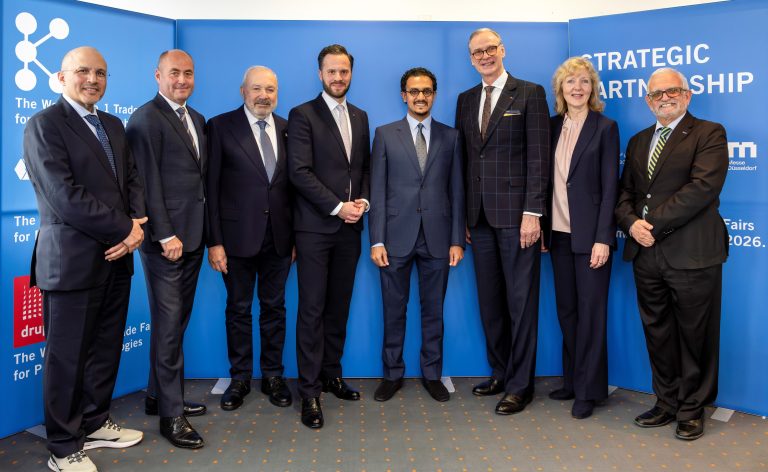
The drupa Prize, worth 6,000, was presented on 1 September 2025 during a ceremony at the exhibition grounds in Düsseldorf. The presentation was attended by Wolfram N. Diener, Chairman of the Management Board of Messe Düsseldorf, Sabine Geldermann, Director of drupa Portfolio Print Technologies, Prof. Dr. Heidrun Dorgeloh, Vice-Rector of Heinrich Heine University Düsseldorf, Prof. Dr. Stefan Hartmann, Chairman of the Commission for the Promotion of Young Scientists at the Faculty of Philosophy, and doctoral supervisor Prof. Dr. Valeska von Rosen.

Dr Andreas Pleßke, CEO of Koenig & Bauer and Chairman of the drupa Committee, congratulated the award winner on her achievement in a personal video message. ‘This award not only recognises exceptional scientific achievement, but also the courage to take an innovative look at historical image strategies – an impulse that has an impact far beyond art history,’ said Pleßke.

Innovative approach to the topic

In her dissertation, which was awarded summa cum laude, Anna Maria Jonietz analyses the Medici’s collection of self-portraits as a strategic communication tool. Her innovative approach to early Baroque image politics also builds a bridge to current issues surrounding media impact and public perception. The jury particularly praised the methodological originality, the interdisciplinary approach and the precise, source-based analysis.

www.drupa.com

#drupaPrize2025 #Modernplasticsindia #Pasticsnews #ModernPlasticsIndiaMagazine
#PrintPublication #Modernplasticschina

Another Victory That Places the Team Among the World’s Best

Another Victory That Places the Team Among the World’s Best

  • Team Sonnenwagen finishes in top position at the World Solar Challenge 2025
  • More than 3,000 kilometers through the Australian outback
  • Fastest qualifying lap of all teams
  • More than ten Covestro materials used

Team Sonnenwagen finished the 2025 Bridgestone World Solar Challenge with a top position. The race is considered the toughest solar car race in the world and covers more than 3,000 kilometers from Darwin to Adelaide through the Australian outback.

Start in Darwin: The Sonnenwagen Æthon begins from pole position.

In qualifying, the Covestro Ithon secured pole position with a time of 1:52.50 minutes, setting a new team record. Never before has a Team Sonnenwagen solar race car been faster on the circuit in Darwin. After five days of racing, the new Sonnenwagen Covestro Ithon finished in fourth place – a world-class performance in a strong field of 37 teams from 18 countries, made possible in part by Covestro products.

“Regardless of the outcome of the race, Team Sonnenwagen has done a great job in my opinion,” says Dr. Thorsten Dreier, Chief Technology Officer at Covestro. “What these students from Aachen have achieved with the design of their solar car is a demonstration of innovative strength, team spirit, and determination. They deserve nothing but congratulations. And I am always delighted that we are able to support this extraordinary team with our innovative and sustainable technologies and our expertise.”

“We are incredibly proud of what we have achieved,” says Leonie Brandt, Chair of Team Sonnenwagen Aachen. “Just finishing this race is an enormous achievement – and with Æthon, we made it into the ranks of the world’s best teams. Our vehicle proved itself under extreme conditions, and we are taking away many important insights.”

The team inspecting the Covestro Æthon.

Covestro has been supporting Team Sonnenwagen since its founding in 2017 and has been its main sponsor and technology partner since 2018. The company is convinced that more sustainable high-performance plastics are key to climate-neutral and circular mobility. Together with customers and partners, Covestro is continuously developing new material solutions and recycling technologies for this purpose.

As with previous vehicles, the Ithon also relied on more sustainable high-performance plastics from Covestro – this time even more than ever before: over ten different materials from the company were used in the car.

One example of the application of our raw materials is chemically recycled car seat foam, which offers comfort while conserving resources. Sustainable mass-balanced Vulkollan, a particularly resilient elastomer that absorbs shocks between the battery and the chassis, was also used to protect the structure. For the cell holders, the team used Makrolon TC, a thermally conductive polycarbonate that helps to reduce the temperature during battery charging and discharging, thereby increasing the battery’s service life. The coating cures at room temperature and contains a binder with a high proportion of sustainable Covestro raw materials. In addition, other Covestro raw materials were used as materials in the cockpit hood, outer shell, headlights, seat, and steering wheel, for example.

www.covestro.com

#covestro #Modernplasticsindia #Pasticsnews #ModernPlasticsIndiaMagazine
#PrintPublication #Modernplasticschina

Prestigious Industry Award of 2025 CEO of the Year Presented to Dr Sultan Al Jaber for Transformational Global Leadership

Prestigious Industry Award of 2025 CEO of the Year Presented to Dr Sultan Al Jaber for Transformational Global Leadership

ICIS is pleased to announce Dr. Sultan Ahmed Al Jaber, UAE Minister of Industry and Advanced Technology, ADNOC Managing Director and Group CEO and Executive Chairman of XRG, as the winner of the 2025 ICIS CEO of the Year Award for outstanding achievement.

Dr. Sultan Al Jaber said: “I am deeply honored to receive the ICIS CEO of the Year Award and sincerely thank my peers for their recognition of the efforts of the UAE and all my colleagues at ADNOC and XRG to help meet the world’s growing demand for energy and chemicals. ICIS continues to provide trusted insight and analysis on which our industry relies to make informed business decisions.”

Dean Curtis, CEO of ICIS, said: “We are delighted to announce this award to the UAE’s Dr Sultan Al Jaber based on recognition from peers of transformational moves in the global chemical industry in building significant downstream capabilities from the company’s core strength in crude oil and gas. These include the launch of XRG, ADNOC’s international investment arm, which has an ambition to create a top three global chemicals platform.”

“Through its newly launched investment vehicle XRG, ADNOC will also make investments in the energy systems of the future to ensure energy remains a catalyst for sustainable growth and development,” said Joseph Chang, Global Editor of ICIS Chemical Business.

Dr. Al Jaber has been CEO and Managing Director of ADNOC since 2016, leading the company’s transformation into an advanced and progressive international energy company at the forefront of deploying AI and advanced technologies. He also serves as Executive Chairman of XRG, ADNOC’s international energy investment company designed to meet the surging demand for energy in an AI-enabled world.

Among his key contributions, Dr. Al Jaber has been a driving force behind a pragmatic transformation of the global energy landscape, championing solutions to meet the rapidly expanding energy demands of artificial intelligence.

The ICIS CEO of the Year article from the interview with Dr. Al Jaber will be published in an upcoming issue of ICIS Chemical Business.

The ICIS CEO of the Year Award is unique in the chemical industry as the winner is selected by peers based on a vote among industry CEOs in the ICIS Top 40 Power Players – a global ranking of leaders driving the greatest positive impact on their companies and the chemical industry, published in ICIS Chemical Business.

In selecting the winner, each of the ICIS Top 40 Power Players was asked to vote for three individuals based on achievements in Innovation (technology, product, business process), Profitability/Shareholder value, Projects, M&A/Portfolio Management, Advocacy and ESG (Environmental, Social and Governance).

Previous winners of ICIS CEO awards as voted on by the ICIS Top 40 Power Players include Dow CEO Jim Fitterling (2022), former BASF CEO Martin Brudermuller (2021), Saudi Aramco CEO Amin Nasser (2020), and, INEOS chairman Jim Ratcliffe (2016).

https://www.icis.com/

#icis #Modernplasticsindia #Pasticsnews #ModernPlasticsIndiaMagazine
#PrintPublication #Modernplasticschina

SAF and HVO Pilot Validates Future of Renewable Fuels on World Biodiesel Day

SAF and HVO Pilot Validates Future of Renewable Fuels on World Biodiesel Day

On the occasion of World Biodiesel Day, MOL Group highlights a recent milestone in its energy transition journey. Sustainable aviation fuel (SAF) has been successfully produced for the first time at INA’s Rijeka Refinery during a pilot project to process biocomponent, as well as a significant volume of renewable diesel HVO (Hydrotreated Vegetable Oil). This marks the second successful SAF and HVO production test within MOL Group, following an earlier pilot at Slovnaft’s Bratislava refinery. These underscore the company’s technological readiness and strategic commitment to alternative fuel development in meeting EU climate targets and enhancing regional energy security.

The successful pilot project at the Rijeka Refinery was implemented in cooperation with Chevron Lummus Global (CLG), the licensor of the refinery’s Hydrocracking Unit, with the aim of testing the co-processing of 5% POME (Palm Oil Mill Effluent – a by-product of palm oil production) with fossil feedstocks. During the pilot, 1,000 tonnes of biogenic feedstock were processed. The entire process was certified by the independent auditor Bureau Veritas d.o.o., in line with the ISCC (International Sustainability and Carbon Certification) standard for sustainable biofuels.

The preparation of the pilot project took eight months due to the complexity of processing a new type of feedstock and its specific physical and chemical properties. During the test run, more than 400 samples were collected for detailed analysis conducted at INA’s Central Testing Laboratory (CIL), while the biogenic content (C14 analysis) was carried out by accredited external laboratories – the Ruđer Bošković Institute in Zagreb and Isotoptech Zrt. in Debrecen.

Earlier this year, MOL Group’s Bratislava Refinery also conducted successful production tests of a diesel fuel containing HVO and SAF. HVO was produced using oil from cashew nut shells and the biocomponent produced this way was processed together with crude oil. In case of SAF, partially refined cooking oil was processed with the traditional raw material. The test proved that the Bratislava Refinery’s production unit used for the production of standard aviation kerosene is also suitable for producing sustainable aviation fuel.

MOL Group had been using the co-processing method at the Danube Refinery in Százhalombatta for years: the process reduces the emissions of traditional fuels by mixing plant residues, as the bio and fossil components are processed simultaneously directly during production.

Renewable fuels play a key role in MOL Group’s SHAPE TOMORROW strategy. The company is already a key player in both the Hungarian and regional biofuel markets, with hydrotreated vegetable oil produced from waste, i.e., renewable feedstock, being among the most climate-friendly fuel options, and ranks among the pioneers in Europe when it comes to the production of aviation biofuels.

MOL Group already produces diesel and sustainable aviation fuel from renewable feedstocks and is ready to expand the production. This readiness underscores our strategic commitment to sustainable mobility—whether in road or air transport. For us, becoming a complex mobility service provider means offering an increasingly diverse range of fuels, thus creating all the necessary conditions for a smart energy transition for our customers. We are already playing a leading role in this process in the region, and we are determined to maintain this position through continued investments and innovation.” – said Csaba Zsótér, Senior Vice President, Fuels at MOL Group.

MOL Group is continuously researching and developing new possibilities for the production and use of biofuels. In partnership with Budapest Airport, Wizz Air, and Airport Fuel Supply Llc., MOL Group launched commercial testing of SAF in 2022 in Hungary. Building on this, the company now sells SAF as part of its regular operations in Hungary, Slovakia, and Croatia, in quantities equivalent to approximately 14 kilotons of biocomponents.

SAF can only be produced from classic renewable feedstocks (such as materials of vegetable origin) or waste, but it should meet the same technical and environmental specifications as conventional kerosene. Currently, very few refineries worldwide are equipped to produce sustainable aviation fuel. The current and projected global supply of SAF falls significantly short of demand, as reflected in prices. This is why MOL Group’s developments are of strategic importance, both from a climate protection and supply security perspective.

https://molgroup.info/

#molgroup #Modernplasticsindia #Pasticsnews #ModernPlasticsIndiaMagazine
#PrintPublication #Modernplasticschina

Breakthrough in Sustainable Materials: Fossil-Free LDPE Plant Marks Industry First

Breakthrough in Sustainable Materials: Fossil-Free LDPE Plant Marks Industry First

Vioneo awards ECI Group contract to build world’s first LDPE plant using entirely fossil-free feedstock

Vioneo, a European pioneer in fossil-free plastics, has awarded a major contract to ECI Group, a global leader in polymer technology licensing and engineering services. The project will deliver the world’s first low-density polyethylene (LDPE) plant to operate using an entirely fossil-free feedstock.

The facility, to be built in Antwerp, Belgium, represents a pivotal step in the transition to sustainable plastics. It will use ECI Group’s proprietary autoclave technology to produce 110,000 tonnes of LDPE per year from certified green methanol. The venture is backed by A.P. Moller, with ECI Group’s product partner, Repsol, providing essential market knowledge and product expertise.

ECI Group’s President and CEO, Joaquin Flores, commented, “We’re proud to have been selected to support Vioneo’s vision to create the world’s first green LDPE plant and the first new autoclave LDPE plant to be built in Europe in forty years. This project aligns perfectly with our vision of providing technology solutions that drive sustainable innovation.”

Vioneo, backed by A.P. Moller Holding, is dedicated to pioneering fossil-free plastics production. The plant will form part of the Vioneo’s planned production complex in Antwerp, Belgium which aims to address fundamental environmental challenges associated with conventional plastics manufacturing and will position Europe at the forefront of the transition to a sustainable ‘fossil-free’ plastics industry.

“Vioneo is driving the transition of the plastics industry by demonstrating the economic viability of large-scale, cleaner production using green methanol instead of fossil fuels.

This initiative offers Europe the opportunity to lead the 5 trillion chemicals and materials sector’s defossilisation. Our partnership with ECI Group is a crucial step in realizing this vision,” said Alex Hogan, Chief Executive Officer, Vioneo.

The LDPE plant will use a green methanol feedstock derived from biogenic CO₂, ensuring a fully fossil-free, traceable, and ISCC PLUS-certified product. Powered by renewable electricity, the facility will significantly reduce lifecycle emissions while delivering high-performance LDPE suitable for critical applications in healthcare, automotive, packaging, and consumer goods.

“This project is a landmark moment for the polymer industry. By combining green methanol with our high-pressure polyethylene technology, we’re enabling a truly fossil-free approach to plastics manufacturing. We look forward to working with Vioneo to deliver this first-of-its-kind facility,” said ECI Group’s Director for HPPE Technology, Chris Brock.

ECI Group’s proprietary technology offers a wide range of high-pressure polyethylene products, providing unrivalled operational efficiency, reliability, and flexibility. Building on ECI Group’s decades of experience within the polymer industry, their technology has been optimized to make use of modern materials, design techniques, standards, and industry best practices for construction, operation, and maintenance. In the four years since 2021, ECI Group has licensed over one million tonnes of annual capacity, all using ECI Group’s standardised design approach.

Repsol, the multi-energy company, will support ECI Group as product partner, bringing its extensive technical, operational, and commercial expertise. Repsol has over 55 years of experience producing LDPE, EVA, and EBA polymers at its industrial complexes in Spain and Portugal.

www.vioneo.com
www.ecigrouponline.com

#Vioneo #ecigrouponline #Modernplasticsindia #Pasticsnews
#ModernPlasticsIndiaMagazine #PrintPublication  #Modernplasticschina

New Polymer Upcycling Solutions Introduced at K 2025

0

New Polymer Upcycling Solutions Introduced at K 2025

At the K 2025, MEAF Machines will launch two new machine series based on its new, patented Xtender technology. The MDX-IV, a prototype of which will be on display at the MEAF stand in Hall 17, is designed to increase the intrinsic viscosity (IV) and decontaminate rPET material. The machine is specifically tailored for the use of recycled PET material in the packaging, recycling and film & sheet production sectors.

The EU Packaging and Packaging Waste Regulation (PPWR) sets specific targets for recycled content in packaging, with a minimum of 30% recycled content for PET packaging, and 10% for other contact- sensitive packaging by 2030. MEAF’s MDX-IV can up-cycle material with a lower IV to better quality, higher IV material, offering producers more flexibility when it comes to using different streams of regrind material. That way they can remain competitive in a market where the raw material prices of virgin material are now lower than those of regrind, due to cheaper raw material supplies from the Middle East and the Far East.

Also to be introduced at K is the MDX-DEO, which stands for decontamination and deodorisation. This machine is designed for processing and upcycling other recycled and post-consumer thermoplastics, including PP, PE and PS. In addition to the packaging, recycling and film & sheet markets, the MDX-DEO is aimed at the production of carpet-backing and automotive interior components. In these markets the use of recycled materials is still quite limited, due to the stringent requirements when it comes to odours and volatile components. However, the potential use of the MDX-DEO extends to recycling in general, as deodorising and upcycling allows for more flexible use of different regrind qualities and material streams.

‘With our revolutionary new MDX-series we give polymer processors more options to reduce their dependence on virgin materials and adhere to the EU packaging directive, while simultaneously reducing their CO2-footprint,’ says Roald de Bruijne, Sales Manager at MEAF Machines. ‘Importantly, this can be achieved without compromising on the quality of their products or a large increase in their energy consumption. At MEAF we pride ourselves for developing the new MDX-IV and MDX-DEO series in line with our core values: high quality, compact machines, with low energy consumption and with a very competitive price tag.’

The MEAF Xtender melt co-processing technology has exceptional mixing and degassing properties, and was developed in collaboration with an Italian partner. The MDX-IV and MDX-DEO machines based on this technology can be (retro)fitted on both single-screw and twin-screw extruders, and will be available to customers globally, starting in Q4 2025.

www.meaf.com
www.bridge-b2b.nl

#meaf #bridge #Modernplasticsindia #Pasticsnews #ModernPlasticsIndiaMagazine
#PrintPublication #Modernplasticschina

Flawless Packaging Execution Launched at PPMA Total 2025

0

Flawless Packaging Execution Launched at PPMA Total 2025

Sidel, a global leader in packaging solutions for the food, home and personal care (FHPC) and beverage sectors, is set to return to the special edition of PPMA Total Show 2025 with a powerful message: when every element of your line plays in harmony, performance follows.

Under the banner “One conductor. One perfectly executed line,” Sidel invites visitors to Stand E52 at NEC Birmingham to explore how precision engineering, targeted upgrades, and local expertise combine to optimise equipment and packaging performance – whether manufacturers are starting a project from scratch or enhancing an existing line.

From full-scale orchestration to smart integration

Across its broad portfolio, Sidel will demonstrate how it acts as a conductor – not just a supplier – bringing together machines and systems in perfect sync. With solutions ranging from modular line designs and high-precision standalone equipment to intelligent digital solutions, Sidel offers complete packaging harmony for shaped containers, jars, tins, pots, flexible packaging, cans, glass and PET bottles.

Whether it’s boosting the performance of a food or personal care line, solving end-of-line bottlenecks, or integrating new blowing or filling technology in a beverage bottling line without disruption, Sidel’s local team is ready to support manufacturers with tailored, on-the-ground expertise.

Spotlights at the booth:

  • Smart line design expertise offering innovative thinking for both multi-format and space-constrained environments
  • Optimised complete lines based on flawless engineering and long-term efficiency with several of them running successfully across the UK
  • Packing & palletising innovations including the collaborative CoboAccess Pal; the compact RoboAccess Pal; the sustainable EvoFilm Stretch Wrapper; and the ultra-smooth operation Cermex WB46 wrap around case and tray packer to boost your bottom-line efficiency and environmental goals.
  • Line efficiency upgrades by including the last generation of high-performance Sidel stand-alone equipment or line improvement services.

“A conductor doesn’t play every instrument—they bring harmony to the whole,” said Abhinav Sharma, FHPC UK Account Manager, Sidel. “That’s exactly what we do with packaging lines: orchestrate each component to deliver measurable and optimal results.”

https://www.sidel.com/en

#sidel #Modernplasticsindia #Pasticsnews #ModernPlasticsIndiaMagazine
#PrintPublication #Modernplasticschina

Pioneering Efficiency Through Full Automation

0

Pioneering Efficiency Through Full Automation

At K 2025, ENGEL is presenting an integrated, fully automated production solution for the diagnostics market. The system achieves an increase in overall efficiency of approximately 25 % compared to conventional production methods. In a single cell, well plates and lids are produced and packaged in a validated manner. At the heart of the solution is an all-electric ENGEL e-motion 280 WP combi MW injection moulding machine with 2800 kN clamping force.

Maximum precision for diagnostics: Well plates with lids, manufactured to meet the highest standards in quality, dimensional accuracy, cleanliness and cost efficiency.

Two machines in one – in just 11 seconds

ENGEL’s compact system concept combines with the innovative high-performance Variotwinstack mould technology from HACK Formenbau GmbH to implement the principle of two machines in one. The mould is designed for the simultaneous production of up to four polystyrene well plates with 24 wells and their matching lids. For optimal media connection, the e-motion features a movable centre platen. The two injection units operate in parallel – not sequentially – reducing the cycle time to just 11 seconds. The shot weight for the well plates is 42.6 grams, and 13.2 grams for the lids.

The angled arrangement of the moving injection unit brings the nozzle closer to the hot runner, reducing its volume and thus increasing process reliability. Valve gate hot runner injection without a sprue optimises material usage while completely eliminating weld lines and flow marks. A multi-stage demoulding process with intelligent cooling and optimal part orientation further provides a particularly wide process window. In addition, integrated HACK moldlife sense sensor technology continuously monitors the mould mechanics, increases system availability and detects faults at an early stage. This system also supplies data to support digitally assisted process validation.

Premiere for shortened validation times

ENGEL is premiering its new validation assistant in this cell – a system for digitally assisted qualification and validation of injection moulding processes. Developed in collaboration with HACK Formenbau and Professor Thomas Seul, the solution combines ENGEL’s iQ assistance systems, moldlife sense technology and structured software modules. It supports all validation phases from DQ to PQ, accommodates future release methods such as parametric release, and simplifies the transfer of validated processes to additional machines or sites. As a result, both time and staffing requirements for validation are significantly reduced, leading to a much shorter time to market.

Compact, precise and cleanroom-ready – with cost savings

One of the key advantages of this production solution lies in its reduced system height, made possible by the newly designed layout. The overall footprint of the production cell is reduced by 40 percent – a significant cost-saving factor in cleanroom environments, where floor space comes at a premium.

ENGEL’s e-motion series has been specifically developed to meet the most demanding requirements in injection moulding for medical technology and sets new standards in precision, efficiency and long-term cleanroom performance.

Automated post-processing and quality assurance

After demoulding, a side-entry robot from Ilsemann removes the moulded parts. Two arms simultaneously grip the parts from both sides of the mould and transfer them either to a sampling station or to a laser marking station where a QR code is applied. The parts are then automatically assembled, stacked and sealed in sterile packaging.

https://www.engelglobal.com/

#engelglobal#Modernplasticsindia #Pasticsnews #ModernPlasticsIndiaMagazine
#PrintPublication #PrintMagazine #modernplasticschina