Wednesday, July 1, 2026
spot_img
Home Blog Page 189

Solvay Launches ISCC PLUS Certified Mass Balance Hydroquinone and Hydroquinone Monomethylether

Solvay Launches ISCC PLUS Certified Mass Balance Hydroquinone and Hydroquinone Monomethylether

Products are designed to meet demand for enhanced sustainability, more renewable feedstocks and reduced carbon footprint for the polymer, coating, adhesive, pharmaceutical and agrochemical markets.

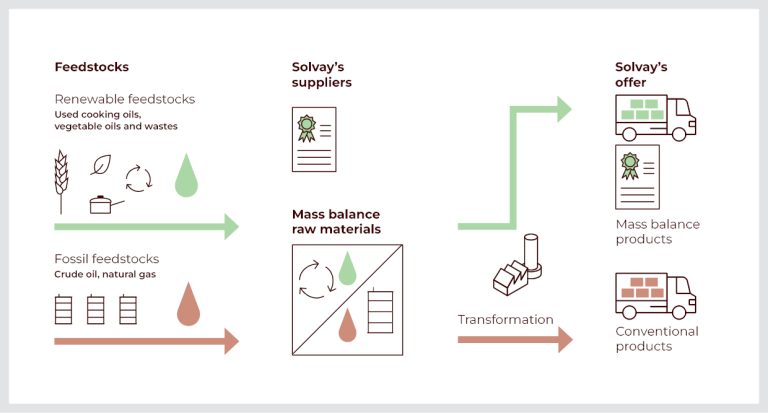
Solvay, a leading global supplier of specialty materials, has announced that the production of its hydroquinone (HQ) and hydroquinone monomethylether (MeHQ) in Saint-Fons, France has been accredited to comply with the mass balance accounting regime of the International Sustainability and Carbon Certification (ISCC) PLUS system.

HQ and MeHQ (also referred to as para-methoxyphenol, PMP) are frequently used as building blocks in the formulation of polyetherether ketone (PEEK), liquid crystal polymer (LCP) and other high-performance engineering thermoplastics. They also serve as raw materials in epoxy and polyester coatings, in polyurethane adhesives, and as inhibitors for monomer stabilization during production, storage and transportation. Further industrial application areas include the synthesizing of rubber chemicals, pharmaceuticals and agrochemicals. The vast majority of companies in those industries have set ambitious goals seeking to reduce the carbon footprint of their products and minimize fossil feedstock depletion.

“As a leading producer of HQ and MeHQ, offering mass balance certified grades exemplifies our strategic commitment to drive the change towards high-quality, sustainable solutions as the polymer and chemicals industry is transforming from a linear to a more circular economy,” says Jo Grosemans, Solvay Natural Growth Director.

Solvay’s certified renewable Hydroquinone MB and MeHQ MB products provide an instant and easily implemented drop-in solution for customers to replace incumbent fossil feedstock based synthetic grades, without any need for time-consuming homologation and sampling or other modifications in storage and production. The replacement of primary fossil resources by responsibly-sourced and mass-balance certified renewable feedstocks aligns with the Solvay One Planet roadmap to continuously improve the sustainability of Solvay’s own operations (Scope 1, 2 and 3), as it also helps customers reduce their Scope 3 emissions.

Learn more at www.solvay.com


#modernplasticsindia #plasticmagazine #indianmagazine #indianplasticmagazine #modernplasticsaward #ginujoseph #modernplastic #plasticindia #plasticnews #plasticrecycling #modernplasticsglobalnetwork #modernglobalnetwok #modernplasticsaward2022 #PlasticIndustry #solvay

A Very Special “Anniversary Gift”!

A Very Special “Anniversary Gift”!

  • World premiere: 470 H Comfort and Premium
  • Efficiency: 50 per cent less energy, CO2 cut by 12,000 kilogram
  • Starting signal: New generation of machines heralds the future

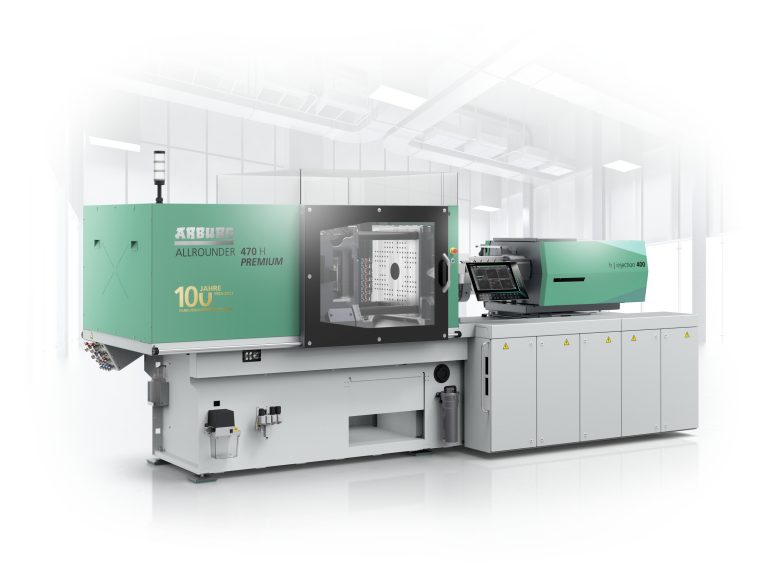
The 100-year anniversary of the Hehl family company has set the stage for Arburg’s latest piece of machine technology, the hybrid Allrounder 470 H. This anniversary machine delivers an impressive performance across the board: it saves energy, conserves resources, is production-efficient, user-friendly and reliable all at the same time! The perfect combination of electric clamping unit and hydraulic injection unit significantly reduces acquisition and operating costs as well as the carbon footprint. With “Comfort”, “Premium” and “Ultimate” performance variants, various injection units and a wide range of options, the new Allrounder 470 H machines can not only be precisely adapted to specific customer requirements – they also mark the start of a new generation of machines from Arburg.

“Electric drives are becoming increasingly important, not least in terms of energy efficiency,” points out Gerhard Böhm, Managing Director Sales and Service. “In the new Allrounder 470 H, we have created precisely the hybrid machine that users need today and in the future; a machine that has not yet been available on the market in this form.” The anniversary machine is particularly interesting to customers who are looking for an energy-saving alternative to hydraulic machines, for example, but who also want to benefit from their proven benefits.

Unique hybrid machine

“The new generation of machines incorporates many technical innovations that are only available from Arburg,” adds Guido Frohnhaus, Managing Director Technology & Engineering. “When designing the new Allrounder 470 H, we significantly enhanced our proven technology to optimise the energy footprint and reduce cycle times.” Contributing factors include the new oil management concept for which a patent is now pending, flow rate splitting for simultaneous movements of hydraulic secondary axes and the extended use of the Arburg servo hydraulic system.

50 per cent less energy, CO2 cut by 12,000 kilogram

Compared to a similar hydraulic machine, the energy footprint of the Allrounder 470 H is up to 50 per cent better, and depending on the application, up to 12,000 kilogram of CO2 can be saved each year. The new oil management concept also helps to conserve resources: For one thing, around 35 per cent less oil is needed, and for another, waste machine heat is used to pre-heat the oil. In addition, the required cooling water capacity is also between 50 and 70 percent lower! A reduction in the dry cycle time of up to 33 per cent results in significantly greater production efficiency.

Save time and money on service and maintenance

“User-friendliness and reliability are also important criteria for the new machine in order to save time and money on service and maintenance,” says Gerhard Böhm. “To achieve this, we incorporated the experiences and suggestions of our customers and service technicians directly into the design.” Gerhard Böhm adds that predictive maintenance is an important factor in this context and describes how the machine will automatically report that the oil filter is due to be changed soon, for example, so that this can be scheduled accordingly.

Less energy thanks to the Arburg servo hydraulic system

The Arburg servo hydraulic system (ASH), which has already proven itself in hydraulic and electric Allrounders, has been integrated in the Allrounder 470 H Comfort and Premium machines. ASH enables particularly energy-efficient and low-emission operation, as the speed-controlled, water-cooled servo motor continuously adjusts the drive system to the actual power requirement. This means, for example, that when the machine stops moving, the pump drive also stops and there are therefore no more idling losses. This saves up to 50 per cent of the energy, especially in processes with long cooling times. At the same time, however, the machine’s cooling requirements and noise level are also significantly reduced.

Flow rate splitting for simultaneous movements

Splitting the flow rate of the hydraulic pump makes it possible to drive an additional secondary axis at the same time. This technology has a positive effect on production and energy efficiency, particularly with the powerful hybrid Allrounder H machines. The machines consume less energy in total and cycle times are also reduced at the same time. These are two real advantages in combination that the hybrid series can offer over purely hydraulic machines.

Oil management saves resources

The new oil management concept with improved oil container, differential pressure-enabled oil filter housing and predictive maintenance for filter changes and oil pump inspection are aspects ensuring that the new machines are extremely reliable and operate with low energy and resource requirements. The warning message for a dirty filter is issued when the level reaches 75 per cent, which is early enough to enable proactive procurement of a new filter in good time. Result: no machine standstill. By attaching the filter element to the removable cover with a handle and making the filter housing easily accessible on the operating side, the machine’s designers have also made the filter housing more ergonomic.

The new oil management concept reduces energy and cooling water consumption and increases the service life of the individual components, in some cases considerably. Hot, contaminated hydraulic oil is separated from cold, clean hydraulic oil in the oil container. Together with the constantly filtered and cooled return volume and targeted flow guidance, the oil quality is improved with an oil volume that is around 35 per cent lower and the service life of the components is increased, thereby improving machine availability. The waste heat from the machine can be used to pre-heat the oil and does not flow back into the cooling water circuit as residual heat.

Increased user-friendliness

Additional design simplifications have been implemented to ensure that the machine is extremely user-friendly. A real-time Ethernet bus replaces the individual ribbon cables of the control modules, which increases the service and service life of the machines. The distribution of the hardware on and in the machine base has been completely restructured. The control manifold and hydraulic accumulator technology have been moved inside so that there is more space for peripheral equipment at the rear side of the 470 H Allrounder machines. The electrical, hydraulic and water media circuits have been separated, which simplifies assembly, service and conversion. Hydraulic and water circuits are located in the machine base. The pneumatic and central lubrication systems are on the operating side, which also means more flexibility with options on the rear side. This optimised distribution saves time during service and in daily use. Finally, arranging options and interfaces uniformly on the rear side of the machine also provides more clarity and order around the Allrounder H.

Anniversary machine as a first step towards the future

The new Allrounder 470 H machines in the “Comfort” and “Premium” performance variants will celebrate their world premiere as part of the exclusive anniversary events at Arburg’s headquarters in Lossburg in February 2023. The anniversary machines will then be on display live at the Anniversary Days from 8 to 11 March and at a host of Arburg events and trade fairs around the world. “Arburg is taking an important step towards the future with its Allrounder 470 H anniversary machine,” says Guido Frohnhaus, also offering a first glimpse into the future: “The new concept will be gradually implemented for other Allrounders in the hybrid Hidrive series – and the new generation of machines heralds great things for Arburg. It will be exciting to see what happens next!”

Further information about Arburg can be found at www.arburg.com


#modernplasticsindia #plasticmagazine #indianmagazine #indianplasticmagazine #modernplasticsaward #ginujoseph #modernplastic #plasticindia #plasticnews #plasticrecycling #modernplasticsglobalnetwork #modernglobalnetwok #modernplasticsaward2022 #PlasticIndustry #arburg


Bio-Based Flame Retardants for Bioplastics in Electrical Engineering and Electronics

Bio-Based Flame Retardants for Bioplastics in Electrical Engineering and Electronics

Researchers at the Fraunhofer WKI and the Fraunhofer IAP, in collaboration with industrial partners, have achieved initial success in the development of bio-based flame retardants in bioplastics. In the future, it could therefore be possible to utilize plastics in electronics and electrical engineering that consist of 100 percent bio-based materials. Within the framework of the research project, processing was tested by means of compounding, injection molding and additive manufacturing.

In order for bioplastics to be utilized in the fields of electrical engineering and electronics, they must – just like conventional plastics – fulfill high flame-retardancy requirements. Up to now, there have been no bio-based flame retardants available for use in the production of bioplastics. This is where a research project conducted by the Fraunhofer institutes WKI and IAP, in collaboration with industrial partners, came to the fore. One focus was on the development of a halogen-free flame retardant that can be used in the smallest possible quantities and therefore at low cost. In addition, the utilization of already available flame retardants was tested for use in compounding with non-reinforced biopolymers and with biopolymers that had been reinforced with wood particles.

“In order to achieve our goal of developing bio-composites for electrical engineering and electronics that are as close as possible to being 100 percent bio-based, we first had to redirect our focus towards the development of new, bio-based flame retardants. Syntheses of halogen-free flame retardants on the basis of bio-based alcohols and phosphorus-containing compounds were performed. We subsequently conducted numerous compounding trials using polylactic acid (PLA) as a matrix polymer,” said Dr. Arne Schirp, Project Manager at the Fraunhofer WKI, explaining the approach.

Newly tested: Electron-beam cross-linking binds flame retardants to PLA

For optimal flame retardancy, the homogeneous distribution of the flame retardants in the PLA biopolymer matrix is essential. The coupling with the biopolymer matrix should be achieved through the specially developed reactive flame retardants. Electron-beam cross-linking was adopted as a new procedure for attaching the flame retardants to the matrix. This is a non-thermal process that is widely used in the treatment of plastics, but which has as yet rarely been applied to bioplastics. The properties of the polymers are modified here by triggering cross-linking and coupling reactions that can be controlled via the irradiation dose. In the tests, also at the industrial partner BGS Beta Gamma Service, one additive proved to be effective in which the cross-linking reaction of the PLA verifiably outweighs the degradation caused by the electron beam. Other additives were also extensively tested. The results improve our knowledge regarding the additives – some of which were used for the first time – as well as the procedures involved in plastics processing and the effects of irradiation.

In the synthesis of halogen-free, novel flame retardants on the basis of bio-based alcohols and phosphorus-containing compounds, the focus on the production of fully esterified phosphates proved to be promising. Following optimization trials, compounding with PLA was realized, from which a formulation for the production of flame-retardant PLA compounds was developed. Flammability tests in accordance with UL94 resulted in a very good classification (V-0) at a test-specimen thickness of 1.6 mm.

During the project, industry partner Hager Electro was able to produce, amongst other items, a flexible adaptor made from flame-retardant polybutylene succinate (PBS) as a technology demonstrator.

Testing of conventional flame retardants: Compounding with PLA and PBS

The researchers at the Fraunhofer WKI and Fraunhofer IAP furthermore conducted tests into the compounding of non-reinforced biopolymers and wood-particle-reinforced biopolymers with halogen-free, currently available flame retardants. They were able to determine that these are procedurally suitable for PLA and bio-based polybutylene succinate (PBS) as base polymers. In the processing of PLA, the use of a heatable mold is required in order to achieve high crystallinities and, consequently, high thermal stability in the components. In addition to good flame retardancy, thermal stability is an important criterion for the application. The team succeeded in developing formulations for PLA and PBS which fulfill, to a large extent, the flame-retardancy requirements in the target applications and which can be processed via injection molding and additive manufacturing. This was demonstrated through various tests, including UL94, glow-wire testing, and tracking-resistance testing.

The processing results obtained through injection molding at the participating industrial partners are very encouraging. It was possible for technical flame-retardant components and parts – such as flexible adaptors for switch boxes and storage containers from the logistics sector – to be manufactured under near-production conditions. For the PBS-based materials, the cycle times lie within a range which is comparable to the petro-based plastics in use today.

In the experiments with the addition of wood particles, the researchers were furthermore able to demonstrate that these have a positive influence on the flame-retardant performance. The heat-release rates were significantly reduced through the addition of wood. Simultaneously, however, there was a shortening of the ignition times. For wood-fiber-reinforced, flame-retardant and crystallized PLA compounds, a maximum thermal stability of 140 °C to 160 °C was verified.

Testing of flame retardants in compounding with Bio-PA

Furthermore, the scientists developed flame-retardant formulations on the basis of bio-polyamides (PA) for injection molding. The formulations fulfilled the classification V-0 (1.6 mm thickness) in the UL94 test and, compared to reference materials, largely fulfilled the requirements with regard to the glow-wire test and for tracking resistance (CTI). The cross-linkability of three flame-retardant Bio-PA grades was investigated for the first time in electron irradiation. It was found that Bio-PA grade PA6.10 is the most cross-linkable, and Bio-PA grade PA11 the least. The researchers were also able to demonstrate here that the addition of wood particles results in a positive influence on flame-retardant performance. As in the experiments with PLA and PBS, heat-release rates were reduced by wood addition, with a simultaneous shortening of ignition times. For almost all PA-based formulations, irradiation caused an increase in tensile strength and modulus of elasticity, as well as a reduction in notched impact strength.

“The formulations on the basis of Bio-PA have so far only been processed on a small scale in the laboratory compounder and mini injection molding. Further research is therefore required in order to find out how processing can be achieved using twin-screw extruders and in injection molding. Optimization of the flame-retardant PA-based compounds should also be carried out with regard to the entire range of requirements from the electrical engineering and electronics sectors,” concluded Dr. Schirp.

https://mag.k-online.com/


#modernplasticsindia #plasticmagazine #indianmagazine #indianplasticmagazine #modernplasticsaward #ginujoseph #modernplastic #plasticindia #plasticnews #plasticrecycling #modernplasticsglobalnetwork #modernglobalnetwok #modernplasticsaward2022 #PlasticIndustry #magkonline

Suraj Logistix Adopts Innovative Solutions for a More Sustainable Cement Packaging

Suraj Logistix Adopts Innovative Solutions for a More Sustainable Cement Packaging

India is the second largest producer of cement globally and more than 90% of it is packed in woven sacks. Woven sacks are made of a single polymer family and are therefore already quite easy to recycle. Sustainability requirements for packaging products have increased worldwide and at the same time the need to develop better packaging products to protect the packed commodity has also gained further importance.

M/s Suraj Logistix Pvt. Ltd. (Suraj), a leading producer of PP woven sacks in India, has taken several initiatives in creating more sustainable woven sacks solutions for cement packaging. The Company has a strong commitment to the market it operates in and strongly believes in adhering to stringent quality parameters. The Company presently has an installed annual capacity of 50000 mt. of woven sacks.

Suraj Logistix has several W&H machines to produce high quality woven bags. Using innovative technology from these high-quality machines, Suraj Logistix has developed the following innovative products.

Lightweight AD PROTEX block bottom bags for cement packaging

Indian market is currently using 80-82g of block bottom woven bags. Using W&H machine technology and the W&H sack concept AD PROTEX LS, Suraj has produced 74g bags which are already successful in the Indian supply chain. The lighter weight bag is a cost advantage and makes the supply chain more efficient and sustainable.

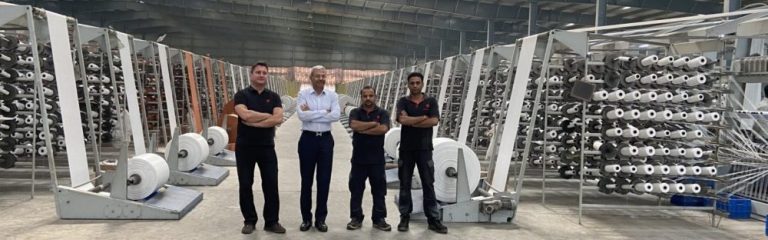
Prakash Khemani, director of Suraj Logistix, with the W&H engineering team at the company’s sack making plant in Jharkhand.

Lightweight sewn woven bags

The benefits of tape extrusion technology from W&H were also utilized by Suraj for reducing bag weight for sewn woven bags, bringing it down from 77g to 65g for 50 kg cement bags and these bags have also been successfully implemented in the Indian supply chain.

Bags with recycled materials

Recycling plastics to utilize used plastics back in the supply chain is a critical demand to help reduce the negative environmental impacts of plastic. Suraj Logistix has already developed both the AD PROTEX and sewn cement bags with up to 25% PIR. These bags are already active in the supply chain. They also plan to increase the production capacity of recycled bags.

“AD PROTEX block bottom bags are already a very sustainable solution, the bags are produced using hot air sealing and use no glue or threads. W&H’s Light and Strong technology is getting popular worldwide as it helps woven sacks solution become more sustainable and cost effective. We thank Suraj Logistix for partnering with us and investing in top-of-the-line technology. The results are excellent, and the developed products are a game changer for cement and bulk material packaging.” Says Mr. Shri Gupta, Managing Director W&H India.

“As a leading supplier of woven sacks, we feel responsible to make our solutions more sustainable and viable, we owe this to the industry and to the next generation. We are constantly working in this direction and the products developed are a result of extensive research and development. W&H technology certainly played a key role in our efforts. Also having complete turnkey woven sack plant from a renowned supplier helped a lot in these endeavors. We cherish our long-term partnership and look forward to work on more such developments.” says Mr. Prakash Khemani, Director, Suraj Logistix.

https://mag.k-online.com/


#modernplasticsindia #plasticmagazine #indianmagazine #indianplasticmagazine #modernplasticsaward #ginujoseph #modernplastic #plasticindia #plasticnews #plasticrecycling #modernplasticsglobalnetwork #modernglobalnetwok #modernplasticsaward2022 #PlasticIndustry #magkonline

Performance Meets Circularity: Fibre-Reinforced Plastics Become Recyclable

Performance Meets Circularity: Fibre-Reinforced Plastics Become Recyclable

Interview with Prof. Dr. Silke Rathgeber, Head of the Department of Physics, Institute for Integrated Natural Sciences of the Department of Mathematics / Natural Sciences, University of Koblenz

Recycled plastics are often less efficient than new plastics. But they can be upgraded – namely by using fibre composites. In turn, they make the plastics difficult to recycle. The All-Polymer project shows how both are possible: high-performance materials and a closed cycle.

Prof. Dr. Silke Rathgeber.

In an interview with K-MAG, Prof. Dr. Silke Rathgeber talks about the All-Polymer project, Röchling Automotive’s participation in it, and the extent to which fibre-reinforced plastics can save material and energy.

To what extent is there still a need to catch up when it comes to recycling fibre-reinforced plastics?

Prof. Dr. Silke Rathgeber: Secondary plastics often have poorer mechanical properties than primary materials. This means that the recycling of plastics is in most cases inevitably associated with downcycling. Plastic composites are generally not recyclable. This does not correspond to the goal of a resource-efficient Circular Economy, in which raw materials should remain in the cycle for as long as possible without loss of value. Nevertheless, due to their properties (low density, design flexibility, media stability, energy-efficient processing, durability), plastics offer many advantages in terms of resource efficiency compared to other material classes, such as metal or even wood, especially in lightweight construction, logistics, the construction industry, etcetera. The goal must therefore be to upgrade recycled secondary plastics through new design concepts and to process them into new products that are 100 percent recyclable.

A fibre-reinforced container ring from Infinex Holding GmbH.

In the All-Polymer project, you researched exactly that. What were the goals?

Rathgeber: The goal of All-Polymer is to add value to secondary plastics by means of cost- and energy-efficient unidirectional (UD) fibre-reinforced tapes (UD tapes), which are either applied to a component using an additive tape-laying process for local reinforcement or integrated into a component as inserts in injection moulding or compression moulding processes. Instead of using energy- and cost-intensive glass and carbon fibres, the innovative approach is to use plastic fibres. These can be produced in an extraordinarily energy-efficient way, are sorted according to type and are completely recyclable.

How did you go about your research?

Rathgeber: The potential to use recyclates from one application in another high-value application was investigated using use cases from different industries. Here we focused on important key industries such as automotive (Röchling Automotive), logistics (Infinex Holding) and agriculture, forestry and construction (Hahn Kunststoffe). The start-up A+ Composites produces UD tapes with the plastic fibre Dyneema, which are unique worldwide according to the fibre manufacturer DSM.

By investigating the tape-component adhesion as well as by means of mechanical characterisation, the requirements for the various applications could be identified and the UD tapes and component properties adapted. The connection between the component and the UD-Tape was made using a welding or pressing process, depending on the application. Both processes could be significantly improved through the cooperation and adapted to the requirements of the components. Stable processes leading to well adhering tapes were realised.

An examination of the ecological and economic framework conditions by the Technical University of Kaiserlautern (Chair of Sustainability Management) supported the technical development. The status quo of the participating companies in the Circular Economy could be recorded through an accompanying circularity assessment. In addition, potentials were identified through which the project participants can position themselves even more sustainably in the future. For one of the use cases, a life cycle analysis including a CO2 balance was also prepared.

Detail of a glass fibre reinforced underbody structure of Röchling Automotive SE & Co KG.

You were also provided with a prototype by Röchling Automotive. What was the basic idea here? What were the results of the investigations?

Rathgeber: Röchling Automotive was involved in the project as an associated partner. The company has set itself the strategic goal of acting in a sustainable and value-conscious manner. This includes supporting new developments in the plastics processing industry that aim at increased resource efficiency, recycling of plastics and more recycling. Several series of tests were carried out with different car parts. The aim was to use the fibre-reinforced tapes to compensate for a drop in performance of the components with recycled material and to reduce or make obsolete the proportion of long fibres or the insertion of glass or carbon layers by using completely polymer-based unidirectional fibre reinforcements. The feasibility could be demonstrated in a prototype.

To what extent can the results of the All-Polymer project contribute to more sustainability in the plastics industry?

Rathgeber: The technical, ecological and economic results have shown that several types of upgrading can be realised. By using fibre-reinforced tapes, the recycled content can be increased and a loss of performance due to the use of recycled material can be compensated for. This can open up new, demanding areas of application for components that are 100 percent recyclable. Another possibility is to reinforce components, which can thus be made lighter in construction. This not only saves material, but also energy in the life cycle of the product during every transport process.

https://mag.k-online.com/


#modernplasticsindia #plasticmagazine #indianmagazine #indianplasticmagazine #modernplasticsaward #ginujoseph #modernplastic #plasticindia #plasticnews #plasticrecycling #modernplasticsglobalnetwork #modernglobalnetwok #modernplasticsaward2022 #PlasticIndustry #magkonline

Traceless: Material Made From Plant-Based Polymers Protects Climate and Environment

Traceless: Material Made From Plant-Based Polymers Protects Climate and Environment

Interview with Dr.-Ing. Anne Lamp, CEO & Co-Founder, traceless materials GmbH

As early as 1908, textile engineer Jacques Brandenberger invented cellophane, a film made of natural polymers. However, the material was displaced by synthetic polymers with the development of numerous plastics. In the wake of the climate crisis, natural polymers are now coming back into focus as an alternative to fossil raw materials. traceless offers such an alternative.

Dr. Anne Lamp.

In an interview with K-MAG, Anne Lamp talks about traceless, the production of the material and its possible applications.

Dr Lamp, with traceless you have developed a new type of material. What is it about?

Dr Anne Lamp: traceless is a natural, plant-based plastic alternative. We use plant-based residues from the agricultural industry to produce a thermoplastic granulate that can be further processed using standard plastics processing methods. My motivation for developing the traceless material was to develop a biocompatible material according to the cradle-to-cradle principle – 100% bio-based, naturally compostable, free of potentially harmful substances, climate-friendly and resource-efficient in production and processing.

How exactly is the material produced?

Lamp: The basis for the production is plant-based raw materials – more precisely: a side stream from industrial grain processing, for example brewery or starch production. We have developed an efficient and simple process to harness the natural polymers in it. This is the secret behind our materials.

The challenge: to bring this technology to scale! At an industrial production level, the production is price-competitive with plastics, but we are not there yet. In the two years since our founding, we have built and commissioned a pilot plant and are currently producing our materials there. A larger demonstration plant is being planned. We want to start building it this year. In view of the great demand, time is pressing!

The traceless material is particularly suitable for disposable products.

For which products is the material particularly suitable? What is it not suitable for?

Lamp: traceless has thermoplastic properties, and can be processed in a similar way to many plastics – for example into moulded parts, films or paper coatings. Injection moulded parts are a great potential.

In general, a biocircular material is suitable wherever products easily end up in the environment or where conventional recycling is difficult. Of course, new materials like ours cannot yet replace all plastics, especially in the high-performance sector. The material is stable in storage, but when exposed to weather and moisture it begins to decompose – one of the advantages of the material, but one that makes it rather unsuitable for a garden chair, for example. Therefore, disposable products or packaging are of particular interest, where the enormous resistance of plastic is not necessarily needed.

Together with C&A, a small hook was developed that is produced by injection moulding.

Where exactly is the material used? Do you already have experience?

Lamp: Our first product on the shelves is a small hook that we developed together with the fashion retailer C&A. The injection-moulded part is used for this purpose. The injection-moulded part is used to hang up socks. C&A is planning to significantly reduce the amount of conventional plastics in packaging and came to us looking for solutions. Especially with a small part like the hook, recycling is difficult in practice, so a plastic-free solution was interesting here. After some development time, the launch of this innovative project then attracted a lot of attention, there was a lot of press and positive feedback. Many C&A customers, on the other hand, hardly noticed that the hooks were different, because apart from the amber appearance, they look quite similar. We consider that a success – our material should work just as easily as plastic!

Last year you won the Next Economy Award as part of the German Sustainability Award. What does this award mean to you?

Lamp: It was an important award for us because it recognises the core objective of our company: to drive the green transformation of our economy. Especially in the consumer goods sector, sustainability claims are omnipresent but usually difficult to verify. We see the fact that the high-calibre jury has recognised our business model as sustainable after a thorough examination as a great external confirmation that we are on the right track. Of course, such a prestigious award is also important for our customers – processors, brands and retailers. But it is also very clear that we have not yet reached the end. We want to produce one million tonnes of traceless material by 2030, and replace less sustainable materials in many applications – we still have a long way to go!

Until 2030, the start-up wants to produce one million tons of traceless material.


You also participated as an exhibitor at K 2022. How did the trade fair go for you?

Lamp: As a young company founded in 2020, it was our first K as an exhibitor. We don’t offer plastic, but a natural material, but it can be processed like plastic – so it was clear to us that we would not only participate as a visitor, but also as an exhibitor. We were one of the only suppliers of natural polymers, so the interest was correspondingly great! We had an unbelievably large number of exciting discussions with processors and brand owners, from which some promising new development projects have already emerged.

It was also a great opportunity to expand our network: On the very first day, I was able to meet German State Secretary Dr. Christiane Rohleder for a personal discussion together with some industry representatives. It was really exciting to enter into dialogue and to understand even better how our solution can contribute to mastering the challenges of the entire industry.

https://mag.k-online.com/


#modernplasticsindia #plasticmagazine #indianmagazine #indianplasticmagazine #modernplasticsaward #ginujoseph #modernplastic #plasticindia #plasticnews #plasticrecycling #modernplasticsglobalnetwork #modernglobalnetwok #modernplasticsaward2022 #PlasticIndustry #magkonline

“Unleashing the Natural Power of Mucilage for a Sustainable Future”

“Unleashing the Natural Power of Mucilage for a Sustainable Future”

Mucilage is a thick, viscous substance that is produced by many plants as a means of storing water and providing structural support. It is composed of long chains of polysaccharides, which are complex sugars that can be easily broken down by plant enzymes. These polysaccharides are referred to as mucilage polymers. Mucilage polymers are found in a wide variety of plants, including many common food crops such as oats, barley, and flax. They are also found in medicinal plants like Aloe vera and Marshmallow root. The properties of mucilage polymers can vary depending on the plant species and the conditions under which the plant is grown. One of the most important applications of mucilage polymers is as a thickening agent in food and pharmaceutical products. Because of their ability to absorb water and form a gel-like consistency, they are commonly used in products such as pudding, jellies, and syrups. They are also used in tablet coatings to improve the stability and release of active ingredients. Additionally, they are used in cosmetics and personal care products as a thickening agent and emulsifier. Mucilage polymers also have medicinal applications. They have been used for centuries in traditional medicine for their anti-inflammatory, soothing, and demulcent properties. These properties make them useful in the treatment of conditions such as sore throat, digestive disorders, and skin irritation. They are also being investigated as a potential treatment for certain types of cancer, due to their ability to inhibit the growth and spread of cancer cells. Another application of mucilage polymers is in agriculture. They can be used as a natural alternative to synthetic pesticides and herbicides. They can also be used to improve soil structure and fertility. They can be used as a natural bio-fertilizer, soil conditioner and plant growth promoter.

In addition to the aforementioned applications, mucilage has a wide range of applications in several other growing sectors. Here are a few additional examples: Textile Industry: Mucilage polymers can be used as a natural sizing agent for fabrics. The polymers can be used to coat the fibers of the fabric and provide a smooth, glossy finish. They can also be used to improve the strength and durability of the fabric. Paper Industry: Mucilage polymers can be used as a natural binder in paper production. Polymers can be used to bind the fibers of the paper together, making the paper stronger and more durable. Additionally, they can be used as a natural alternative to synthetic binders, which can be harmful to the environment. Construction Industry: Mucilage polymers can be used as a natural adhesive in construction. They can be used as a natural alternative to synthetic adhesives, which can be harmful to the environment. They can be used to bind building materials together and improve the structural integrity of the finished product. Pharmaceutical Industry: Mucilage polymers can be used as a natural excipient in the production of pharmaceuticals. Excipients are inactive substances that are used to form the final dosage forms of drugs. Mucilage polymers can be used as a natural alternative to synthetic excipients, which can be harmful to the environment. They can also be used to improve the stability and release of active ingredients. Cosmetics and Personal Care: Mucilage polymers can be used as a natural thickening agent and emulsifier in cosmetics and personal care products. They can be used to improve the consistency and stability of these products, and can also provide nourishing and moisturizing benefits to the skin. Bioplastics: Mucilage polymers can be used as a natural alternative to synthetic plastics. They can be used to make bioplastics, which are plastics made from renewable plant-based materials. These bioplastics are biodegradable and can be broken down by microorganisms in the environment. In summary, mucilage polymers are a versatile and abundant natural resource with a wide range of applications in various industries. They are being increasingly researched and utilized as a natural alternative to synthetic products due to their benefits to the environment and for their biodegradable properties.

Institute webpage: https://marj.ictmumbai.edu.in


#modernplasticsindia #plasticmagazine #indianmagazine #indianplasticmagazine #modernplasticsaward #ginujoseph #modernplastic #plasticindia #plasticnews #plasticrecycling #modernplasticsglobalnetwork #modernglobalnetwok #modernplasticsaward2022 #PlasticIndustry #marjictmumbaiedu

“Innovations in Electrochemistry: Exploring the Potential of Nano Sensors and Energy Storage Devices”

“Innovations in Electrochemistry: Exploring the Potential of Nano Sensors and Energy Storage Devices”

The field of electrochemistry has seen a surge in recent times, with researchers exploring new avenues to improve the efficiency and accuracy of various sensing techniques. Our research group is at the forefront of this development, working on two cutting-edge projects that are poised to make a significant impact in the field of environmental monitoring and energy storage. Our work focuses on the development of an electrochemical Nano sensor for heavy metal ions and NPK sensors using metal oxide, conducting polymer, and carbon nanotubes. In addition, we are also exploring the use of metal-oxide organic or non-organic frameworks for the development of binder-less supercapacitors and energy storage devices. These projects are a testament to the expertise and innovation of our research group, and we are confident that they will have a lasting impact in their respective fields.

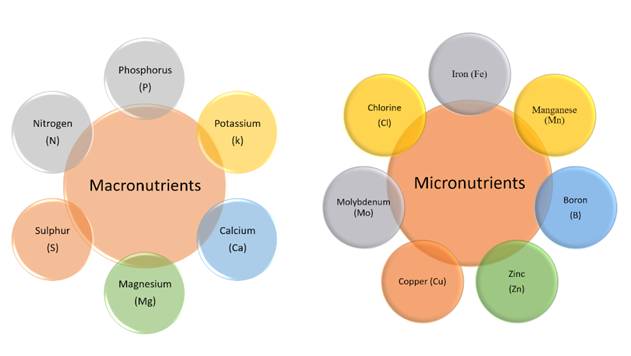
Our research group is working on electrochemical Nano sensors for heavy metal ion, NPK (Nitrogen, Phosphorus, and Potassium) sensors, using metal oxide, conducting polymer, and carbon nanotubes. The aim of our research is to develop low-cost, portable, and efficient sensors that can provide quick and accurate results for soil nutrient testing. The electrochemical sensors that we are working on use ion-selective membrane transducers to monitor major soil nutrients such as nitrate, phosphate, potassium, and other parameters such as soil pH and humidity.

Our team of experts is dedicated to exploring the potential of electrochemical sensors and incorporating the latest technologies to make our sensors more effective. The use of metal oxide, conducting polymer, and carbon nanotubes enhances the performance and accuracy of the sensors, providing farmers with reliable data to make informed decisions. We are committed to contributing to the development of the agricultural sector by providing innovative and efficient soil nutrient sensors. By using electrochemical sensors, we aim to make soil nutrient testing more accessible, cost-effective, and sustainable for farmers, leading to a healthier and more prosperous future for all. In addition, we are exploring and developing innovative solutions for energy storage and sustainability. Our current focus is on the development of a Metal-oxide organic or non-organic framework foamed Binder less supercapacitor and energy storage device. This technology has the potential to revolutionize the way we store and use energy, offering increased efficiency and versatility in energy storage systems. Our team of experts is using a multidisciplinary approach to design, synthesize, and characterize these materials and devices. With our extensive knowledge and experience in the field of energy storage, we are confident that our work will have a significant impact on the future of sustainable energy.


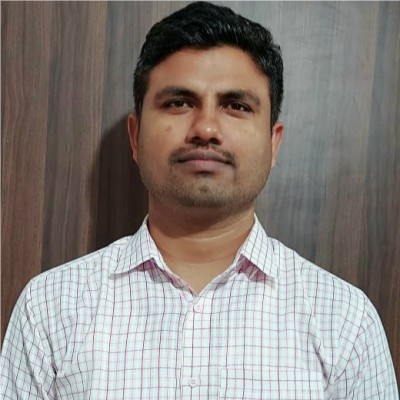
Short CV of Dr. D J Shirale

Dr. Dhammanand J. Shirale is a highly qualified and experienced educator and researcher in the field of Electronics. He holds a Ph.D. in Electronics from Dr. B. A. M. University, Aurangabad and a Master’s Degree in Electronics Science from North Maharashtra University, Jalgaon. He has taught at several prestigious institutions, including VIT University and Kavayitri Bahinabai Chaudhari North Maharashtra University, and has worked as a postdoctoral researcher at the University of California, Riverside.


Dr. Shirale’s research focuses on Nano-structured conducting polymers for Nano-sensors and biosensors. He has supervised Ph.D. students and graduate students and has co-authored two books on Modern Physics and Materials Science. He has received numerous awards and prizes for his research, including a Research Award from North Maharashtra University and a Postdoctoral Fellowship from the University of California.

In addition to his research and teaching, Dr. Shirale has also served in various administrative roles, including as a member of the Academic Audit of SOPS and the University Board of Studies at VIT University. He is also a member of several professional organizations, including the Semiconductor Society of India and the Centre for Crystal Research Center at VIT University.

Short CV of Rahul Salunke

Dr. Rahul Siddharth Salunke is an Assistant Professor at the Department of Electronics, School of Physical Sciences at the Kavayitri Bahinabai Chaudhari North Maharashtra University in Jalgaon, India. He holds a Ph.D. in Electronics from the same department and has been a researcher in the Nano-Structured Materials Processing Research Laboratory since 2014. His research focuses on nano-structured conducting polymers and carbon nanotubes for heavy metal detection. He has experience in fabricating Atomic Layer Deposition systems and is skilled in multi-disciplinary design, including embedded systems product design, automation, and environmental design.


Sort CV of Dr. Yogesh Nakate

Dr. Yogesh Tukaram Nakate is an Assistant Professor in Yeshwant College Nanded. He holds a Ph.D. in Electronics from Kavayitri Bahinabai Chaudhari North Maharashtra University Jalgaon, Maharashtra with a thesis entitled “Bio-derived Carbonized Materials and their Nano-composites for High-Performance Energy Storage Devices.” He has expertise in the synthesis and characterization of semiconducting nanostructures, functional materials, conducting polymers, and nanocomposite hybrid nanomaterials. He has worked on device applications for supercapacitors, batteries, sensors, optoelectronics devices, catalysis, and fuel cells. He has also carried out Density Functional Theory and theoretical investigations for materials science in various applications. Dr. Nakate is qualified in the National Eligibility Test (NET) examination for Assistant Professor and research in College and University of India, as well as the State Eligibility Test (SET) examination for Assistant Professor in College of Maharashtra State. He has worked on a Department of Science and Technology (DST) research project at North Maharashtra University. He holds a M.Sc. Electronics Science from the University of Pune with distinction and a B.Sc. Electronic Science from the University of Pune with first class. Dr. Nakate has received several awards and recognition, including the Laxman Deshmukh Prize for the highest total in M.Sc., and has been a senior wing NCC cadet (Air Force) at the college level. He has won the 2nd prize in the National Level Technical Festival “INTECHXICATION-2013” for Assembly coding at MIT Pune, and was a mentor for research projects at the state level competition. He was also selected for pre-incubation for “Designing low-cost programmable spin coater design with vacuums system” at KBCNM University Centre for Innovation, Incubation & Linkages KCIIL, Jalgaon. He has received support for his start-up “Design smart vigilance device” from SRTM University Incubation Center (CABII), Nanded.

Ms. Nikita Wadodkar

Working as a Research Scholar at Kavayitri Bahinabai Chaudhari North Maharashtra University, Jalgaon. My research interests include Electrochemical Sensors, Supercapacitors and energy storage devices, Nanomaterials.


#modernplasticsindia #plasticmagazine #indianmagazine #indianplasticmagazine #modernplasticsaward #ginujoseph #modernplastic #plasticindia #plasticnews #plasticrecycling #modernplasticsglobalnetwork #modernglobalnetwok #modernplasticsaward2022 #PlasticIndustry

Flex Medical Molding (Shenzhen) Co., Ltd Becomes First Site Within Flex to Achieve Plastics Injection Molding Medaccred Progam Accreditation

Flex Medical Molding (Shenzhen) Co., Ltd Becomes First Site Within Flex to Achieve Plastics Injection Molding Medaccred Progam Accreditation

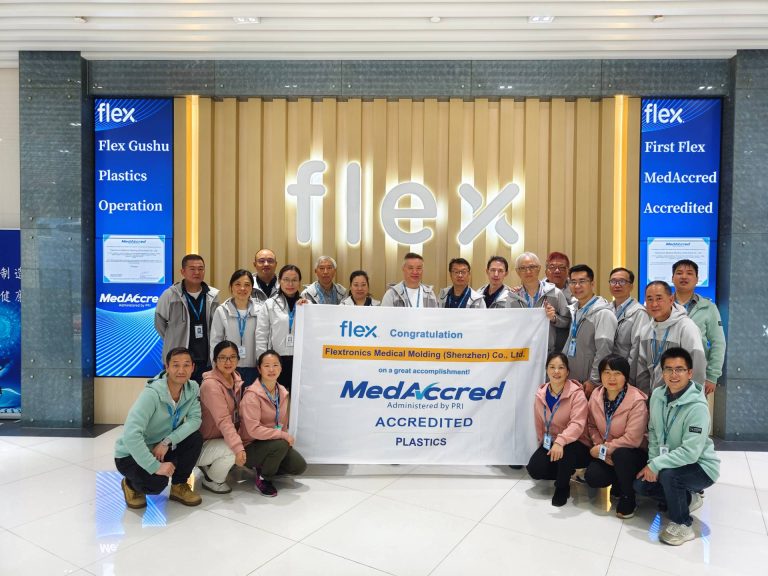
Flex Medical Molding (Shenzhen) Co., Ltd has become the first site within Flex to earn the prestigious MedAccred industry-managed program accreditation for Plastic Injection Molding following a recent successful audit.

The Gushu facility in Shenzhen, China, achieved the accreditation, after meeting the rigorous audit requirements set by MedAccred subscribing members – including Baxter, BD, Boston Scientific, Edwards Lifesciences, Johnson & Johnson, Medtronic, Philips, Roche Diagnostics and Stryker.

The MedAccred audit and accreditation program is unique as it is the sole industry-managed supply chain oversight program for key critical manufacturing processes in the medical device industry. The accreditation assures that critical manufacturing processes meet industry consensus requirements, leading to the production of high-quality end products, ultimately enhancing patient safety.

Bob Lizewski, Vice President, MedAccred, said: “I wish to congratulate Flex Gushu for its commitment to quality which enabled it to attain MedAccred Accreditation for Plastics Injection Molding. This is a major accomplishment which is globally recognized. The medical device industry has incorporated MedAccred into its approach for handling risk, as it demonstrates compliance to industry standards, customer requirements and best practices.”

Keith Hung, Vice President for Medical Operations, Asia, Flex, said: “Flex Gushu obtained the MedAccred Accreditation in injection molding process which can help to improve the quality of products and most importantly patient safety. We are the first Flex site to get the certification worldwide in injection molding. MedAccred Accreditation can be used as tool to enhance the process capability, manufacturing monitoring and process validation. We will utilize all resources available in our pursuit of this quality.”

Kenneth Leung, Senior Quality Director, Flex, said: “The MedAccred accreditation gave us the excellent chance to improve the processes through different tools that are recognized by the leading medical device companies, as well as to step up into a new level of quality control in our site. We plan to continue the MedAccred Accreditation process and seek for the improvement in the system and extend to other areas.”

Learn more at www.MedAccred.org.


#modernplasticsindia #plasticmagazine #indianmagazine #indianplasticmagazine #modernplasticsaward #ginujoseph #modernplastic #plasticindia #plasticnews #plasticrecycling #modernplasticsglobalnetwork #modernglobalnetwok #modernplasticsaward2022 #PlasticIndustry #MedAccred

Archroma Expected to Close Acquisition of Huntsman Textile Effects on 28 February 2023

Archroma Expected to Close Acquisition of Huntsman Textile Effects on 28 February 2023

Archroma, a global leader in sustainable specialty chemicals and solutions for industries such as textiles, packaging & paper, paints and coatings, today announced that it has secured all regulatory approvals required to complete the acquisition of the Textile Effects business from Huntsman Corporation (“Huntsman Textile Effects”).

Both parties expect the transaction, which was first announced on 09 August 2022, to close on 28 February 2023.

Archroma is a portfolio company of US-based private investment firm SK Capital Partners. Since its formation in 2013, Archroma acquired and successfully integrated the global textile chemicals businesses of BASF as well as BASF’s stilbene-based OBA business for paper applications, and M. Dohmen, a specialist in coloration for automotive textiles.

www.archroma.com.


#modernplasticsindia #plasticmagazine #indianmagazine #indianplasticmagazine #modernplasticsaward #ginujoseph #modernplastic #plasticindia #plasticnews #plasticrecycling #modernplasticsglobalnetwork #modernglobalnetwok #modernplasticsaward2022 #PlasticIndustry #archroma