SABIC and Solarge Showcase Development and Commercialization of Lightweight, Circular Solar Panels
The solar panels, developed in full collaboration between Solarge and SABIC, are fully circular and are 50% lighter than conventional panels
This innovative collaboration has seen engagement at every stage of the process from initial development to installation to the industrial scale up of the product for market entry
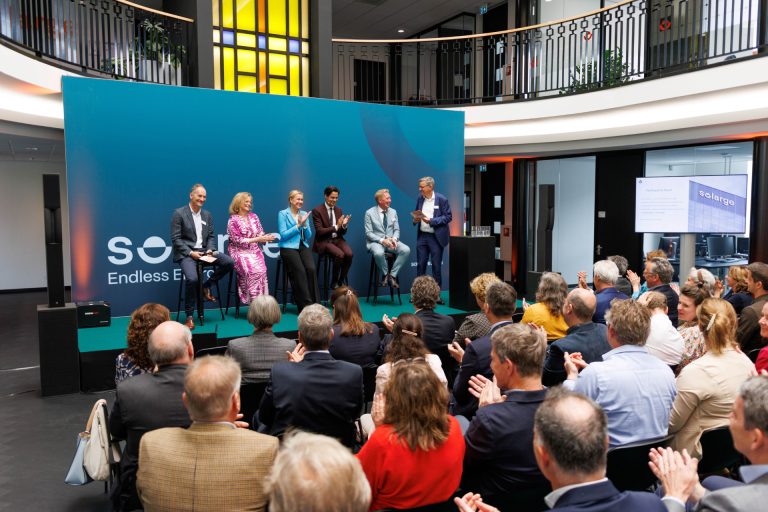
SABIC and Solarge presented the unique collaboration at the opening of Solarge’s new production facility in Weert, The Netherlands, attended by Dutch and European Commission officials
SABIC, a global leader in the chemical industry, has participated in the successful development of lightweight, circular photovoltaic (PV) panels in conjunction with Solarge, an innovative manufacturer of circular lightweight solar panels. This collaboration was showcased during the opening event of Solarge’s new production facility in Weert, The Netherlands on 22nd May. Representatives from SABIC and Solarge, along with other industry leaders, attended the ceremony that was also attended by Rob Jetten, Dutch Minister for Climate & Energy, and Kadri Simson, European Commissioner for Energy.
Lada Kurelec, General Manager, PP & E4PS, at SABIC, spoke at the event and highlighted; “As a part of our sustainability strategy to support the energy transition, SABIC prioritizes collaboration and innovation together with industry leaders in their fields. We are proud to be a trusted partner for sustainable and inclusive growth and are pleased to work with Solarge on this important project in the development of circular solar panels. We look forward to building on this partnership and continuing our efforts in driving sustainability through collaboration and innovation on the road to carbon neutrality.”
Jan Vesseur, CEO of Solarge, said: “This new production line enables us to realize the most sustainable solar panels in a solid volume and contribute to accelerating of the energy transition in the most sustainable way possible. The collaboration with SABIC in the development of this product has been crucial for us and exemplary in its execution.”
SABIC worked closely with Solarge to develop a low carbon footprint solar panel made from SABIC® PP (polypropylene) compounds. Today, many building roofs cannot sustain the weight of the current glass PV panels, but SABIC PP Compounds used in these solar panels provide more than 50% weight reduction. In addition, PV panels made with this material result in more than 25% carbon footprint reduction and can be reused within their own production chain after 25 years. These features attract a high demand for application on industrial roofs as customers in the commercial and industrial building segment seek lighter and more energy efficient alternatives.
The initial concept for the lightweight, circular PV panels was developed and patented by SABIC and Solarge. In this unique collaboration with Solarge, SABIC developed differentiated polypropylene materials to enable the Solarge lightweight solar panel to meet performance requirements. SABIC then worked together with Solarge in the further application development and testing of the concept, installation, and supported the industrial scale up of the product for market entry.
The SABIC PP compounds used in these panels will be produced at SABIC’s polypropylene compounding site in Genk, Belgium. As the next exciting step, in this ongoing journey, SABIC has already installed 50 of these lightweight PV panels on the roof of this manufacturing facility in a pilot project, marking the start of a full-scale roof installation of nearly 5,000 panels during 2023. This also reaffirms SABIC’s commitment to drive the energy transition toward renewable power through both material applications and reducing the manufacturing carbon footprint.
Lightweight solar panels from Solarge made with SABIC PP Compounds mounted on the roof of SABIC’s ICEhouse at the World Economic Forum General Meeting in May 2022.
Borouge Appoints Dr. Hasan Karam as Chief Operating Officer
Borouge Plc (ADX symbol: BOROUGE / ISIN: AEE01072B225), a leading petrochemical company that provides innovative and differentiated polyolefin solutions, announces the appointment of Dr. Hasan Karam as Chief Operating Officer (COO) at Borouge effective 1 May 2023. Dr. Karam will be succeeding Mr. Louis Desal who will be moving on from Borouge after 6 successful years leading the operations of the business. Mr. Desal will assist Dr. Karam in a transitional capacity to ensure business continuity and enable seamless transition before returning to Borealis to pursue another role.
Dr. Karam has 29 years’ experience in refinery operations and has held senior positions in various capacities at ADNOC Refining, steering the growth and transformation of the organisation’s performance-driven culture. In his most recent role as Vice President of Plant Operations at Ruwais Refinery, Dr. Karam was instrumental in developing the site to one of the largest refinery complexes in the world and contributing to the commercial performance and sustainable growth of its operations.
Acme Disys: India’s Leading Manufacturer and exporter of Injection Pet Preform, Caps & Closures Molds
Introduction
Acme Disys was established in 2002 having its Manufacturing & Sales setup in New Delhi. Acme Disys has 70+ Employees at its Manufacturing location with Modern Manufacturing facilities equipped with In-house Design & Engineering facilities to manufacture High Performance Injection Molds through Ultra High Precision Machine Tools from world renowned Japanese & German Companies. Acme Disys also has In-house Injection Mold testing facilities equipped with High Performance Injection Molding Machines from reputed Global Companies. Acme Disys currently sells its Injection Pet Preform, Caps & Closures Molds across India & Exports to 30+ Countries in the SAARC, Middle East, Africa, Australia,Turkey,Cyprus etc.
In-House Services
Acme Disys provides Inhouse Preform & Cap Product designs, Prototyping & Testing of the Molds. In addition to this comprehensive In-house customer training is provided for Mold Assembly, Maintenance & Process Optimization.
Recent Trends
Acme Disys main focus is in PET Preform which is likely to grow as the Consumer convenience amongst the Urban & Rural Population is growing.Customers are looking at New Designs & Creative Packaging to attract Consumers with their End Products. High Output (Higher cavitation), Hot Runner Molds are Key trends apart from Light weighting & Design Innovation + Design Creativity.
Dispensing Pump – 1st Company in India develop Full Set
Bubble Top Caps – up to 8 – 32 Cavities
New Applications
Acme Disys is making its foray into the New Application Segment Viz.
Medical Devices
Thin Walled Containers
Future Vision
Acme Disys will strive to be a Preferred Supplier of High Performance Injection Molds in the below Application Segments.
PET Preforms
Caps & Closures
Medical Devices
Thin walled containers
With these High Performance Mold Offerings, Acme Disys will ensure that the Indian Plastic
Molding fraternity shall source Molds in India as well Export Globally.
Acme Disys aspires to grow 3x in the next 5 Years.
Key Highlights & Achievements
In recent times Acme Disys have executed several Industry Leading Projects – to name a few….
Supplied a Mineral Water Preform Project 48C Fully Hot Runner High Speed Mold in East Africa
Most Lightweight Preform- 6.5 gm (200ml), 9 gm (500ml) & 16.5 gm (1 litre) for Water Bottle Preform
Most Lightweight Injection Mold Cap- 1 gm (26mm Neck)
High Production Industry Best Preform Solution- 48C Fully Hot Runner System for end user- PATANJALI, IRCTC (Rail Neer) & PARLE
World’s First Commercial Mold for Preform with Handle to cater the Australian Market for 2 Litre & 3 Litre Juice Bottle. (PATENT by End User)
World’s First Largest 12 Cavity Preform Mold for 5 Gallon (20 Litre) Preform Weighting 750 gm for water 55mm Neck Bubble Top.
World’s Largest Wide Mouth Jar Mold 12 cavity 110mm Neck for African Market.
India’s First Largest Preform Mold – 72 Cavity
Dispensing Pump developed indigenously & executed becoming the 1st Company in India to offer a complete solution for Dispenser.
NORMA Group Expands Water Management Production in the USA
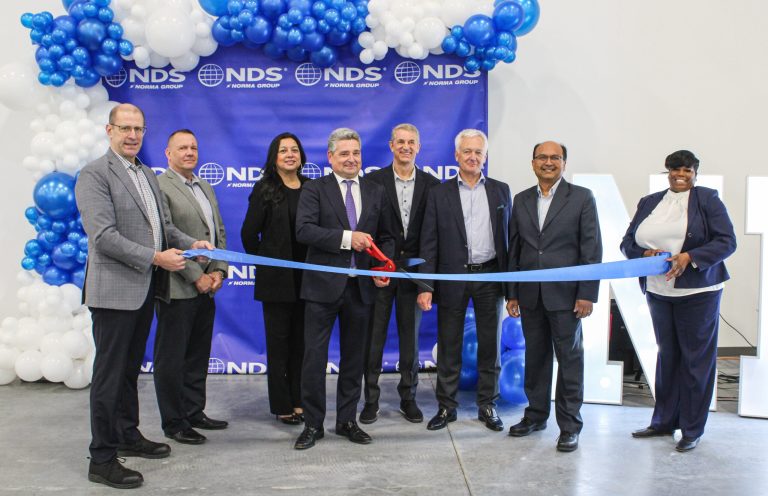
NORMA Group is expanding its production capacities for water management solutions. The US subsidiary NDS, which specializes in irrigation and rainwater management, opened a new plant on May 4th. The site is located in Lithia Springs, Georgia, near Atlanta. At the new production site, NORMA Group manufactures valve boxes for irrigation systems and products for draining rainwater.
The CEO of NORMA Group, Miguel Ángel López Borrego, said at the opening ceremony: “The scarcity of water in different parts of the world clearly shows that we have to use this resource responsibly. We will continue to grow our water management business globally. We want to grow in absolute numbers and also increase the share of the water business in total sales.”
The new facility in Lithia Springs has a production area of 10,900 square meters. Initially, 40 employees will work there; within the next three years, the workforce is to increase to 120 people. Products manufactured at the Lithia Springs facility are sold to various wholesalers and retailers.
“This new location is another milestone in the global expansion of our water management business,” said Samir Shah, President Americas and globally responsible for NORMA Group’s water business. Mike Gummeson, President of NDS, added, “The focus of the plant concept is on product quality, throughput, automation and flexibility. This enables us to effectively support our planned growth and at the same time offer our customers products of the highest quality with good service.”
NORMA Group has been expanding the business with connection solutions for water management since 2012, including through acquisitions such as the acquisition of NDS in 2014. In 2022, NORMA Group generated 24 percent of its consolidated sales of around EUR 1.2 billion with water management -products.
NDS irrigation systems enable private homeowners as well as corporate clients such as contractors and landscape architects to use water more efficiently. NDS drip irrigation systems can save up to 70 percent water compared to conventional irrigation methods.
For more information about the company, visit www.normagroup.com
Arburg: Energy Advice and Other Measures Significantly Reduce Costs
Cost-effectiveness and efficiency have always been Arburg’s guiding principles. Due to the huge price increases, the topic of energy in particular has rapidly gained in importance throughout Europe. This is one of the reasons why the machine manufacturer from Lossburg, Germany, launched its “Action Plan: Energy” in March 2023. The plan is based on individual energy consultations including energy measurements at the customer’s premises. It highlights many specific options for optimising energy requirements throughout the entire production process, thereby significantly reducing costs in injection moulding production.
“The importance of energy costs has increased at lightning speed in the injection moulding sector in 2022. We have responded to this with a professional action plan,” explains Gerard Böhm, Managing Director Sales and Service at Arburg. “The history of our company and our current activities show that we are great at saving energy, both in terms of our products and our in-house production. We allow our customers worldwide to benefit fully from this knowledge. With our in-depth expertise, machine upgrades and digital services, we support injection moulding plants and make them strong and resilient with regard to energy efficiency.”
Sharing knowledge: Comprehensive energy advice
Anyone who wants to make significant energy savings in their injection moulding parts production can receive specific and comprehensive advice and training from Arburg as part of its “Action Plan: Energy”. Initial contact can be made via the responsible sales staff or by e-mailing energy@arburg.com.
After a kick-off via video conference, the experts go to the customer’s premises, where they follow a 5-step plan. In order to obtain meaningful data, step 1 is to determine the energy requirement in a real production environment. For example, measuring power and compressed air leakages can reveal potential energy guzzlers (Fig. 2). The measurement data is used for subsequent advice on process optimisation directly at the machine. This is followed by new measurements to evaluate the success of these measures. In step 2, the machine fleet is classified and individual retrofits are considered. Step 3 comprises process and cycle time optimisations with the aim of increasing output and reducing specific energy requirements. In steps 4 and 5, the experts deal with the “dos and don’ts” of moulds and peripheral equipment.
The hybrid Allrounder 470 H milestone machine sets the stage for a new type of machine technology that is particularly good at saving energy and conserving resources, and is efficient in production, user-friendly and reliable.
At the end of the action plan, there is a detailed consultation and a final discussion with the customer, who is given an individual list of measures with all the information and specific recommendations on suitable retrofits, digital solutions and, depending on the region, the use of possible subsidies.
Learning something new: Special energy efficiency courses
Arburg offers special courses on energy efficiency at its Training Center in Lossburg as well as directly at the customer’s premises. As part of an information seminar, for example, maintenance staff and production managers learn how they can make their work even more energy efficient. The seminar explains, among other things, which criteria can be used to select the most energy-efficient injection moulding machine, determine the specific energy requirement of an Allrounder and exploit savings opportunities in the injection moulding process. In addition, the Arburg experts provide practical training for machine operators on request, directly on their Allrounders on site.
“100 years of the Hehl family company”: Guido Frohnhaus (left), Managing Director Technology & Engineering, and Gerhard Böhm, Managing Director Sales and Service, presented the world premiere of the hybrid Allrounder 470 H milestone machine with new machine technology in Lossburg in February 2023.
Documenting: Energy data for certification
Arburg can provide documented and traceable consumption measurements for new machines for businesses that require detailed energy data for certification (Fig. 4). This service has three components:
Basic: Measurement of the energy requirement in the operating phase of the Arburg injection moulding machine and robotic system.
Extended: In addition to the operating phase, the energy requirement in the start-up and cooling phases is determined, including peripheral devices.
Complete: Additional measurement of water and compressed air consumption, flow rate and cooling capacity.
If required, Arburg provides documented and traceable consumption measurements and energy data for certification.
Saving energy: Upgrades and retrofits
Existing Allrounder injection moulding machines of all sizes and series can also be retrofitted to optimise their energy use. Depending on the application, it may be worthwhile to fully insulate the cylinder, which ensures that process heat losses are minimised and heating is fast. With this measure, the energy requirement in relation to heating energy can be reduced by up to 40 per cent, depending on the process.
For machines made in 2011 or earlier (with IE1 and older motors), an upgrade with energy-efficient air- and water-cooled IE3 motors can save up to ten per cent of energy, which means a return on investment (ROI) of only 1.5 to 2 years, depending on the machine.
As part of the “Action Plan: Energy”, Arburg experts determine the energy requirements of injection moulding production at the customer’s premises. This measurement data forms the basis for intensive consultation and an individual list of measures.
For newer Allrounders, retrofitting with the Arburg energy saving system AES can also be considered. For example, assuming a cycle time of 50 seconds and 6,000 hours of production per year, a hydraulic Allrounder 270 S can save around 4,800 euros with electricity costs of 40 cents per kilowatt hour. With an Allrounder 820 S and 50 cent electricity costs, this measure even reduces production costs by around 21,000 euros per year. In general, the payback period for an investment of this kind depends on the energy costs, machine and process.
Intelligent support: “EnergyAssist” controller function
The Gestica machine controller actively supports the operator – including when it comes to energy optimisation. The assistance function “aXw Control EnergyAssist” brings together all the essential functions for the heating zones of the plasticising cylinder and the mould hot runner, for example, and ensures that all heating zones are switched on and off in an optimised manner. This can reduce the energy requirement in the heating phase by up to 30 per cent.
With the mobile ALS functions, users can always keep an eye on production, and its energy requirements can also be visualised and evaluated.
Energy-efficient working: New Allrounder 470 H
Arburg has answered the question of what an energy-optimised machine of the future will look like with its milestone machine: “When designing the hybrid Allrounder 470 H, we made significant advances to our tried-and-tested technology in order to optimise the energy footprint and reduce cycle times,” emphasises Guido Frohnhaus, Managing Director Technology & Engineering at Arburg. “There are many technical innovations in the new machine generation that are only available from Arburg”. These include the new oil management concept, flow splitting for simultaneous movements of hydraulic secondary axes and the extended use of the Arburg servo hydraulic system. The new machine saves energy, conserves resources, and is efficient in production, user-friendly and reliable at the same time.
This is also made possible above all thanks to the combination of electric clamping unit and hydraulic injection unit. The electric drives reduce the energy requirement and hence the operating costs and carbon footprint. The high-quality hydraulic injection unit lowers the purchase costs and is also very robust.
The “aXw Control EnergyAssist” function in the Gestica controller reduces power consumption and power peaks during heat-up. The result is a reduction in the energy requirement of up to 30 per cent.
A comparison of the hybrid Allrounder 470 H milestone machine with similar hydraulic machines produces some impressive figures:
A 50 per cent smaller energy footprint
Up to 12,000 kilograms less CO2 per year
Around 35 per cent less oil – preheated by machine waste heat
A cooling water capacity that is between 50 and 70 per cent lower
Dry cycle times reduced by up to 33 per cent, resulting in significantly greater production efficiency
The bottom line is that the Allrounder 470 H significantly reduces acquisition and operating costs as well as the carbon footprint.
Comparing Allrounders: Energy labels in the customer portal
Digital products and features help make production processes more energy efficient and create transparency – at any time and around the clock. The arburgXworld customer portal plays an important role here. New features in the “MachineCenter” app include energy labels: each Allrounder is assigned to one of three energy efficiency classes. In addition, its carbon footprint is displayed from the creation phase to delivery to the customer.
Arburg’s comprehensive energy advice follows a 5-step plan based on energy measurements in a real production environment at the customer’s premises.
Depending on the machine, the customer portal also provides tailored suggestions for energy optimisation, e.g. through retrofits. The new equipment comparison option helps users quickly and efficiently find the best Allrounder for their current injection moulding process during production planning. Another tried-and-tested tool for determining the most efficient solution is the Arburg cost effectiveness calculator, which uses important parameters to compare the various options and determine unit costs and the payback period, for example.
Visualising the energy requirement: ARBURG host computer system ALS
The host computer system ALS also makes a significant contribution to increasing the production and energy efficiency of machines and systems. Arburg’s proprietary manufacturing execution system (MES) allows users to digitally plan and control their entire plastic parts production process and track all relevant information.
Mobile ALS functions enable resource-saving paperless production. Their energy requirements can be visualised and evaluated via ALS. In the information and machine terminal, the total energy requirement of the current job, the energy requirement per 15 minutes or the average output per 15 minutes can be displayed.
Measurements of power and compressed air leakages reveal energy guzzlers.
Further information about Arburg can be found at www.arburg.com
Mondi to Modernise Its Dynäs Kraft Paper Mill in Sweden
Project includes installation of new and upgraded machinery to improve energy and production efficiency at Mondi Dynäs in Sweden.
Investing in the future of the mill to meet customer demand for sustainable packaging solutions.
Mondi, a global leader in sustainable packaging and paper, is upgrading its Dynäs pulp and paper mill in Sweden. The modernisation programme will increase efficiency and further improve the overall environmental performance of the mill, positioning it well to continue meeting customer demand for sustainable paper and paper-based packaging solutions.
The Dynäs mill produces high-quality sack and speciality kraft papers, used for a variety of paper-based packaging solutions for industrial and consumer industries, and is an important part of Mondi’s Flexible Packaging business. The project includes the installation and upgrade of machinery and equipment such as a new cooking plant and bark boiler, which will improve the mill’s energy efficiency. Upgrades will also further reduce air and water emissions, and result in better wood utilisation at the mill.
Roman Senecky, COO Mondi Kraft Paper, says: “The modernisation programme at Dynäs represents a significant investment in the future of this well-established mill. By producing sustainable sack and speciality kraft paper, we continue to contribute to our MAP2030 goals and meet customer demand with innovative solutions such as Advantage StretchWrap, an alternative to plastic film pallet wrapping, and Advantage MF EcoComp, used for high strength packaging like paper bags for wet organic household waste. The mill supplies paper across Europe and plays an important role in the local community.”
The Swedish Land and Environmental Court (Mark-och Miljödomstolen) approved Mondi’s works application in March 2023. Construction is expected to be completed by the end of 2026.
SABIC Expands ULTEM Portfolio With Colorable, High-Flow, Reinforced Grades for Connectors and Other Thin-Wall Components
SABIC, a global leader in the chemical industry, today announced the expansion of its high-heat ULTEM resin portfolio with new glass fiber-reinforced grades that deliver high flow, custom colorability and high strength, and are well suited for thin-wall components like fiber optic and electrical connectors. New low-viscosity ULTEM 2120, 2220 and 2320 resins exhibit exceptional flow characteristics that empower designers to create miniaturized, high-precision components with complex geometries. For molders, the high flow capabilities of these materials offer the flexibility to lower injection pressures or mold thinner walls at the same pressure, while avoiding short shots. In contrast to other high-flow glass-reinforced ULTEM materials, these new grades maintain the existing color range of existing ULTEM 2X10/2X00 resins and can be custom colored for connector identification and product branding. Furthermore, compared to competitive polysulfones, the ULTEM 2X20 grades can produce more-durable and -reliable parts, thanks to their higher mechanical strength.
To advance sustainability, the new ULTEM resins are available as ISCC PLUS certified renewable versions. In addition, they do not contain per- and polyfluorinated substances (PFAS) intentionally added during the SABIC manufacturing process and are not expected to contain unintentional PFAS impurities.
“We developed these new ULTEM resins to meet evolving requirements for exceptionally small and intricate connectors and other components,” said Paul Nugent, senior business manager, ULTEM Americas, SABIC. “The new grades address customer needs for greater design and aesthetic freedom, increased processing flexibility and cost-effectiveness, and reliable performance. We’re confident that these specialty materials can add value across multiple industries, from fiber optic communications to consumer electronics, helping to address rapid technological advances in connectivity and data management.”
High Flow to Enhance Design and Production
Even with glass fiber loadings of 10, 20 and 30 percent, respectively, ULTEM 2120, 2220 and 2320 resins exhibit low viscosity, enabling compact designs with thin walls that expand available space within or surrounding the part. Compared to incumbent ULTEM resins with enhanced flow, these materials demonstrate higher spiral flow properties of up to 36 percent.
In addition, high flow can reduce processing time and production cost. By delivering potential reductions in injection pressure of up to 35 percent, the ULTEM resins can help customers overcome molding equipment limitations. Improved flow can also permit processing temperature reductions that may cut energy costs and shorten cooling times up to 10 percent for faster throughput. Finally, high flow helps to mitigate issues such as premature solidification of the resin (freeze off) and visual defects.
Colorability for Identification and Differentiation
The ULTEM 2X20 resins can be custom colored to provide critical identification of the type and speed of fiber optic and electrical connectors, or to enhance the appearance and brand identity of components. SABIC’s ColorXpress Services can develop and precisely match colors and effects, and offers customers a library with thousands of colors that are searchable online.
New Additions to SABIC’s High-heat Materials
Like all ULTEM resins, which are amorphous polyetherimide (PEI) materials, the new high-flow, colorable grades feature an excellent balance of high-performance properties. These include long-term high-heat resistance, inherent flame retardance, and chemical, dimensional and hydrolytic stability. SABIC’s extensive portfolio of high-heat materials include ULTEM, EXTEM and SILTEM resins.
Hubergroup Print Solutions Restructures Its UV Poly/tin Offset Portfolio
Everything from a single source – with this aim in mind, the international ink specialist hubergroup Print Solutions has revised and strengthened its UV offset portfolio for non-absorbent substrates. The portfolio includes printing inks, varnishes, and fountain solution additives that are optimally matched to each other and thus enable a smooth printing process. Thanks to intensive development work, the globally available food and non-food ink series NewV poly (MGA) and NewV tin (MGA) as well as the varnish series NewV lac (MGA) are now also formulated to be sensorially neutral and PTFE (polytetrafluoroethylene)-free.
“Our customers are our focus, so it was important to us to provide printers with a well-matched and globally available portfolio with the best printing performance.” With these words Roland Schröder, Product Manager UV-Offset at hubergroup, explains the new positioning as a complete range, which does not only include inks but also varnishes and fountain solution additives.
But even beyond that, there are some changes in hubergroup’s UV offset portfolio: for example, the ink and varnish series are now formulated PTFE-free in order to comply with the regulations of the American market as well as the requirements of important brand manufacturers and to be prepared for future specifications in other global markets. In addition, the NewV lac series is now free of benzophenone, a substance that is considered controversial due to its potential carcinogenic effects. Last but not least, there is a new NewV tin LED series for metal packaging, which includes UV inks and varnishes for LED drying.
According to hubergroup, the common feature of all products is very good reactivity and adhesion. Roland Schröder sums up: “With this repositioning, we have designed our portfolio future-oriented. At the same time, however, it was important to us that printers can continue to rely on a stable printing process with high-quality printing results. Our international service staff are therefore available for our customers with their expertise at all times and accompany the complete project handling from the idea to implementation and continuous further support.” Tools such as the company’s own HDCC colour management system, which guarantees customers the same colour all over the world, round off the service offering.
Covestro drives forward technologies for recycling
Co-founder of planned research center for the chemical industry
In view of the upcoming UN conference which aims to develop a legally binding agreement on plastic pollution, Covestro is emphasizing the need for more innovative recycling technologies, required to boost the currently low recycling rates of used plastics. Covestro has already achieved success with the development of its novel chemical recycling. In addition, the company plans to establish a global research center for processing plastic waste together with six other chemical groups.
In Paris, from May 29 to June 2, another round of international negotiations (“INC-2”) will focus on drafting a global agreement against plastic waste pollution, which should be in place by the end of 2024. The international community initiated the process in spring 2022 at the United Nations Environment Assembly. According to the Organization for Economic Cooperation and Development (OECD), around 22 million tons of plastic waste, including microplastics, enter the oceans and the environment each year1. Without countermeasures, the annual amount could double by 2060.
“Resource consumption is on the rise and mountains of waste are growing – with negative consequences for the environment and climate. We urgently need to take countermeasures here and fundamentally change consumption habits and production patterns,” emphasizes Dr Markus Steilemann, CEO of Covestro. “We need to make the circular economy a reality, and recycling is crucial here, in addition to the production of long-lasting and resource-conserving products. Covestro can and wants to play a central role in this.”
Joint research center for processing plastic waste
Currently, the global recycling rate of plastic waste is only nine percent2. But with more recycling on an industrial scale, one study suggests that nearly 60 percent of plastic production could be met by recycled materials by 2050, reducing petroleum consumption by 30 percent3. This is where the World Economic Forum comes in, through its Low Carbon Emitting Technologies initiative, which promotes collaboration on a global scale to accelerate the development of low carbon emitting technologies for chemical production, including processing plastic waste. Seven international chemical companies, including Covestro, have signed a collaboration agreed to establish a research and development center together with the Dutch research institute TNO. Initial work will focus on the sorting, cleaning and conditioning of plastic waste to make it suitable for subsequent recycling technologies.
One key problem is that some types of plastic cannot be recycled, or can hardly be recycled at all. That is why Covestro is pushing the development of chemical recycling as an additional method. This involves breaking down used plastic into its chemical components so that new material can then be produced from these molecules.
Breakthrough for mattress foam recycling
Covestro has achieved a technological breakthrough for the chemical recycling of soft foam for mattresses. So far, around 40 million of these end up in waste incineration plants or landfills each year in the European Union alone4. With the new “Evocycle CQ-Mattress” process, the two central foam components can now be recycled. At the company’s Leverkusen site in Germany, this process is being further developed in a pilot plant with the prospect of industrial use.
The chemical recycling of rigid foam for insulating buildings and refrigeration appliances is the focus of a Europe-wide research project CIRCULAR FOAM initiated in 2021 and coordinated by Covestro. Here, 22 partners from nine countries are working together. If the material cycle can be closed, around one million metric tons of waste and three million metric tons of CO2 emissions per year could be saved in the European Union from 2040.
In order to also improve the recycling of food packaging made of paper and cardboard, Covestro has been offering a new development on the market since May 2023. For this purpose, the company has developed a special coating material that, unlike conventional coatings, can be recycled together with the packaging. It is also produced itself in the spirit of circularity – with raw materials that are partly based on plants.
EcoBell4: Efficiency of Up to 98% Saves Significant Amounts of Paint and Rinsing Agent
Dürr is setting new benchmarks in sustainable production with its new EcoBell4 atomizer family. The innovative application technology achieves up to 98% efficiency for clear coat application. It reduces paint loss and rinsing agent consumption by 50% during color changes, or up to 91% in combination with the EcoProBooth modular paint booth concept. The unique 4-main needle technology and process parameter changes make improvements for paint application possible.
Higher paint application efficiency reduces material, resources and energy consumption for a more sustainable production process. With the latest atomizer generation EcoBell4 Pro Hu with direct charging and EcoBell4 Pro Ux with external charging, Dürr is scaling new heights. For clear coat application, the Dürr atomizer achieves application efficiencies of 95 to 98 percent according to DIN EN 13966-1.
The following process parameters optimize the atomizer’s paint application efficiency: The speed and spray distance are significantly reduced to enhance the impact of the high voltage while maintaining a high paint flow rate. In addition, the shaping air is reduced to a minimum and the high-voltage control is adjusted. Dürr is testing the implementation of this painting process in a concrete automotive paint shop in collaboration with interested OEMs. Existing systems have the potential for retrofitting too.
How the measures impact the process:
Reducing the shaping air volume to a range of 90 and 200 standard liters per minute achieves a gentler spray jet. Together with a reduced bell disk speed, energy consumption is reduced. Simultaneously, more paint reaches the body when the spray distance is decreased to approximately 100 millimeters. Two factors contribute to this effect: firstly, a less dispersed spray pattern, and secondly, an enhanced electrical field between the bell disk and body surface, which optimizes the utilization of electrostatic force via a constant voltage. Consequently, the atomized paint more effectively reaches the body instead of being lost in the booth air. A paint outflow rate of up to 400 milliliters per minute can be obtained to achieve the required layer thicknesses within the given cycle time. As a result, the EcoBell4 Pro Hu with direct charging reaches up to 98% efficiency for clear coat applications.
Utilizing the EcoBell4 Pro E atomizers with external charging for exterior painting yields a notable efficiency boost for base coat application, elevating it from 75 to 78% compared with the predecessor model EcoBell3. The EcoBell4 Pro Ci atomizer for interior painting continues to achieve unrivaled high efficiencies of up to 70%. By fostering partnerships with OEMs and paint suppliers in Dürr’s technical center, additional opportunities emerge to enhance the efficiency and quality of paint application.
Fast color changes reduce paint and rinsing agent consumption
In addition to advancements in the painting process, technical innovations in the design elevate the EcoBell4 atomizer generation to a new level of quality. This new generation enhances flexibility and efficiency for a more sustainable painting process. The EcoBell4 carries out color changes more quickly than any other high-speed rotary atomizer on the market. This is because the patented 4-main needle technology not only saves time but reduces paint and rinsing agent consumption, as well as VOC emissions.
Here’s how the principle works: Three of the four main needles are reserved exclusively for the most frequently used colors. All other colors go through the fourth main needle. Real-world evidence from the automotive sector shows that more than 50% of bodies are painted in the three most frequently used colors.
The technology leverages this fact and provides the three colors permanently via the main needles, which are located directly behind the bell disk. When a color change is due, the system can switch to another main needle within four seconds with no need to rinse and clean the channel. This reduces both paint loss and rinsing agent consumption associated with color changes. If a less frequently used color is requested, it can easily be primed via the fourth channel while one of the three other needles still applies a main color. This means that
each color is available for the next body within a very short timeframe.
Additional savings with the new paint booth concept
Compared with the predecessor model EcoBell3 (1C), paint and rinsing agent consumption is reduced by 51% in the conventional line setup. This is good for the environment and minimizes process costs. The new atomizer generation is efficient and sustainable in combination with the EcoProBooth. As interior and exterior painting can be performed within a single booth, not only are the color change times shorter but handling times are also lower when compared with the line concept.
The universal atomizer EcoBell4 Pro Ux is a perfect match for the EcoProBooth, suitable for interior, exterior, and metallic painting applications. It utilizes a unified bell disk/shaping air ring system and an external charging system for all three painting tasks.
Combining the EcoBell4 Pro Ux and EcoProBooth can result in savings of up to 91% during color changes by reducing paint loss and rinsing agent consumption. “This is a huge step. Our model calculations are based on a paint shop that uses 24 colors and coats 30 bodies an hour, 230 days a year on a three-shift basis. The amount of paint saved would be enough to paint an additional 15,600 bodies,” says Frank Herre, Head of Application Technology Development at Dürr.
Just four robots reduce color change and handling times
The system includes up to four main needles, which meets all painting needs ranging from the 4x1C solution for base coats to the 3x2C solution for clear coats. Dürr offers ten versions of the EcoBell4, suitable for all exterior and interior painting applications with direct or external charging. For the first time, the product family includes a basic version for standard applications and a pro version for special processes such as 4x1C or 3x2C.