Asahi Kasei Strengthens Long-Term Profitability By Phasing Out Hmd Production As Part Of Structural Reform
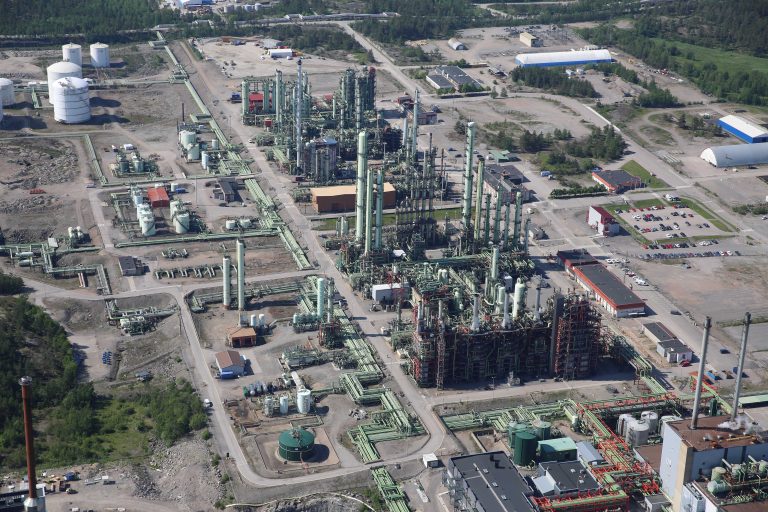
Asahi Kasei will discontinue production of hexamethylene diamine (HMD) as part of its ongoing portfolio optimization, aiming to enhance capital efficiency and strengthen the company’s earnings profile. HMD and its by-product, propionitrile, are used in materials such as polyamide 66 (PA66), hexamethylene diisocyanate (HDI), and resin hardening agents. Based on an assessment of market dynamics, competitiveness, and future capital requirements, Asahi Kasei has decided to exit HMD production. The phase-out will be completed by April 2027.
This discontinuation will not affect the production of Asahi Kasei’s PA66 resin and filament in Nobeoka, nor the production of HDI and its derivatives in Hyuga—both located in Miyazaki Prefecture. All affected employees will be reassigned to other roles within the company. The impact on Asahi Kasei’s consolidated performance forecast is expected to be immaterial. Under its three-year medium-term management plan “Trailblaze Together“, Asahi Kasei is improving capital efficiency and accelerating earnings by converting past growth investments into tangible returns. To support this, the company is implementing structural reforms that channel resources to its key growth pillars—pharmaceuticals, critical care, overseas homes, and electronics.
The Dutch folding carton specialist, Rutgers Printing & Packaging Solutions in Zoetermeer, is meeting the growing demand for sustainable packaging solutions with the installation of a Rapida 76 featuring seven printing units and a coating section. For the company, which concentrates on producing packaging for food and non-food products, the machine marks an important step into the future. Managing Director Oscar Pepermans confirms: “We are really taking a leap in terms of efficiency, productivity, and capacity.”
For several months, the Rapida 76 has been the productive centre and backbone of packaging production at Rutgers Printing & Packaging Solutions
Maximum performance through high automation
The Rapida 76 transfers further high-end technologies, familiar from the Rapida 106, to the B2 format class of 530(605) x 750 mm – especially for packaging production. This migration creates the basis for maximum efficiency in folding carton printing. This includes the increased maximum substrate thickness of 1 mm, a new feeder with an optional, automatic nonstop function, and machine raised heights of up to 450 mm, which allow for the processing of taller board stacks. The high level of automation and the internal measuring and control technology ensure stable, high print quality.
For Rutgers, in addition to the small measuring strip heights (just 4 mm), reliability was a central decision criterion. The new Rapida 76 also scores with speed and – thanks to short makeready times and automation – a significant increase in production capacity. The operators benefit from the high degree of automation, which significantly relieves them of routine tasks. This primarily involves the fully automatic, simultaneous plate change in all printing units, but also washing devices for parallel washing processes (CleanTronic Synchro), a lowerable nonstop carriage in the delivery, and measuring and control technology like QualiTronic ColorControl.
Managing Director Oscar Pepermans: “With the Rapida 76, we are taking a leap in terms of efficiency, productivity, and capacity.”
A key efficiency driver is the option to use the Extended Colour Gamut (ECG). The seven-colour technology enables Rutgers to print with the basic colours and three supplementary colours, thereby covering an extremely wide colour spectrum. Pepermans explains: “Printing in the Extended Colour Gamut means it is no longer necessary to constantly change spot colours.” This simplification of processes brings a further significant boost in efficiency and reduces the amount of waste material needed. The print stability of the Rapida 76 is an indispensable prerequisite for precisely controlling the complex seven-colour workflow.
Raised and further automated with a focus on packaging production – this is how the Rapida 76 for the half format
The decision to opt for the Rapida 76 was made by Rutgers after extensive test prints at Koenig & Bauer in Radebeul, which created complete confidence in the new technology.
RAKEZ Wraps Up India Roadshow With Strategic FICCI Mou And UAE-India Start-Up Series Finale
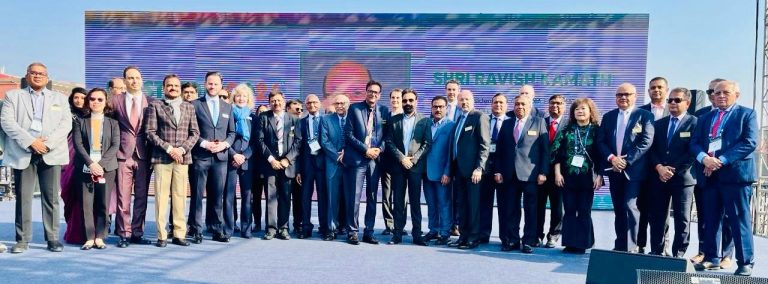
Ras Al Khaimah Economic Zone (RAKEZ) has concluded a highly successful multi-city India Roadshow led by Group CEO Ramy Jallad, covering Pune, Chennai, Bangalore, and New Delhi, and bringing together more than 200 Indian companies across key sectors. The visit highlighted RAKEZ’s commitment to advancing business collaboration under the UAE–India Comprehensive Economic Partnership Agreement (CEPA) and participation in the seventh edition of the India Manufacturing Show, while also marking two major milestones: the signing of a significant Memorandum of Understanding (MoU) with the Federation of Indian Chambers of Commerce and Industry (FICCI) and the finale of the first-of-its-kind UAE–India Start-up Series.
Throughout the roadshow, organised in collaboration with FICCI and supported by leading regional chambers in Chennai, including the Tamil Chamber of Commerce, Andhra Chamber of Commerce, Hindustan Chamber of Commerce, and the All India Manufacturers’ Organisation, RAKEZ engaged with industrialists, entrepreneurs, and business leaders seeking opportunities to expand globally. Discussions centred on Ras Al Khaimah’s competitive industrial landscape, ease of doing business, and the potential for Indian enterprises to explore joint ventures, technology collaborations, and market access through the UAE.
During the New Delhi leg, Jallad and Manab Majumdar, Senior Advisor at FICCI, formalised a strategic MoU that sets out broad areas of cooperation to strengthen economic and commercial ties between the two countries. The agreement underscores a shared ambition to enable knowledge exchange, jointly organise business-focused events, encourage delegation visits, and create new platforms for Indian enterprises to participate in initiatives under CEPA. The signing took place during a roundtable that brought together leaders from manufacturing, engineering, chemicals, building materials, and related sectors to explore investment opportunities in Ras Al Khaimah.
The roadshow concluded with the grand finale of the UAE–India Start-up Series, a flagship initiative under the CEPA framework designed to identify and elevate innovative Indian start-ups with global potential. Held in New Delhi, the finale showcased a group of outstanding ventures, including Bioreform – a Hyderabad-based sustainable packaging company producing certified biodegradable and compostable alternatives to single-use plastics using a proprietary biopolymer blend. As one of the winners, Bioreform will receive direct support from RAKEZ to scale its operations and accelerate its international growth through the ecosystem available in Ras Al Khaimah.
Reflecting on the week-long engagement, Jallad said, “India continues to foster one of the world’s most vibrant business environments, and our interactions across Pune, Chennai, and New Delhi reaffirm the strong appetite among Indian companies to expand into the UAE. Ras Al Khaimah offers them a dynamic and cost-effective base for growth, and our strengthened partnership with FICCI and the successful completion of the UAE–India Start-up Series demonstrate our collective commitment to fostering innovation, industry development, and long-term collaboration under CEPA.”
The India Roadshow, the MoU signing, and the start-up finale together mark a significant step forward in enhancing UAE–India trade and investment ties, while reinforcing RAKEZ’s role as a strategic gateway for Indian businesses aiming to scale in the region and beyond.
Practical relevance: Live demonstrations, expert and customer presentations
Networking: Around 160 participants and specialists engaged in-depth exchange of expertise
Customers and interested parties were able to learn how to use digital tools to keep their production under control at two interlinked events held by Arburg in Lossburg. The Smart Factory Information Day on 26 November +2025 was designed specifically for beginners, while the ALS User Meeting on 26 and 27 November was aimed at users who already use Arburg’s MES. With a total of about 160 participants, both events were fully booked.
The events was designed to provide participants with practical information on how to use digital support to meet the current challenges in their production, as well as the needs of their customers. In addition, there were live demonstrations and best practice examples and also an opportunity to network with other users and with Arburg’s entire “Digital Solutions” team.Peter Kowalewski, Director of IT Digital Industrial Solutions, was delighted with the response: “These two events were attended by about 160 participants, all of whom were thoroughly impressed by the focused transfer of expertise and the in-depth networking”.
Exciting insights into Arburg’s MES and customer portal
The half-day event Smart Factory Information Day was designed by the Digital Solutions team at Arburg as an ’event with in-depth insights into digitalisation for greater transparency, flexibility and efficiency in production’. Among other things, the aim was to get to know and experience Arburg’s digital tools. These include the arburgXworld customer portal and the Arburg host computer system ALS, the company’s MES. This was also an opportunity to learn more about success stories that showcase the advantages of digitalisation. At the user meeting the following day, ALS users then obtained detailed information about the innovations and developments of the Arburg host computer system, the customer portal and the control assistants.
Practical presentations by users for users
On both days, this exclusive expertise transfer event took the form of presentations by Arburg specialists as well as ALS users. Lukas Krüger from Arburg’s Technical Sales department explained how digital assistants can make companies more efficient, while keynote speaker Tobias Herwig, Managing Director of fischer Consulting GmbH, shed light on this topic in his practical presentation entitled “Lean and Digital Processes for Competitiveness in Production”. Further practical insights were provided by Sembach, Novapax, H&K Müller, ZF Lifetec, Trelleborg and Presspart.
“These practical presentations by customers for customers were just as valuable as the opportunity to speak directly with development specialists from Arburg. The consistently positive feedback on our digital products and services once again underlined that we are among the pioneers in the industry when it comes to digitalisation”, said Benjamin Franz, Manager of Digital Solutions who was delighted with the success of these two events.
Iperal, one of Northern Italy’s most dynamic supermarket chains, has built its reputation on quality, service and a close connection to the communities it serves. With 56 stores, more than 50,000 employees and an expanding fresh offering, the retailer’s operations have grown significantly since its founding in 1986. This growth reached a new milestone in 2025 with the opening of the Fresh Food Centre in Giussano (MB), a 50,000 mfacility designed to manage fresh products and Iperal’s own “Fatto da Noi” (Made by Us) range. Equipped with fully automated systems and powered by 4,300 solar panels, the new hub sets new standards of efficiency, quality and sustainability.
The launch of the new centre prompted Iperal to rethink a long-standing logistical challenge: the reliance on cardboard, plastic and wooden crates to move fruit and vegetables from suppliers to stores. These single-use and mixed-material solutions generated large volumes of waste, contributed to unstable pallet handling, and led to inconsistent in-store presentation across locations. With the opening of the Fresh Food Centre, Iperal saw a clear opportunity to move away from single-use materials and invest in a more efficient, sustainable solution compatible with automation that would support both the company’s growth and its environmental commitments.
Iperal selected Tosca’s Wood Look reusable plastic crates (RPCs) and bins to create a streamlined, sustainable and automation-ready packaging system. Designed for resilience and repeat use, the RPCs combine the aesthetic appeal of a traditional wooden display with the durability, hygiene and product protection of plastic. This wood-look finish helps create clean, attractive and well-organised shelves that elevate the shopper experience and support increased sales. Through Tosca’s pooling model, each crate is collected, cleaned and redeployed multiple times, eliminating the waste associated with single-use packaging and providing a cost-efficient circular solution.
Today, Iperal uses Tosca’s 60×40 and 30×40 RPCs in multiple heights as well as larger bins that move seamlessly from suppliers to the Fresh Food Centre and onward to stores. Their standardised footprint and consistent build quality enable smooth handling, efficient stacking, and uniform presentation of fresh products once in store – an important element of Iperal’s customer experience.
“Our partnership with Iperal is a great example of how reusable packaging can unlock both operational and environmental value,” says Gian Paolo Mezzanotte, Managing Director – Italy, France, Spain at Tosca. “By introducing a standardised,
reusable system, we’ve helped simplify logistics, enhance product quality, and support Iperal’s long-term sustainability goals.”
A visible leap in efficiency, sustainability, and automation performance
Since making the transition, Iperal has observed clear benefits. Pallet stability has increased, making handling safer and more predictable – an essential advantage for an automated facility. The consistent crate dimensions streamline stacking and movement through the warehouse, helping reduce downtime and supporting a smooth material flow. The simplification of waste management has also been significant, with less reliance on single-use materials and fewer disposal processes required.
Tosca’s solutions have integrated into Iperal’s automated systems with ease and delivered measurable improvements in operational efficiency: “Tosca’s automation-ready RPCs fit seamlessly into our existing lines, ensuring smooth handling, consistent stacking, and reliable flow through every stage of the automated process,” explains Lorenzo Zecca – Supply Chain Director at Iperal. We’ve seen faster throughput, fewer stops on the line, and more consistent performance overall. The durability and uniformity of the RPCs have reduced disruptions, improving both efficiency and reliability across our operation and supply chains.”
In stores, shoppers now encounter fresh products presented in a cleaner, more uniform way, reinforcing Iperal’s commitment to quality. The crates’ durability protects produce more effectively during transport, contributing to a reduction in damage and a more reliable supply of high-quality goods.
Environmentally, the shift to reusable packaging supports Iperal’s broader sustainability commitments – reducing packaging waste, lowering CO emissions, and promoting more responsible use of resources. While precise savings are still being measured, the benefits are visible every day in smoother operations, reduced waste, and an enhanced shopping experience for customers.
A growing partnership shaping the future of Iperal’s supply chain
The success of the collaboration has inspired Iperal to expand the use of Tosca’s reusable assets to additional suppliers, including partners in Spain and the Netherlands. The retailer is also exploring ways to enhance its in-store replenishment operations to improve ergonomics and efficiency further. Describing the collaboration as “constructive, productive, and efficient”, Iperal views Tosca as a strategic partner in building a smarter, greener supply chain fit for the future.
ALPLA secures grant and set up new recycling company pioneering food-grade HDPE recycling process
Four-year innovation project with NTCP kicks off in the Netherlands
Safe, affordable, sustainable: ALPLA is working on a future-proof solution for food-safe HDPE recycled material. The international packaging and recycling specialist is now evaluating the patented solvent-based process at a pilot plant in Heerenveen in collaboration with the independent technological institute NTCP. The innovation project, which is funded by the Dutch Ministry of Climate Policy and Green Growth, will run for four years. Just in time for the start of the PPWR 2030, the innovative solution will be scaled up to industrial production.
Zentrum für Recycling-Innovation: Der Standort von NTCP in Heerenveen (Niederlande). // Centre for Recycling Innovation: The NTCP site in Heerenveen (Netherlands).
From 2030, packaging in the EU must contain a minimum proportion of recycled material. ALPLA and NTCP are working on a future-proof and affordable solution for plastic food packaging. The patented recycling technology is expected to deliver food-safe HDPE recycled material (rHDPE) on an industrial scale for the first time. Following several years of R&D with successful laboratory results, the two project partners have just started evaluating the solvent-based process at the NTCP site in Heerenveen.
Intensive testing of all process steps of the patented technology will be performed as part of a collaborative innovation project. The aim is to obtain approval from the European Food Safety Authority (EFSA) in the near future. The construction and operation of the pilot plant will provide valuable insights for scaling up the process. ALPLA has set up its own recycling company in the Netherlands for this purpose.
“To date, there is no certified process in the EU for the production of food-grade HDPE recycled material. Our highly efficient technology for cleaning and processing post-consumer recycled material could be a real game changer,” explains Michael Heyde, Head of Technology Recycling Division at ALPLA. The company already produces PET and HDPE recycled material in its own recycling division at 14 locations worldwide, with 400 000 tonnes installed and projected recycling output capacity. ALPLA processes most of this material itself into packaging. The future industrialisation of this innovative technology should enable readily available food packaging made from rHDPE for the FMCG (Fast Moving Consumer Goods) market.
“This cooperation with ALPLA fits perfectly to the core activities and mission of NTCP as an independent knowledge institute, to facilitate and accelerate technology developments with frontrunner parties. We believe that new technologies are needed to completely close the plastics value chain while reducing the amount of waste,” emphasises Martine Brandsma, NTCP’s CEO.
The pilot project is being carried out with the support of the Dutch Ministry of Climate Policy and Green Growth.
Meusburger Showcases Innovation And Expanded Portfolio At K 2025
Meusburger, the leading standard parts manufacturer, will be presenting its expanded product range and innovative solutions for mould making at the K trade fair in Düsseldorf from 8 to 15 October 2025. As the world’s largest trade fair for plastics and rubber, K is a global hotspot for innovations in mould and toolmaking, offering an ideal platform for Meusburger to demonstrate its engineering expertise and technological leadership. Visitors to stand C30 in hall 1 can look forward to the latest developments in plates, mould bases, components and hot runner systems. In addition to its broad standard range, the company will highlight tailored solutions designed to meet the increasingly complex demands of modern mould making. Meusburger will focus particularly on its current campaign on demoulding and on a special area dedicated to designers.
Product diversity and innovative demoulding solutions
Meusburger provides its customers with a comprehensive range of high-quality plates and mould bases that serve as the foundation of efficient mould production. The raw materials, which are heat-treated for stress relief, guarantee maximum stability, quality, and precision throughout the entire production process. With a high proportion of in-house manufacturing combined with enormous storage capacities, Meusburger ensures remarkably short lead times and reliable delivery even for large orders.
The extensive portfolio also includes high-precision components that are tailored to customer requirements. In addition to guiding elements and ejectors, visitors will discover innovative slide systems, locks, and a wide range of hot runner solutions. By continuously expanding its product range, Meusburger demonstrates its commitment to providing customers with everything they need from a single source. The company’s technical experts are always on hand to advise customers individually, helping them select the right components for their projects.
The latest campaign on demoulding will be a special highlight at the exhibition stand. Regardless of whether customers prefer mechanical or hydraulic demoulding components, Meusburger offers the right solution to optimize production processes. Drawing on decades of engineering experience, the company has developed numerous in-house innovations that make demoulding faster, more reliable, and more cost-effective. These practical solutions support customers in achieving efficient processes, while reducing downtime and extending the service life of moulds. Alongside standard components, Meusburger also provides customised designs and complete solutions, enabling customers to save valuable time in planning, designing, and production.
In addition to product diversity, Meusburger emphasizes the importance of digitalization in mould and toolmaking. At the trade fair, the exhibition stand will feature a dedicated area for designers, showcasing the diverse functions of the Meusburger online portal. Numerous new features now enable an even more efficient design process—available 24/7 in up to 20 languages, offering maximum accessibility for international customers.
Visitors will also gain a first-hand look at the tried and trusted wizards and configurators from Meusburger, which have been enhanced with clearer, more intuitive functions. Particularly noteworthy is the Meusburger CAD tool, a user-friendly software solution that provides designers with access to the entire Meusburger standard parts library. Kept continuously up to date through regular updates, the CAD tool simplifies design workflows and increases productivity.
The tool not only allows users to configure models but also automatically accounts for the required installation space, eliminating common design errors. Integrated wizards offer step-by-step support when designing mould bases and die sets, helping to streamline tasks that would otherwise be time-consuming. Compatible with a variety of CAD systems, the software can also be used offline, giving engineers greater flexibility and independence in their daily work. This makes it particularly valuable for companies operating across multiple sites or with limited internet connectivity.
By combining its wide product portfolio with cutting-edge digital tools, Meusburger provides mould makers with a powerful mix of innovation and efficiency. The company’s solutions are designed not only to reduce lead times and costs but also to help customers maintain a competitive edge in a globalized marketplace. With its presence at K 2025, Meusburger reaffirms its role as a trusted partner for tool and mould makers worldwide, offering reliable products, practical digital support, and continuous innovation.
STADLER And Ecourbis Ambiental To Build The Most Advanced Waste Treatment Plant In Latin America: UTM Leste In São Paulo
STADLER Anlagenbau GmbH, the globally active German company specialized in the planning, production and assembly of turnkey sorting plants, has been awarded a major contract by Ecourbis Ambiental S.A. for the design and construction of the UTM Leste sorting plant, a state-of-the-art municipal solid waste (MSW) facility in São Paulo, Brazil. Scheduled for commissioning in August 2027, the plant will be the most advanced MSW treatment facility in Latin America, setting a new standard for technological excellence and circular resource recovery.
model of Ecourbis MSW plant_resized
With a processing capacity of 135 tons per hour (550,000 tons per year), UTM Leste will recover 48,000 tons of recyclables, produce 260,000 tons of Refuse-Derived Fuel (RDF), and generate 170,000 tons of organics for biogas, diverting over 308,000 tons annually from landfill disposal.
A strategic partnership driving São Paulo’s circular economy
The collaboration between STADLER and Ecourbis Ambiental marks a turning point in São Paulo’s waste management strategy. Combining STADLER’s global engineering know-how and local operational insight with a shared dedication to innovation and sustainability, the project will enhance resource recovery, increase process efficiency, and reduce landfill dependency.
Ednei Rodrigues, Superintendent of Engineering, Innovation and Projects at Ecourbis Ambiental
“The choice of STADLER reflects not only its international leadership in providing mechanized sorting solutions with highly robust, reliable, and efficient equipment, but also its alignment with Ecourbis Ambiental’s innovation strategy,” said Ednei Rodrigues, Superintendent of Engineering, Innovation and Projects at Ecourbis Ambiental. “This combination ensures technology transfer, digitalization, and process replicability, reducing risks and strengthening São Paulo’s position as a reference in urban solid waste management.”
European technology tailored to Brazilian conditions
At the heart of the project lies STADLER’s ability to tailor its proven European waste treatment model to local realities, including Brazil’s waste composition, climate and regulatory environment. Drawing on extensive experience across Latin America and backed by technical expertise from its German headquarters, the company ensures that each system delivers optimal performance under local conditions.
The advanced UTM Leste plant is unique for the application of Artificial Intelligence through STADLER connect to support predictive maintenance, blockage detection, and real-time process optimization – marking the platform’s first deployment in Latin America.
“Years of continuous learning, combining in-depth technical studies and hands-on experience, have enabled us to design the most efficient process flow and mass balance for Brazilian conditions,” explained Henrique Filgueiras , Commercial Director of STADLER do Brasil. “Brazilian waste streams present specific challenges compared to Europe: higher organic content, greater moisture levels, a larger share of bulky and non-recyclable materials, and a generally poorer gravimetric composition. Achieving the right balance between capital and operational expenditures is crucial, as is adapting plant design to address the high costs of civil works in Brazil. By adapting layouts and reinforcing equipment robustness, STADLER ensures stable and reliable plant performance even under the challenging waste composition typical of Brazil.”
model of Ecourbis MSW plant_resized
Turning waste into energy and opportunity
A key innovation at UTM Leste is the integration of a drying line for organic fractions, transforming traditionally considered residual materials into high-calorific green RDF and contributing directly to São Paulo’s clean energy transition.
“The drying of organic fractions plays a crucial role in enabling the large-scale production of green RDF, a sustainable alternative to fossil fuels. At UTM Leste, approximately 132,000 tons of waste per year are directed to alternative energy generation through green RDF, reducing landfill dependency and contributing to greenhouse gas mitigation”.
For Ecourbis Ambiental, UTM Leste is also a strategic contribution to Brazil’s National Solid Waste Plan. “The facility will operate as part of an eco-park integrating several technologies, ensuring the reuse and energy recovery of various materials, enhancing circularity, and reducing Greenhouse Gas emissions,” Rodrigues added.
Innovation driving the circular economy
For São Paulo, the benefits of UTM Leste will also have a strong social impact. The plant’s automation and modernization will create hundreds of direct and indirect jobs, improve working conditions for operators, and support the development of a local circular economy market for secondary raw materials and renewable fuels.
drawing Ecourbis sorting plant
At the heart of the process lies a focus on circularity: “The plant transforms residual waste into inputs for new production chains – plastics, metals and paper – and into renewable energy through RDF, closing material loops and reducing the need for natural resource extraction,” explained Rodrigues. “In addition, it is directly aligned with the guidelines of the latest update of Brazil’s National Solid Waste Plan, establishing São Paulo as a living laboratory of the circular economy in Latin America and as a technological replicability platform for other Brazilian cities.”
UTM Leste is not only the largest and most advanced waste treatment plant in Latin America – it is also a tangible demonstration of STADLER’s long-term vision for the circular economy, where waste becomes a valuable resource for multiple industries, closing the loop for a sustainable future,” concluded Filgueiras.
Latest Results From The Autosmooth Project Make 3D Metal Printing With Coldmetalfusion Even More Attractive
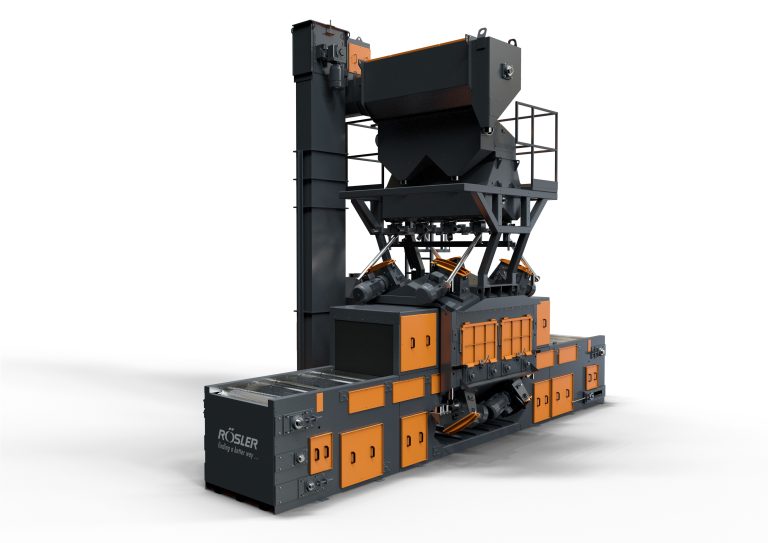
3D post processing technology, Neue Materialien Bayreuth and Headmade Materials are advancing the groundwork for an efficient, fully automated post-processing for ColdMetalFusion (CMF) parts. The goal: a seamless process chain perfectly aligned with the CMF process. Even today, the technology enables cost-efficient serial production of high-quality metal components – at volumes of up to one million parts per year.
The first AutoSmooth results already drew significant attention within the additive manufacturing community: A new depowdering and surface finishing technology for green parts, developed in the first project phase, drastically reduced post-processing time compared with conventional methods. New investigations now confirm the potential of the technology – and add a decisive lever: feedstock reuse. A key focus of the current research lies in the automated processing and recyclability of the feedstock – the polymer-binder-enhanced metal powder used as the base material in CMF. Previous studies had shown that the material is fundamentally recyclable. The latest findings go far beyond that.
100% recycling rate: Feedstock reuse as an economic and environmental breakthrough
“Right now, all indicators point to full, meaning 100%, reuse of the feedstock,” says Sven Amon, project engineer at Rösler, who leads the AutoSmooth project and has spent nearly a decade researching and advancing automation and industrial applications of additive manufacturing. “This is a milestone. Until now, during manual depowdering or fine depowdering, only part of the feedstock could be reused, depending on part geometry.”
Neue Materialien Bayreuth is currently examining in detail how the reuse of materials processed through AutoSmooth affects long-term performance. A comprehensive life-cycle analysis of the process media is expected by mid-next year. In parallel, test series are underway to determine the mechanical properties of parts made from recycled feedstock – with a special focus on static strength, fatigue resistance and bending fatigue. These investigations are closely supported by Headmade Materials, the inventor of ColdMetalFusion.
The complete recyclability of the feedstock unlocks massive cost-saving potential: What was previously considered waste becomes a valuable resource. The closed material loop drastically reduces material costs, as the excess metal-powder feedstock that is not printed remains virtually indefinitely reusable. Combined with significantly reduced disposal costs, this creates a strong economic lever that makes CMF even more attractive for serial production.
AutoSmooth_CMF_Green part to finished surface
The environmental impact is equally significant: 100% reuse dramatically lowers the CO₂ footprint of the entire process chain, enabling a sustainable, resource-efficient production system. Even the specially tailored process media can be fully recycled and reused after cleaning and sieving – another lever for cost reduction and environmental relief.
With this dual impact of cost efficiency and sustainability, AutoSmooth sets new benchmarks in industrial 3D metal printing. The ability to keep valuable raw materials in a nearly loss-free closed loop may prove to be one of the most important breakthroughs for the economic viability of additive metal manufacturing.
Patented workpiece fixture for the most delicate components
In addition to post-processing, the project also focuses on handling highly complex green parts. These components cannot be clamped with conventional fixturing methods. Their structures are so delicate that they would be damaged in a traditional blasting process with a rotating basket. The team led by Sven Amon has developed an elegant solution: The fragile parts are embedded in a specially printed mesh that is clamped directly into
the post-processing system. This patented handling concept is fully automatable and supports serial processing even for highly complex structures – another step toward end-to-end automation.
Faster to perfect surfaces – AutoSmooth unlocks the full potential of CMF
“Interest in CMF continues to rise – against the general trend in the additive industry,” says project lead Sven Amon. “That’s because CMF makes metal printing economically viable, particularly in prototyping and serial production. With the new AutoSmooth post-processing method, the process can now reach its full potential.”
The project, scheduled to run until summer 2026, forms the foundation for a new, fully automated post-processing system from AM Solutions. Initial test runs in a pilot setup are already showing promising results. In the coming months, the feedstock-analysis findings will be integrated into the pilot system. “With the system we intend to develop based on these research results, we will expand our established 2-in-1 approach – depowdering and smoothing – by adding sustainability. The result is a 3-in-1 process precisely tailored to the needs of metal-printing customers,” Amon explains. “This makes the production of highly demanding components – such as impellers – economically and industrially scalable. A decisive step that will allow CMF to establish itself as the leading 3D metal printing technology.”
Ecocvario – Innovative All-Rounder For Water-Based Fine Cleaning Fast, Economical, And Sustainable For High Purity
With the new EcoCvario, Ecoclean has developed a highly flexible solution for water-based precision cleaning. The modular concept allows different cleaning technologies and drying processes to be combined and adapted to individual requirements in such a way that high cleanliness specifications can be met reproducibly, quickly, and sustainably. In addition, innovative equipment details, effective heat management, optimized media flow, and efficient media treatment contribute to cost- and resource-saving processes.
Increasing quality requirements are leading to more demanding cleaning tasks with high cleanliness specifications across all industries. This is regardless of whether mass-produced parts are to be cleaned as bulk goods or precision parts as set goods. These applications require application- and customer-specific fine cleaning processes, for which Ecoclean has developed the new EcoCvario. The powerful spray-flood cleaning system with a vacuum-tight working chamber is designed for batches weighing up to 150 kg and measuring a maximum of 650 x 470 x 400 mm and is equipped with three flood tanks as standard. Its compact footprint and wide range of automation options also make it ideal for seamless integration into the production chain.
It’s all in the combination
By using various cleaning technologies that can be combined as desired, this innovative all-rounder can be adapted to a wide range of requirements. For example, the pulsated pressure cleaning (PPC) pressure change process enables contaminants to be reliably removed from complex internal geometries, fine capillaries, narrow undercuts, deep bores with small cross-sections, or the delicate structures of printed components. With power-controlled ultrasound at different frequencies, individual vibration units can be selected or deselected depending on the application and parts. For stubborn contamination, high-pressure cleaning comes into its own. Gentle flooding ensures that delicate and sensitive components emerge from the cleaning system clean and undamaged, in line with requirements. The rinsing function of the working chamber via additional nozzle bars reduces carryover to a minimum.
The EcoCvario also offers comparable flexibility when it comes to drying: equipped with combinable hot air and vacuum drying, optimal results are achieved in every case with minimal energy consumption and the shortest possible time. This is supported by sensor-controlled moisture measurement and monitoring integrated into the working chamber. HEPA filters for treating the supply air during hot air drying prevent recontamination of the cleaned parts.
System technology designed for high cleanliness
Ecoclean_EcoCvario_innen
In addition to the combination of cleaning and drying processes, the system technology supports high cleaning quality. This includes the working chamber made of polished stainless steel and the media-carrying pipes welded using special processes that counteract deposits. The bogie integrated into the working chamber with frequency-controlled drive ensures precise positioning of the components and optimum accessibility of media and process mechanics. The flood pumps, which are also frequency-controlled, ensure fast filling and emptying of the working chamber or tanks with optimum adaptation to the items being cleaned. These are arranged vertically and are cylindrical. The flow-optimized design of the flood tanks prevents deposits from forming and contributes to improved media flow. This results in extended bath life and thus cost and resource savings as well as higher productivity.
Effective media treatment reduces operating costs
Suspended and light materials, such as oil or casting dust, are reliably removed from the cleaning baths by effective gravity separators. The separate media circuits of the flood tanks are each equipped with full-flow filtration. Both bag and high-performance filter elements can be used in the flexibly designed filter housing without any modifications. When a filter change is required, this is indicated on the HMI, including operating instructions, and can therefore be carried out without any problems. For continuous treatment of the rinsing baths, a newly designed Aquaclean system can also be integrated, whose waste heat is used to completely heat the cleaning medium in flood tank one. Overall, the media treatment of the new EcoCvario is designed for long circulation of the baths, which significantly reduces energy, water, and chemical consumption and lowers operating costs.
Simple, safe operation and state-of-the-art communication technology
The user-friendly HMI ensures intuitive and safe control through a guided dialogue between the system operator and the control panel. At the same time, it simplifies the definition of up to 50 part-specific cleaning, rinsing, and drying programs, each with up to 30 process steps. The ability to set the parameters for each program sequence of the cleaning processes individually allows for extremely precise adaptation of the cleaning to the parts.
IO-Link is used in the EcoCvario for safe process control and quick and easy maintenance. This is a future-oriented, standardized communication technology that connects intelligent sensors and actuators to a higher-level automation system. This results in various advantages, such as higher data availability and accuracy, improved productivity, simplified and faster maintenance, and fault diagnosis.